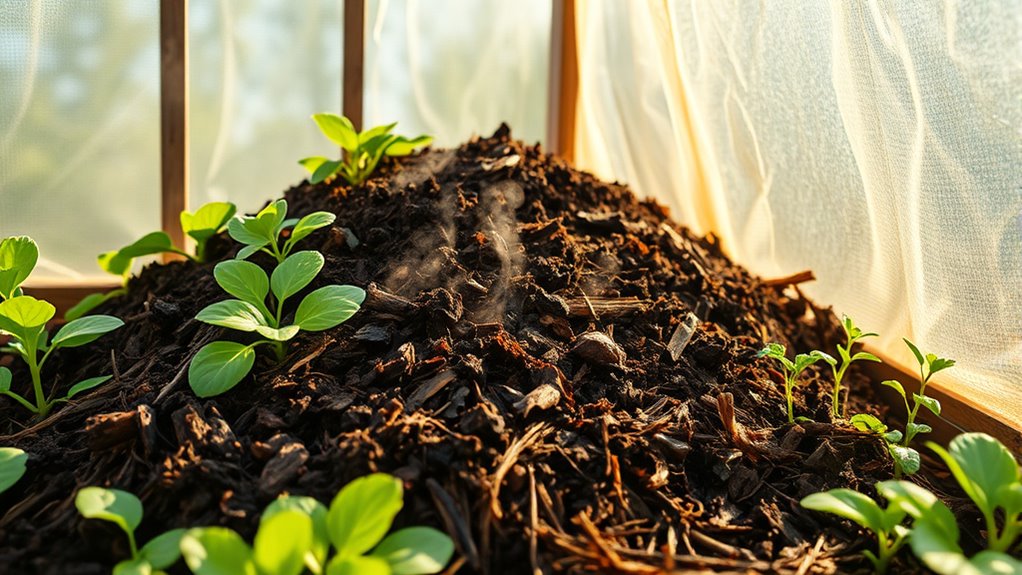

You can naturally warm your greenhouse by harnessing the heat produced from composting. Microbial activity in well-managed compost generates consistent warmth, especially when moisture levels are maintained around 50-60%, and design features like insulation help retain heat. Proper moisture control and choosing an insulated bin or sheltered location will maximize warmth transfer. By using compost as a heat source, you reduce reliance on external energy, extending your growing season. Keep exploring to discover how to optimize this eco-friendly approach.
Key Takeaways
- Microbial activity in compost generates heat that can naturally warm greenhouses.
- Maintaining optimal moisture levels (50-60%) boosts microbial heat production.
- Using insulated or sheltered compost bins enhances heat retention for greenhouse warming.
- Proper bin design and regular turning sustain microbial activity and consistent heat output.
- Placing compost beneath plants or along greenhouse walls efficiently radiates heat inward.
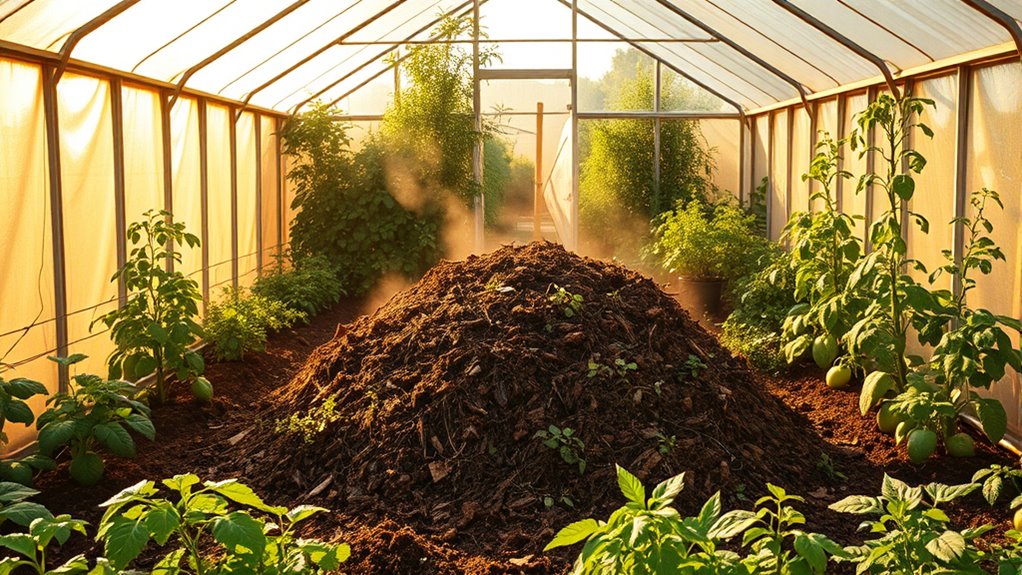
Have you ever wondered how composting can generate enough heat to warm your garden or even indoor spaces? The secret lies in the natural process of microbial activity, which produces heat as organic materials break down. When managed correctly, compost can serve as a reliable, eco-friendly heat source, especially for greenhouses. To maximize this heat production, understanding moisture control and compost bin design is essential. These factors determine how effectively your compost heats up and sustains warmth over time.
Moisture control is critical because microbes need the right level of moisture to thrive—generally around 50-60%. Too little moisture slows microbial activity, reducing heat output, while too much can cause anaerobic conditions, leading to foul odors and less efficient decomposition. To keep moisture levels ideal, you should regularly check your compost and add water if it’s too dry or incorporate dry materials if it’s too wet. Covering your compost with a tarp or lid helps retain moisture and heat, especially in colder weather. Proper moisture management ensures microbes stay active, continuously generating heat that can be harnessed to warm your greenhouse or indoor space. Additionally, selecting an appropriate compost bin design can further optimize heat retention and microbial activity.
Equally important is compost bin design. A well-designed bin maximizes insulation and airflow, both of which influence heat retention and microbial activity. Many successful compost bins are constructed with insulated walls or are positioned in sheltered locations to reduce heat loss. Some designs feature double-walled or layered structures that trap heat more effectively. Proper aeration is also essential; you need enough airflow to supply oxygen for microbial respiration but not so much that heat escapes. Turning the compost regularly helps maintain this balance, keeping microbes active and heat levels high.
When you combine the right moisture control with an effective compost bin design, you create a self-sustaining heat source. As microbes work diligently inside your bin, they generate warmth that can be channeled into your greenhouse or indoor space. Some gardeners even place the compost bin directly beneath their plants or along the greenhouse walls, allowing the heat to radiate and warm the air naturally. This method reduces reliance on external heating sources, making your gardening more sustainable and cost-effective.
In essence, mastering moisture control and choosing a thoughtful compost bin design are key to harnessing compost heating successfully. With proper management, your compost can produce consistent warmth, extending your growing season and creating a cozy environment for plants and yourself alike. It’s a simple, natural process that transforms organic waste into a valuable, renewable heat source you can rely on year-round.
Frequently Asked Questions
How Long Does Compost Heating Typically Last?
Compost heating usually lasts for about 2 to 3 months, depending on the compost temperature and material. As the compost heats up, it can sustain its elevated temperature for several weeks, providing natural warmth to your greenhouse. Regular turning and maintaining proper moisture levels help prolong the heating duration. Once the compost cools below ideal temperatures, the heating effect diminishes, so expect a seasonal heating cycle aligned with compost decomposition.
Can Compost Heating Be Used in Cold Climates?
Yes, compost heating can be used in cold climates. Its climate adaptability depends on effective insulation techniques like double-layer walls or thermal blankets, which help retain heat. You should monitor the compost temperature regularly and adjust insulation as needed to maintain warmth. With proper insulation and management, compost heating provides a sustainable, natural way to keep your greenhouse warm even in colder weather.
What Types of Compost Materials Are Most Effective?
Did you know compost can generate enough heat to warm your greenhouse? You’ll want to use a mix of nitrogen-rich materials like fruit scraps and grass clippings, layered with carbon-rich items like straw and dry leaves. Proper moisture management is key—keep your compost moist but not soggy. This combination maximizes heat production, making your compost ideal for natural greenhouse warming through effective compost layering and moisture control.
Does Compost Heating Produce Any Unpleasant Odors?
Compost heating can produce some odor, but with proper odor control, it shouldn’t be unpleasant. If you maintain good airflow and balance green and brown materials, you’ll minimize compost smell and prevent foul odors. Turning the compost regularly helps aerate it, reducing odor buildup. Keep humidity in check and avoid overloading the pile, and you’ll enjoy the benefits of warm compost without any unpleasant smells in your greenhouse.
How Much Space Is Needed for a Compost Heating System?
Space specifics depend on your system size; generally, allocate enough room for your compost’s core and surrounding margins. For smaller setups, about a square meter might suffice, while larger systems need more space to ensure proper airflow and efficient heating. Make sure to take into account clearance for maintenance and turning. It’s best to plan generously, giving enough space to support your sustainable, self-heating system without crowding your greenhouse.
Conclusion
By harnessing compost heating, you become the gardener tending a silent, steady fire beneath your greenhouse. Just as compost transforms waste into warmth, you nurture growth and resilience in your plants. This natural warmth symbolizes your commitment to sustainability and harmony with nature. With each heated breath, your greenhouse flourishes like a living heartbeat, reminding you that true warmth comes from nurturing what’s already alive. Embrace compost heating—let it ignite your passion for eco-friendly gardening.