
TL;DR

Get garden gear delivered free with Prime
- Fast, free delivery on millions of items
- Prime Video, Amazon Music and more included
- Member-only deals all year
Planet Natural’s fall checklist says healthy, naturally declining tomato vines can go into an active backyard compost pile, while plants with fast-spreading lesions, unexplained wilt, severe rot or heavy pest problems warrant caution. Symptoms alone do not confirm a disease, so when the cause is unclear, the report advises keeping plants out of a small home pile and checking local disposal rules.
Planet Natural’s fall tomato-plant checklist advises gardeners to sort spent vines by their overall condition before composting them: healthy, naturally declining plants can go into a managed backyard pile, while plants with concerning disease-like symptoms should be kept out of a casual home compost heap. The guidance matters because similar symptoms can have different causes, and a backyard pile may not heat evenly enough to reliably reduce pathogens.
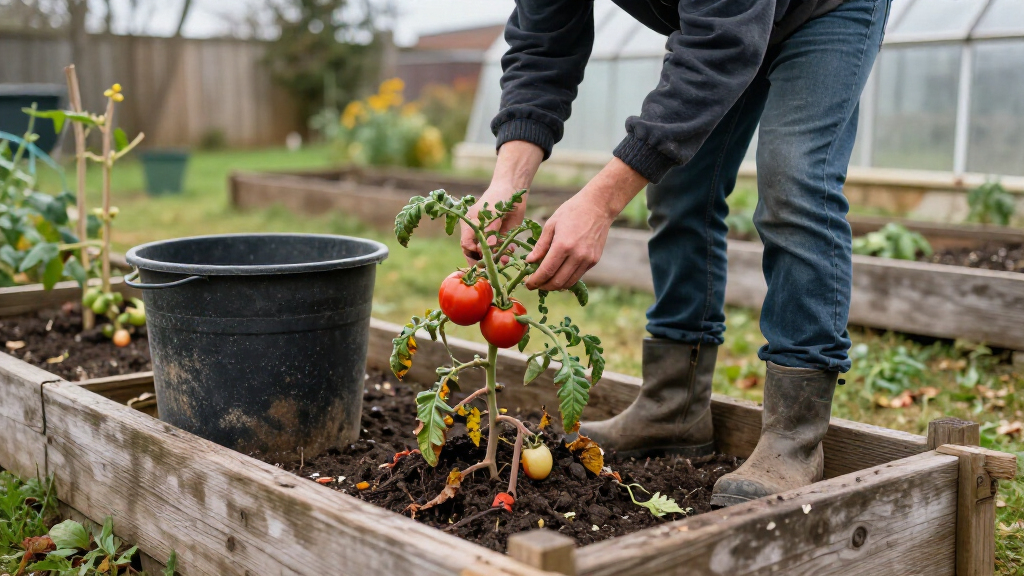
The report recommends inspecting the whole plant on a dry day rather than diagnosing it from one spotted leaf. Gardeners are advised to check whether leaf damage is spreading, look for stem lesions and fruit rot, inspect the crown and roots, and note whether symptoms affect one plant or a larger section of the bed. A pattern across plants can be more informative than a single symptom, but the inspection is not a laboratory diagnosis.
Vines with normal late-season aging, no concerning disease pattern, no serious fruit rot and no heavy pest infestation are candidates for home compost. Planet Natural recommends removing clips and ties, chopping vines into shorter pieces and mixing them with dry, carbon-rich material such as leaves or straw. The pile should be kept moist and turned as it settles; sound fruit can be composted with healthy vines, while dropped or rotting fruit should be picked up separately.
The report urges caution around rapidly spreading lesions, unexplained wilt, decayed roots or crowns, powdery growth, distorted leaves and mosaic-like coloring. Those signs can be associated with diseases, but they can also have other causes, including drought, nutrient problems, herbicide injury or pests. For broadly blighted-looking plants or plants that collapse while soil is moist, the report recommends bagging for disposal in the trash under local rules. A municipal yard-waste program is an option only if it explicitly accepts diseased garden material.
Choosing a Safe End for Tomato Vines
The decision affects both compost quality and next season’s garden. Composting healthy vines recycles useful plant material, but putting suspicious debris into a small, cool or unevenly heated pile is not a dependable way to manage an uncertain disease problem. Rotting fruit left beneath plants may also shelter pests or carry a problem back into the bed.
The checklist offers a practical choice among three destinations: a home compost pile for plants that appear healthy, a municipal program that confirms it accepts the material, or trash disposal for suspicious plants when the cause is unknown. It does not claim that a visual check can identify every pathogen or that every municipal facility treats diseased plants the same way.
Products Worth Considering

Garvee 6 × 8 ft Walk-In Polycarbonate Greenhouse

EGO POWER+ HT2600 26-Inch Cordless Hedge Trimmer (Battery and Charger Not Included)

Greenworks 40V 16-Inch Cordless Snow Blower with 5.0Ah Battery and Charger
As an affiliate, we earn on qualifying purchases.
How to Read Fall Plant Symptoms
Tomato plants often yellow and decline late in the season, and ordinary aging can resemble disease. Drought stress, nutrient imbalance, herbicide injury and several pathogens may cause overlapping signs. The report therefore treats symptoms such as leaf spots or wilt as reasons to inspect further, not proof of a specific disease.
For plants that look broadly blighted or deteriorate quickly, Planet Natural points to late blight as one possible concern, while noting that early blight and Septoria leaf spot can also produce brown lesions. The checklist does not diagnose an individual garden. It suggests photographing the plant and contacting a local nursery if a diagnosis would affect what to plant, treat or save next year.
What a Visual Check Cannot Confirm
A gardener may not be able to tell from appearance alone whether wilt, leaf spots, powdery growth or unusual coloring comes from a pathogen, pests or non-disease stress. The checklist does not establish a diagnosis, and it does not say that every symptomatic plant carries a disease that will survive composting.
Local disposal options also vary. The report says gardeners should check current municipal acceptance rules before sending diseased garden debris to a yard-waste program. It does not provide a universal temperature or time standard for backyard composting, and warns that many home piles do not heat evenly or remain hot long enough to serve as a reliable sanitation plan.
Before Clearing the Tomato Bed
Before pulling vines, gardeners can inspect leaves, stems, fruit and roots, then separate clearly healthy material from plants that raise concern. The report recommends collecting loose debris, using clean pruners if needed and removing reusable clips and ties before composting. Suspicious plants should be kept apart while their disposal route is checked.
If a diagnosis could change next year’s planting or treatment decisions, photograph the plant and contact a local nursery, as Planet Natural advises. Gardeners should also note which plants and parts of the bed were affected, avoid moving soil from around a suspect root ball to a new tomato bed, and confirm local rules for trash or municipal yard waste.
Key Questions
Can healthy spent tomato vines go in a backyard compost pile?
Yes. Planet Natural says vines with normal late-season decline and no concerning disease pattern, serious fruit rot or heavy pest problem can be composted. Chop them and mix them with dry, carbon-rich material.
Should tomato plants with possible blight go in home compost?
The report recommends keeping broadly blighted-looking or rapidly deteriorating plants out of a casual home pile. Bag them for trash disposal under local rules, or use a municipal program only after confirming that it accepts diseased garden material.
Does wilt prove that a tomato plant has a disease?
No. Wilt can have several causes, including dry soil, root damage, heat, pests or disease. Sudden collapse while soil is moist or a decayed crown or root system calls for a more cautious disposal choice, but it does not identify the cause.
Can a hot compost pile make diseased tomato debris safe?
Planet Natural says a properly managed hot pile can reduce many plant pathogens, but many backyard piles do not heat evenly or stay hot long enough to be a reliable sanitation method. The report recommends separating clearly healthy and suspicious material.
Source: rss