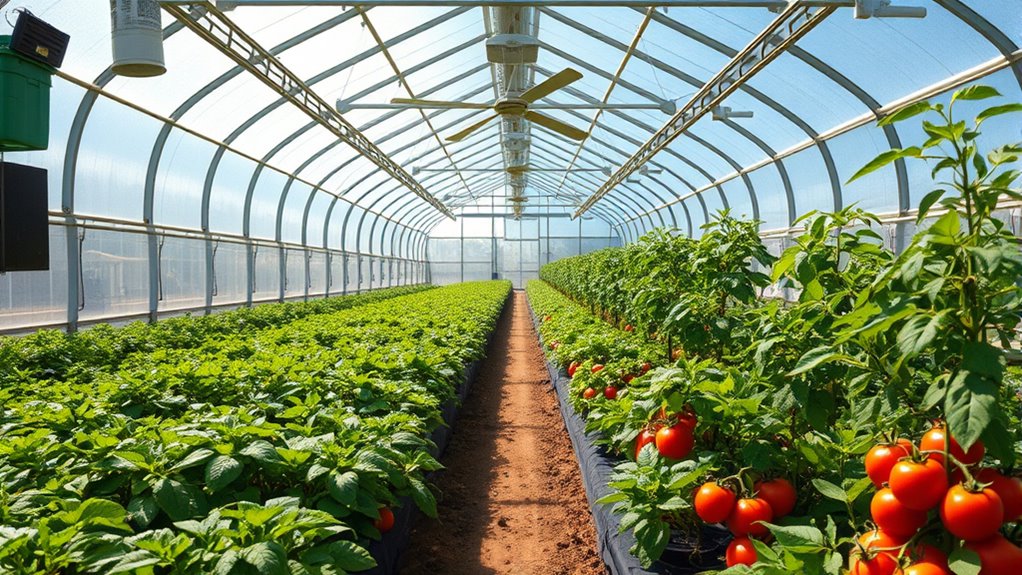
By planning carefully, you can save money and resources in greenhouse gardening through cost-benefit analysis, choosing high-demand crops, and investing in energy-efficient systems. Using controlled environments reduces crop losses and lowers ongoing expenses like water and energy. Starting small and scaling gradually helps you manage costs effectively. Keep monitoring your investments versus returns to guarantee profitability. Want to know more tips to maximize efficiency and savings? Continue exploring to access more strategies.
Key Takeaways
- Conduct a cost-benefit analysis to ensure investment in greenhouse infrastructure and operations yields a profitable return.
- Select high-demand, marketable crops aligned with local consumer preferences to maximize revenue.
- Implement resource-efficient technologies like drip irrigation and renewable energy to reduce ongoing expenses.
- Start small and expand gradually to manage costs, test market response, and optimize operational efficiency.
- Continuously monitor and adjust resource use and crop choices to improve profitability and minimize waste.
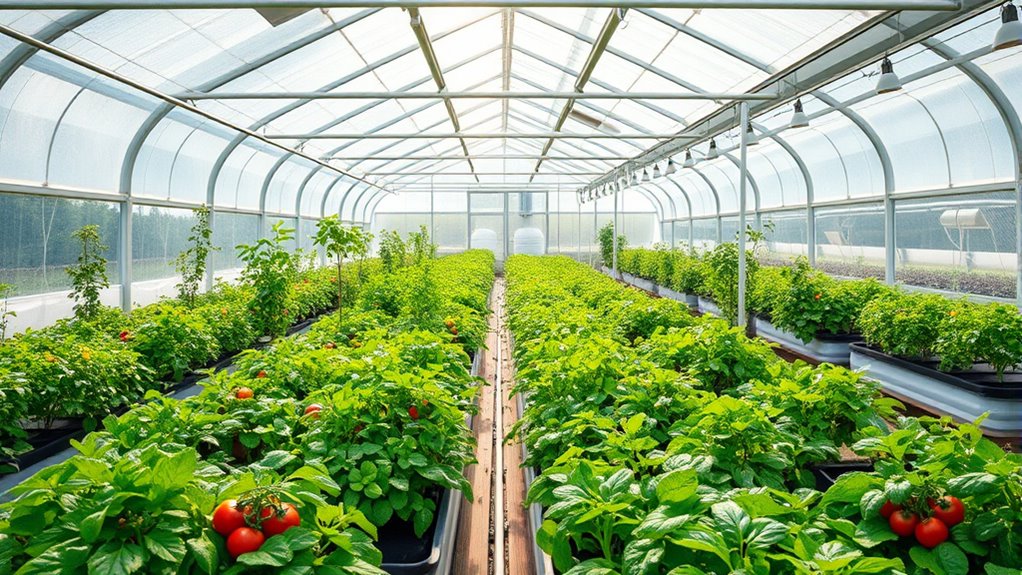
Greenhouse gardening offers a promising opportunity to extend growing seasons and increase crop yields, but understanding its economics is essential before making an investment. One of the first steps you should take is conducting a thorough cost-benefit analysis. This involves weighing the initial costs, ongoing expenses, and potential revenue against the benefits of year-round production and higher-quality crops. By carefully evaluating the costs—such as greenhouse construction, heating, cooling, lighting, and maintenance—you can determine whether your investment will be financially feasible. On the other hand, the benefits include increased market demand for fresh, locally grown produce and the ability to sell out of season, commanding higher prices. Comparing these factors helps you decide if the potential returns justify the upfront and operational costs.
Understanding market demand is equally critical. Before you set up your greenhouse, research what consumers are willing to buy and at what price points. If there’s high demand for organic tomatoes, salads, or herbs in your local area, you can tailor your production to meet that demand and maximize profits. Conversely, if the market is saturated or preferences are shifting away from certain crops, you might need to adjust your plans or diversify your offerings. Knowing your target market‘s needs ensures that your greenhouse operation is aligned with consumer preferences, reducing the risk of excess inventory and financial losses.
Research local demand to optimize crop choices and maximize greenhouse profitability.
When evaluating costs and benefits, consider not just the financial aspects but also the resource savings greenhouse gardening can offer. For example, using efficient irrigation systems and renewable energy sources can lower operational expenses over time. These investments often pay off through reduced water use and energy bills, further improving your overall profitability. Additionally, controlled environments can minimize crop losses caused by pests, diseases, or unpredictable weather, providing more consistent yields and income. Incorporating hydraulics and water management principles can optimize water use efficiency and crop health, leading to cost savings.
It’s also important to analyze the potential for scaling your operation based on market demand. Starting small allows you to test the waters and adapt your business model without overextending your resources. As you gain experience and better understand your market, you can expand gradually, ensuring that your costs remain manageable relative to the revenue you generate. This strategic approach helps you optimize your investment and avoid costly mistakes.
Frequently Asked Questions
What Are the Initial Costs to Start a Greenhouse Garden?
The initial costs to start a greenhouse garden vary, but you should plan for a thorough cost analysis and budget planning. Expect expenses for the greenhouse structure, which can range from a few hundred to several thousand dollars, depending on size and materials. You’ll also need to budget for heating, lighting, ventilation, soil, and initial plant purchases. Investing wisely at this stage helps guarantee your greenhouse garden is both cost-effective and productive.
How Can I Reduce Energy Consumption in My Greenhouse?
Like a knight guarding a castle, you should optimize your greenhouse’s energy use. Switch to solar heating to harness free, renewable energy, and install energy-efficient LED lighting to reduce power consumption. Proper insulation and ventilation further cut down energy waste. These steps help you save money and resources, making your greenhouse more sustainable and resilient—just like a well-fortified fortress standing strong against the test of time.
What Are the Best Plants for Cost-Effective Greenhouse Gardening?
You should focus on cost-efficient crops like herbs, lettuce, and radishes, which grow quickly and require minimal resources. Select plants with high yields per square foot, and prioritize hardy varieties suited to your greenhouse conditions. Proper plant selection helps you maximize your space and minimize expenses. By choosing these cost-effective crops, you’ll enjoy steady harvests while keeping your gardening budget manageable and reducing resource use.
How Does Greenhouse Size Impact Overall Savings?
Greenhouse size directly affects your overall savings through greenhouse scalability and space optimization. A larger greenhouse lets you grow more plants efficiently, spreading costs over a bigger yield and reducing per-unit expenses. However, if you choose a size that’s too big for your needs, it can increase maintenance and energy costs. Carefully plan your space to maximize productivity, balancing size with your budget to achieve ideal savings.
Are There Government Grants for Green Greenhouse Projects?
You might be surprised, but yes, there are government grants available for green greenhouse projects. These grants aim to support sustainable initiatives and green project funding. You should check with local, state, or federal agencies that promote environmental innovation. Applying for these programs can help cover costs, making your greenhouse project more affordable and environmentally friendly. Keep an eye on deadlines and eligibility criteria to maximize your chances of securing funding.
Conclusion
By embracing greenhouse gardening, you turn your backyard into a thriving oasis of sustainability and savings. It’s not just about growing food; it’s about cultivating your future—an investment that blooms with every season. As you harness resources wisely, you’ll find that the true wealth lies in your newfound mastery over nature’s bounty. So, why wait? Step into the greenhouse and let your eco-conscious journey blossom—because, after all, a garden isn’t just a place to grow; it’s a promise to the planet.