
The best October lawn care products depend on whether your lawn needs nutrients, weed control, or help with a specific problem. I’d put Sunday Green Machine forward as the best overall fertilizer option for its broad fall-feeding role, while Spectracide Weed Stop stands out for ready-to-spray lawn weed control and Scotts DiseaseEx for disease-focused care. The main tradeoff is choosing a targeted treatment or a multi-action product rather than applying overlapping products your lawn may not need. October timing also matters: grass type, local weather, and product directions affect what is suitable. Read on for how the 11 options compare and which needs each one fits.

Get garden gear delivered free with Prime
- Fast, free delivery on millions of items
- Prime Video, Amazon Music and more included
- Member-only deals all year
Complete the kit


Key Takeaways
- Fall feeding is not one-size-fits-all: the 16-4-8, 3-18-18, and 28-0-0 fertilizers offer different nutrient balances, so choosing by lawn need matters more than choosing by season alone.
- Sunday Green Machine is the broadest fertilizer-led pick: it offers a practical starting point for buyers seeking liquid lawn nutrition, while the paired Kickstart and Green Machine option suits shoppers who want a two-product approach.
- Weed control products are not interchangeable: Spectracide Weed Stop targets lawn weeds, Drive XLR8 is specifically a crabgrass herbicide, and Scotts Plus 2 combines lawn food with weed control.
- Multi-action formulas trade simplicity for specificity: Scotts Southern Triple Action combines fertilizer, weed killer, and fire ant control, but its regional focus makes it less suitable as a default choice for every lawn.
- October treatment should follow the lawn’s condition: DiseaseEx addresses a different problem from fertilizer or herbicide, so a visible disease concern calls for a targeted choice rather than extra feeding or weed treatment.
| Simple Lawn Solutions 16-4-8 Balanced NPK Liquid Lawn Fertilizer, 32 oz |  | Best October All-Purpose Fertilizer | NPK ratio: 16-4-8 | Nitrogen: 16% | Phosphorus: 4% | VIEW LATEST PRICE | See Our Full Breakdown |
| Simple Lawn Solutions 3-18-18 Liquid Lawn Fertilizer, 32 fl oz | 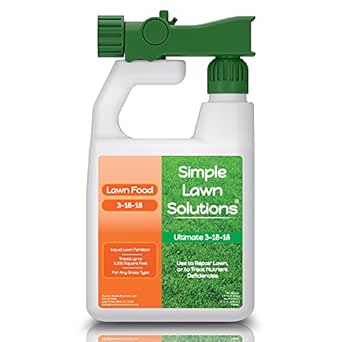 | Best for Root-Focused Fall Feeding | NPK ratio: 3-18-18 | Nitrogen: 3% | Phosphorus: 18% | VIEW LATEST PRICE | See Our Full Breakdown |
| Sunday Green Machine Liquid Lawn Fertilizer, 2-Pack, Covers 10,000 Sq. Ft. |  | Best for Broad-Area Greening | NPK ratio: 22-0-3 | Pack size: 2 bottles | Bottle size: 42.3 oz each | VIEW LATEST PRICE | See Our Full Breakdown |
| Spectracide Weed Stop for Lawns Ready-to-Spray Concentrate, 32 oz | 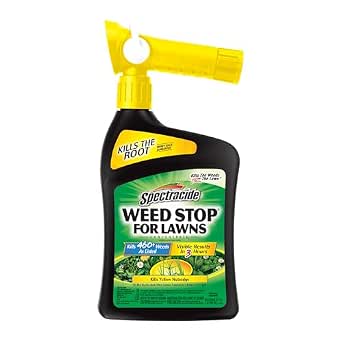 | Best for Visible Fall Weed Control | Volume: 32 fl oz | Coverage: Up to 8,000 sq ft | Form: Liquid | VIEW LATEST PRICE | See Our Full Breakdown |
| Scotts DiseaseEx Lawn Fungicide, 10 lb |  | Best for Fall Lawn Disease Protection | Weight: 10 lb | Coverage: Up to 5,000 sq ft | Diseases controlled: 26 listed lawn diseases | VIEW LATEST PRICE | See Our Full Breakdown |
| Sunday Lawn Kickstart and Green Machine Liquid Lawn Fertilizer, 2-Pack |  | Best Two-Stage Feeding Plan | Brand: Sunday | Items: 2 | Formula: Kickstart 22-0-2; Green Machine 22-0-3 | VIEW LATEST PRICE | See Our Full Breakdown |
| Scotts Turf Builder Southern Triple Action Lawn Fertilizer, Weed Killer, and Fire Ant Control, 13.32 lb |  | Best for Southern Lawns with Multiple Problems | Brand: Scotts | Weight: 13.32 lb | Item form: Granule | VIEW LATEST PRICE | See Our Full Breakdown |
| Simple Lawn Solutions Maximum Green & Growth 28-0-0 Liquid Lawn Fertilizer, 1 Quart |  | Best for Nitrogen-Hungry Grass | NPK ratio: 28-0-0 | Nitrogen blend: 70% quick-release, 30% slow-release | Volume: 32 fluid ounces (1 quart) | VIEW LATEST PRICE | See Our Full Breakdown |
| Scotts Liquid Green Max Lawn Food, 32 oz |  | Best for a Fast Color Boost | Brand: Scotts | Product type: Liquid lawn fertilizer and iron supplement | Application method: Spray | VIEW LATEST PRICE | See Our Full Breakdown |
| BASF Drive XLR8 Crabgrass Herbicide Concentrate, 64 oz |  | Best for Targeted Crabgrass Control | Brand: BASF | Active ingredient: Quinclorac 18.92% | Form: Liquid concentrate | VIEW LATEST PRICE | See Our Full Breakdown |
| Scotts Liquid Turf Builder with Plus 2 Weed Control, 32 fl. oz. |  | Best October Pick for Feeding and Broadleaf Weed Control | Brand: Scotts | Liquid volume: 32 fluid ounces | Item form: Spray | VIEW LATEST PRICE | See Our Full Breakdown |
| October lawn care product | Coverage |
|---|---|
| Simple Lawn Solutions 16-4-8 B | — |
| Simple Lawn Solutions 3-18-18 | Up to 3,200 sq ft |
| Sunday Green Machine Liquid La | Up to 10,000 sq ft |
| Spectracide Weed Stop for Lawn | Up to 8,000 sq ft |
| Scotts DiseaseEx Lawn Fungicid | Up to 5,000 sq ft |
| Sunday Lawn Kickstart and Gree | 10,000 sq ft |
| Scotts Turf Builder Southern T | 4,000 sq. ft. |
| Simple Lawn Solutions Maximum | Up to 3,200 square feet with hose-end sprayer |
| Scotts Liquid Green Max Lawn F | Up to 2,000 sq. ft. |
| BASF Drive XLR8 Crabgrass Herb | — |
| Scotts Liquid Turf Builder wit | Up to 6,000 sq. ft. for warm-season lawns; up to 4,000 sq. ft. for cool-season lawns |
More Details on Our Top Picks
Simple Lawn Solutions 16-4-8 Balanced NPK Liquid Lawn Fertilizer, 32 oz
For October lawns that are still actively growing, this 16-4-8 blend offers a broader nutrient mix than Sunday Green Machine, which emphasizes nitrogen and potassium with no phosphorus. That balance makes it a flexible pick for buyers seeking general feeding rather than a specialized root-focused treatment. Seaweed and fish emulsion add to the formula, and the listed grass range spans warm- and cool-season varieties, giving mixed-grass households more flexibility. Its ready-to-use sprayer also avoids separate mixing equipment. The tradeoff is that October timing depends on local conditions: it suits turf that is still growing, not dormant grass. The supplied details do not give an application rate, and watering is needed to help nutrients absorb, so I would choose a product with clearer instructions if precise coverage guidance is my priority.
Pros:- 16-4-8 blend supplies nitrogen, phosphorus, and potassium
- Includes seaweed and fish emulsion
- Listed for a broad range of warm- and cool-season grasses
- Ready-to-use sprayer simplifies application
Cons:- Grass needs sufficient watering to help nutrients absorb
- Supplied details do not state an application rate
- Best suited to actively growing turf, so timing may not fit dormant lawns
Best for: Homeowners with actively growing October turf who want one liquid fertilizer suited to several listed grass types.
Not ideal for: People seeking a targeted high-potassium root-support formula or clear application-rate guidance from the supplied product details.
- NPK ratio:16-4-8
- Nitrogen:16%
- Phosphorus:4%
- Potassium:8%
- Volume:31.9 fl oz
- Additional ingredients:Seaweed and fish emulsion
- Grass types:Bermuda, St. Augustine, Zoysia, Buffalo, Centipede, Florida Palmetto, Bahia, Fescue, Ryegrass, and Kentucky Bluegrass
- Country of manufacture:United States
Our verdict“Choose this for broad, straightforward feeding of actively growing October grass; pick Sunday Green Machine instead if broad-area coverage is your main concern.”
Simple Lawn Solutions 3-18-18 Liquid Lawn Fertilizer, 32 fl oz
This formula is the most root-oriented fertilizer in this group: its 3-18-18 NPK blend supplies far more phosphorus and potassium than nitrogen. That makes it a different choice from Simple Lawn Solutions 16-4-8, which provides a more balanced feeding, and Sunday Green Machine, which is built around a stronger nitrogen share for greener growth. In October, this pick makes more sense for actively growing turf when a buyer specifically wants the listed root-development and vigor support—not as a replacement for a regular fertilizer program. The hose-end sprayer and stated coverage of up to 3,200 square feet make application approachable, though that area is more limited than Sunday Green Machine’s stated coverage. Skip it if the lawn is dormant or if you want a single, complete routine fertilizer rather than a supplemental product.
Pros:- High 18% phosphorus and 18% potassium content
- Hose-end sprayer makes application straightforward
- Covers up to 3,200 square feet
- Listed for several common warm- and cool-season grasses
Cons:- Intended for actively growing turf
- Product details recommend using it alongside a regular lawn fertilizer program
- Coverage is lower than Sunday Green Machine’s stated 10,000 square feet
Best for: Lawn owners with actively growing turf who want a hose-end liquid with a high-phosphorus, high-potassium profile for root and vigor support.
Not ideal for: People with dormant October lawns, larger areas needing fewer bottles, or buyers seeking a stand-alone regular fertilizer program.
- NPK ratio:3-18-18
- Nitrogen:3%
- Phosphorus:18%
- Potassium:18%
- Volume:32 fl oz
- Coverage:Up to 3,200 sq ft
- Application method:Hose-end sprayer
- Suitable grass types:Bermuda, St. Augustine, Zoysia, Buffalo, Centipede, Palmetto, and Bluegrass
Our verdict“Pick this as a supplemental, root-focused feed for actively growing turf, not as your only October fertilizer.”
Sunday Green Machine Liquid Lawn Fertilizer, 2-Pack, Covers 10,000 Sq. Ft.
For a larger lawn that is still growing in October, Sunday Green Machine’s standout advantage is its stated 10,000-square-foot coverage across a two-bottle pack. Its 22-0-3 formula, with nitrogen, seaweed, iron, and potassium, is aimed more at green growth than the root-heavy Simple Lawn Solutions 3-18-18. That difference helps clarify the choice: Green Machine suits buyers seeking broad-area color and recurring feeding, while the 3-18-18 is the more specialized supplemental option. The hose-end setup keeps application simple, but the recommended repeat schedule of every four to six weeks during active growth means this is not a one-and-done October treatment. The supplied listing also gives two slightly different total-volume figures, so I would not rely on it for exact combined volume.
Pros:- Stated coverage of up to 10,000 square feet
- Two-bottle pack includes a hose-end sprayer
- Nitrogen, iron, seaweed, and potassium support the listed greening and rooting goals
- Application interval is specified for active growth
Cons:- Requires repeat applications every four to six weeks during active growth
- No phosphorus in the 22-0-3 formula
- Listing gives conflicting total-volume figures
Best for: Owners of larger, actively growing lawns who want hose-end application and a nitrogen-forward formula for greener turf.
Not ideal for: People with dormant grass, buyers seeking a phosphorus-containing formula, or anyone wanting a single seasonal application.
- NPK ratio:22-0-3
- Pack size:2 bottles
- Bottle size:42.3 oz each
- Coverage:Up to 10,000 sq ft
- Key ingredients:Nitrogen, seaweed, iron, and potassium
- Application method:Hose-end sprayer
- Recommended interval:Every 4 to 6 weeks during active growth
- Item form:Liquid
Our verdict“Choose Green Machine for convenient feeding across a large, actively growing lawn; select Simple Lawn Solutions 16-4-8 for a more balanced nutrient blend.”
Spectracide Weed Stop for Lawns Ready-to-Spray Concentrate, 32 oz
When October’s problem is broadleaf weeds rather than a need for feeding, Spectracide fills a role none of the fertilizers here can: it lists control of more than 460 weed types, including dandelion, chickweed, clover, and yellow nutsedge. The ready-to-spray hose attachment and stated coverage of 8,000 square feet make it a practical option for treating a substantial lawn without mixing a tank. Visible results may appear in as little as three hours, a faster signal than waiting for fertilizer-driven color changes. But this is a selective herbicide, not a lawn food, and correct timing matters: the product has a specified temperature range and can injure turf if misused, including zoysia emerging from dormancy. I would choose it over Scotts DiseaseEx only when weeds—not lawn disease—are the issue.
Pros:- Lists control of more than 460 weed types
- Targets weeds down to the roots
- Visible results may appear in as little as three hours
- Ready-to-spray format covers up to 8,000 square feet
Cons:- Must be applied within the specified temperature range
- Improper use can injure lawns, including zoysia emerging from dormancy
- Treats weeds rather than providing fertilizer or disease control
Best for: Homeowners targeting listed broadleaf weeds across a lawn whose grass type and weather conditions match the label directions.
Not ideal for: Anyone whose main October task is fertilizing or treating disease, or who cannot confirm the specified temperature range and grass-specific directions.
- Volume:32 fl oz
- Coverage:Up to 8,000 sq ft
- Form:Liquid
- Weed types controlled:More than 460 listed types
- Active ingredients:2,4-D, mecoprop-P, dicamba, and sulfentrazone
- Application method:Ready-to-spray garden hose attachment
- Visible results:As little as 3 hours
- Item weight:2.4 lb
Our verdict“Use Spectracide for a weed-focused October treatment when your turf and weather meet the label directions; choose Scotts DiseaseEx for disease concerns instead.”
Scotts DiseaseEx Lawn Fungicide, 10 lb
Scotts DiseaseEx earns its place for a different October job from the fertilizers and weed killer in this lineup: it is designed to prevent and control 26 listed lawn diseases, including brown patch, rust, and powdery mildew. That makes it a more relevant choice than Spectracide when turf symptoms point to disease rather than weeds, while neither product replaces routine feeding. Its up-to-four-week control and stated start within 24 hours offer a defined treatment window for lawns needing disease management. The 10-pound bag covers up to 5,000 square feet, but application requires following spreader settings and directions carefully. I would favor this granular option for buyers comfortable with spreader use; those wanting a quick hose-end application will find the liquid fertilizers simpler, although they serve different lawn-care needs.
Pros:- Prevents and controls 26 listed lawn diseases
- Includes brown patch, rust, and powdery mildew among listed targets
- Begins working within 24 hours
- Provides control for up to four weeks and covers up to 5,000 square feet
Cons:- Application requires following spreader settings and directions
- Does not provide the weed control offered by Spectracide
- Treats disease rather than supplying lawn fertilizer
Best for: Homeowners with lawns at risk of, or showing signs of, a listed disease who can apply granules using the specified spreader directions.
Not ideal for: Buyers seeking weed control, fertilizer, or a hose-end product, and anyone unwilling to follow spreader settings and label directions.
- Weight:10 lb
- Coverage:Up to 5,000 sq ft
- Diseases controlled:26 listed lawn diseases
- Active ingredient:Azoxystrobin
- Time to start working:Within 24 hours
- Control duration:Up to 4 weeks
- Suitable grass types:All grass types when used as directed
- Application:Follow spreader settings and product directions
Our verdict“Choose DiseaseEx for a disease-focused October treatment on up to 5,000 square feet if you can apply it according to spreader directions.”
Sunday Lawn Kickstart and Green Machine Liquid Lawn Fertilizer, 2-Pack
For October lawns still actively growing, this two-bottle set gives me a straightforward way to pair a growth-focused feed with ongoing maintenance. Kickstart 22-0-2 and Green Machine 22-0-3 both supply nitrogen, with iron to support greener color, and the hose-end sprayer avoids mixing granules into a spreader routine. Its listed 10,000-square-foot coverage is broader than Scotts Liquid Green Max’s 2,000-square-foot coverage, making this the better fit for larger lawns. The tradeoff is that two formulas do not make it an October-specific treatment: the label calls for applications every four to six weeks during the growing season, so timing and local temperature conditions matter. I would skip it for dormant grass or if the lawn needs targeted weed or pest control rather than fertilizer.
Pros:- Includes two formulas for feeding and ongoing lawn maintenance
- Nitrogen and iron support growth and greener color
- Hose-end sprayer simplifies application
- Listed coverage reaches 10,000 square feet
Cons:- Use is tied to the growing season and recommended temperature range
- Requires repeat applications every four to six weeks during the growing season
- Sprayer may differ from listing images
Best for: Owners of larger, actively growing lawns who want hose-end application and two liquid feeding formulas for seasonal care.
Not ideal for: People with dormant October lawns or anyone seeking a single application for weeds, insects, or disease rather than nutrient support.
- Brand:Sunday
- Items:2
- Formula:Kickstart 22-0-2; Green Machine 22-0-3
- Form:Liquid
- Application method:Hose-end sprayer
- Coverage:10,000 sq ft
- Liquid volume:84.6 fl oz
- Application interval:Every 4–6 weeks during the growing season
Our verdict“Choose this two-pack for a large lawn that is still growing in October and needs liquid feeding, not weed or pest treatment.”
Scotts Turf Builder Southern Triple Action Lawn Fertilizer, Weed Killer, and Fire Ant Control, 13.32 lb
This is the roundup’s most targeted pick for Southern grass owners dealing with more than nutrient needs: one granular treatment feeds suitable turf, controls listed weeds, and prevents and kills fire ants for up to six months. That combination separates it from Sunday Lawn Kickstart and Green Machine, which focus on liquid feeding rather than weed or pest control. Its fit is specific, though: the listed grasses are St. Augustine, Centipede, Zoysia, and Carpet, so I would not use it as a general-purpose October product for an unlisted lawn type. Immediate watering is required, and people and pets must stay off the area until watering is complete and the surface has dried. That extra step makes it less convenient than hose-end fertilizers, but the multi-target action may suit lawns with several listed issues at once.
Pros:- Combines fertilizer, listed weed control, and fire ant treatment
- Provides up to six months of fire ant prevention and control
- Treats listed pests including chinch bugs, ticks, and armyworms
- Suitable for St. Augustine, Centipede, Zoysia, and Carpet grasses
Cons:- Must be watered immediately after application
- People and pets must stay off the treated area until it is watered and dry
- Grass-type suitability is limited to the varieties listed
Best for: Southern homeowners with listed warm-season grasses who need fertilizer plus control of specified weeds and fire ants.
Not ideal for: Owners of grass types not listed on the label, or households unable to keep people and pets off the lawn through watering and drying.
- Brand:Scotts
- Weight:13.32 lb
- Item form:Granule
- Coverage:4,000 sq. ft.
- Suitable grasses:St. Augustine (including Floratam), Centipede, Zoysia, Carpet
- Fire ant control:Prevents and kills fire ants for up to 6 months
- Weeds controlled:Dollarweed, dandelion, clover, oxalis, plantain, chickweed, henbit
- Pests prevented:Armyworms, fleas, mole crickets, chinch bugs, sod webworms, ticks
Our verdict“Pick this for a qualifying Southern lawn with fire ants and listed weeds, provided you can follow the watering and re-entry directions.”
Simple Lawn Solutions Maximum Green & Growth 28-0-0 Liquid Lawn Fertilizer, 1 Quart
When an October lawn is still growing and showing signs of nitrogen deficiency, this concentrated formula offers a more direct nitrogen boost than the balanced Sunday Kickstart and Green Machine two-pack. Its 28-0-0 blend is mostly quick-release nitrogen, with a smaller slow-release portion, so it is geared toward color and growth rather than supplying a broad mix of nutrients. The 32-ounce bottle is listed to cover up to 3,200 square feet with a hose-end sprayer, and it can also be applied with several other sprayer types or a watering can. That flexibility is useful for spot or smaller-area work, but more nitrogen is not automatically better: a lawn without a deficiency may not gain the desired response. Adequate watering is also needed for nutrient absorption.
Pros:- High-nitrogen 28-0-0 formula includes quick- and slow-release nitrogen
- Works on all grass types
- Can be applied with a hose-end, backpack, or pump sprayer, or a watering can
- Listed hose-end coverage is up to 3,200 square feet
Cons:- Greening response depends on an actual nitrogen deficiency
- Requires adequate watering for nutrient absorption
- Does not provide weed or pest control
Best for: Homeowners with actively growing, nitrogen-deficient turf who want a concentrated liquid feed that can be applied with different tools.
Not ideal for: People seeking a balanced fertilizer, weed control, or a color boost without first having a lawn that needs additional nitrogen.
- NPK ratio:28-0-0
- Nitrogen blend:70% quick-release, 30% slow-release
- Volume:32 fluid ounces (1 quart)
- Coverage:Up to 3,200 square feet with hose-end sprayer
- Suitable for:All grass types; select garden and ornamental plants
- Application methods:Hose-end sprayer, backpack sprayer, pump sprayer, or watering can
- Made in:United States
Our verdict“Choose this concentrated feed when your actively growing lawn needs nitrogen; skip it if you want balanced nutrition or treatment for another problem.”
Scotts Liquid Green Max Lawn Food, 32 oz
Scotts Liquid Green Max is the color-focused choice here: its fertilizer and iron supplement are intended to deepen lawn color in as little as three days. Compared with Simple Lawn Solutions Maximum Green & Growth, which supplies a high dose of nitrogen for lawns with a deficiency, this product puts more emphasis on pairing lawn food with iron for a quick visual change. That makes it a narrower October pick, suited to actively growing turf when greener color is the goal rather than weed control or a broader repair plan. Coverage is up to 2,000 square feet per bottle, less than the 3,200 square feet listed for Simple Lawn Solutions’ concentrate. Scotts also recommends regular applications from early spring through late fall, and heavy rain in the forecast is a reason to hold off.
Pros:- Combines lawn fertilizer with an iron supplement
- Can deepen lawn color in as little as three days
- Suitable for multiple grass types
- Hose-end spray application covers up to 2,000 square feet
Cons:- Listed coverage is lower than Simple Lawn Solutions Maximum Green & Growth
- Best results call for regular applications from early spring through late fall
- Application should be avoided when heavy rain is expected
Best for: Owners of actively growing lawns who want a liquid fertilizer and iron supplement aimed at deepening color.
Not ideal for: Buyers with large areas to cover, lawns needing weed treatment, or anyone unable to follow a regular application schedule.
- Brand:Scotts
- Product type:Liquid lawn fertilizer and iron supplement
- Application method:Spray
- Coverage:Up to 2,000 sq. ft.
- Suitable for:Multiple grass types
- Liquid volume:32 fluid ounces
- Item weight:2 pounds
- Number of items:1
Our verdict“Choose Scotts Liquid Green Max for a color-focused treatment on a smaller, actively growing lawn, not as a substitute for targeted weed control.”
BASF Drive XLR8 Crabgrass Herbicide Concentrate, 64 oz
Unlike the fertilizers in this group, BASF Drive XLR8 is a weed-control concentrate, making it the specialist pick for October lawns where crabgrass or other labeled weeds are the main concern. It provides up to 30 days of residual control and becomes rainfast in less than an hour, a useful feature when application conditions are changeable. Scotts Turf Builder Southern Triple Action also controls listed weeds, but bundles that job with fertilizer and fire ant treatment for a narrower set of Southern grasses; Drive XLR8 is labeled for warm- and cool-season turf instead. The tradeoff is a more involved application: this concentrate must be mixed and applied according to its label, and state restrictions or protective equipment requirements may apply. It will not feed the lawn or solve nutrient-related color issues.
Pros:- Controls crabgrass and other grassy and broadleaf weeds
- Provides up to 30 days of residual control
- Becomes rainfast in less than an hour
- Labeled for warm-season and cool-season turf
Cons:- Requires careful mixing and application according to the label
- State restrictions may apply
- Protective equipment requirements may apply
Best for: Homeowners or turf managers with labeled warm- or cool-season turf who need targeted crabgrass and other weed control.
Not ideal for: Buyers looking for fertilizer, a ready-to-use spray, or a simple treatment without mixing and label-specific safety steps.
- Brand:BASF
- Active ingredient:Quinclorac 18.92%
- Form:Liquid concentrate
- Liquid volume:64 fl oz
- Item weight:4.2 lb
- Residual control:Up to 30 days
- Rainfast:Less than 1 hour
- Pack quantity:1 bottle
Our verdict“Choose Drive XLR8 when weed control is the priority and you can follow the concentrate’s mixing, safety, and local-use directions.”
Scotts Liquid Turf Builder with Plus 2 Weed Control, 32 fl. oz.
For an October lawn that needs both a nitrogen boost and help with broadleaf weeds, Scotts Liquid Turf Builder with Plus 2 Weed Control combines those jobs in one hose-end application. Its 25-0-2 formula supplies nitrogen without adding phosphorus, while targeting listed weeds such as dandelions and clover. That makes it more of a targeted cleanup option than Simple Lawn Solutions 16-4-8 Balanced NPK Liquid Lawn Fertilizer, which provides a more balanced nutrient blend but does not combine fertilizer with weed control. The ready-to-spray applicator keeps mixing simple, though coverage differs by lawn type: up to 6,000 square feet on warm-season lawns and 4,000 on cool-season lawns. The October limitation is timing: it works best on actively growing weeds and needs 48 hours without watering, so it is a poor fit for dormant turf or a forecast that brings rain soon.
Pros:- Combines nitrogen feeding with control of listed broadleaf weeds, including dandelions and clover.
- Hose-end spray applicator avoids separate mixing equipment.
- Covers up to 6,000 square feet on warm-season lawns.
- 25-0-2 formula adds nitrogen and potassium without phosphorus.
Cons:- Coverage falls to up to 4,000 square feet on cool-season lawns.
- Works best only when weeds are actively growing, limiting usefulness on dormant October turf.
- Requires 48 hours without watering, so application depends on suitable weather and lawn-care timing.
Best for: Homeowners with actively growing warm-season turf who want to feed the lawn and treat listed broadleaf weeds in one hose-end application.
Not ideal for: Owners of dormant or stressed lawns, cool-season lawns needing wider coverage, or anyone unable to keep the treated area dry for 48 hours.
- Brand:Scotts
- Liquid volume:32 fluid ounces
- Item form:Spray
- Coverage:Up to 6,000 sq. ft. for warm-season lawns; up to 4,000 sq. ft. for cool-season lawns
- NPK:25-0-2
- Applicator:Hose-end
- Active ingredient:Nitrogen
- Item weight:8 ounces
Our verdict“Choose this for actively growing warm-season lawns with broadleaf weeds when you want fertilizer and weed control in one spray and can keep the lawn dry for 48 hours.”

How We Picked
I compared these 11 products by the job they are designed to do, how clearly their formats and stated coverage support a homeowner’s routine, and how much flexibility they leave when a lawn needs only one kind of treatment. Fertilizers were judged by the distinction in their listed nutrient formulas and whether a liquid, granular, or bundled option makes more sense for different routines. Weed and disease products were assessed as targeted tools, not substitutes for general feeding.
The ranking favors useful October roles and clear fit over the number of claims on a label. Products with a focused purpose rank well when that purpose is easy to identify, while combination formulas earn a place for convenience but lose ground when their added functions may not match a buyer’s lawn or region. I also weighed the need to follow label directions, including timing, grass compatibility, application conditions, and any restrictions; a product’s seasonal usefulness depends on those details, not the calendar alone.
Factors to Consider When Choosing Best October Lawn Care Products
Before choosing an October treatment, I’d start with the lawn’s actual condition and the grass type rather than buying a general fall-care bundle. These decisions help avoid mismatched applications and make it easier to compare products with different jobs.
Match the Treatment to the Problem
Separate feeding from pest, weed, and disease control before shopping. Yellowing or thin growth does not automatically mean the lawn needs fertilizer; drought stress, poor drainage, disease, or seasonal dormancy can look similar. A weed treatment will not address nutrient needs, and a fertilizer will not resolve a disease problem. Walk the yard and identify whether the issue is widespread or limited to patches. Treating only the affected area may reduce unnecessary chemical use, but only when the label allows spot application. When the cause is unclear, identify it before applying multiple products.
Check Grass Type and Local October Conditions
October means different things for cool-season and warm-season lawns, and local temperatures can shift the timing further. Some grasses are actively growing while others are slowing down or entering dormancy, which affects how they respond to feeding and herbicide treatments. Read the label for approved grass species, temperature limits, and seasonal directions before applying anything. Avoid assuming a product is suitable just because it is marketed for lawns. Regional product claims, such as a formulation designed for southern lawns, should be matched to the yard’s location and grass. Local extension guidance can help when the lawn’s species or seasonal condition is uncertain.
Choose Nutrient Balance for a Reason
Fertilizer numbers describe the relative amounts of nitrogen, phosphorus, and potassium, but a higher number does not automatically mean a better October choice. Nitrogen supports leafy growth, while phosphorus and potassium have different roles; local soil conditions and lawn needs determine which balance makes sense. Applying phosphorus without a need may be restricted in some areas, so check local rules and soil-test guidance. Avoid stacking two fertilizers simply because both are labeled for fall. Compare the intended use, application instructions, and coverage so you can pick one plan rather than layering products without a clear purpose.
Decide Whether Convenience Is Worth the Compromise
Ready-to-spray liquids can simplify mixing and application, while concentrates may require careful measuring and a compatible sprayer. Granular products use different equipment and may be easier for some yards to apply evenly, but they still need the correct spreader settings and watering instructions. Combination products reduce the number of separate applications only when every included function is needed. If you need fertilizer but have no fire ant issue, for example, a multi-action formula may add little value and may narrow the product’s fit. Choose the format you can apply consistently and safely, not the one with the most features.
Plan Applications Around Weather and Label Limits
Rain, wind, heat, and irrigation can affect application results and the chance of product moving beyond the target area. Check whether the label calls for dry foliage, a rain-free period, watering in, or other timing conditions. Herbicides may have restrictions around mowing, reseeding, or treating stressed grass, so do not assume they can be applied alongside every fall task. Keep children and pets away for the period specified on the label. If weather changes after application, follow the label rather than repeating a treatment by guesswork. A well-timed single application is preferable to adding another dose without checking directions.
Use Coverage and Storage to Avoid Waste
Match the package coverage to the area you actually plan to treat, not just the total property size. A broad-coverage bundle may be convenient for a larger lawn, while a smaller container can make more sense for spot treatments or a compact yard. Measure the treatment area before buying and follow the label’s application rate; using extra product does not guarantee better results. Check storage directions and whether an opened container can be kept safely for later use. Also account for the equipment needed, since a concentrate may require a sprayer that a ready-to-spray bottle does not. These practical details can matter as much as the product category.
Frequently Asked Questions
Should I fertilize my lawn in October or use a weed-control product?
Choose based on what the lawn needs, not on the month alone. If the lawn is actively growing and calls for nutrition, compare the fertilizer formula with your grass type and local guidance. If broadleaf weeds or crabgrass are the problem, a suitable herbicide is a separate tool and may have specific temperature or growth-stage limits. Some products combine feeding and weed control, but that only helps when both jobs are appropriate at the same time. Check the label before combining applications or treating stressed grass.
Can I apply fertilizer and herbicide to my lawn in the same October treatment?
Sometimes a labeled combination product is intended to handle both jobs, but separate products should not be mixed or applied together unless their directions permit it. The ingredients may have different timing, watering, or weather requirements, and applying them at once can make it harder to follow each set of instructions. Confirm that both treatments suit your grass species and current lawn condition. Pay attention to restrictions around mowing, reseeding, and irrigation. When directions conflict or are unclear, space applications as the labels specify rather than improvising.
Is a liquid or granular lawn product easier to use in October?
Neither format is automatically easier for every yard. Ready-to-spray liquid products can simplify application, but coverage depends on following the directions and applying evenly. Concentrates may need measuring and a compatible sprayer, while granular products call for a spreader and careful calibration. Yard size, access to equipment, and whether you are treating the whole lawn or a small area should guide the choice. Review watering and weather instructions too, since those can affect how much coordination the application takes.
Should I use a combination product if I have only one lawn problem?
Usually, a targeted product is the clearer fit when you need only one treatment. Combination formulas can reduce the number of separate applications when their included functions match your needs, but unused features may add complexity without helping the lawn. For example, a fertilizer-and-weed-control product is not automatically preferable if weeds are absent or the lawn does not need feeding. Check all included active purposes against the conditions in your yard and the label’s approved uses. Avoid applying an ingredient simply because it comes in the same bag or bottle.
What should I do if I am not sure whether a lawn patch has disease, weeds, or nutrient stress?
Hold off on treating the patch with several products at once. Note the shape and spread of the affected area, inspect the grass blades and surrounding soil, and check whether the symptoms follow mowing, watering, or recent weather. A soil test can help identify nutrient issues, while local extension services can often help with grass and disease identification. Once you know the likely cause, choose a product labeled for that problem and compatible with your grass. This approach reduces the risk of applying an unnecessary treatment that could stress the lawn further.
Conclusion
For a broadly useful fertilizer-led starting point, I’d choose Sunday Green Machine as the best overall pick in this lineup. Buyers focused on a two-part feeding approach can compare Sunday Lawn Kickstart and Green Machine, while the Simple Lawn Solutions formulas give shoppers distinct nutrient balances to match against lawn needs; the best value depends on coverage and whether the formula fits your yard, not on package size alone. For beginners, I’d favor a clearly targeted ready-to-spray option such as Spectracide Weed Stop when lawn weeds are the specific problem, and skip it if the lawn needs feeding instead. Choose Scotts DiseaseEx for disease-focused needs, Drive XLR8 for crabgrass when its label fits, and Scotts Southern Triple Action only when its combined functions and regional fit suit your lawn. For a premium-style, all-in-one approach, the Southern Triple Action formula offers the broadest set of listed functions, but it is not the right default for every yard; match the product to the problem and label before applying.