The best homesteading supplies help turn everyday work into practical skills, whether you are preserving food, planning a garden, or caring for poultry. My best overall pick is The Backyard Homestead, a broad starting point for readers building a self-reliant routine; the Supa Ant Stainless Steel Canning Starter Kit stands out for hands-on food preservation, while the Backyard Homestead Seasonal Planner helps organize work across the year. The main tradeoff is between versatile references that build knowledge and focused tools that solve one immediate task. Some options suit beginners, while others make more sense once you have animals, a garden, or workshop projects underway. Read on for the full breakdown and help matching each pick to your homestead.

Get garden gear delivered free with Prime
- Fast, free delivery on millions of items
- Prime Video, Amazon Music and more included
- Member-only deals all year
Complete the kit


Key Takeaways
- The Backyard Homestead earns the broadest role in this lineup because it covers multiple parts of homestead planning, while the canning kit and poultry tools address narrower jobs.
- The Seasonal Planner offers practical timing support; it complements general reference books rather than replacing them.
- Food preservation is the most task-ready area represented: the Supa Ant canning kit gives readers a defined project, but safe canning still requires suitable instructions and process control.
- The poultry picks solve different workflow problems: the telescoping egg grabber helps with reach, the compartment basket helps separate eggs, and the date stamp supports tracking.
- Several books focus on preparedness or traditional ingenuity, so their value depends on whether you want crisis planning, broad skill-building, or labor-saving project ideas.
| Supa Ant Stainless Steel Canning Starter Kit |  | Best for Canning and Pickling | Material: Food-grade stainless steel | Included tools: Wide-mouth funnel, magnetic lid lifter, bubble popper/measurer, jar lifter, jar wrench, pickle tongs | Labels: Canning labels included | VIEW LATEST PRICE | See Our Full Breakdown |
| The Backyard Homestead Book of Building Projects |  | Best for DIY Homestead Infrastructure | Project count: 76 | Project areas: Workspaces, storage, garden equipment, harvest storage, animal housing, outdoor furniture | Product type: Building project guide | VIEW LATEST PRICE | See Our Full Breakdown |
| 36-Variety Medicinal Herb Seed Pack for Herbal Tea Gardens |  | Best for Herb Garden Variety | Varieties: 36 | Net weight per variety: 2 g | Seed type: Non-GMO | VIEW LATEST PRICE | See Our Full Breakdown |
| The Prepper’s Survival Bible: A Complete Guide to Preparing for Crises and Disasters |  | Best for Emergency Readiness | Topics: Emergency preparedness, bug-in and bug-out planning, food and water preparation, off-grid living, homesteading, urban survival, bushcraft | Product type: Preparedness guide | ASIN: B0DLH2HLKL | VIEW LATEST PRICE | See Our Full Breakdown |
| The Backyard Homestead Seasonal Planner: What to Do and When in the Garden, Orchard, Barn, Pasture, and Equipment Shed | 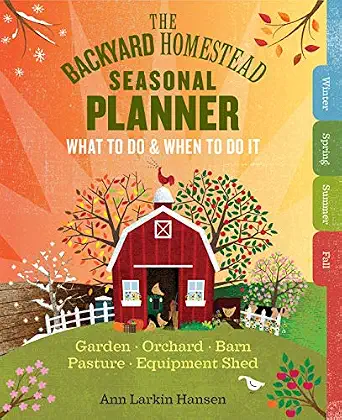 | Best for Year-Round Task Planning | Format: Book | Planning structure: Seasonal | Areas covered: Garden, orchard, barn, pasture, equipment shed | VIEW LATEST PRICE | See Our Full Breakdown |
| Back to Basics: A Complete Guide to Traditional Skills |  | Best for Traditional Skills | Title: Back to Basics: A Complete Guide to Traditional Skills | ASIN: 1629143693 | Product type: Guide | VIEW LATEST PRICE | See Our Full Breakdown |
| The Backyard Homestead |  | Best for Small-Space Food Production | Title: The Backyard Homestead | ASIN: 1603421386 | Subtitle: Produce all the food you need on just a quarter acre | VIEW LATEST PRICE | See Our Full Breakdown |
| No Grid Survival Projects |  | Best for Off-Grid Projects | Title: No Grid Survival Projects | ASIN: 173548153X | Product type: Not provided | VIEW LATEST PRICE | See Our Full Breakdown |
| Telescoping Egg Grabber Reacher Tool |  | Best for Deep or Hard-to-Reach Nest Boxes | Adjustable length: 15–78 inches | Rod material: Stainless steel | Scoop material: ABS plastic | VIEW LATEST PRICE | See Our Full Breakdown |
| 7-Compartment Egg Collecting Basket for Jumbo Poultry Eggs |  | Best for Carrying Jumbo Eggs | Brand: NOVYQREN | Capacity: Up to 7 jumbo eggs | Compartments: 7 | VIEW LATEST PRICE | See Our Full Breakdown |
| Egg Date Stamp Kit for Fresh Eggs |  | Best for Egg Handling and Storage | Brand: Generic | Model: Kallisya007 | Date format: Month/day | VIEW LATEST PRICE | See Our Full Breakdown |
| The Backyard Homestead Guide to Raising Farm Animals |  | Best for Small-Space Livestock Planning | ASIN: 1603429697 | Topics: Small-space farming, animal breeds, grass-fed meat | Animals covered: Rabbits, goats, sheep, pigs, cattle, and bees | VIEW LATEST PRICE | See Our Full Breakdown |
| Homemade Contrivances and How to Make Them: 1001 Labor-Saving Devices for Farm, Garden, Dairy, and Workshop |  | Best for DIY Labor-Saving Ideas | ASIN: 1602390185 | Stated project count: 1001 labor-saving devices | Application areas: Farm, garden, dairy, and workshop | VIEW LATEST PRICE | See Our Full Breakdown |
| homesteading supplie | ASIN |
|---|---|
| Supa Ant Stainless Steel Canni | — |
| The Backyard Homestead Book of | 1612120857 |
| 36-Variety Medicinal Herb Seed | — |
| The Prepper’s Survival Bible: | B0DLH2HLKL |
| The Backyard Homestead Seasona | 1612126979 |
| Back to Basics: A Complete Gui | 1629143693 |
| The Backyard Homestead | 1603421386 |
| No Grid Survival Projects | 173548153X |
| Telescoping Egg Grabber Reache | — |
| 7-Compartment Egg Collecting B | — |
| Egg Date Stamp Kit for Fresh E | — |
| The Backyard Homestead Guide t | 1603429697 |
| Homemade Contrivances and How | 1602390185 |
More Details on Our Top Picks
Supa Ant Stainless Steel Canning Starter Kit
The Supa Ant Stainless Steel Canning Starter Kit earns its place for homesteaders who preserve seasonal harvests and want several purpose-built tools in one set. Its stainless steel funnel, jar lifter, lid lifter, and bubble measurer cover common canning steps, while pickle tongs add a useful extra for packing jars. Compared with The Backyard Homestead Book of Building Projects, which helps readers make equipment and storage projects, this kit is a ready-to-use set for food preservation. The tradeoff is that its focus is narrow: it does not help with growing, planning, or building, and the fluorescent green color may not suit every kitchen. Dishwasher-safe tools and a storage box make it easier to clean and keep together between batches, though no dimensions are provided to gauge storage needs.
Pros:- Includes tools for lifting jars and lids, filling jars, and packing pickles
- Food-grade stainless steel is suited to high temperatures and acidic foods
- Dishwasher safe for easier cleanup after preserving
- Storage box and canning labels help keep tools and batches organized
Cons:- Focused on canning, so it offers little value for other homestead tasks
- Fluorescent green color may not fit every kitchen
- No dimensions or weight are provided to assess storage and handling
Best for: Home canners who preserve garden produce and want a coordinated set of jar-handling tools.
Not ideal for: Homesteaders looking for multipurpose farm supplies or who have limited drawer space and need dimensions before buying.
- Material:Food-grade stainless steel
- Included tools:Wide-mouth funnel, magnetic lid lifter, bubble popper/measurer, jar lifter, jar wrench, pickle tongs
- Labels:Canning labels included
- Storage:Storage box
- Care:Dishwasher safe
- Color:Fluorescent green
- Assembly:Assembled in the USA
Our verdict“Choose this kit if canning is a regular part of your harvest routine and you want the main jar-handling tools together.”
The Backyard Homestead Book of Building Projects
The Backyard Homestead Book of Building Projects is the most hands-on planning resource in this group for readers ready to make practical improvements around their property. Its 76 projects span workspaces, storage, garden equipment, harvest storage, animal housing, and outdoor furniture, giving it a broader build focus than the Supa Ant Stainless Steel Canning Starter Kit, which equips one preservation task. That range can help a reader identify projects across several parts of a small homestead rather than buying a single-purpose tool. The tradeoff is that a project guide requires time, materials, and building ability; it does not provide the immediate utility of a finished supply or a seasonal schedule like The Backyard Homestead Seasonal Planner. The supplied product data gives no detail about project difficulty, required tools, or construction plans, so buyers should not assume every project fits their setup.
Pros:- Includes 76 building projects
- Covers storage, workspaces, garden equipment, and harvest storage
- Includes animal housing projects for small-scale livestock setups
- Outdoor furniture projects extend its use beyond production tasks
Cons:- Projects require time, materials, and suitable building skills
- Available product details do not specify project difficulty or required tools
- It offers project guidance rather than ready-to-use homestead supplies
Best for: DIY-minded backyard homesteaders who want project ideas for storage, garden infrastructure, or animal housing.
Not ideal for: Readers seeking ready-to-use equipment or detailed assurances about project skill level and materials.
- Project count:76
- Project areas:Workspaces, storage, garden equipment, harvest storage, animal housing, outdoor furniture
- Product type:Building project guide
- ASIN:1612120857
- Format:Book
- Intended setting:Backyard homestead
Our verdict“Pick this book if you want a wide menu of build-it-yourself projects and can supply the labor and materials.”
36-Variety Medicinal Herb Seed Pack for Herbal Tea Gardens
For homesteaders who want to grow a broad selection of herbs from seed, the 36-variety PLANTMEW pack offers more range than the focused task planner in The Backyard Homestead Seasonal Planner. Each variety comes with 2 g of non-GMO seeds and planting instructions, and the pack is described for indoor and outdoor use. That breadth could support tea, cooking, and varied garden projects, but it also asks the grower to manage many different plants rather than start with a small, simple herb bed. The listed full-sun exposure may rule out shaded plots or indoor spaces without enough direct light. Product data mentions a high germination rate but gives no specific rate, growing zones, or harvest timing for individual varieties, so buyers have limited information for matching the seeds to their climate and space.
Pros:- Includes 36 herb varieties for a wide range of garden experiments
- Provides 2 g of seeds per variety
- Non-GMO seeds come with planting instructions
- Listed for indoor and outdoor growing
Cons:- Full-sun requirement limits suitable growing locations
- Managing 36 varieties can be demanding for growers with little space or time
- No individual variety list, growing zones, or specific germination rate is supplied
Best for: Gardeners with a sunny growing area who want to try many herbs for tea, cooking, and garden use.
Not ideal for: Growers with mostly shaded space or beginners who prefer a small set of clearly specified plants.
- Varieties:36
- Net weight per variety:2 g
- Seed type:Non-GMO
- Growing location:Indoor and outdoor
- Sunlight exposure:Full sun
- Expected blooming period:Spring to fall
- Special feature:Described as having a high germination rate
- Brand:PLANTMEW
Our verdict“Choose this pack if you have sunny growing space and want variety more than a simple, tightly specified starter garden.”
The Prepper’s Survival Bible: A Complete Guide to Preparing for Crises and Disasters
The Prepper’s Survival Bible suits homesteaders who want their self-reliance plans to cover emergencies as well as ordinary chores. Its subject range includes food and water preparation, bug-in and bug-out planning, and off-grid living, with urban survival, bushcraft, and homesteading also covered. That makes it broader on crisis planning than The Backyard Homestead Seasonal Planner, which organizes routine work around the garden, orchard, barn, pasture, and equipment shed. The tradeoff is that this is a general preparedness guide, not a set of physical supplies or a focused manual for one homestead skill. The product details do not specify the book’s format, length, or depth on each topic, so a buyer cannot tell from the supplied information how much practical instruction each area receives. It makes most sense as a broad planning reference alongside more specialized resources.
Pros:- Covers both bug-in and bug-out planning
- Addresses food and water preparation
- Includes off-grid living, homesteading, urban survival, and bushcraft topics
Cons:- Broad subject coverage may be less focused than a dedicated gardening or building guide
- Provides guidance rather than physical emergency supplies
- Available product details do not describe length or depth of coverage
Best for: Homesteaders building household emergency plans for food, water, shelter, and possible off-grid scenarios.
Not ideal for: Buyers who need a hands-on tool, a specific homestead skill manual, or a clearly documented level of technical detail.
- Topics:Emergency preparedness, bug-in and bug-out planning, food and water preparation, off-grid living, homesteading, urban survival, bushcraft
- Product type:Preparedness guide
- ASIN:B0DLH2HLKL
- Focus:Crises and disasters
- Planning approaches:Bug-in and bug-out
- Preparedness areas:Food and water
Our verdict“Choose it as a broad emergency planning reference if you want homestead preparedness to include both household and off-grid scenarios.”
The Backyard Homestead Seasonal Planner: What to Do and When in the Garden, Orchard, Barn, Pasture, and Equipment Shed
The Backyard Homestead Seasonal Planner is the most useful pick here for readers whose challenge is coordinating recurring work across a whole property. It organizes tasks by season and covers the garden, orchard, barn, pasture, and equipment shed, connecting areas that a single-purpose option like the Supa Ant Stainless Steel Canning Starter Kit does not address. Compared with The Backyard Homestead Book of Building Projects, this planner focuses on when to do work rather than what to build. That distinction makes it a practical companion for keeping multiple areas in view, but its value depends on whether seasonal guidance fits the reader’s climate and operation. The supplied details do not include regional adaptation or examples of specific tasks, so buyers seeking a tailored calendar or step-by-step instructions may need other references too.
Pros:- Arranges homestead work by season
- Covers garden and orchard tasks alongside barn and pasture work
- Includes the equipment shed in its planning scope
- Addresses multiple parts of a homestead in one book
Cons:- No regional adaptation details are provided in the product information
- Specific tasks and level of instruction are not described
- A planner does not supply tools or project materials
Best for: Small-scale homesteaders juggling recurring work across gardens, orchards, livestock areas, and equipment.
Not ideal for: Readers who need region-specific dates, detailed how-to instruction, or a guide focused on one homestead project.
- Format:Book
- Planning structure:Seasonal
- Areas covered:Garden, orchard, barn, pasture, equipment shed
- Product type:Homestead task planner
- ASIN:1612126979
- Primary use:Organizing tasks throughout the year
Our verdict“Choose this planner if you need a seasonal framework for coordinating several homestead work areas throughout the year.”
Back to Basics: A Complete Guide to Traditional Skills
Back to Basics earns a place for readers who want a broad introduction to practical, traditional self-reliance skills. The available product information gives no chapter list or format details, so I would treat it as a general reference rather than a step-by-step plan for a specific homestead project. Compared with The Backyard Homestead, which is framed around producing food on a quarter acre, this title appears to take a wider skills-focused approach. That breadth may suit someone building a home library, but it makes it harder to judge how much space it gives to any one task. For focused off-grid project ideas, No Grid Survival Projects may be a closer match; choose this guide when the appeal is learning traditional skills across a wider range of topics.
Pros:- Traditional-skills focus suits readers interested in practical self-reliance
- Broad guide format may serve as a general reference
- Offers a skills-oriented complement to food-production guides
Cons:- Provided details do not specify which skills or projects it covers
- No information is available about instructional depth or format
Best for: Readers starting a home reference shelf who want an introduction to traditional self-reliance skills
Not ideal for: Homesteaders seeking detailed instructions for a particular project, since the provided product details do not identify specific topics or depth
- Title:Back to Basics: A Complete Guide to Traditional Skills
- ASIN:1629143693
- Product type:Guide
- Subject:Traditional skills
- Further product details:Not provided
- Format:Not provided
Our verdict“Choose this as a general traditional-skills reference, but pick a more specifically described guide when you need instructions for a defined homestead task.”
The Backyard Homestead
The Backyard Homestead is the most directly food-focused choice among these books: its subtitle sets the goal of producing food on just a quarter acre. That gives small-property owners a clearer planning lens than the wider traditional-skills scope of Back to Basics: A Complete Guide to Traditional Skills. It also pairs naturally with hands-on supplies such as the Supa Ant Stainless Steel Canning Starter Kit for readers thinking about preserving a harvest. The central tradeoff is that the subtitle describes an ambitious aim, while the provided details do not spell out the crops, methods, or level of instruction. I would choose it for a compact-property food-growing plan, not as a complete guide to every part of homesteading or a substitute for task-specific advice.
Pros:- Quarter-acre focus speaks directly to small-property growers
- Food-production emphasis gives the book a distinct role among broader skills guides
- Pairs well with practical preserving supplies such as a canning kit
Cons:- The supplied details do not list specific crops, methods, or chapters
- Its ambitious subtitle does not establish what food yield or instruction readers can expect
Best for: Urban and suburban growers who want to plan food production on a small plot
Not ideal for: Readers focused on livestock, building projects, or detailed guidance for a specific crop, since the supplied description does not confirm that coverage
- Title:The Backyard Homestead
- ASIN:1603421386
- Subtitle:Produce all the food you need on just a quarter acre
- Product type:Guide
- Subject:Food production
- Stated plot size:Quarter acre
- Further product details:Not provided
Our verdict“Pick this if your main homesteading goal is organizing food production on a compact plot and verify the topic coverage fits your needs.”
No Grid Survival Projects
No Grid Survival Projects has the clearest potential role for readers whose homesteading plans center on functioning without grid utilities. Its title signals a project-oriented angle, which sets it apart from The Backyard Homestead and its quarter-acre food-production focus. That distinction could help readers choose between a practical food-growing reference and a book aimed at off-grid making. The limits are substantial, though: no description, project list, materials, or format details are available here, so I cannot judge the difficulty or usefulness of its instructions. Compared with Back to Basics: A Complete Guide to Traditional Skills, this title sounds narrower and more project-led. I would shortlist it for off-grid interests, while checking the contents before relying on it for a particular build.
Pros:- Off-grid focus gives it a distinct niche among the roundup’s books
- Project-oriented title may appeal to hands-on self-reliance planners
- Potentially complements food-production references with a different subject focus
Cons:- No project examples or coverage details are supplied
- Instructional depth and intended skill level are unknown
- Materials and format information are unavailable
Best for: Homesteaders interested in off-grid projects who are comfortable checking the contents before choosing a project guide
Not ideal for: Readers who need verified instructions, materials lists, or project difficulty details before buying
- Title:No Grid Survival Projects
- ASIN:173548153X
- Product type:Not provided
- Stated subject:No-grid survival projects
- Project details:Not provided
- Format:Not provided
Our verdict“Consider it for an off-grid project library if you can first confirm that its actual projects match your needs and skill level.”
Telescoping Egg Grabber Reacher Tool
The Telescoping Egg Grabber solves a specific daily chore: reaching eggs set far back in a coop without leaning in or reaching by hand. Its extension from 15 to 78 inches gives it more reach than a fixed-length tool, while the rotating, auto-locking scoop is designed to help capture an egg from different angles. Compared with the 7-Compartment Egg Collecting Basket, this is the access tool; the basket is for carrying eggs once collected. The tradeoff is the plastic scoop, which may be less durable than metal, and the narrow purpose: it adds little for keepers whose nests are already easy to reach. At just 6.7 ounces, it is a lightweight option for awkward nest layouts, provided the scoop suits the keeper’s egg sizes and handling style.
Pros:- Extends up to 78 inches to reach deep coop spaces
- Rotating scoop supports pickup from multiple angles
- Auto-locking feature is designed to help secure eggs during retrieval
- Lightweight 6.7-ounce build and non-slip handle
Cons:- ABS plastic scoop may not hold up as well as a metal scoop
- Dedicated egg-retrieval tool may be unnecessary for accessible nest boxes
- Provided details do not specify compatibility with egg sizes
Best for: Chicken or duck keepers with deep nest boxes who want to reduce bending and direct hand contact
Not ideal for: Poultry keepers with easily accessible nests or those who prefer a metal scoop for durability
- Adjustable length:15–78 inches
- Rod material:Stainless steel
- Scoop material:ABS plastic
- Weight:6.7 ounces
- Product dimensions:15.7 × 1.7 × 2.1 inches
- Scoop features:Rotating, auto-locking
- Handle:Non-slip
Our verdict“Choose this for deep or awkward nest boxes where its long reach matters more than having a metal scoop.”
7-Compartment Egg Collecting Basket for Jumbo Poultry Eggs
For keepers who collect larger eggs and carry them from coop to kitchen, this seven-compartment canvas basket separates eggs to reduce collisions during transport. Its role differs from the Telescoping Egg Grabber: that tool helps retrieve eggs from a difficult spot, while this one organizes eggs after collection. The reinforced base and integrated handle support carrying a small batch, and the lightweight canvas keeps the basket easy to move. Fit is the key tradeoff. The compartments are described for jumbo eggs, and the layered gaps may let smaller, regular-sized eggs slip through. Hand washing is also recommended, so it suits keepers willing to clean it by hand. I would choose it for larger eggs and short, organized carries, not as an all-size collection basket.
Pros:- Seven separate compartments help limit egg-to-egg collisions
- Capacity is specified for up to seven jumbo eggs
- Reinforced base and sturdy stitching support carrying
- Integrated handle and lightweight canvas make it easy to move
Cons:- Small regular-sized eggs may slip through the layered gaps
- Hand washing is recommended
- Limited to carrying up to seven eggs at once
Best for: Small-flock keepers who collect jumbo chicken, duck, goose, or pigeon eggs and want separated carrying spaces
Not ideal for: Keepers whose flock lays mostly regular-sized eggs or who need a basket that can go in a washing machine
- Brand:NOVYQREN
- Capacity:Up to 7 jumbo eggs
- Compartments:7
- Material:Canvas
- Outer diameter:Approximately 20 cm
- Inner depth:7 cm
- Weight:0.1 kg
- Care:Hand wash recommended
Our verdict“Pick this basket for carrying a small batch of jumbo eggs in separate spaces, and skip it if your flock lays smaller eggs.”
Egg Date Stamp Kit for Fresh Eggs
For a small flock that produces more eggs than the household can use at once, this kit adds a simple way to mark dates as eggs are collected or packed. Its rotating month/day dial makes date changes straightforward, while the included black and red ink pads let you distinguish batches or use cases. Compared with the 7-Compartment Egg Collecting Basket for Jumbo Poultry Eggs, which helps gather and carry eggs, this stamp supports organization after collection; it is a complementary tool rather than a substitute for safe storage practices. The ABS housing and protective case suit keeping the kit with other poultry supplies. Its main limitation is ongoing ink supply: replacement pads are not included, and the product data does not specify ink capacity or compatibility with every surface.
Pros:- Rotating dial allows quick month/day changes
- Includes black and red ink pads
- Protective case helps store and transport the stamp
- Can mark eggs, cartons, paper, cardboard, and some plastics
Cons:- Replacement ink pads are not included
- Ink capacity and food-safety details are not provided
- Some plastic surfaces may not take the stamp reliably
Best for: Backyard chicken keepers who collect enough eggs to sort batches by date and want one stamp for eggs and cartons
Not ideal for: Keepers who only handle a few eggs at a time or need a documented food-safe ink specification before marking eggs
- Brand:Generic
- Model:Kallisya007
- Date format:Month/day
- Housing material:ABS
- Included items:Date stamp, black ink pad, red ink pad, protective case
- Intended surfaces:Eggs, cartons, paper, cardboard, envelopes, and some plastics
Our verdict“Choose this kit if you routinely sort a backyard flock’s eggs by date and can confirm the ink suits your intended use.”
The Backyard Homestead Guide to Raising Farm Animals
When the challenge is deciding which animals fit a limited homestead, this guide focuses on breed selection for small-space farming across rabbits, goats, sheep, pigs, cattle, and bees. That breadth makes it a planning resource, while a hands-on item such as the 7-Compartment Egg Collecting Basket for Jumbo Poultry Eggs addresses one narrower poultry chore. The guide also covers grass-fed meat and gathering fresh products, giving readers a view of several possible outputs from animal keeping. Its scope is useful for comparing directions before committing space and labor, but covering six animal groups means it may not provide the depth a reader needs for day-to-day care of one species. The supplied data gives no publication date or detail on health, housing, or feeding coverage, so I would treat it as an orientation guide rather than a complete husbandry manual.
Pros:- Covers rabbits, goats, sheep, pigs, cattle, and bees
- Emphasizes breeds suited to small-space farming
- Includes grass-fed meat production among its topics
Cons:- Broad animal coverage may offer less depth on any one species
- The provided product information does not establish coverage of veterinary care or daily husbandry
- Readers seeking equipment for immediate chores will need a separate supply
Best for: New or expanding homesteaders with limited land who are comparing which livestock or bees may fit their goals
Not ideal for: Experienced keepers seeking detailed veterinary, feeding, or daily management instructions for a particular species
- ASIN:1603429697
- Topics:Small-space farming, animal breeds, grass-fed meat
- Animals covered:Rabbits, goats, sheep, pigs, cattle, and bees
- Format:Guide
- Primary focus:Choosing farm animal breeds suited to small-space farming
- Production topics:Grass-fed meat and gathering fresh products
Our verdict“Pick this guide to compare small-space animal options before choosing livestock, and pair it with species-specific care resources for practical management.”
Homemade Contrivances and How to Make Them: 1001 Labor-Saving Devices for Farm, Garden, Dairy, and Workshop
This title is aimed at homesteaders who would rather build useful aids than buy a purpose-made tool for every task. Its stated focus spans farm, garden, dairy, and workshop, giving it a wider project range than The Backyard Homestead Book of Building Projects, whose title points specifically to building projects. That makes this a promising idea source for readers with basic making skills and a willingness to adapt plans to their materials and setup. The tradeoff is uncertainty: the supplied product data offers no description beyond the title, so I cannot verify the devices, instructions, materials, or skill levels covered. Treat the “1001” in the title as a stated scope, not a guarantee that every idea will suit a modern homestead or be straightforward to build.
Pros:- States a broad range of settings: farm, garden, dairy, and workshop
- Centers on labor-saving devices with potential for practical adaptation
- Offers a DIY-oriented alternative to buying a separate tool for every chore
Cons:- Available product data does not describe the projects or instructions
- Materials, tools, and skill requirements are unspecified
- Some concepts may need adaptation to current equipment and safety practices
Best for: Resourceful homesteaders with basic workshop skills who want ideas for adapting or making task-saving devices
Not ideal for: Readers who need verified plans, material lists, or step-by-step instructions for a specific farm task
- ASIN:1602390185
- Stated project count:1001 labor-saving devices
- Application areas:Farm, garden, dairy, and workshop
- Format:Guide
- Product data available:Title and ASIN only
- Specific project details:Not provided
Our verdict“Choose this as an idea source if you are comfortable evaluating and adapting DIY projects, but seek a detailed plan when a specific build matters.”

How We Picked
I ranked these 13 supplies by how directly they support common homesteading jobs, how usable they appear for their intended buyer, and how broadly they can serve a small or developing setup. I also weighed maintenance and learning demands: a focused tool should make a recurring task easier, while a reference should offer guidance that can be applied across more than one season or project.
The order reflects distinct roles rather than treating a book, a canning kit, and an egg tool as interchangeable. Broad planning and skill resources rise when they help readers make several decisions; specialized products rank for the particular chore they address. Tradeoffs matter throughout: narrow tools can be efficient but limited, while wide-ranging books can leave readers needing task-specific instructions or equipment.
Factors to Consider When Choosing Best Homesteading Supplies
Homesteading supplies work best when they match a real routine, the space available, and the skills you are ready to build. I would start with the task that currently costs the most time or creates the most uncertainty, then check how a purchase fits into the rest of the setup.
Start With a Recurring Task, Not an Idealized Setup
Choose a supply around work you already do or are ready to begin, such as preserving a harvest or collecting eggs. A common mistake is buying for a future homestead that has not yet taken shape, which can leave specialized gear unused. List the task’s frequency, volume, and current bottleneck before comparing products. A tool for occasional small batches should not be judged by the needs of a high-volume routine. Books can help with planning, but they do not replace the space, materials, or practice a project requires. This approach helps distinguish an immediate need from an aspirational purchase.
Match the Scope of a Resource to Your Experience
Broad guides are useful when you are still deciding which skills or projects belong in your plan. Focused books and tools make more sense once you know the specific job you want to improve. Beginners can be overwhelmed by references that cover many systems without offering a clear first step, while experienced readers may find introductory material too general. Check whether a resource offers the level of detail you need, including instructions, planning prompts, or project dimensions. For safety-sensitive tasks such as food preservation, confirm that you also have current, reliable process guidance. The right scope saves time and reduces the chance of treating a general overview as a complete procedure.
Account for Storage, Cleaning, and Upkeep
A supply’s usefulness depends partly on where it will live between jobs. Before buying a tool or kit, measure storage space and consider whether parts need drying, cleaning, or protection from moisture. Equipment that is awkward to store can become inconvenient even if it works well at the task. Books and planners need less maintenance, though a dated schedule or advice may need adapting to local conditions. For poultry tools, consider whether the design can be cleaned after routine contact with the coop. These practical details often matter more over a season than an extra feature.
Think Through the Whole Workflow
A single item rarely completes a homesteading process on its own. Egg collection, for example, may involve reaching nests, carrying eggs without damage, and tracking freshness, with different supplies suited to each step. Garden planning connects to seed selection, soil preparation, water access, and harvest timing. Before choosing a specialized product, sketch the steps before and after it and note what else you need. This prevents buying a clever accessory that leaves the main bottleneck untouched. It also helps reveal when a general reference is more useful than another narrow tool.
Pay More for Fit and Durability, Not for Complexity
A more elaborate supply earns its place when it is built for frequent use, fits your scale, or reduces a recurring source of labor. Added compartments, attachments, or broad coverage are less useful if they complicate cleaning or go unused. Compare the materials and construction with the conditions where the item will be used, including damp areas, dirt, and repeated handling. For books, pay attention to whether the content matches your climate, animals, and available tools rather than assuming a large scope means a perfect fit. Start simple when you are still learning a task, then upgrade after you can identify a real limitation. That habit keeps a homestead practical as it grows.
Frequently Asked Questions
Which supplies should I buy first if I am new to homesteading?
Start with a broad reference or planner if you have not settled on your first projects, then buy tools for a task you will perform soon. A general guide can help you compare garden, animal, and preservation work, while a seasonal planner can turn plans into a calendar. Avoid assembling a large collection before you know your space, climate, and available time. If you already have a specific job in mind, such as collecting eggs or canning, a focused tool may be the more useful first purchase. Build the setup in stages as your routine becomes clear.
Is a canning starter kit enough to preserve food safely?
A starter kit can supply useful equipment, but it should not be treated as a complete food safety system. The process depends on the food, preparation, jar size, and method, so use a tested recipe and current guidance from a reliable food preservation authority. Check which tools the kit includes and which items, such as jars or a suitable canner, you may still need. Beginners should learn the difference between water bath and pressure canning before selecting a recipe. The kit is most helpful when it fits the method and batch size you plan to use.
Do I need both a general homestead book and a seasonal planner?
They serve different needs: a general book can help you understand the range of homestead projects, while a planner helps organize when to do recurring work. If you are still choosing what to grow or raise, start with the broader reference. If you already have a garden, orchard, or animals, a calendar may address a more immediate planning gap. Local climate and growing conditions can shift suggested timing, so adapt schedules rather than following them mechanically. Many buyers can begin with one and add the other when its job becomes clear.
Which egg tools are useful together, and which solve separate problems?
The reacher, collecting basket, and date stamp address separate stages of egg handling. A reacher helps access awkward nests, a basket supports carrying and separation, and a stamp can help identify freshness or collection dates. You may need only the tool that fixes your current bottleneck, especially with a small flock and easy-to-reach nest boxes. Before adding a reacher, consider whether changing nest access would solve the problem more simply. Choose a basket around egg size and handling needs, and use a consistent date system if tracking matters to your household.
Should I choose a preparedness book or a practical homestead skills book?
Choose based on the decisions you need to make now. A preparedness guide focuses on planning for disruptions, while a traditional skills reference may support everyday tasks and a broad range of self-reliant practices. Project books can be a better fit when you want to build or adapt equipment, though they may require materials and workshop skills. Before buying, look at the contents and ask whether you need planning guidance, instructions, or project inspiration. A title centered on crises may not be the best first resource for someone mainly trying to manage a garden or poultry routine.
Conclusion
For the broadest starting point, I recommend The Backyard Homestead as best overall because it speaks to several parts of a developing homestead. The Backyard Homestead Seasonal Planner is my best value for readers who already have recurring garden, animal, or equipment tasks to schedule, while the Supa Ant Stainless Steel Canning Starter Kit is the more focused pick for buyers ready to preserve food. Beginners who have not chosen a project can start with Back to Basics for traditional skills, then add specialized equipment as needs become concrete. For poultry-specific needs, match the reacher, basket, or date stamp to the exact point in egg handling that causes friction; for workshop inspiration, the contrivances book serves a different need. Choose the item that improves a task you will actually do, and the rest of the lineup becomes easier to sort.
Halloween Picks
halloween
As an affiliate, we earn on qualifying purchases.