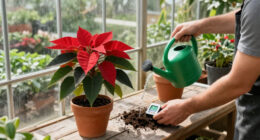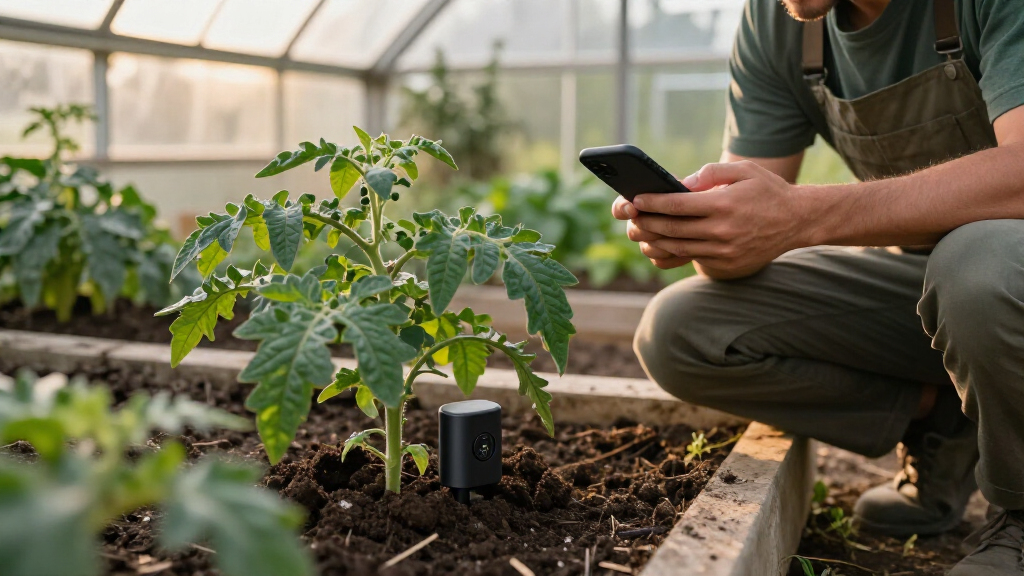

The best smart plant sensors make it easier to spot dry soil and check plant conditions before problems show. I rank the RAINPOINT Smart Soil Moisture Meter Kit with Wi-Fi Hub as my best overall pick for its hub-based setup and focused moisture monitoring. For broader readings, the RainPoint 3-in-1 WiFi Soil Moisture, Temperature, and Light Sensor with Hub tracks more than watering needs, while the Haozee Zigbee 3-Pack suits buyers who want to monitor several pots. The main tradeoffs are how many conditions a sensor measures, whether it needs a hub, and how easily it fits your existing smart-home setup. Read on for my full breakdown and advice on choosing the right sensor for your plants.

Get garden gear delivered free with Prime
- Fast, free delivery on millions of items
- Prime Video, Amazon Music and more included
- Member-only deals all year
Complete the kit



Key Takeaways
- Hub-based models lead this lineup for connected monitoring: several RAINPOINT picks include a Wi-Fi hub, but that means checking the kit contents and planning for another device in your home.
- More readings do not automatically mean better plant care: 3-in-1 models add temperature and light data, while simpler moisture sensors keep the task more focused.
- Multi-sensor kits can make plant collections easier to manage: the Haozee Zigbee 3-Pack is distinct for covering several pots without buying one sensor at a time.
- Connectivity is a deciding factor, not a small detail: Wi-Fi, Zigbee, and hub requirements affect setup and compatibility, so match the sensor to your network and smart-home habits.
- App and ecosystem fit matter as much as sensor features: options built around Tuya or Smart Life may suit users already in that ecosystem, while buyers seeking simple moisture alerts may not need a broad feature set.
| Haozee Smart Soil Moisture Sensor |  | Best for Flexible Smart-Home Setups | Model: HZ-SL10 | Dimensions: 1.18 in W × 6.3 in H | Measurements: Soil moisture and ambient temperature; optional light sensing | VIEW LATEST PRICE | See Our Full Breakdown |
| Haozee Zigbee Soil Moisture and Temperature Sensors, 3-Pack |  | Best Value for Multi-Plant Monitoring | Pack size: 3 sensors | Sensor type: Capacitive | Measurements: Soil moisture and ambient temperature | VIEW LATEST PRICE | See Our Full Breakdown |
| RAINPOINT Smart Soil Moisture Meter Kit with Wi-Fi Hub |  | Best for App-Based Monitoring and History | Model: 026v3+023 | Probe length: 3.5 in | Connectivity: 2.4 GHz Wi-Fi via included gateway hub | VIEW LATEST PRICE | See Our Full Breakdown |
| Smart 3-in-1 Soil Moisture, Temperature, and Fertility Meter with 2.4 GHz Wi-Fi |  | Best for Outdoor Soil Diagnostics | Model: Sm-3001 | Measurements: Soil moisture, temperature, and nutrient levels (EC) | Connectivity: 2.4 GHz Wi-Fi | VIEW LATEST PRICE | See Our Full Breakdown |
| THIRDREALITY Smart Soil Moisture Sensor Gen2 |  | Best for Zigbee Irrigation Automations | Model: 3RSM0147Z | Part number: 3RSM0347Z | Sensor type: Capacitive soil-moisture monitoring | VIEW LATEST PRICE | See Our Full Breakdown |
| Mcbazel WiFi Smart Soil Tester with Tuya/Smart Life App |  | Best Hub-Free Pick | Connectivity: 2.4 GHz WiFi; no hub required | App compatibility: Tuya / Smart Life | Soil moisture range: 0–100% | VIEW LATEST PRICE | See Our Full Breakdown |
| RainPoint 3-in-1 WiFi Soil Moisture, Temperature, and Light Sensor with Hub |  | Best for Light-Aware Plant Care | Connectivity: 2.4 GHz WiFi with Mini Hub Gen 2 | Measurements: Soil moisture, air temperature, and light intensity | Temperature upper range: 55°C | VIEW LATEST PRICE | See Our Full Breakdown |
| RAINPOINT Smart Digital Soil Moisture Meter with Wi-Fi Hub |  | Best for At-a-Glance Readings | Connectivity: 2.4 GHz Wi-Fi hub | Monitoring interval: Every minute | Alerts: App push notifications and email | VIEW LATEST PRICE | See Our Full Breakdown |
| Drusine Smart WiFi Soil Moisture and Temperature Sensor | 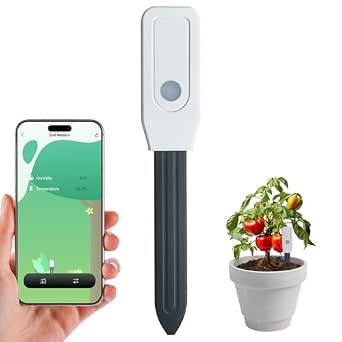 | Best for Voice Assistant Users | Connectivity: 2.4 GHz WiFi | App compatibility: Tuya Smart Life, iOS and Android | Voice assistant compatibility: Amazon Alexa and Google Assistant | VIEW LATEST PRICE | See Our Full Breakdown |
| smart plant sensor | Connectivity | Model | Dimensions |
|---|---|---|---|
| Haozee Smart Soil Moisture Sen | Zigbee | HZ-SL10 | 1.18 in W × 6.3 in H |
| Haozee Zigbee Soil Moisture an | Zigbee | — | 0.98 in W × 6.1 in H |
| RAINPOINT Smart Soil Moisture | 2.4 GHz Wi-Fi via included gateway hub | 026v3+023 | 1.8 in W × 2.2 in H |
| Smart 3-in-1 Soil Moisture | 2.4 GHz Wi-Fi | Sm-3001 | 3.6 × 3.6 × 6 in |
| THIRDREALITY Smart Soil Moistu | Zigbee 3.0; hub required | 3RSM0147Z | 7.17 in W × 1.18 in H |
| Mcbazel WiFi Smart Soil Tester | 2.4 GHz WiFi; no hub required | — | — |
| RainPoint 3-in-1 WiFi Soil Moi | 2.4 GHz WiFi with Mini Hub Gen 2 | 021+023 | — |
| RAINPOINT Smart Digital Soil M | 2.4 GHz Wi-Fi hub | 026+023 | — |
| Drusine Smart WiFi Soil Moistu | 2.4 GHz WiFi | — | — |
More Details on Our Top Picks
Haozee Smart Soil Moisture Sensor
The Haozee Smart Soil Moisture Sensor is a good fit for plant owners who want readings inside a broader Zigbee smart-home setup rather than a dedicated watering system. It tracks soil moisture and ambient temperature, and its optional light sensor can detect up to 15,000 lux, giving it a broader environmental view than the moisture-only THIRDREALITY Gen2. Its compact 6.3-inch profile is easier to place in pots than the larger 3-in-1 Wi-Fi meter, though it still needs a compatible Zigbee hub to report readings. Haozee also limits water resistance to splashes, so it is not a choice for a sensor that will stay submerged. I’d pick it for Home Assistant, Zigbee2MQTT, or ZHA users; buyers without Zigbee gear may find the RAINPOINT Wi-Fi kit simpler to set up.
Pros:- Tracks both soil moisture and ambient temperature.
- Optional light sensor detects up to 15,000 lux.
- Compact probe suits individual potted plants.
- Works with Home Assistant, Zigbee2MQTT, and ZHA.
Cons:- Requires a compatible Zigbee hub.
- Splash-proof construction is not rated for continuous submersion.
Best for: Plant owners already using Home Assistant, Zigbee2MQTT, or ZHA who want moisture and temperature readings in compact pots.
Not ideal for: Buyers without a Zigbee hub, or gardeners who need equipment suitable for continuous submersion.
- Model:HZ-SL10
- Dimensions:1.18 in W × 6.3 in H
- Measurements:Soil moisture and ambient temperature; optional light sensing
- Maximum light detection:15,000 lux
- Connectivity:Zigbee
- Compatible platforms:Home Assistant, Zigbee2MQTT, ZHA
- Power:1 AAA battery
- Water resistance:Splash-proof; not for continuous submersion
Our verdict“Choose Haozee if you already run a supported Zigbee platform and want compact moisture, temperature, and optional light monitoring.”
Haozee Zigbee Soil Moisture and Temperature Sensors, 3-Pack
For anyone monitoring several plants, the main advantage here is straightforward: three capacitive sensors in one pack let you track separate beds, pots, or greenhouse zones instead of moving one probe around. Each measures soil moisture and ambient temperature, much like the single Haozee HZ-SL10, but this set is better suited to wider coverage than adding one sensor at a time. It can also fit garden and lawn use, provided readings are collected through a compatible Zigbee gateway or Zigbee2MQTT with Home Assistant. Placement matters: at least two-thirds of each sensor should be buried, and the surface needs to stay clean for more accurate readings. Unlike the RAINPOINT kit, this pack does not include a Wi-Fi hub or an LCD, so it makes more sense for existing Zigbee users than app-first beginners.
Pros:- Three sensors cover multiple plants or garden areas at once.
- Measures both soil moisture and ambient temperature.
- Capacitive sensing is suited to repeated soil monitoring.
- Designed for gardens, lawns, and greenhouses.
Cons:- Requires a compatible Zigbee gateway or Zigbee2MQTT setup to read data.
- At least two-thirds of each sensor must be buried for more accurate measurements.
- Sensor surfaces need cleaning to support accurate readings.
Best for: Zigbee smart-home users who want to monitor moisture and temperature across several garden beds, greenhouse zones, or plant groups.
Not ideal for: First-time sensor buyers who want an included hub, an on-device display, or a setup that avoids Zigbee configuration.
- Pack size:3 sensors
- Sensor type:Capacitive
- Measurements:Soil moisture and ambient temperature
- Connectivity:Zigbee
- Hub requirement:Zigbee gateway or Zigbee2MQTT with Home Assistant
- Battery:2 AAA alkaline batteries
- Temperature range:Up to 55 °C
- Temperature accuracy:±0.5 °C
- Dimensions:0.98 in W × 6.1 in H
Our verdict“Pick this three-pack to monitor several growing areas at once if you already have a compatible Zigbee setup.”
RAINPOINT Smart Soil Moisture Meter Kit with Wi-Fi Hub
The RAINPOINT kit suits growers who want to check moisture without opening the soil or relying on a separate smart-home platform. Its on-device LCD gives a local reading, while the app adds custom alerts and up to a year of data logging—useful for spotting how quickly a particular plant dries between waterings. That makes it more accessible than the Zigbee Haozee three-pack for someone who does not already own a Zigbee gateway, though remote viewing still depends on the included hub and 2.4 GHz Wi-Fi. The weather-resistant, rustproof probe also gives it a more outdoor-ready profile than Haozee’s splash-proof sensor. Its watering links are less universal: automatic watering depends on compatible RainPoint timers, so buyers seeking open smart-home automation may prefer the THIRDREALITY Gen2 with a supported Zigbee system.
Pros:- LCD displays readings on the device as well as in the app.
- Custom alerts and up to one year of data logging support watering decisions.
- Weather-resistant, rustproof probe is suited to indoor or outdoor use.
- Can integrate with compatible RainPoint watering devices.
Cons:- Remote monitoring requires the included hub and a 2.4 GHz Wi-Fi connection.
- Automatic watering requires compatible RainPoint timers.
- The kit relies on the RainPoint app and ecosystem for its remote features.
Best for: Plant owners who want app alerts, a local display, and moisture history through a dedicated Wi-Fi hub.
Not ideal for: Buyers seeking hub-free remote monitoring or automatic watering that works with a range of non-RainPoint devices.
- Model:026v3+023
- Probe length:3.5 in
- Connectivity:2.4 GHz Wi-Fi via included gateway hub
- Data logging:Up to 1 year
- Hub capacity:Up to 39 devices
- Dimensions:1.8 in W × 2.2 in H
- Weight:4.48 oz
- Included items:Soil moisture meter, Wi-Fi gateway hub, pH test strips, Phillips screwdriver
Our verdict“Choose this kit if you want readable local measurements and app-based moisture history, and are comfortable using its hub and RainPoint ecosystem.”
Smart 3-in-1 Soil Moisture, Temperature, and Fertility Meter with 2.4 GHz Wi-Fi
This meter is the specialist pick for growers who want more than a watering prompt: it measures moisture, temperature, and nutrient levels (EC) in one device. EC readings can add a useful nutrient-related signal that the moisture-focused Haozee three-pack and THIRDREALITY Gen2 do not provide. That extra scope is better matched to larger plots, lawns, farms, or greenhouses than to a windowsill collection; the manufacturer specifically advises against small indoor pots. App access through Tuya or Smart Life also makes it distinct from the RAINPOINT kit’s dedicated ecosystem, but this model connects only on 2.4 GHz Wi-Fi. Its temperature readings may take about an hour to adjust on first use, so it is a weaker choice for quick checks or buyers who want a compact, pot-friendly monitor.
Pros:- Combines soil moisture, temperature, and EC nutrient-level measurements.
- Supports remote monitoring through Tuya or Smart Life.
- Designed for outdoor gardens, farms, lawns, and greenhouses.
Cons:- Supports 2.4 GHz Wi-Fi only.
- First-use temperature readings may take about an hour to adjust.
- Not recommended for small indoor pots.
Best for: Gardeners and greenhouse growers who want moisture, temperature, and EC readings from outdoor beds or larger growing areas.
Not ideal for: Houseplant owners with small pots, or buyers who need readings to adjust quickly after moving the sensor.
- Model:Sm-3001
- Measurements:Soil moisture, temperature, and nutrient levels (EC)
- Connectivity:2.4 GHz Wi-Fi
- Compatible apps:Tuya, Smart Life
- Maximum router distance:45 m
- Dimensions:3.6 × 3.6 × 6 in
- Weight:10.9 oz
Our verdict“Choose this model for broader outdoor soil diagnostics, but pick a smaller moisture-focused sensor for ordinary indoor pots.”
THIRDREALITY Smart Soil Moisture Sensor Gen2
The THIRDREALITY Gen2 is the focused choice for people who want soil moisture to trigger actions in a compatible smart-home system. Its capacitive sensor measures moisture without relying on the traditional exposed-probe approach, and the enhanced antenna is designed to support steadier Zigbee communication across gardens, greenhouses, and indoor plant collections. Compared with the Haozee HZ-SL10, it does not offer ambient-temperature or optional light readings; in return, its role is clear: remote moisture monitoring and irrigation automations. A compatible Zigbee hub is still required, and Apple Home or Google Home users need the separately sold Smart Bridge MZ1. The RAINPOINT kit is easier to approach if you want a supplied Wi-Fi hub and app history, while this sensor is the better match for buyers already building automations around Zigbee.
Pros:- Capacitive moisture sensing is less affected by soil salinity and pH than traditional probes.
- Enhanced antenna is designed for more stable Zigbee coverage.
- Supports remote monitoring and watering automations with compatible systems.
- Suitable for potted plants, gardens, greenhouses, farms, and nurseries.
Cons:- Requires a compatible Zigbee hub.
- Apple Home and Google Home integration requires the separately sold Smart Bridge MZ1.
- Measures soil moisture only, unlike the Haozee HZ-SL10, which also tracks ambient temperature.
Best for: Zigbee users who want capacitive soil-moisture readings for irrigation automations across potted plants, gardens, or greenhouse spaces.
Not ideal for: Buyers without a compatible Zigbee hub, or those who need temperature and light readings from the same sensor.
- Model:3RSM0147Z
- Part number:3RSM0347Z
- Sensor type:Capacitive soil-moisture monitoring
- Connectivity:Zigbee 3.0; hub required
- Battery:Alkaline
- Operating humidity:0% to 100%
- Upper temperature range:50 °C
- Temperature accuracy:±1.5 °C
- Dimensions:7.17 in W × 1.18 in H
Our verdict“Pick the THIRDREALITY Gen2 if moisture-triggered automations matter more to you than extra environmental readings or an included hub.”
Mcbazel WiFi Smart Soil Tester with Tuya/Smart Life App
The Mcbazel is a straightforward choice for growers who want app-based soil checks without adding a hub: it connects directly to 2.4 GHz WiFi and works with Tuya or Smart Life. Its moisture history and configurable alerts can help you spot drying patterns instead of relying on occasional checks, while air-temperature readings add context around a plant’s growing conditions. Compared with the RainPoint 3-in-1 WiFi Soil Moisture, Temperature, and Light Sensor with Hub, Mcbazel avoids a separate hub but does not measure light or link into RainPoint watering equipment. The 3.7-inch probe may be awkward for shallow pots, and two AA batteries are required but not included. It is also unsuitable for hydroponics, so this is best for conventional potted plants rather than water-based growing systems.
Pros:- Connects directly to 2.4 GHz WiFi without a hub
- Tracks soil moisture and air temperature in the Tuya or Smart Life app
- Measurement history and configurable moisture alerts help track changing conditions
- IP66-rated and portable for indoor or outdoor use
Cons:- Two AA batteries are not included
- The 3.7-inch probe may not fit shallow pots with less than 4.7 inches of soil depth
- Not suitable for hydroponic setups
Best for: Houseplant owners who want direct WiFi monitoring and moisture alerts without buying a hub.
Not ideal for: Hydroponic growers or people with shallow pots that cannot accommodate the probe.
- Connectivity:2.4 GHz WiFi; no hub required
- App compatibility:Tuya / Smart Life
- Soil moisture range:0–100%
- Air temperature range:-10°C to 60°C (14°F–140°F)
- Probe length:3.7 in (9.3 cm)
- Power:2 AA batteries; not included
- Battery life:3–6 months with typical daily use
- Water resistance:IP66
Our verdict“Choose Mcbazel if you want hub-free WiFi moisture and temperature tracking for soil-grown plants and can accommodate its probe.”
RainPoint 3-in-1 WiFi Soil Moisture, Temperature, and Light Sensor with Hub
Among these picks, the RainPoint 3-in-1 has the broadest view of a plant’s immediate conditions: it tracks soil moisture, temperature, and light intensity, with customizable alerts in the app. Light readings make it a more informative choice for owners trying to tell whether a struggling plant needs a brighter spot as well as a watering change. Unlike the Mcbazel WiFi Smart Soil Tester, it comes with a Mini Hub Gen 2 and can connect with RainPoint automatic-watering systems. That ecosystem link is useful if you plan to add compatible watering equipment, but the sensor is less appealing if you only want a simple standalone monitor. It needs a 2.4 GHz network, and the hub is part of the setup; water timers are sold separately. Its IP66 design suits indoor and outdoor monitoring.
Pros:- Monitors soil moisture, air temperature, and light intensity
- Customizable app alerts cover moisture, temperature, and light
- Includes a Mini Hub Gen 2
- IP66-rated design is suited to indoor and outdoor use
Cons:- Requires the included compatible hub and a 2.4 GHz WiFi network
- Water timers for automated watering are sold separately
- Its RainPoint system focus is less useful if you do not plan to add compatible devices
Best for: Plant owners who want moisture, temperature, and light readings together, especially those building a RainPoint watering setup.
Not ideal for: Buyers seeking a standalone WiFi sensor or anyone who does not want to use a hub-based system.
- Connectivity:2.4 GHz WiFi with Mini Hub Gen 2
- Measurements:Soil moisture, air temperature, and light intensity
- Temperature upper range:55°C
- Temperature accuracy:±0.5°C
- Water resistance:IP66
- Included items:WiFi soil moisture meter and Mini Hub Gen 2
- Model:021+023
Our verdict“Pick this RainPoint model if light readings and a path to compatible automatic watering matter more to you than a hub-free setup.”
RAINPOINT Smart Digital Soil Moisture Meter with Wi-Fi Hub
This RainPoint model suits plant owners who want to check moisture on the device itself as well as receive remote alerts. Its built-in display updates every minute, so you can read the soil condition at the pot without opening an app; app and email notifications add a warning when moisture passes a chosen threshold. Compared with the RainPoint 3-in-1 WiFi Soil Moisture, Temperature, and Light Sensor, this meter emphasizes visible moisture readings rather than adding temperature and light measurements. It also includes pH test strips, though the supplied details do not specify a continuous pH sensor. The included Mini Wi-Fi Hub Gen2 enables app connectivity and pairing with compatible RainPoint devices, but buyers seeking direct-to-router WiFi may prefer the hub-free Mcbazel. Batteries are not included.
Pros:- On-device display shows moisture readings and updates every minute
- Supports customizable low- and high-moisture alerts by app notification and email
- Includes a Mini Wi-Fi Hub Gen2 for app monitoring
- Can connect with compatible RainPoint devices for automated watering
Cons:- WiFi features require the compatible 2.4 GHz hub
- Batteries are not included
- Does not list temperature or light measurement
Best for: Growers who want a visible moisture reading at the pot plus app and email alerts through a RainPoint hub.
Not ideal for: Buyers who want temperature or light monitoring, or who prefer a sensor that connects directly to WiFi without a hub.
- Connectivity:2.4 GHz Wi-Fi hub
- Monitoring interval:Every minute
- Alerts:App push notifications and email
- Use:Indoor and outdoor
- Battery:Not included
- Included items:Smart soil moisture meter, Mini Wi-Fi Hub Gen2, pH test strips, Phillips screwdriver
- Model:026+023
Our verdict“Choose this meter if checking a local display is as useful to you as remote moisture alerts, and you are comfortable with the RainPoint hub.”
Drusine Smart WiFi Soil Moisture and Temperature Sensor
Drusine stands out for households that want sensor readings available through both an app and a voice assistant: it works with Tuya Smart Life, Alexa, and Google Assistant. The 6-inch probe reaches farther into deeper pots than the Mcbazel’s 3.7-inch probe, while moisture and temperature readings with customizable alerts cover the two main conditions many soil-grown plants need monitored. Its stated temperature span is wider than the Mcbazel’s, but it does not measure light like the RainPoint 3-in-1. Drusine connects directly to 2.4 GHz WiFi, avoiding that RainPoint model’s hub requirement. The tradeoffs are IP65 rather than IP66 water resistance and a need for two AA batteries, which are not included; the claimed 10–12-month battery life is useful context, though actual life can vary.
Pros:- Works with Tuya Smart Life, Amazon Alexa, and Google Assistant
- Measures soil moisture and temperature with customizable alerts
- Six-inch probe reaches deeper into soil than the Mcbazel sensor
- Claimed battery life is 10–12 months
Cons:- Requires a 2.4 GHz WiFi network
- Two AA batteries are not included
- IP65 water resistance is below the IP66 rating of the Mcbazel and RainPoint alternatives
Best for: Smart-home users with deeper pots who want soil moisture and temperature alerts accessible through Alexa or Google Assistant.
Not ideal for: Growers who need light readings, a hub-based watering ecosystem, or a probe suited to very shallow containers.
- Connectivity:2.4 GHz WiFi
- App compatibility:Tuya Smart Life, iOS and Android
- Voice assistant compatibility:Amazon Alexa and Google Assistant
- Moisture range:0–100% RH
- Temperature range:-40°F to 176°F (-40°C to 80°C)
- Temperature accuracy:±0.5°C
- Probe length:6 inches (15 cm)
- Water resistance:IP65
- Power and claimed battery life:2 AA batteries, not included; 10–12 months
Our verdict“Choose Drusine if voice control and a longer probe matter more than light sensing or a hub-based watering system.”

How We Picked
I compared these nine sensors by the practical questions that shape everyday use: what each one measures, how it connects, whether a hub is part of the setup, and how many plants it can sensibly cover. I gave more weight to clear, useful monitoring than to a long feature list; a moisture reading is more valuable when a buyer can understand it and act on it. I also considered whether a product’s stated range of readings—such as temperature, light, or fertility—serves a distinct need rather than adding complexity.
The order reflects versatility and ease of choosing, not a claim that one sensor suits every home. The RAINPOINT Wi-Fi hub kit ranks first as a balanced, focused pick; broader 3-in-1 models follow for buyers who want extra context. Multi-packs and ecosystem-specific options earn their places for particular setups, while simpler or less differentiated models rank lower because buyers may need to check compatibility and features more carefully before choosing.
Factors to Consider When Choosing Best Smart Plant Sensors
Smart plant sensors can differ in ways that are easy to miss when comparing feature lists. I’d start with the conditions you need to monitor, then check how the sensor connects, how you plan to use its alerts, and whether its readings make sense for your plants and environment.
Choose Readings That Match the Problem
Start with the question you want the sensor to answer: does a plant need water, is its spot too dim, or are temperature swings a concern? A moisture-only device keeps attention on watering and may be easier to interpret than a sensor with several metrics. A model that also measures light or temperature can help when you are troubleshooting a plant’s location, but more data is only useful if you’ll act on it. Soil fertility readings deserve particular care: don’t assume a sensor’s broad label replaces a plant-specific feeding plan or a dedicated test. Match the sensor’s stated measurements to the plants and decisions you actually have, rather than choosing the longest feature list.
Check Connectivity Before You Buy
Wi-Fi and Zigbee models fit different home setups, and a hub-based kit adds another piece of hardware to place and configure. Check whether a hub is included, whether your network meets the product’s stated requirements, and whether the app or smart-home platform you use is supported. A sensor that depends on an unfamiliar ecosystem may create more setup work than its extra readings justify. If you have several sensors, think about how they connect and whether the system can handle your intended layout. Confirm these details against the manufacturer’s current specifications because connectivity support can vary by model and version.
Plan for Pot Count and Sensor Placement
One sensor is rarely a reliable stand-in for every plant in a varied collection. Soil, pot size, drainage, and watering routines differ, so a single reading may not describe the needs of other pots. A multi-pack can simplify monitoring several plants, but only if the sensors can be assigned and read clearly in the app. Probe placement also affects usefulness: insert it where the plant’s roots are represented, not against the pot wall or into an unusually dry patch. For outdoor use, check the product’s stated suitability and placement guidance rather than assuming an indoor-focused sensor will tolerate the elements.
Treat Alerts as Prompts, Not Automatic Watering Rules
A notification can flag a condition, but it cannot account for every plant’s preferred moisture level or changing seasonal needs. Newly repotted plants, dormant plants, and plants in fast-draining mixes may call for different responses even when a sensor shows a similar reading. Learn how the app presents its measurements and whether you can adjust alert thresholds. Avoid watering just because an alert appears if the soil and plant do not support that choice. The best sensor is one that helps you build a better routine, not one that encourages you to follow a number without context.
Compare Ongoing Use, Not Just Setup
Before choosing, check how the manufacturer describes power, probe care, app access, and any maintenance needs. A sensor that requires frequent attention can be a poor fit for someone seeking low-effort monitoring, even if it reports several conditions. Consider whether you want a dedicated device for one plant or a group of sensors managed through a shared app. If you already use Tuya or Smart Life, ecosystem alignment may simplify your routine; if not, learn what installing and maintaining another app involves. A higher-feature model makes more sense when its extra readings and connectivity solve a real problem you have.
Frequently Asked Questions
Do I need a Wi-Fi hub for a smart plant sensor?
Only if the model you choose relies on one for connectivity or app access. Some products in this roundup are sold with a Wi-Fi hub, while others use a different connection approach, so check the exact kit rather than relying on the product name alone. A hub can be useful when you want a central connection for sensors, but it adds setup and another device to manage. If you already have a Zigbee or smart-home system, verify compatibility instead of assuming the sensor will pair with it. Choose based on your home network and comfort with setup, not on the assumption that every smart sensor needs the same equipment.
Is a 3-in-1 sensor worth choosing over a moisture-only model?
It depends on whether you need the extra readings to make plant-care decisions. Temperature and light data can help when you are investigating a plant’s environment, while a moisture-only sensor keeps its purpose straightforward. Added measurements may also mean more app information to interpret, so they are not automatically an upgrade for someone who only wants a watering prompt. Think about the plants you own and the issues you are trying to solve before paying for broader monitoring. For a mixed collection or an uncertain growing spot, the extra context may be useful; for routine moisture checks, a simpler model may be enough.
Can one smart sensor monitor all the plants in my home?
Usually, one sensor can only report conditions at its own placement, so it cannot reliably represent plants in different pots or locations. Soil mix, pot size, light exposure, and watering habits can all change what a plant needs. A multi-pack, such as the Haozee Zigbee 3-Pack in this roundup, is better suited to monitoring several plants individually. You do not necessarily need a sensor in every pot; prioritize plants with different care needs or a history of watering problems. Keep sensor placement consistent with the plant you want to understand, and avoid treating one reading as a rule for the whole collection.
Will these sensors tell me exactly when to water?
A sensor can provide a useful soil reading or alert, but it cannot make a universal watering decision for every plant. The right moisture level depends on the species, pot, soil, season, and growing conditions, and app thresholds may need adjustment. Use the reading alongside the plant’s appearance and the way its soil dries between waterings. If a notification conflicts with what you see, check the soil and your plant’s care needs before adding water. The sensor is most helpful as a monitoring aid that builds your understanding over time, rather than as an automatic watering instruction.
What should I check if I use Tuya, Smart Life, or a Zigbee smart-home system?
Confirm the exact app, protocol, hub, and device compatibility listed for the specific model. The Mcbazel WiFi Smart Soil Tester is identified with Tuya and Smart Life, while the Haozee Zigbee option uses a different connection type; those labels do not mean every sensor will work with every hub or automation. Check whether the required hub is included and whether the product supports the phone app and smart-home platform you already use. Also review what the app can do with readings, such as alerts or device grouping, if those functions matter to you. A sensor that fits your existing setup can be easier to maintain than one with more features but a separate ecosystem.
Conclusion
For a balanced pick, I’d choose the RAINPOINT Smart Soil Moisture Meter Kit with Wi-Fi Hub as the best overall: it keeps the focus on moisture while offering hub-based connectivity. The Haozee Zigbee 3-Pack is my best value for monitoring several pots, provided Zigbee fits your setup. For the best premium-style feature set, consider the RainPoint 3-in-1 WiFi Soil Moisture, Temperature, and Light Sensor with Hub if you will use all three readings. Beginners may prefer a focused moisture sensor rather than a device with more measurements and settings. For specific needs, choose the Mcbazel if Tuya or Smart Life fits your existing routine, or a 3-in-1 model if light and temperature readings help you troubleshoot plant placement. Match the connection type and measurements to your plants before deciding.
Fall yard work Picks

EGO Power+ Cordless Electric Leaf Blower, 880 CFM, with Two 4.0Ah Batteries (LB8803-2)
As an affiliate, we earn on qualifying purchases.