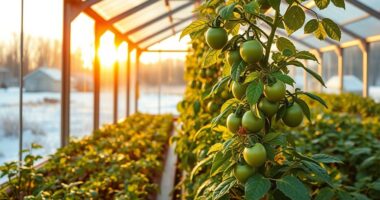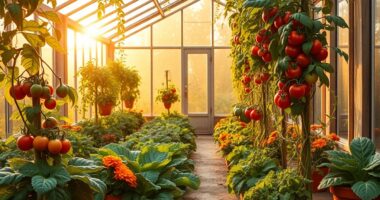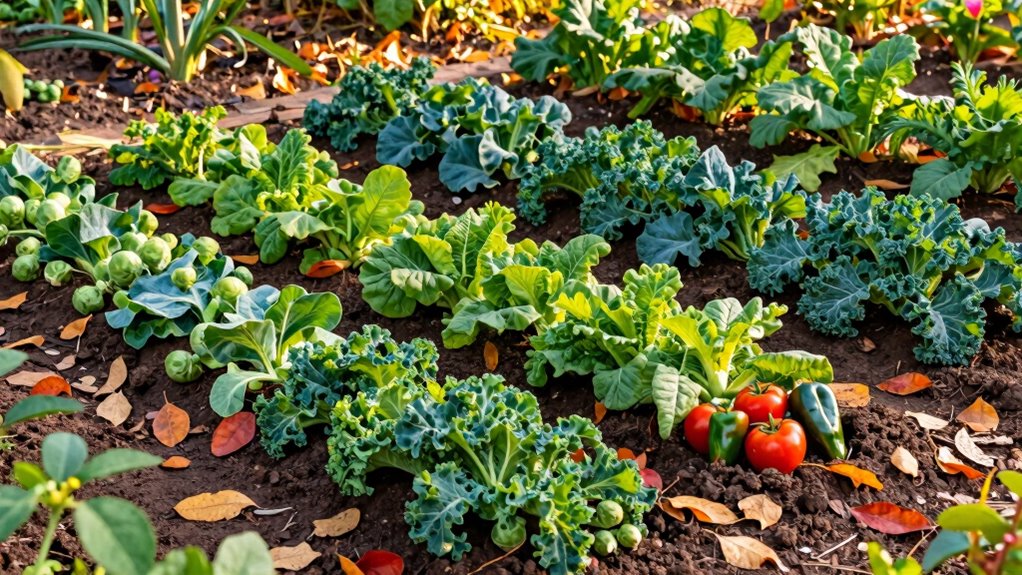

To swap summer plants for winter greens smoothly, start by assessing your soil and climate conditions to plan the right timing. Remove summer crops gently, enrich your soil with compost, and adjust pH levels if needed. Choose hardy greens like kale or spinach and plant them properly, using mulch and protective covers. Regularly monitor pests and soil health, ensuring a seamless changeover. For detailed steps, you’ll find helpful tips for a successful fall crop change ahead.
Listen free for 30 days with Audible
Thousands of audiobooks and originals — cancel anytime.
As an affiliate, we earn on qualifying purchases.
Key Takeaways
- Assess soil health and climate conditions, then prepare and amend soil for winter crops.
- Time planting schedules based on frost dates, using covers or mulch for protection.
- Select hardy winter greens like kale, spinach, and Swiss chard suited for cold weather.
- Remove summer plants gently, incorporate debris into compost, and prepare soil for new crops.
- Monitor pests, manage soil moisture, and use crop rotation to maintain soil health through seasonal change.
As an affiliate, we earn on qualifying purchases.
Assess Your Garden’s Climate and Soil for Winter
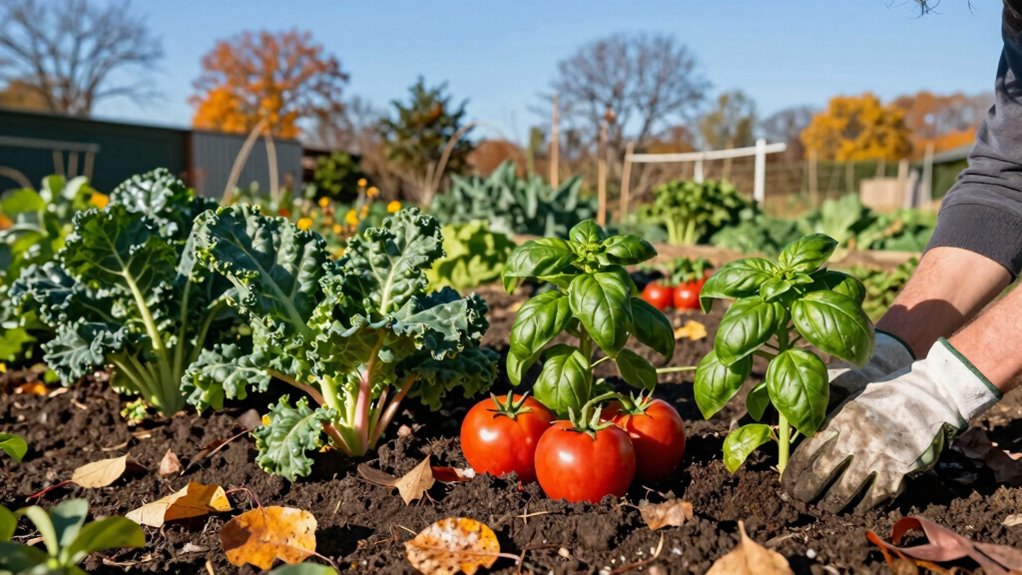
Before planting winter crops, it’s essential to evaluate your garden’s climate and soil conditions. Start with soil testing to determine nutrient levels, pH, and drainage, ensuring your soil is suitable for cold-tolerant plants. Understanding your climate considerations helps you choose the right crops and protect them from harsh conditions. Check if your area experiences early frosts or extended cold spells, as this influences planting timing and crop selection. Additionally, assess sunlight exposure, wind patterns, and moisture levels. Knowing these factors allows you to prepare your garden properly, such as amending soil or installing protective covers. Recognizing climate considerations is crucial for selecting the most resilient winter crops and implementing appropriate safeguards. By thoroughly evaluating your garden’s climate and soil, you set a strong foundation for a successful winter harvest.
Decide When and How to Transition to Fall Crops
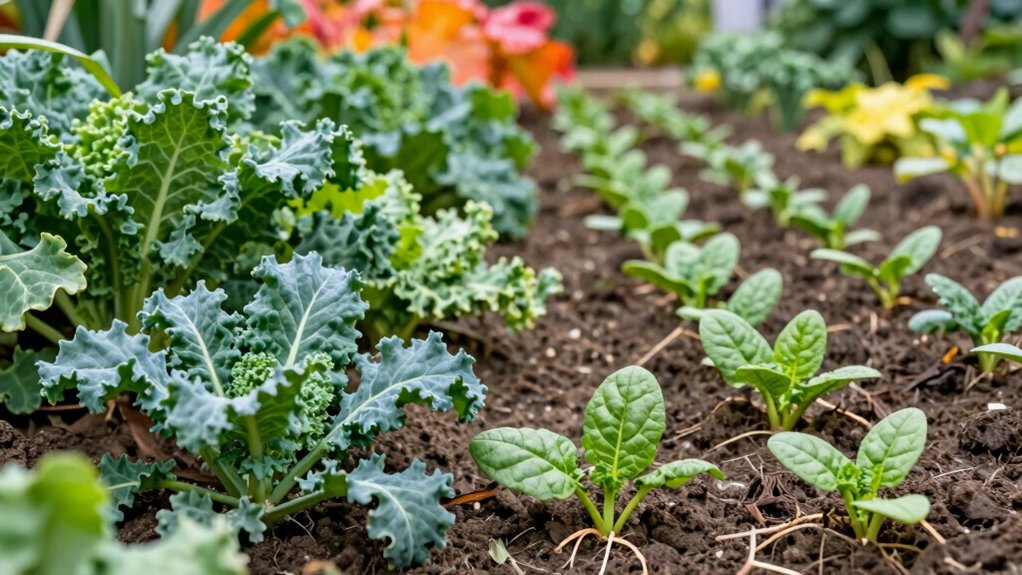
Once you’ve assessed your garden’s soil and climate, it’s time to plan the timing and methods for planting your fall crops. Choose a planting window based on your region’s first frost date, ensuring crops have enough time to mature. Proper crop rotation helps prevent soil depletion and reduces pest issues, so plan to avoid planting the same family of crops consecutively. Incorporate pest management strategies, like row covers or companion planting, to keep pests at bay. Use the table below to outline your schedule:
| Step | Action |
|---|---|
| Determine planting date | Based on frost forecast and crop growth time |
| Rotate crops | Avoid planting same crop family consecutively |
| Prepare seedlings or seeds | Start indoors or directly sow |
| Use pest deterrents | Row covers, organic pest controls |
| Monitor and adjust | Regularly check for pests and growth progress |
Additionally, understanding the contrast ratio of your chosen plants can help you select varieties that will thrive in your specific lighting conditions.
Prepare Your Soil for Planting Winter Greens
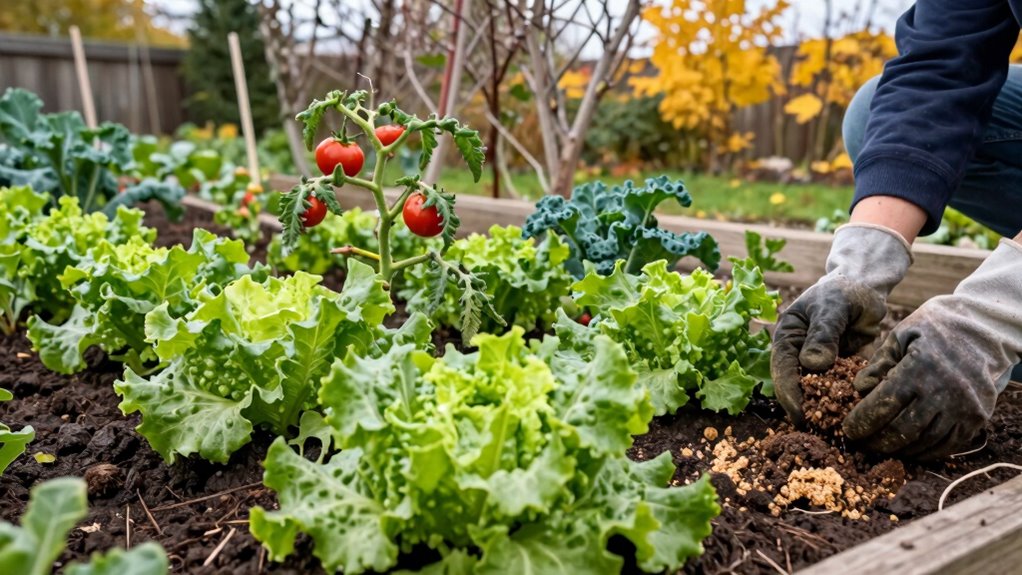
To get your soil ready for winter greens, start by removing any old plant debris to prevent pests and diseases. Next, enrich the soil with compost to boost nutrients and improve structure. Finally, check and adjust your soil’s pH to create the ideal environment for your greens to thrive. Incorporating proper soil drainage can further enhance root health during the colder months.
Remove Old Debris
Clearing away old plant debris is an essential step in preparing your soil for winter greens. A thorough garden cleanup removes leftover stems, leaves, and roots from summer crops, preventing pests and diseases from overwintering. Effective debris removal also helps improve soil aeration and allows you to better assess the soil condition. Use a rake or garden fork to gather and remove the debris, making sure to clear the entire planting area. Dispose of the debris properly—compost healthy plant material or discard diseased remnants to avoid spreading issues. Removing old debris not only creates a clean, healthy environment for your winter greens but also gives you a clear view of your soil’s surface, setting the stage for successful planting and growth. Incorporating soil health practices during cleanup can further enhance the nutrients and structure of your soil for the upcoming season.
Enrich Soil With Compost
After removing old debris from your garden, you’re ready to give your soil a nourishing boost with compost. Proper compost application enhances soil enrichment, providing essential nutrients for your winter greens. Spread a generous layer of compost evenly across the prepared area, working it into the topsoil with a rake or fork. This process improves soil structure, increases its ability to retain moisture, and supplies crucial nutrients naturally. Avoid over-application, as too much compost can lead to nutrient imbalances. Instead, focus on creating a well-draining, fertile bed that encourages healthy root growth. Enriching your soil with compost now sets a strong foundation for your winter crops, ensuring they get the nourishment needed to thrive through the colder months. Using quality compost products can further enhance your soil’s fertility and overall health.
Adjust Soil pH
Since soil pH can critically affect nutrient availability, it’s essential to test and adjust your garden soil before planting winter greens. Start with pH testing to determine your soil’s acidity level. Most winter greens thrive in slightly acidic to neutral soil, with a pH between 6.0 and 7.0. If your soil is too acidic (low pH), add lime to raise the pH. Conversely, if it’s too alkaline (high pH), incorporate sulfur or organic matter to lower the pH. Regular pH testing helps you monitor changes and guarantee ideal conditions for healthy growth. Adjusting soil acidity now prevents nutrient deficiencies and promotes vigorous winter greens. Properly balanced soil pH creates the foundation for a successful shift from summer crops to winter greens. For optimal results, consider testing your soil’s pH levels regularly to ensure consistent conditions throughout the season.
Choose the Best Winter Greens for Your Garden
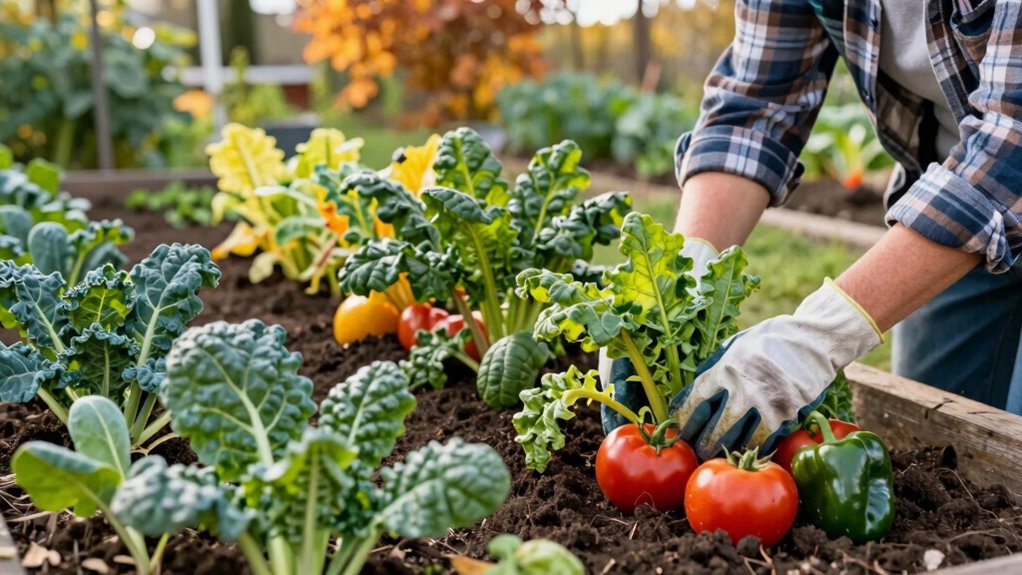
Choosing the right winter greens depends on their cold tolerance and how well they thrive in your garden. You’ll want to contemplate their nutritional benefits to maximize your harvest. Additionally, understanding planting and care tips guarantees your greens stay healthy through the colder months. Incorporating the proper at-home gardening tools can also improve your success during the transition.
Suitable Cold Tolerance
Are you wondering which winter greens can withstand cold temperatures and thrive in your garden? To choose the right ones, consider their cold hardiness and frost resistance. Some greens, like kale and collards, have high cold hardiness and can survive harsh winter conditions with minimal protection. Others, such as spinach and arugula, are more frost-resistant but may need some cover during severe cold snaps. Hardy varieties are specially bred for frost resistance, ensuring they stay healthy despite freezing temperatures. Knowing your local climate helps determine which greens will flourish without extra effort. Selecting plants with strong cold tolerance guarantees a successful shift from summer to winter crops and keeps your garden productive all season long. cold hardiness is a key factor in choosing winter greens that will thrive in your specific environment.
Nutritional Benefits Overview
Winter greens are packed with essential nutrients that support your health during the colder months. These hardy plants retain their nutrients well, guaranteeing you get maximum benefit from your harvest. Leafy greens like kale, spinach, and Swiss chard are especially rich in vitamins A, C, and K, along with minerals such as iron and calcium. Their nutrient retention varies slightly among varieties, so choosing diverse greens helps you maximize health benefits. Incorporating a variety of winter greens adds plant diversity to your garden, which can enhance resilience and nutritional quality. Consuming a colorful mix ensures you get a broad spectrum of nutrients, supporting your immune system and overall well-being during the winter season. Prioritizing nutrient-dense winter greens keeps you healthy and energized through colder months. Essential nutrients in winter greens are especially important for maintaining energy levels and supporting immune function during winter.
Planting and Care Tips
To guarantee a successful winter garden, start by selecting hardy greens that thrive in cooler temperatures, such as kale, spinach, Swiss chard, and collard greens. Proper planting and care enhance growth and pest resistance. Consider these tips:
- Space plants properly to improve air circulation and reduce disease risk.
- Use companion planting, like onions or garlic, to naturally deter pests.
- Mulch around greens to conserve soil warmth and moisture.
- Regularly inspect for pests, applying organic controls promptly.
- Incorporate traditional crop protection methods like row covers or natural repellents to further shield your greens from harsh weather and pests.
Implementing these strategies will support healthy growth and minimize pest issues. Remember, choosing resilient varieties and practicing good garden hygiene are key to a successful winter crop. With attentive care, your greens will flourish despite the chill.
Plant and Cover Your Winter Crops Properly
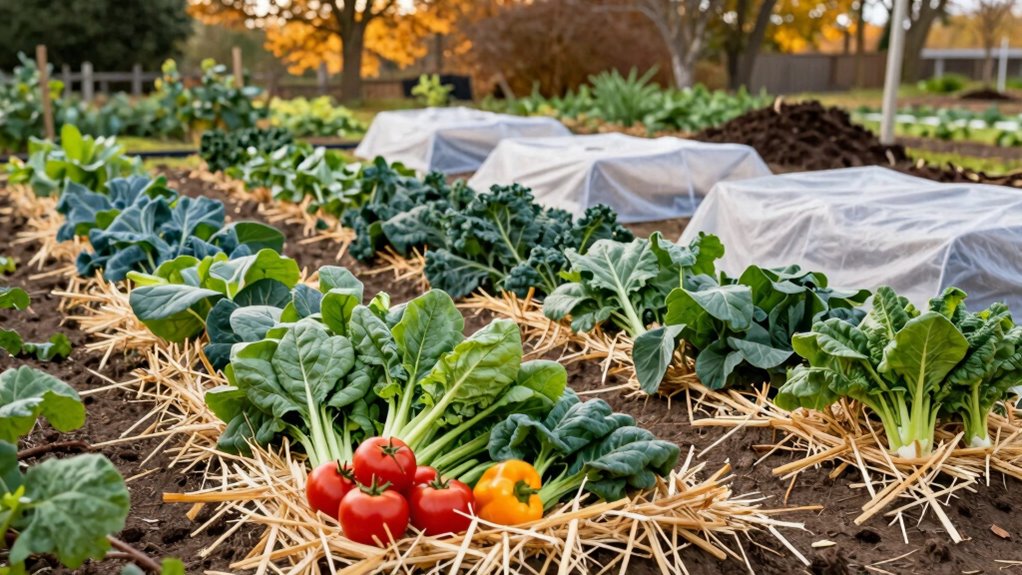
Have you prepared your garden beds for the upcoming cold months? To protect your winter crops, start by planting them at the right depth and spacing. Once planted, apply a layer of mulch layering around your plants. Mulch helps insulate the soil, keeping temperatures more stable and preventing frost damage. It also acts as a barrier against weeds and pests, reducing pest prevention issues. Covering your crops with straw, leaves, or a frost cloth can further shield them from harsh weather while maintaining soil warmth. Make sure covers are secure but allow some airflow to prevent mold. Proper covering not only extends your growing season but also ensures healthier, more robust winter greens come harvest time.
Remove Summer Plants Without Damaging Your Soil
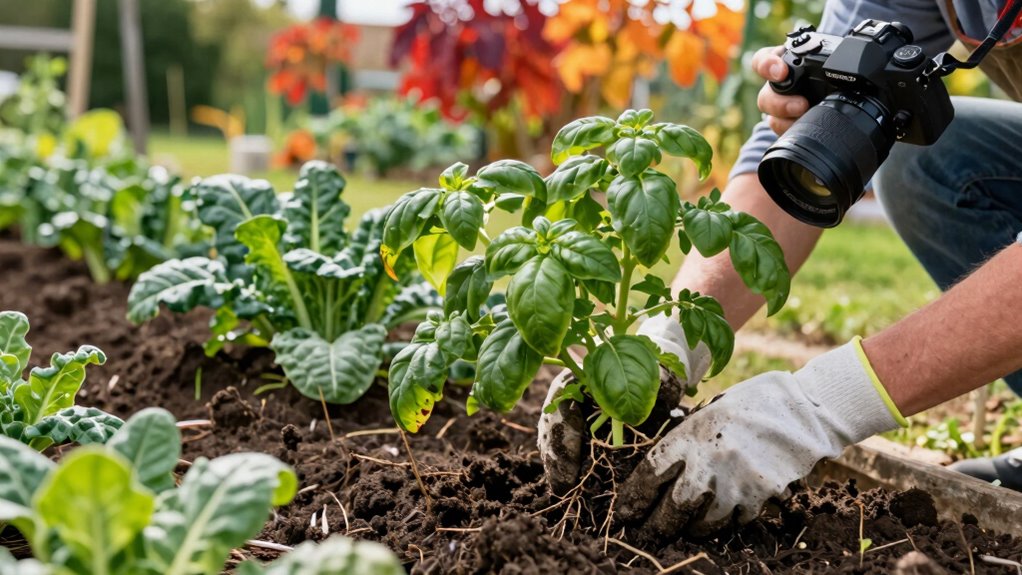
As summer crops finish their cycle, removing them carefully is essential to preserve soil health. Proper removal prevents soil disturbance and promotes effective compost management. Follow these steps:
- Gently pull out plants, avoiding root disruption to maintain soil structure.
- Remove plant debris to reduce pest harboring spots, aiding pest control.
- Incorporate plant residues into the compost or mulch, enriching soil nutrients.
- Loosen the soil lightly to improve aeration, preparing it for winter crops.
Maintain Your Garden During Fall and Winter
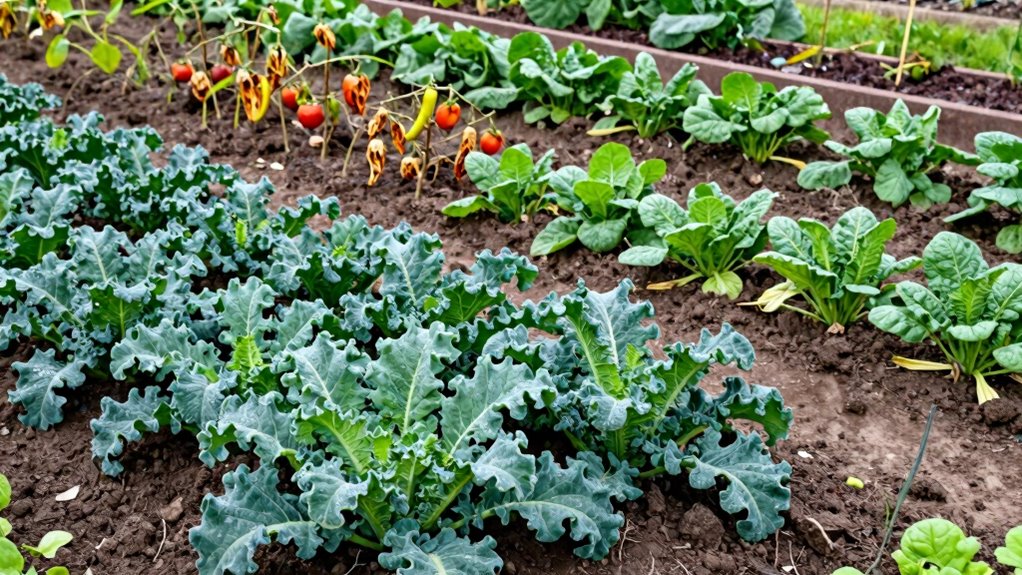
Even as temperatures drop, maintaining your garden during fall and winter keeps it healthy and ready for spring. Regular upkeep helps protect plants from pests and encourages healthy growth. Use companion planting to naturally deter pests; for example, planting garlic near greens can repel aphids. Mulching conserves soil moisture and insulates roots against cold. Keep an eye out for disease and remove infected debris promptly. Incorporate this table to guide your efforts:
| Task | Tips |
|---|---|
| Pest control | Use organic methods, companion planting |
| Soil health | Add compost, avoid compaction |
| Plant protection | Cover crops or row covers |
Staying attentive during the colder months ensures your garden thrives when spring arrives.
Troubleshoot Common Challenges When Switching Crops
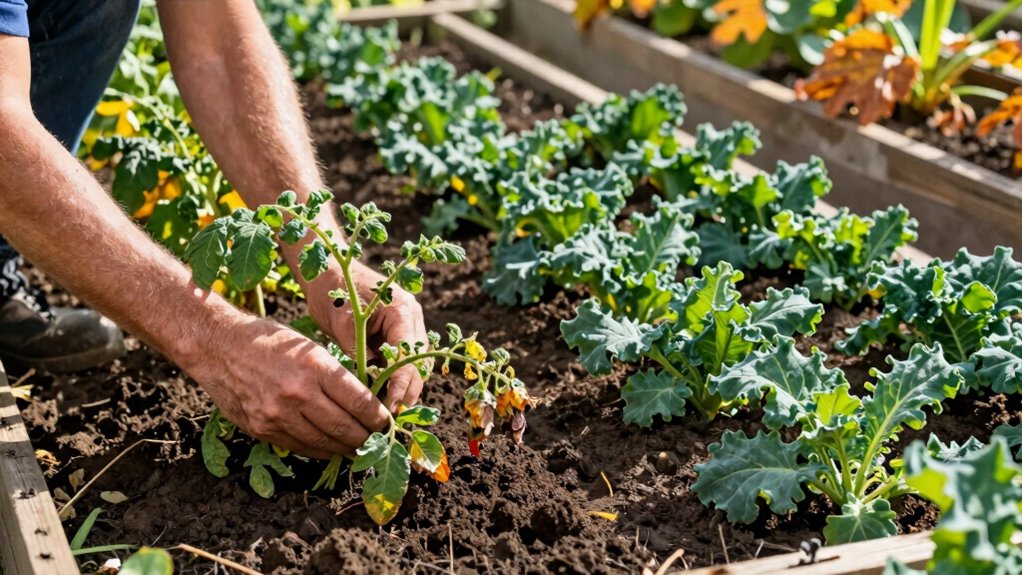
Switching crops in your garden can present several challenges, especially if previous plants leave behind pests, diseases, or depleted soil nutrients. To address these issues effectively, consider these steps:
- Implement pest management strategies, such as crop rotation or natural deterrents, to prevent recurring infestations.
- Adjust your watering schedules to match the needs of your new winter crops, ensuring they receive adequate moisture without overwatering.
- Test and amend soil to replenish nutrients lost during previous plant growth, promoting healthy development.
- Monitor plants regularly for signs of pests or diseases, acting promptly to contain problems before they spread.
How to Clear Out Summer Plants Without Soil Damage?
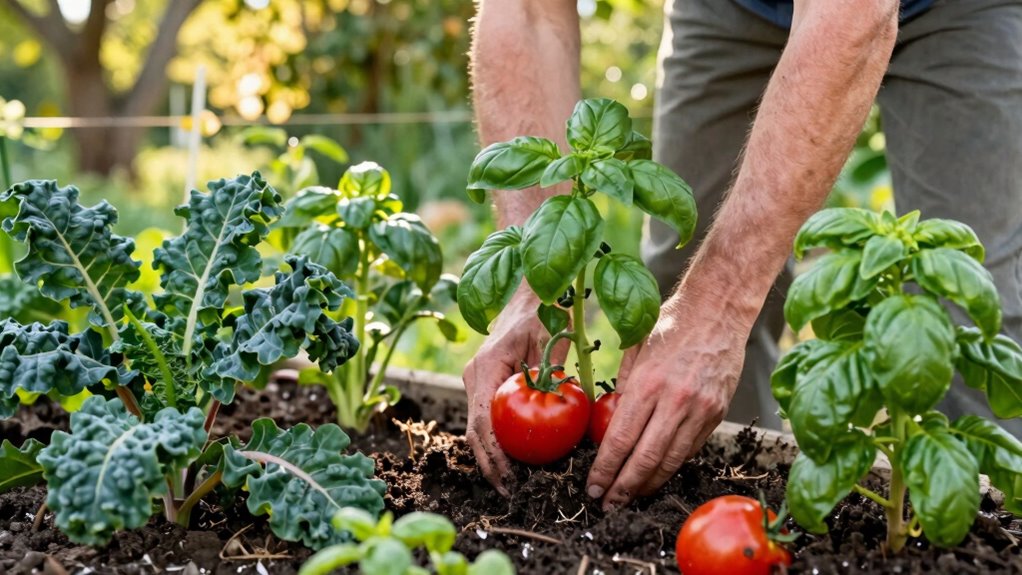
Clearing out summer plants efficiently is essential to prepare your garden for the next crop without damaging the soil structure. Start by gently removing plants, taking care not to disturb the soil too much. To maintain healthy soil aeration, loosen the surface lightly with a garden fork or rake, ensuring you don’t compact the soil. Incorporate compost layering as you clear out plants; spread a thin layer of compost over the soil to enrich it and protect it from erosion. This process promotes good soil health and prepares the bed for winter greens. Avoid heavy digging or turning the soil excessively, as this can disrupt soil life and structure. With careful removal and compost layering, you’ll safeguard your soil’s health and set the stage for a successful fall crop progression.
Frequently Asked Questions
How Can I Extend My Growing Season in Colder Climates?
To extend your growing season in colder climates, you should use season extension techniques like cold frames. These protect your plants from harsh weather, keeping temperatures stable and encouraging growth. Build or buy a cold frame, and place it over your plants to trap heat. This simple method allows you to harvest fresh greens longer, even into late fall or winter. Stay vigilant and adjust your setup as needed for ideal results.
What Pests Are Common on Winter Greens?
You might notice aphids and flea beetles on your winter greens, but choosing pest-resistant varieties helps diminish issues. To keep pests at bay, introduce beneficial insects like ladybugs and lacewings, which naturally control pests. Regularly inspect your plants and remove any infested leaves. This proactive approach minimizes damage, keeps your greens healthy, and ensures a successful winter harvest without heavy pesticides.
Can I Plant Winter Crops in Containers?
Yes, you can plant winter crops in containers. Container gardening makes winter planting tips easier, as you can move plants to protected spots if needed. Use well-draining soil and choose cold-hardy greens like kale or spinach. Make sure your containers are large enough for root growth and place them where they’ll get plenty of sunlight. Regular watering and mulching help keep your winter crops healthy and productive.
How Do I Prevent Soil Compaction During Crop Transition?
You can prevent soil compaction during crop shift by improving soil aeration and adding organic amendments. Loosen the soil gently with a garden fork or tiller to enhance airflow, allowing roots to grow freely. Incorporate organic matter like compost or aged manure to boost soil structure and drainage. This not only reduces compaction but also enriches your soil for healthy winter greens. Regularly aerate and amend your soil for ideal crop growth.
What Are Eco-Friendly Methods for Crop Removal?
You might worry about harming the environment, but eco-friendly crop removal is simple. Use composting techniques to break down plant debris naturally, enriching your soil for next season. Mulching benefits your garden by suppressing weeds and conserving moisture while avoiding plastic or chemical waste. Carefully remove plants by hand, compost organic matter, and lay mulch to protect your soil—this method promotes sustainability and healthy garden growth.
Conclusion
As you shift from summer to winter, stay steady and strategic. Simplify your soil, sow smartly, and safeguard your greens. Remember, patience and preparation pave the path to plentiful winter harvests. By balancing boldness with care, you’ll cultivate a cozy, colorful garden that thrives through the chill. So, seize the season, stay spirited, and let your garden grow gracefully, turning seasonal shifts into spectacular success.
NFL season / tailgating Picks
team gear
As an affiliate, we earn on qualifying purchases.