To reduce surprises in your greenhouse year-round, establish a consistent routine that adjusts seasonally. Check your plants daily and water based on their needs, increasing or decreasing as temperatures change. Keep pests in check with regular inspections and targeted control methods. Monitor and regulate temperature and humidity for ideal growth. Maintaining good airflow and record-keeping helps you spot patterns early. Staying organized and proactive ensures healthy plants and a smoother gardening experience—continue to explore how to perfect your routine.
Key Takeaways
- Establish a consistent, seasonally adjusted routine for watering, pest control, and environmental monitoring.
- Use regular inspections and moisture sensors to detect issues early and prevent surprises.
- Adjust watering, ventilation, and pest management based on seasonal changes and plant growth stages.
- Maintain detailed records to identify patterns and refine routines over time.
- Ensure proper air circulation and climate control to create stable, predictable growing conditions year-round.
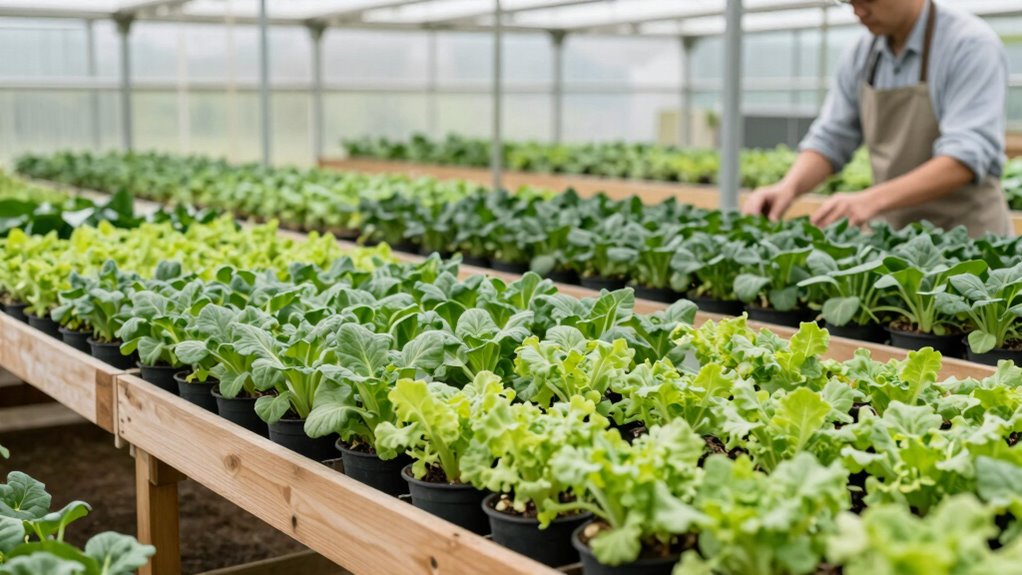
Maintaining a greenhouse requires a consistent routine to guarantee healthy plant growth and ideal conditions. When you follow a well-structured plan, you reduce the chances of surprises that can harm your plants or disrupt your harvest. One of the most important aspects is establishing a reliable watering schedule. You need to check your plants daily, adjusting your watering based on their specific needs and the season. During hotter months, your plants will require more frequent watering, while cooler periods call for less. Overwatering can lead to root rot, so verify the soil drains well and you’re not saturating it. Using a moisture meter can help you determine exactly when your plants need water, preventing both over and underwatering. Consistency is key; sticking to a schedule helps your plants thrive and makes your routine predictable, which reduces stress and errors.
Alongside watering, pest control plays a vital role in maintaining a healthy greenhouse environment. Pests can quickly become a problem if left unchecked, especially during certain seasons when pests are more active. Regular inspections are essential—look for signs of pests such as chewed leaves, webbing, or discolored patches. As part of your routine, consider integrated pest management strategies, which include introducing beneficial insects, using organic sprays, or applying physical barriers. Keeping your greenhouse clean and free of debris also helps prevent pest infestations. When you catch pests early, you can treat the problem with targeted methods, avoiding widespread damage. Preventative pest control, combined with vigilant monitoring, keeps your plants safe and reduces the need for harsh chemical treatments. Incorporating seasonal adjustments into your routine ensures your pest management remains effective year-round. Additionally, understanding how climate conditions influence pest activity can help you tailor your strategies more effectively. Being aware of pest lifecycle stages can also help you time your interventions more precisely, avoiding unnecessary treatments or missed infestations. Maintaining optimal ventilation and air circulation can further reduce pest problems by creating less favorable environments for pests to thrive.
A seasonal approach to your routine makes a significant difference. In spring and summer, increase your attention to watering and pest control because plants grow faster and pests are more active. Conversely, in fall and winter, you can reduce watering slightly and focus on maintaining temperature and humidity levels, which are equally vital. Regularly adjust your routine to match the changing climate and plant growth stages. Keeping detailed records of watering times, pest issues, and treatments helps you identify patterns and refine your approach. This proactive, organized method minimizes surprises, guarantees your plants stay healthy, and maximizes your greenhouse’s productivity year-round. With discipline and awareness, your greenhouse can be a resilient, thriving space that produces abundant, healthy plants regardless of the season.

YAMRON 4-in-1 Soil Moisture Meter Digital Plant Temperature/Soil Moisture/pH Meter/Sunlight Intensity Backlight LCD Display Soil Test Meter for Gardening, Farming and Outdoor Plants
- 4-in-1 Soil Testing: Measures moisture, pH, temperature, sunlight
- Large Backlit LCD: Easy reading in day or dark
- Fast Accurate Results: Quickly measures soil parameters with latest technology
As an affiliate, we earn on qualifying purchases.
As an affiliate, we earn on qualifying purchases.
Frequently Asked Questions
How Do I Adjust Watering Schedules for Changing Seasons?
To adjust your watering schedule for changing seasons, monitor your plants’ moisture levels regularly. In warmer months, you’ll need to increase watering frequency as the soil dries out faster, while in cooler seasons, reduce it to prevent overwatering. Stick your finger into the soil; if it feels dry an inch down, it’s time to water. This approach helps maintain ideal moisture levels and keeps your plants healthy year-round.
What Pests Are Common During Different Greenhouse Seasons?
During different greenhouse seasons, you’ll encounter pests like aphids in spring, whiteflies in summer, and spider mites in fall. Regular seasonal monitoring helps catch pest infestations early before they spread. Keep an eye out for signs of pests, and adjust your pest control measures accordingly. Being proactive guarantees you prevent major infestations, maintaining healthy plants year-round. Proper monitoring and timely action are key to managing pests across all seasons.
How Can I Prevent Diseases in Fluctuating Temperatures?
Dealing with fluctuating temperatures is like balancing on a tightrope—you need to stay steady. To prevent diseases, prioritize soil health by maintaining proper drainage and avoiding overwatering. Regularly monitor your greenhouse conditions, and use ventilation or heaters to stabilize temperatures. Good airflow and consistent humidity levels help reduce disease risks. Remember, healthy soil and stable conditions are your best defenses against diseases caused by temperature swings.
When Is the Best Time to Rotate Crops in the Greenhouse?
You should rotate crops in the greenhouse at the end of each growing season, after harvesting your current plants. This allows you to focus on soil preparation, improving soil health through composting or amendments, which helps prevent disease buildup. Plan your crop succession to guarantee different plant families follow each other, reducing pest and disease risks. Regular rotation maintains soil fertility, promotes healthy growth, and minimizes surprises during the next planting cycle.
What Are the Signs of Plant Stress During Seasonal Shifts?
You’ll notice plant stress during seasonal shifts when leaves turn yellow, wilt, or show uneven growth, indicating soil nutrition imbalances or inadequate sunlight exposure. Remarkably, up to 70% of plant stress signs stem from these factors. Keep an eye on leaf discoloration, stunted growth, or sparse flowering. Adjust soil nutrients and optimize sunlight exposure promptly to help your plants adapt smoothly and prevent long-term health issues.
Conclusion
So, follow this foolproof routine and watch your greenhouse become a haven of predictable perfection. No more surprises—just an endless parade of lush greenery and happy plants, all thanks to your meticulously planned schedule. Who knew that sticking to a routine could turn chaos into calm? Now, sit back, relax, and enjoy the illusion of control while your plants thrive in the “perfect” climate. After all, a little routine never hurt anyone—except maybe your sense of spontaneity!