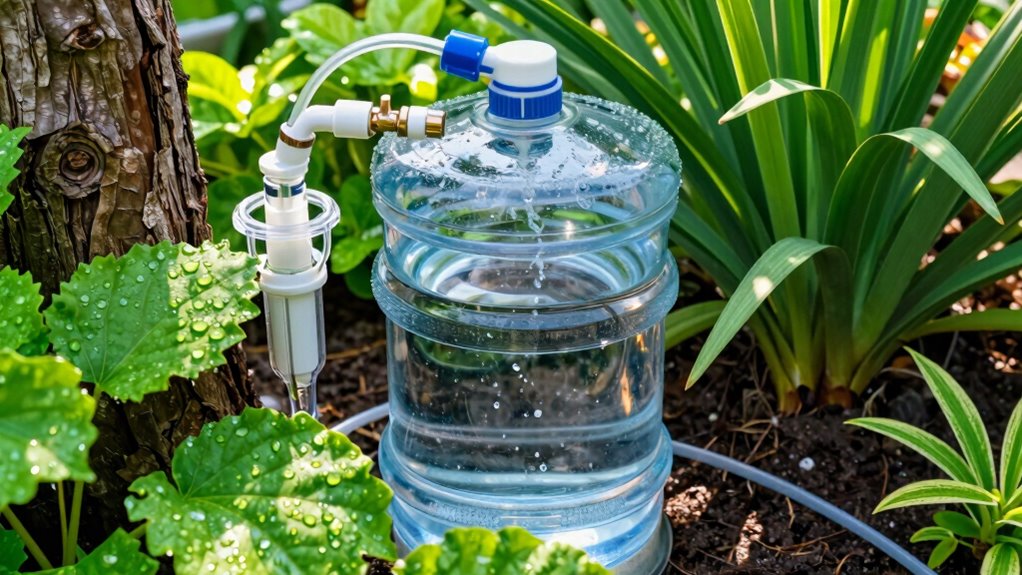

By using effective water storage options like rain barrels or tanks, you guarantee a reliable reserve for dry spells, reducing dependence on municipal water. Combining this with proper filtration keeps the water free from contaminants, promoting healthier plants and stronger growth. This integrated approach helps your garden withstand droughts, extreme weather, and water shortages, making it more resilient. Keep exploring to find out how these techniques boost your garden’s sustainability and long-term health.
Key Takeaways
- Effective water storage ensures a reliable reserve during dry spells, maintaining consistent garden hydration.
- Proper filtration improves water quality, promoting healthier and more resilient plant growth.
- Combining storage with filtration reduces dependency on municipal water, enhancing garden resilience to drought.
- Stored and filtered water minimizes risks of contamination, protecting plants from waterborne diseases.
- Integrated water management optimizes resource use, supporting sustainable and adaptable garden ecosystems.
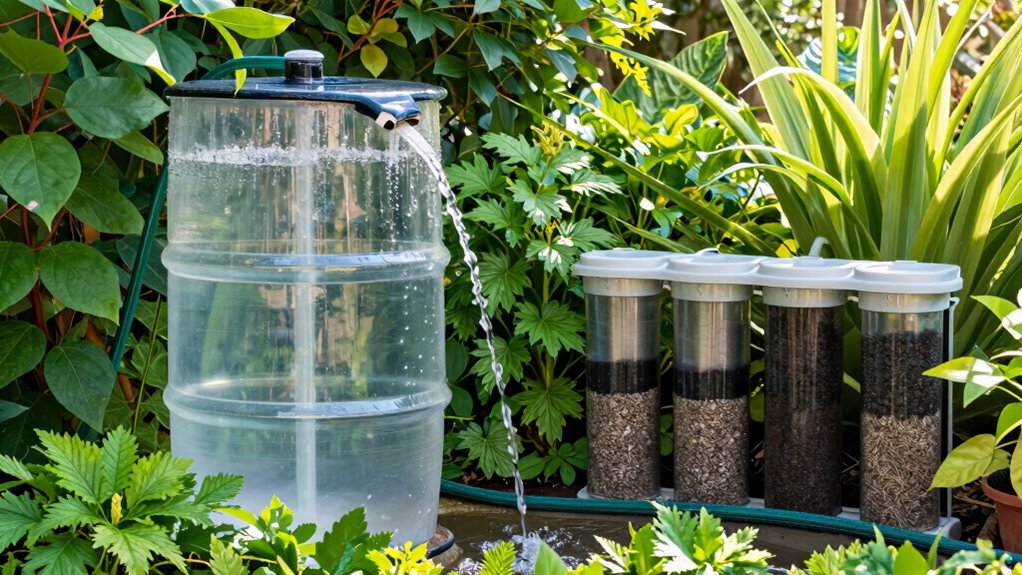
Have you ever wondered how to guarantee your garden stays healthy and vibrant during dry spells? One of the most effective ways is by incorporating rainwater harvesting and optimizing soil moisture retention. Rainwater harvesting allows you to collect and store natural water during rainy days, reducing your reliance on municipal supplies and providing a sustainable source for your garden. When you set up a rainwater collection system, you ensure that your plants have access to soft, chemical-free water that’s better for their roots and overall health. This stored water can be used during dry periods, helping your garden thrive even when Mother Nature isn’t cooperating. By capturing rainwater efficiently, you also ease the pressure on local water sources and contribute to environmental conservation.
In addition, focusing on soil moisture retention plays a vital role in maintaining a resilient garden. When your soil holds onto moisture effectively, your plants don’t suffer from drought stress, and you minimize the need for frequent watering. Techniques like mulching, adding organic matter, and avoiding over-tilling help improve the soil’s ability to retain water. Mulching, in particular, forms a protective layer that slows evaporation, keeps the soil cooler, and provides nutrients as it decomposes. Organic amendments like compost or peat help create a sponge-like environment, allowing the soil to hold more moisture and release it gradually to plant roots. These practices guarantee that your garden’s roots stay hydrated, encouraging healthy growth and reducing vulnerabilities caused by inconsistent watering. Additionally, understanding the importance of water quality can further enhance the health of your garden by ensuring the water you use is free from contaminants. Incorporating water filtration systems can help remove impurities and improve overall water quality, promoting healthier plant development. Furthermore, choosing effective water storage options ensures a reliable reserve to support your garden during dry spells.
Additionally, understanding how water storage and filtration work together can optimize your garden’s water management system. Combining rainwater harvesting with strategies for soil moisture retention creates a powerful system for water management in your garden. When you harvest rainwater, you stockpile a clean, natural resource that can be used during dry spells, reducing the risk of drought stress. Meanwhile, enhancing soil moisture retention means your plants are better equipped to absorb and utilize that water efficiently. This integrated approach not only supports healthier plants but also makes your garden more resilient to climate fluctuations and unpredictable weather patterns. As a result, you spend less time scrambling for water during dry seasons and more time enjoying a lush, thriving garden.

Collapsible Rain Barrel Water Storage Containers-53 Gallon Portable Rainwater Collect System Water Tank to Collect Rainwater from Gutter Downspout Water Catcher with Spigots,Filter&Overflow Kits
- Leak-Proof Integrated Design: Simple screw-in faucet for leak-proof use
- Durable Three-Layer PVC: Withstands tough conditions and prevents wobbling
- Foldable and Portable: Easy to store, carry, and transport
As an affiliate, we earn on qualifying purchases.
As an affiliate, we earn on qualifying purchases.
Frequently Asked Questions
How Often Should I Clean My Water Storage Tanks?
You should clean your water storage tanks at least once a year to maintain proper tank maintenance and water quality. Regular cleaning prevents algae, sediment buildup, and bacteria growth that can compromise your water supply. After heavy rain or if you notice foul odors or discoloration, clean the tanks sooner. Consistent maintenance guarantees your garden water stays clean, safe, and reliable, supporting healthier plants and a more resilient garden.
Can Rainwater Storage Prevent Drought Impacts on My Garden?
Think of your rainwater storage as a shield that guards your garden against drought’s harsh bite. Rainwater harvesting fills this shield, providing an essential reserve when drought strikes. By collecting and storing rainwater, you boost drought resilience, ensuring your plants get the moisture they need even during dry spells. This proactive approach keeps your garden thriving, no matter how tough the weather gets.
What Are the Best Filtration Options for Organic Gardening?
For organic gardening, the best filtration options include compost teas and biofilters that enrich soil and control pests naturally. You can also use charcoal or biochar filters to remove impurities while adding nutrients. These options help maintain healthy soil enrichment and reduce pests without chemicals, ensuring your garden stays resilient. Regularly filtering your water with these methods promotes plant health and supports sustainable, organic growth.
How Do I Detect Water Contamination in Storage Systems?
You can detect water contamination in storage systems by performing water testing regularly. Look for signs like strange odors, discoloration, or cloudiness, which may indicate contamination sources. Use test kits to check for bacteria, chemicals, or other pollutants. Monitoring these signs and testing helps you identify issues early, ensuring your stored water remains safe for your garden. Regular checks keep your water clean and your garden resilient.
Is DIY Water Filtration Effective for Garden Use?
Sure, DIY filtration can seem like a quick fix, but it’s rarely enough to guarantee garden safety. While you might save money, homemade filters often lack the thoroughness needed to remove harmful contaminants. Relying solely on DIY filtration risks introducing pollutants into your garden, which can harm plants and soil. For true garden safety, invest in proven filtration systems or professional testing to protect your garden’s health.
Conclusion
Just as the phoenix rises anew from its ashes, your garden can flourish even in dry times with proper water storage and filtration. By embracing these tools, you create a resilient oasis that withstands nature’s unpredictability. Think of your garden as a modern-day Atlantis—hidden, thriving, and sustainable. With mindful water management, you guarantee your garden’s vitality endures, turning challenges into opportunities for growth. Your garden’s resilience begins with the water you save and filter today.