Garden greenhouse kits range from $60 pop-up PVC tunnels to $2,000 aluminum-and-polycarbonate structures, and the right one depends almost entirely on your climate, budget, and how seriously you plan to grow. My top overall pick is the Domi 8x10FT Polycarbonate Greenhouse, because its aluminum frame, twin-wall polycarbonate panels, and automatic roof vent deliver genuine four-season performance at a price well below true permanent greenhouses. For buyers on a budget, the EAGLE PEAK 8×6 Pop Up Greenhouse offers surprising walk-in usability without tools or a weekend of assembly, while the Modern Shade EverBloom 6.5’x8′ stands out for its built-in faucet, shelving, and power strip — a near turnkey setup. The main tradeoff in this category is upfront cost and assembly effort versus longevity and weather resistance: cheap PE and PVC kits rarely survive a hard winter, while rigid kits demand a proper foundation. Keep reading for the full breakdown, including who each kit is for and who should skip it.

Get garden gear delivered free with Prime
- Fast, free delivery on millions of items
- Prime Video, Amazon Music and more included
- Member-only deals all year
Complete the kit


Key Takeaways
- Cover material was the single biggest divider in this lineup: polycarbonate kits (Domi, the 8x14FT Aluminum model) offer multi-year durability and real insulation, while PE and PVC kits like the Ohuhu and Pure Garden are best treated as seasonal equipment.
- The Domi 8x10FT earned best overall because it was the only mid-priced kit pairing an automatic vent with a tall aluminum frame — the two features that most affect daily usability and plant survival.
- Shelf-based mini greenhouses (Ohuhu, 4-Tier with Locking Wheels) are a different product category entirely; they won’t fit tall plants like tomatoes no matter how good their ratings are.
- The Modern Shade EverBloom was the only kit with integrated plumbing and power, making it the clear pick for anyone wanting a workspace rather than just plant protection — but its price sits far above the wood-kit average.
- Wind exposure, not price, determines whether walk-in soft-cover kits survive: every PE walk-in in this roundup requires serious anchoring, and the Greengro‘s roll-up design trades structural rigidity for ventilation flexibility.




| garden greenhouse kit | Frame | Size | Ventilation | Dimensions |
|---|---|---|---|---|
| Modern Shade EverBloom 6.5’x8′ | — | 6.5′ x 8′ | — | — |
| 6x8FT Wooden Greenhouse for Ou | — | 6 x 8 feet | Adjustable roof vents | — |
| EAGLE PEAK 8×6 Pop Up Greenhou | — | 8 x 6 feet | Mesh windows, roll-up doors | — |
| Walk-in Greenhouse with 8 Shel | — | — | — | 56.3 x 56.3 x 76.7 inches |
| Ohuhu Mini Greenhouse for Indo | Rust-proof metal, push-fit | — | — | 27 x 19 x 62 inches |
| Greengro Greenhouse | 16mm thick base and connectors | — | — | 28 x 57 x 76 inches |
| 8x14FT Greenhouse Aluminum Pol | Reinforced aluminum | — | 4 adjustable windows, multi-angle vents | 160.98"D x 87.8"W x 85"H |
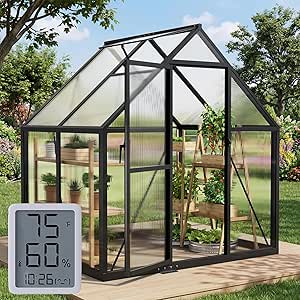
| 6x4FT Greenhouse with Hygromet | Aluminum | 6 x 4 ft | Adjustable roof vents | — |
| Domi 8x10FT Polycarbonate Gree | Aluminum | 8 x 10 ft | Automatic roof vent | — |
| 4-Tier Mini Greenhouse with Lo | Tubular steel | — | — | 27.1 x 19.3 x 63.3 inches |
More Details on Our Top Picks
Modern Shade EverBloom 6.5’x8′ Wooden Greenhouse with Built-in Faucet, Shelving, Power Strip & Ventilation
This is the greenhouse for someone building a permanent growing station, not just a seasonal shelter. The cedar frame and 6mm polycarbonate put it in a different class from the EAGLE PEAK pop-up or the Pure Garden shelf unit — this is a structure meant to anchor a garden for a decade. What sets it apart even from the similar 6x8FT Wooden Greenhouse is built-in plumbing and power: a faucet, shelving, and a power strip mean no more hauling watering cans or running extension cords across the yard. The 8-foot peak makes it comfortable to work standing up, which matters if you spend real hours inside.
The tradeoff is price and effort. Expect a multi-day assembly and a budget several times higher than the entry-level options in this roundup.
Pros:- Cedar frame with genuine long-term weather resistance
- Built-in faucet and power strip eliminate daily hassle
- 8-foot peak height allows full walk-in comfort
- Included shelving means workspace is ready on day one
Cons:- Complex assembly likely to take a full weekend or more
- Premium price point far above soft-sided alternatives
- Wood frame requires periodic upkeep despite durability
Best for: Serious gardeners setting up a permanent, plumbed growing space they’ll use year-round for years
Not ideal for: Beginners or renters — the cost and assembly commitment are overkill for a first greenhouse experiment
- Size:6.5′ x 8′
- Material:FSC certified cedar wood
- Peak Height:8 feet
- Panel Thickness:6mm polycarbonate
- Included Features:Built-in faucet, shelving, power strip, ventilation system
- Door Type:Walk-in
Our verdict“Buy this if you’re committing to a permanent garden workspace and want plumbing and power integrated from the start; skip it if you’re still testing the greenhouse hobby.”
6x8FT Wooden Greenhouse for Outdoors with Thermometers
Sitting between the bare-basics pop-ups and the fully loaded EverBloom, this model delivers the core wooden greenhouse experience without the premium add-ons. You get the same 6mm polycarbonate panel spec as the EverBloom, plus thoughtful touches like included thermometers and a lockable door — a security feature none of the soft-sided picks can offer. Compared with the EAGLE PEAK, the rigid wood-and-polycarbonate construction means far better heat retention and wind resistance, which is the whole point if you’re overwintering plants or starting seeds in early spring.
Where it falls short of the EverBloom is convenience: no faucet, no power, and the wood will need seasonal sealing to stay sound. It’s a fair exchange for the lower price.
Pros:- Impact-resistant, UV-protected 6mm polycarbonate panels
- Lockable door adds security soft-sided models lack
- Adjustable roof vents give real climate control
- Included thermometers help monitor growing conditions
Cons:- Wood requires periodic maintenance to prevent weathering
- No plumbing or power integration like the EverBloom
- Accessory list beyond thermometers is thin
Best for: Hobbyists who want a durable, lockable wooden greenhouse for year-round growing without paying for integrated plumbing
Not ideal for: Anyone wanting a turnkey setup — assembly takes real time and the wood demands ongoing maintenance
- Size:6 x 8 feet
- Material:Wood frame, polycarbonate panels
- Panel Thickness:6mm
- Panel Weight:1000g
- Ventilation:Adjustable roof vents
- Door:Lockable
- Finish:Natural wood texture
- Extras:Thermometers included
Our verdict“The sweet spot for buyers who want EverBloom-level structure and insulation at a lower price, accepting that convenience features are cut.”
EAGLE PEAK 8×6 Pop Up Greenhouse, Clear/Green
When the priority is from-box-to-plants in an afternoon, this pop-up beats everything rigid in the lineup. The patented center lock lets one person raise the steel frame without tools — a stark contrast to the weekend-long assembly of the 6x8FT Wooden Greenhouse. The footprint is genuinely walk-in sized, unlike the Ohuhu mini, and the steel frame with UV- and water-resistant PE cover holds up across seasons better than a typical budget tarped shelter.
But a pop-up is still a pop-up. The PE cover can’t match polycarbonate for insulation or longevity, so it’s better as a seasonal extender than a four-season structure. And the shelves are sold separately, which quietly inflates the real cost versus the Pure Garden unit that includes eight.
Pros:- One-person, tool-free setup with patented center lock
- Rust-resistant steel frame rated for year-round use
- Full walk-in size despite pop-up design
- Mesh windows and roll-up doors provide adjustable airflow
Cons:- PE cover insulates far less than polycarbonate panels
- Shelves sold separately add hidden cost
- Lighter structure needs anchoring in high wind
Best for: Gardeners who want a walk-in greenhouse deployed fast for spring seed-starting and shoulder-season protection
Not ideal for: Cold-climate growers needing true winter insulation — the PE cover loses heat quickly compared to polycarbonate
- Size:8 x 6 feet
- Frame Material:Steel, rust-resistant
- Cover Material:PE (Polyethylene)
- UV Resistant:Yes
- Water Resistant:Yes
- Setup:Tool-free, one person
- Ventilation:Mesh windows, roll-up doors
Our verdict“The right call when speed matters more than permanence — just budget for shelves and don’t expect winter-grade performance.”
Walk-in Greenhouse with 8 Shelves and PVC Cover, 56 x 56 x 76 Inches by Pure Garden
This pick wins on a simple metric: growing surface per dollar. Eight included shelves mean seedlings, herbs, and vegetables are organized immediately — no separate purchases like the EAGLE PEAK requires. It shares the tool-free, fast-assembly character of the Ohuhu mini but scales it into a walk-in footprint, so you can step inside rather than reaching through a zippered flap.
The compromises are predictable at this price. The PVC cover is the weakest link — expect to replace it after a season or two of sun exposure, and don’t count on it through hard frost. The frame is lighter than the EAGLE PEAK’s steel, so staking and guy lines aren’t optional in any breeze. Treat it as an affordable season-extender rather than a permanent structure and the value holds up.
Pros:- Eight sturdy shelves included at no extra cost
- Walk-in height despite compact footprint
- Tool-free assembly with included stakes and guy lines
- Works indoors or outdoors for flexible placement
Cons:- PVC cover will degrade and need replacing over time
- Lightweight frame requires careful anchoring
- Minimal insulation for serious cold protection
Best for: Budget-conscious gardeners who want maximum seed-starting shelf space for a small investment
Not ideal for: Anyone in a windy or snowy region — the light frame and PVC cover won’t survive serious weather
- Dimensions:56.3 x 56.3 x 76.7 inches
- Materials:Steel frame, PVC cover
- Number of Shelves:8
- Color:Green with clear cover
- Assembly:Tool-free
- Anchoring:Stakes and guy lines included
- Use:Indoor or outdoor
Our verdict“The most shelf space per dollar in this roundup, as long as you accept it as a seasonal, replaceable-cover solution.”
Ohuhu Mini Greenhouse for Indoor and Outdoor Use, 27 x 19 x 62 Inches, 4-Tier Rack Stand, Portable Greenhouses with Durable PE Cover
Not everyone has room for — or interest in — a walk-in structure, and this four-tier rack is the lowest-commitment entry point in the lineup. It slips onto a balcony, patio corner, or even indoors, where the Pure Garden unit would overwhelm the space. The push-fit frame assembles in minutes, and at 22 lbs per shelf it handles seedling trays and potted herbs without complaint — more capacity than you’d guess from the footprint.
Compared with the Pure Garden, you sacrifice walk-in access and half the shelves; compared with the EAGLE PEAK, you sacrifice any pretense of weather resistance at scale. The tall, narrow profile also means it should sit against a wall in wind. But for testing whether greenhouse gardening is for you, it’s hard to beat, and the one-year warranty softens the risk.
Pros:- Tool-free push-fit assembly in minutes
- Rust-proof frame with 22 lb per-shelf capacity
- Portable enough to move between indoor and outdoor spots
- One-year warranty adds confidence for a first purchase
Cons:- Too small for mature or large plants
- Very heavy pots may bow the shelves
- Tall narrow shape tips easily without wall support
Best for: Apartment and small-space gardeners starting seedlings or herbs who need a compact, movable option
Not ideal for: Growers with tall plants or outdoor exposure — the 27-inch width and light cover can’t handle either
- Dimensions:27 x 19 x 62 inches
- Number of Tiers:4
- Shelf Capacity:22 lbs per shelf
- Cover Material:High-density PE
- Frame:Rust-proof metal, push-fit
- Assembly:Tool-free
- Warranty:1 year
Our verdict“A low-risk, low-space way into greenhouse gardening — ideal for seedlings on a balcony, too small to be your only greenhouse.”
Greengro Greenhouse, 28 x 57 x 76 inches Walk-in Greenhouse
For gardeners who want walk-in access without the walk-in price, this is the natural first stop. The Greengro sits well below the 8x14FT Aluminum Polycarbonate model in cost because it swaps rigid panels for a polyethylene cover, which means less insulation and a shorter lifespan — but also far less commitment. Shelving is integrated, something the Domi 8x10FT doesn’t offer, making it ready for seed trays on day one. The 45 mph wind rating is respectable for a soft-sided unit, though a concrete slab isn’t part of the deal.
The tradeoff is clear: this is a starter or seasonal structure, not a permanent growing room. Tall indeterminate tomatoes will hit the ceiling, and the 22 lb shelf limit rules out potted trees.
Pros:- Walk-in access at a fraction of rigid greenhouses’ cost
- Multiple integrated shelves with 22 lb capacity each
- Works indoors or outdoors with tool-free assembly
- Wind resistant up to 45 mph
Cons:- Polyethylene cover degrades faster than polycarbonate panels
- 6.4 ft height and shelf weight limits restrict tall or heavy plants
Best for: Budget-conscious hobby gardeners who want shelving included and walk-in convenience for seed starting and seasonal vegetables
Not ideal for: Gardeners in snowy or high-wind regions planning year-round use — the PE cover lacks the insulation and rigidity of polycarbonate models like the 6x4FT kit
- Dimensions:28 x 57 x 76 inches
- Height:6.4 ft
- Cover Material:High-tensile polyethylene
- Frame:16mm thick base and connectors
- Shelf Capacity:Up to 22 lbs per shelf
- Weather Resistance:Wind resistant up to 45 mph
Our verdict“A sensible low-cost entry point for sheltered seed starting, as long as you accept a fabric cover’s shorter lifespan.”
8x14FT Greenhouse Aluminum Polycarbonate Greenhouse Heavy Duty
This is the most ambitious structure in the lineup, and it earns the premium slot through sheer scale and hardware. At 8×14 feet with double lockable doors, four adjustable windows, and rain gutters, it offers climate control and water management that the Domi 8x10FT can’t match — the gutters alone make rainwater harvesting possible for serious growers. Compared with the 6x4FT model, the extra floor area changes what you can grow: full garden beds, potting benches, even a seating corner.
The commitment is real. Assembly is a multi-hour (possibly multi-day) project, and the two-package shipping means parts can arrive separately. But for a gardener consolidating seed starting, overwintering, and storage into one structure, nothing else here competes on capability.
Pros:- Largest capacity in the roundup with flexible interior layouts
- Four adjustable vents plus rain gutters for serious climate and water control
- Shatterproof UV-coated polycarbonate panels
- Lockable double doors secure tools and plants
Cons:- Time-consuming assembly requiring patience and ideally two people
- Split shipping across two packages can delay or complicate setup
Best for: Dedicated gardeners who want a permanent, multi-use structure for year-round growing, storage, and even leisure space
Not ideal for: Small patios or renters — the footprint is enormous and anchoring is expected, making this a permanent landscape feature
- Dimensions:160.98″D x 87.8″W x 85″H
- Frame:Reinforced aluminum
- Panels:Shatterproof polycarbonate with UV coating
- Ventilation:4 adjustable windows, multi-angle vents
- Doors:Double lockable
- Additional Features:Rain gutters, ground anchors
Our verdict“The pick when a greenhouse is a long-term investment in your property, not a hobby purchase.”
6x4FT Greenhouse with Hygrometer, Windproof, Warm Plant Greenhouses
This kit’s cleverest feature is also its smallest: a built-in hygrometer that no other product in this roundup includes. For a beginner, seeing humidity at a glance teaches climate management faster than guessing ever will. The 6×4 footprint is the smallest rigid-panel option here — meaningfully more durable than the Greengro’s PE cover, yet far less imposing than the 8x14FT giant. It’s the sweet spot for a suburban side yard.
Compared with the Domi 8x10FT, you give up interior height and floor space, so overwintering a citrus tree is off the table. The 4mm panels are tough once installed but demand careful handling during assembly — cracked panels are the most common self-inflicted wound with kits at this price.
Pros:- Hygrometer provides real-time humidity readings
- 4mm impact-resistant polycarbonate with UV protection
- Windproof, lockable design suitable for all seasons
- Compact footprint fits tight suburban yards
Cons:- Panels can crack if mishandled during assembly
- Assembly takes substantially longer than pop-up or shelving-style alternatives
Best for: First-time greenhouse owners with limited yard space who want rigid durability plus a hygrometer to learn climate control
Not ideal for: Growers with expansive plant collections — 24 square feet fills up fast once benches go in
- Size:6 x 4 ft
- Frame:Aluminum
- Panels:4mm polycarbonate (580g panels)
- Included Instrument:Hygrometer
- Ventilation:Adjustable roof vents
- Door:Lockable
- Weather Resistance:Windproof, UV-resistant, impact-resistant
Our verdict“The most educational and space-efficient rigid greenhouse here, ideal for learning the ropes on a small lot.”
Domi 8x10FT Polycarbonate Greenhouse with Automatic Vent
The Domi’s automatic roof vent is the feature that separates serious greenhouses from weekend projects. Every other kit here requires you to manually open vents on hot afternoons; this one reacts on its own, which matters if you work away from home — a single missed hot day can cook seedlings. The 8-foot interior height supports vertical crops like cucumbers and climbing beans, something the 6x4FT model simply can’t accommodate.
Against the 8x14FT premium pick, the Domi trades floor space for convenience and a simpler build. That’s a fair swap for most mid-size gardens. The dark grey aluminum frame is rust-free and stylish, though single-color options and a heavier panel load mean you’ll want a helper and a firm, level base before delivery day.
Pros:- Automatic roof vent prevents heat damage unattended
- 8-foot interior height supports vertical gardening
- Rust-free aluminum frame in attractive dark grey
- UV-protective polycarbonate panels
Cons:- Heavy panels make assembly a two-person job
- No shelving included, unlike the Greengro or 4-tier options
Best for: Working gardeners who can’t monitor temperatures daily and want hands-off ventilation for tall, vertical crops
Not ideal for: Gardeners wanting max capacity — the 8x14FT model offers more layout flexibility for a similar installation effort
- Size:8 x 10 ft
- Interior Height:8 ft
- Frame:Aluminum
- Panels:Polycarbonate with UV protection
- Ventilation:Automatic roof vent
- Color:Dark Grey
Our verdict“The best mid-size choice for anyone whose greenhouse needs to run itself during the workday.”
4-Tier Mini Greenhouse with Locking Wheels and PVC Cover
Not everyone needs a building — sometimes a rolling rack is the whole solution. This 4-tier unit is the mobility champion of the roundup: locking wheels let you chase sun on the patio in spring and wheel the whole operation into the garage before a freeze. Compared with the Ohuhu Mini Greenhouse, the key differences are the 24 lb per-shelf rating and removable wheels, which make it sturdier for heavier potted seedlings.
Be realistic about what it is. The PVC cover is the weakest material in this lineup — expect replacement after a season or two of UV exposure — and nothing taller than 14 inches between shelves will fit. Like the Greengro, it’s a season-extender, not a four-season structure, but at this size and price, that’s the point.
Pros:- Locking wheels allow easy repositioning indoors or out
- 24 lb shelf capacity handles heavier seed trays than most minis
- Zippered roll-up door gives quick access and ventilation
- Compact footprint fits balconies and corners
Cons:- PVC cover degrades with sun exposure and needs eventual replacement
- Severely limited interior height for anything beyond seedlings and herbs
Best for: Apartment gardeners and patio growers who need a mobile seed-starting station that moves with the weather
Not ideal for: Anyone growing full-size plants — the 14-inch shelf spacing and slim footprint rule out mature vegetables entirely
- Tiers:4
- Dimensions:27.1 x 19.3 x 63.3 inches
- Shelf Size:27 inches wide, 14 inches spacing
- Shelf Capacity:24 lbs per shelf
- Frame:Tubular steel
- Cover:PVC with zippered roll-up door
- Mobility:Locking, removable wheels
Our verdict“The cheapest, most portable way to protect seedlings — buy it for flexibility, not permanence.”

How We Picked
I evaluated these ten kits against the criteria that actually determine satisfaction: frame material and rigidity, glazing or cover quality, ventilation design, assembly burden, usable growing space, and total cost of ownership including anchoring and replacement covers. A kit that costs $100 but needs a new cover every spring is not better value than one costing four times as much that lasts a decade, so durability was weighted heavily. I also factored in climate suitability — a kit that thrives in a mild coastal garden can fail in a windy, snowy one.
The ranking logic follows use case rather than price alone. Kits that solve a specific buyer problem exceptionally well (the EverBloom’s integrated utilities, the EAGLE PEAK’s tool-free setup) rank high despite narrow appeal, while kits with unresolved weaknesses — flimsy zippers, vague instructions, no vent option — rank lower regardless of popularity. Where two kits are similar on paper, I favored the one with better long-term ownership costs and stronger buyer feedback on weather performance.
Factors to Consider When Choosing Garden Greenhouse Kits
Choosing between garden greenhouse kits comes down to matching the structure to your climate, commitment level, and what you actually plan to grow. Before spending anything, work through these five factors — they explain most of the price differences in this roundup and most of the disappointment buyers report.
Cover and Glazing Material Sets Your Lifespan
The glazing is the single biggest predictor of how long your kit lasts and how well it performs. Polycarbonate panels insulate, resist hail and UV degradation, and hold snow loads, but they cost more and demand a level base. PE (polyethylene) covers are the mid-tier choice — flexible, reasonably clear, and typically good for two to four seasons before fogging or tearing. PVC covers are the cheapest and least durable; expect brittleness after one season of strong sun. A common mistake is buying a soft-cover kit expecting year-round performance in a four-season climate. If your winters drop below freezing for weeks, treat anything without rigid panels as a season extender, not a true greenhouse.
Match the Kit to Your Wind and Snow Exposure
Manufacturer wind ratings are optimistic, and this is where most budget kits fail. A walk-in PE greenhouse in an exposed yard will act like a sail unless you anchor it to timber, concrete footings, or a steel base kit — and budget for that anchoring separately, because tie-down stakes alone rarely survive storms above 40 mph. Snow load matters just as much: flat or shallow-angled roofs collect snow, and collapsed frames are the most common catastrophic failure reported for soft and thin-frame kits. If you get regular snow, a steep-pitched aluminum polycarbonate greenhouse like the Domi or the 8x14FT model is the only sensible category. Urban or sheltered gardens can get away with far cheaper structures.
Ventilation Is Not Optional
Beginners consistently underestimate heat buildup. On a sunny 60°F day, an unventilated greenhouse can exceed 100°F and cook seedlings in hours. At minimum, you want a large roll-up door plus a rear vent so air actually moves through rather than pooling. Automatic vent openers — standard on the Domi, absent on most budget kits — use a wax cylinder to open roof vents without power or attention, and they’re worth several times their modest cost if you work away from home. Zipped vents at the base combined with roof openings create the cross-flow that passive cooling depends on. If a kit offers no roof vent at all, plan to prop the door open daily, which undermines security and pest exclusion.
Real Assembly Time and Foundation Requirements
Assembly estimates on product pages routinely understate reality. A small wooden kit listed at ‘a few hours’ typically consumes a full weekend for one person, and aluminum polycarbonate kits involve hundreds of screws, panel trimming, and often a second pair of hands for the glazing stage. Check whether the kit needs a separate foundation: most rigid greenhouses assume a level base that is not included, and skipping it causes doors that jam and panels that pop out. Pop-up kits like the EAGLE PEAK solve this by sacrificing rigidity — a fair trade for renters and first-timers. Read recent reviews specifically for assembly complaints, since instruction quality varies enormously between brands and revisions.
Size, Height, and What You Actually Grow
Almost every buyer underestimates the space they need, but the more common error is buying height that doesn’t fit their plants. Tall crops — indeterminate tomatoes, cucumbers, citrus — need a ridge height above 6.5 feet, which rules out every shelf-style mini greenhouse in this category. Conversely, if you’re only starting seedlings and hardening off transplants, a 4-tier rack like the Ohuhu uses a tenth of the footprint at a tenth of the price. Walk-in access changes how you garden: you’ll actually spend time inside, so door width, headroom, and bench placement matter more than raw square footage. A useful rule is to buy one size larger than your current plan, because greenhouse space fills faster than anyone predicts.
Frequently Asked Questions
Is a polycarbonate greenhouse actually worth the higher price over a PE or PVC kit?
For most serious growers, yes — but the math depends on your climate and timeline. Polycarbonate kits typically cost three to five times more than soft-cover walk-ins, yet they hold heat through frost, shrug off hail, and last 10-plus years versus one to four seasons for PE covers. Over a decade, a $1,500 polycarbonate greenhouse can cost less per year of use than replacing a $150 PE kit every second season, especially once you add replacement cover prices and shipping. The exception is mild, wind-sheltered climates where a PE kit may genuinely survive year-round, or growers who only need spring seed-starting protection. If you’re uncertain about your long-term interest in greenhouse growing, starting with a cheaper kit for a season or two is a rational move before committing.
Can I keep a greenhouse kit standing through winter?
It depends entirely on the kit’s category. Aluminum polycarbonate models like the Domi and the 8x14FT kit are engineered for year-round use, provided they’re anchored to a solid base and their roof pitch sheds snow. Wooden kits like the EverBloom fall in the middle — structurally capable, but the glazing and sealing quality determine winter performance, and untreated wood needs maintenance. Soft-cover kits are the risk zone: most manufacturers quietly advise disassembling PE and PVC structures before snow or high winds, and collapsed frames from a single October storm are among the most common complaints in this category. If winter growing is your goal, buy rigid panels from the start; if you only need season extension, a soft kit you take down each fall is perfectly reasonable.
Do I need a foundation or base for a greenhouse kit?
Rigid kits almost always do, and the foundation is usually not included in the box. A level base — compacted gravel, treated timber, paving slabs, or concrete footings — keeps the frame square so doors swing cleanly and panels seat properly; without it, polycarbonate sheets can pop out in wind and the structure twists over time. Soft-cover and pop-up kits can sit on grass or soil, but they still need serious anchoring: stakes alone are rarely enough in exposed yards, so plan on sandbags, ground anchors, or screwing the frame to timber. Budget buyers often overlook that a proper base can add $100 to $400 to the true cost of a polycarbonate greenhouse. Also check local building rules, since some municipalities require permits above certain square footages — often around 100 to 120 square feet.
What’s the difference between a mini rack greenhouse and a walk-in greenhouse — isn’t bigger just better?
Not at all, because they serve different purposes. A 4-tier mini like the Ohuhu or the rolling shelf model is essentially a climate-controlled seedling rack: it warms fast, fits on a patio or balcony, and costs under $80, but its shelves cap plant height at around 18 inches and its small air volume means temperature swings are violent. A walk-in greenhouse buffers temperatures better, fits tall and sprawling crops, and lets you work comfortably inside, but it costs more, takes up serious space, and demands anchoring. Buyers who only start seeds in spring often find a mini rack is the more practical tool, while anyone growing through summer or overwintering plants needs walk-in height. The mistake to avoid is buying a mini rack expecting tomato-growing capacity — that mismatch generates most negative reviews in the category.
How much ventilation does a greenhouse kit really need?
More than most kits include, which is why ventilation is a key differentiator in this roundup. The baseline requirement is a large door opening plus at least one roof or high-side vent, because passive cooling depends on hot air escaping high while cooler air enters low — a single vent creates little flow. Automatic vent openers, like the one on the Domi, are the upgrade that matters most: they open and close with temperature using no electricity, protecting plants on sunny days when you’re away. Shuttered or zippered ground-level vents paired with roof vents roughly double effective airflow compared to a door alone. If you live somewhere hot or grow heat-sensitive crops, factor in whether a kit’s cover can be partially removed in summer, since some PE designs allow roll-up sides that rigid kits can’t match.
Conclusion
The right garden greenhouse kit depends on what you’re protecting and how long you plan to keep at it. For best overall, the Domi 8x10FT Polycarbonate Greenhouse combines durable aluminum construction, twin-wall glazing, and automatic ventilation at a price that undercuts true premium brands — it’s the kit that fits the most growers’ futures. The best premium pick is the 8x14FT Aluminum Polycarbonate model, which adds serious square footage and heavy-duty framing for hobbyists ready to build a permanent growing space, while the Modern Shade EverBloom is the premium choice specifically for anyone wanting a wired, plumbed garden workspace straight out of the box. For best value, the EAGLE PEAK 8×6 Pop Up delivers walk-in space and fast setup at a soft-kit price. Beginners and small-space growers should start with the Ohuhu Mini or the rolling 4-Tier with Locking Wheels — cheap, low-commitment ways to learn whether greenhouse growing suits you. If your specific need is seed-starting on a tight budget, the Pure Garden or Greengro walk-ins cover the middle ground. Whatever you choose, budget for anchoring and a level base from day one — that single step decides whether your kit survives its first storm season.
Fall yard work Picks
leaf blowers
As an affiliate, we earn on qualifying purchases.