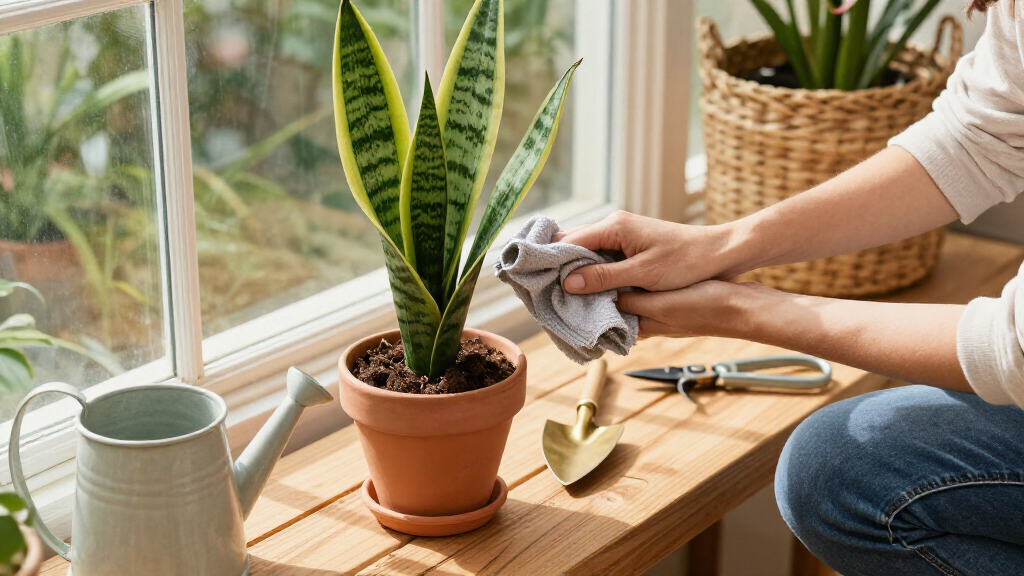

TL;DR

Get garden gear delivered free — and shop member deals
- Fast, free delivery on millions of items
- Access to Prime Big Deal Days deals on October 6–7
- Prime Video, Amazon Music and more included
Online interest in preparing snake plants for autumn and winter is spiking as September arrives. Core seasonal care practices — reducing watering, avoiding cold exposure, and checking roots — are long-established horticultural guidance, but the specific trigger for the current surge is unconfirmed.
Gardeners are searching in rising numbers for guidance on September snake plant care, as the change of seasons prompts houseplant owners to adjust routines before temperatures drop. The surge centers on a handful of seasonal tasks — cutting back watering, protecting plants from cold, and checking pot conditions — that reflect long-established horticultural practice for Sansevieria (now often classified as Dracaena trifasciata) rather than any new development or product launch.
Snake plants are succulent-leaning houseplants native to West Africa, where they evolved in dry, warm conditions. That origin explains nearly all of the standard September advice: as daylight shortens and indoor heating cycles begin, the plants enter a slower growth phase and need less water. Widely repeated guidance from extension services and plant-care references says the most common killer of snake plants is overwatering, and the risk grows in autumn when the soil stays wet longer in cooler rooms — a problem that often shows up as yellowing leaves.
The typical September checklist repeated across gardening publications includes six tasks: reduce watering frequency and let soil dry fully between waterings; stop or sharply reduce fertilizing until spring; move plants away from cold drafts, single-pane windows, and exterior doors; maintain temperatures above roughly 10°C (50°F); inspect for pests such as spider mites that thrive in dry indoor heating air; and check whether roots have outgrown the pot, repotting only if genuinely root-bound, since snake plants tolerate tight quarters.
None of these steps is new or contested. They reflect consensus care guidance accumulated over decades of houseplant horticulture. What is new — or at least newly measurable — is the spike in search interest around the phrasing “what snake plants need in September” and similar queries as the month begins. The metadata confirming this trend does not identify a specific article, expert statement, study, or event that set it off.
Why Seasonal Snake Plant Care Gains Attention
Snake plants are among the most widely kept houseplants globally, prized for tolerating neglect and low light. That hardiness creates a specific failure mode in autumn: owners who water on a summer schedule through the cooler months can leave roots sitting in cold, wet soil, which commonly leads to root rot. Extension-service guidance across multiple US states identifies overwatering as the leading cause of snake plant decline, so the September reset — less water, no fertilizer, stable warmth — is when the year’s biggest care mistakes are either avoided or made.
The trend also matters commercially. Houseplant sales remain elevated compared with pre-2020 levels, and autumn is a period when retailers and publishers push seasonal care content. A spike in care queries can signal that a large cohort of relatively new plant owners is reaching its first or second winter with plants that survived summer, and is now seeking guidance on the transition.
Established Care Basics Behind the Trend
Snake plants were long classified in the genus Sansevieria; molecular studies led to their reclassification into the genus Dracaena, though both names remain in common use in shops and care guides. Their native range across West Africa — arid, warm, with sharply seasonal rainfall — underpins the standard advice of fast-draining soil, infrequent watering, and protection from cold.
Seasonal care calendars for snake plants have appeared in gardening media for decades, and the September guidance being searched now closely mirrors long-published recommendations: water roughly every two to four weeks in the growing season and less in winter, withhold fertilizer from autumn through early spring, and keep the plant above about 10°C (50°F), since prolonged cold can damage leaves even before frost. The houseplant boom that began around 2020 enlarged the audience for this recurring advice, making each autumn’s search spike larger than the last.
What the Search Spike Does Not Tell Us
The verified information in this case is limited to the trend signal itself: a rise in search and content interest around September snake plant care. It is unconfirmed what triggered the current spike — whether an unusually popular article, a social media post, a retailer campaign, a early cold snap somewhere, or simply the ordinary seasonal cycle of houseplant queries. No specific study, expert announcement, product release, or named horticulturist is tied to the surge in the available metadata.
It is also unclear how the current level of interest compares with the same period in prior years, since no baseline figure or historical comparison is provided. The trend should be read as directional, not quantified. Any ‘six things’ framing circulating in headlines reflects routine seasonal advice and carries no independent verification of being a formal checklist from any authority.
The Calendar Ahead for Snake Plant Owners
Through October and November, care guidance typically narrows to winter mode: watering as little as once a month or less depending on home conditions, no fertilizer, and keeping plants clear of both cold windows and hot radiator drafts, which can stress foliage. Owners who repot in September should use a free-draining cactus or succulent mix. Come spring, guidance reverts to resumed watering and the option of light feeding. Search interest in seasonal plant care generally follows this calendar, so comparable spikes for winter preparation topics are likely in the coming weeks — though their size, as with the current surge, will depend on coverage and cannot be predicted from the available data.
Key Questions
How often should I water a snake plant in September?
Let the soil dry out completely between waterings, then water thoroughly. In September, as growth slows, this usually means stretching intervals — commonly two to four weeks or longer depending on light, temperature, and pot size. Overwatering is the leading cause of snake plant decline.
Should I fertilize my snake plant in September?
Standard guidance is to stop fertilizing in early autumn and resume in spring. Snake plants need few nutrients, and feeding a slow-growing or dormant plant can damage roots.
How cold is too cold for a snake plant?
Keep snake plants above roughly 10°C (50°F). Prolonged exposure to cold — especially cold drafts near windows and doors — can damage leaves even without frost.
Should I repot my snake plant in September?
Only if it is genuinely root-bound or toppling over. Snake plants tolerate crowded roots, and many references suggest repotting in spring if possible. If repotting is needed now, use a free-draining cactus or succulent mix.
Why is this topic trending right now?
Search interest in seasonal snake plant care typically rises each September as temperatures drop in the Northern Hemisphere. The current spike fits that pattern, but the specific trigger — a viral article, retail campaign, or weather event — is unconfirmed.
Source: rss
Fall Picks
fall essentials
As an affiliate, we earn on qualifying purchases.