
TL;DR

Get garden gear delivered free — and shop member deals
- Fast, free delivery on millions of items
- Access to Prime Big Deal Days deals on October 6–7
- Prime Video, Amazon Music and more included
Gardening Know How recommends Virginia sweetspire (Itea virginica) as a native alternative to burning bush, which the report says is invasive in many parts of the United States. Sweetspire offers fall foliage, fragrant early-summer flowers and habitat for wildlife, though its color varies by plant and growing conditions.
Gardening Know How is recommending Virginia sweetspire (Itea virginica) as an alternative to burning bush, a popular Asian shrub that the report says has become invasive in many parts of the United States. The native shrub can offer red, orange, purple or maroon fall foliage, fragrant early-summer flowers and habitat for wildlife, although its color varies with the plant and growing conditions.
Burning bush (Euonymus alatus) is widely planted for its vivid red autumn leaves. But the Gardening Know How report says its seeds can be spread by birds, allowing the shrub to escape gardens and establish in natural areas, where it can compete with native vegetation. The report notes that some states have restricted or banned its use in landscaping; it does not list those states or describe their specific rules.
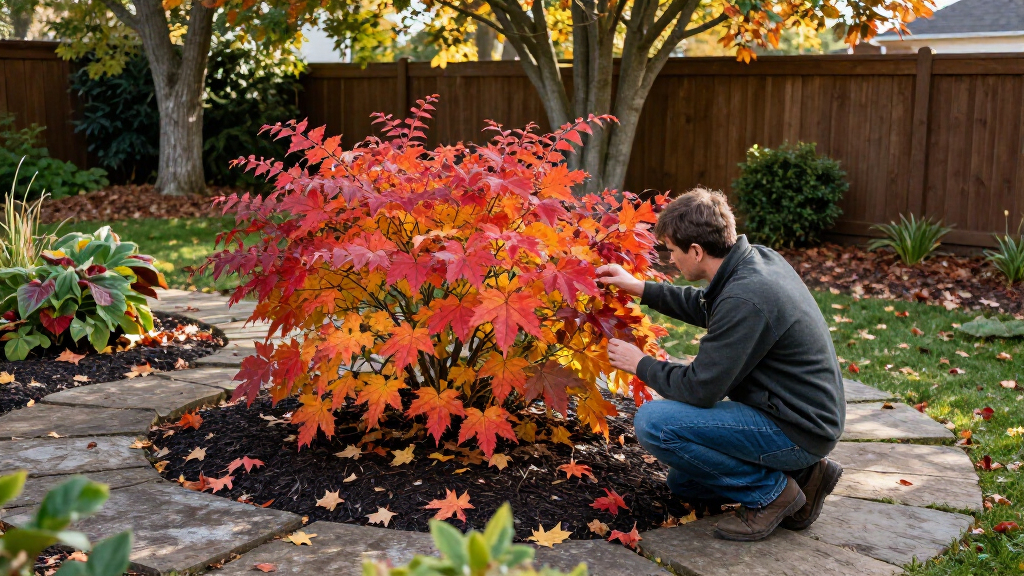
Virginia sweetspire is native to the eastern United States. Its glossy green leaves can turn several colors in fall, and its fragrant white flower spikes appear in early summer. The report also describes it as providing birds with cover and nesting habitat, while supporting bees, butterflies and hummingbirds.
The report cautions that sweetspire is not an identical substitute for burning bush and that autumn color is not uniform. Climate, growing conditions and the individual plant can affect both the intensity and duration of the display. It singles out the cultivar ‘Henry’s Garnet’ for gardeners prioritizing fall color, while also mentioning Little Henry® and Fountains of Rouge™ as other options.
A Colorful Choice With Wildlife Value
The recommendation matters to gardeners choosing shrubs for autumn color because burning bush can spread beyond cultivated gardens, according to the report. A plant that establishes in natural areas may compete with native vegetation, making the choice relevant beyond the look of an individual yard.
Virginia sweetspire provides a different mix of garden benefits across the seasons: flowers in early summer, fall foliage and wildlife habitat. That does not make it a guaranteed match for burning bush’s particular shade or intensity of red. Rather, it gives gardeners a native option with more than one season of ornamental interest, while the report’s account of regional restrictions is a reason to check local rules before buying burning bush.
As an affiliate, we earn on qualifying purchases.
Why Gardeners Plant Burning Bush
Burning bush became popular in part because its green leaves turn a striking crimson in fall. The source acknowledges that mature plants can be visually impressive, while arguing that appearance alone does not make a shrub suitable for every garden. Its concern is that bird-dispersed seeds can carry the plant into natural areas.
The suggested alternative, Virginia sweetspire, is also a deciduous shrub, but the report describes a broader seasonal display: white flowers in early summer and foliage that may shift to several colors in autumn. Its native range is the eastern United States. The source does not provide planting instructions, hardiness zones, or a comparison of the two shrubs’ maintenance needs, so gardeners should consult local horticultural guidance for those details.
““Beautiful doesn’t necessarily mean appropriate for every garden.””
— Gardening Know How
Fall Color and Local Rules Vary
The source does not give a publication date, identify which states restrict or ban burning bush, or link to specific regulations. The extent of those restrictions and whether they apply to a particular gardener depend on local rules that are not detailed in the report.
It is also not clear how intense or long-lasting a sweetspire’s fall color will be at any specific site. The report says climate, growing conditions and the individual plant affect the result. It provides no comparative trial data establishing that ‘Henry’s Garnet’ will produce a particular color or outperform other sweetspire cultivars in every location.
Check Restrictions Before Planting
Gardeners considering either shrub can first check local or state guidance on burning bush and ask a nursery about plants suited to their location. Those seeking Virginia sweetspire for fall color may wish to compare cultivars, including ‘Henry’s Garnet’, while keeping in mind that the display can vary. The source offers no further regulatory update or research milestone; its practical recommendation is to consider the native shrub before purchasing burning bush.
Key Questions
What shrub does the report recommend instead of burning bush?
It recommends Virginia sweetspire (Itea virginica), a shrub native to the eastern United States.
Does Virginia sweetspire have fall color?
Yes. The report says its foliage can turn red, orange, purple or maroon. The color and how long it lasts vary with climate, growing conditions and the plant.
Which sweetspire cultivar does the report suggest for autumn color?
It highlights ‘Henry’s Garnet’ for gardeners whose main reason for choosing a shrub is fall color. The source does not guarantee a specific result in every garden.
Why does the report raise concerns about burning bush?
It says burning bush is native to Asia and has become invasive in many parts of the United States. Birds can spread its seeds, allowing it to establish in natural areas and compete with native vegetation.
Does the report say burning bush is restricted everywhere?
No. It says several states have restricted or banned its use in landscaping, but does not name them. Gardeners should check the rules where they live.
Source: rss
Fall yard work Picks
leaf blowers
As an affiliate, we earn on qualifying purchases.