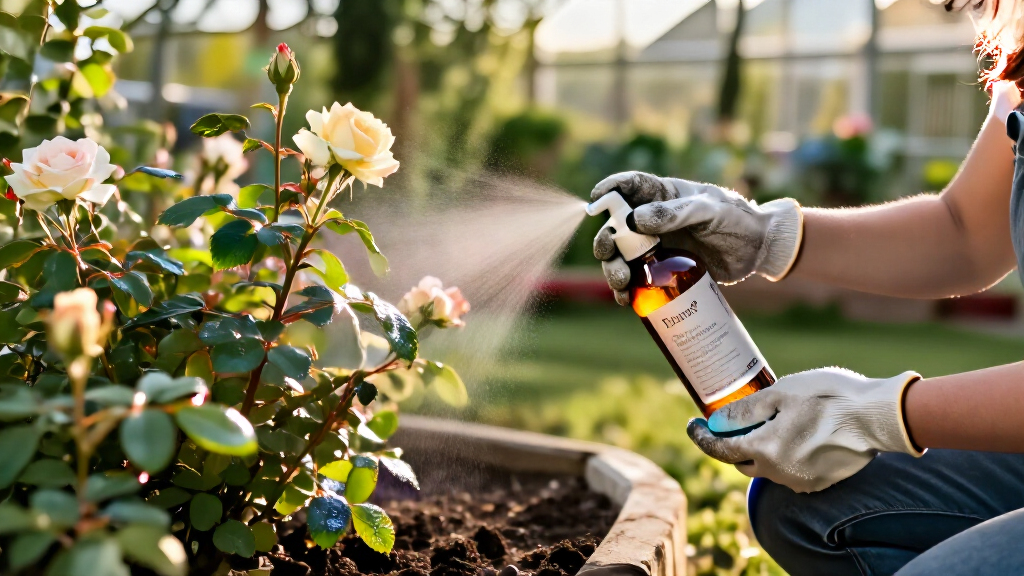

The best rose care products depend on whether your main need is feeding, disease prevention, or pest control. I rank BioAdvanced All-in-One Rose and Flower Care Granules as the best overall for gardeners seeking a combined feeding and protection approach, while Espoma Organic Rose-Tone stands out for organic-minded care and Miracle-GRO Water Soluble Rose Plant Food for quick, direct feeding. The key tradeoff is convenience versus control: combined treatments simplify routines, while separate fertilizers and sprays let you target a specific problem. Application method, treatment scope, and your preference for organic or conventional products also shape the choice. Read on for the full breakdown and help matching a product to your roses and routine.

Get garden gear delivered free with Prime
- Fast, free delivery on millions of items
- Prime Video, Amazon Music and more included
- Member-only deals all year
Complete the kit


Key Takeaways
- Combined-care granules lead for convenience: BioAdvanced All-in-One Rose and Flower Care Granules offer a broad-care approach, while the 2-in-1 and systemic alternatives put more emphasis on particular protection plans.
- Fertilizer and pest control solve different problems: Rose-Tone, Rose Booster, and the other plant foods feed roses; they are not substitutes for products aimed at insects or disease.
- Application style changes the workload: Water-soluble food calls for mixing and repeat attention, while spikes and granules reduce some routine measuring but still require label-directed placement and timing.
- Organic choices involve a different care routine: Espoma Rose-Tone, Jobe’s Organics, Dr. Earth, and Captain Jack’s appeal to shoppers seeking organic options, but they do not make pest or disease monitoring unnecessary.
- Targeted sprays make more sense for specific outbreaks: BioAdvanced Rose & Flower Insect Killer and Captain Jack’s Rose Rx are more focused choices than broad feeding products when insects or disease are the primary concern.


| rose care product | Brand | Target plants |
|---|---|---|
| BioAdvanced Disease Control fo | BioAdvanced | Roses, flowers, shrubs, trees, vines, and houseplants |
| Espoma Organic Rose-Tone 4-3-2 | Espoma | Roses and flowering plants |
| Farmer’s Secret Rose Booster F | Farmer’s Secret | — |
| Scotts Rose & Bloom Continuous | Scotts | Roses, annuals, and perennials |
| Miracle-GRO Water Soluble Rose | Miracle-GRO | — |
| BioAdvanced All-in-One Rose an | — | Roses and flowers |
| Jobe’s 4102 Rose Outdoor Ferti | — | — |
| BioAdvanced 2-in-1 Systemic Ro | — | — |
| BioAdvanced Rose & Flower Inse | — | Roses, flowers, vegetables, and outdoor plants |
| Jobe’s Organics Granular Rose | — | Roses, hydrangeas, hibiscus, azaleas, and flowering shrubs |
| Captain Jack’s Rose Rx 4-in-1 | Bonide | — |
| Dr. Earth Total Advantage Rose | — | — |
More Details on Our Top Picks
BioAdvanced Disease Control for Roses, Flowers & Shrubs Concentrate – 32 oz
I’d choose this concentrate when black spot or powdery mildew is a bigger concern than feeding or bloom support. Its systemic, rain-proof formula can protect treated plants for up to two weeks after drying, so it asks for less frequent attention than Miracle-GRO Water Soluble Rose Plant Food, which is reapplied every 7 to 14 days for nutrition rather than disease control. One bottle makes up to 42 gallons, a practical advantage for gardeners treating multiple roses and other listed plants. The tradeoff is that this is a targeted fungicide, not an all-purpose rose-care routine: it won’t replace fertilizer, and the concentrate must be mixed before spraying. It is also unavailable for sale in New York, Alaska, and Hawaii due to EPA restrictions.
Pros:- Targets common fungal diseases including black spot and powdery mildew.
- Systemic, rain-proof protection lasts up to two weeks after drying.
- One 32-ounce bottle makes up to 42 gallons of spray.
- Listed for roses as well as flowers, shrubs, trees, vines, and houseplants.
Cons:- Not available for sale in New York, Alaska, or Hawaii due to EPA restrictions.
- Requires dilution and spraying rather than ready-to-use application.
- Controls disease but does not provide the feeding benefits of rose fertilizers.
Best for: Rose growers managing recurring fungal problems across several plants who are comfortable mixing a concentrate and can legally buy it in their state.
Not ideal for: Gardeners in New York, Alaska, or Hawaii, or anyone seeking a fertilizer or a single product for general rose maintenance.
- Brand:BioAdvanced
- Form:Spray concentrate
- Volume:32 fluid ounces
- Active ingredient:Tebuconazole 2.9%
- Mix yield:Up to 42 gallons of spray
- Protection duration:Up to two weeks after drying
- Target plants:Roses, flowers, shrubs, trees, vines, and houseplants
- EPA registration number:92564-5
Our verdict“Choose this concentrate for broad, longer-lasting fungal protection across a rose garden, but pair it with a separate fertilizer for plant nutrition.”
Espoma Organic Rose-Tone 4-3-2 Fertilizer, 4 lb. for Roses & Flowering Plants, Includes pH Soil Test Strips, Gardening Claw Gloves, and Garden-IQ AI Assistant
This bundle is the most approachable pick here for gardeners who want to feed roses while getting a few basic tools in the same package. The organic 4-3-2 fertilizer also suits flowering plants, unlike Farmer’s Secret Rose Booster, which is specifically aimed at roses and calls for weekly dilution and application. The included pH strips and claw gloves add practical starter supplies, while Garden-IQ offers another source of guidance. Still, the 4-pound bag is better matched to a modest planting than a large rose bed, and the included accessories don’t replace a full set of garden tools. The AI advice may also feel less tailored than guidance from someone who knows your soil and local growing conditions.
Pros:- Organic 4-3-2 fertilizer is designed for roses and flowering plants.
- Includes pH soil test strips and gardening claw gloves.
- Garden-IQ AI assistant provides an additional source of gardening guidance.
- Can serve flowering plants beyond roses, unlike rose-only fertilizers in this lineup.
Cons:- The 4-pound quantity may not stretch across a large garden.
- Included accessories do not cover every tool needed for routine garden care.
- AI advice may be less personalized than local or soil-specific guidance.
Best for: New rose gardeners with a small to medium planting who want organic fertilizer plus basic soil-testing and hand-care accessories.
Not ideal for: Gardeners feeding many large beds, or experienced growers who already own tools and want advice tailored to their specific garden conditions.
- Brand:Espoma
- Fertilizer nutrient ratio:4-3-2
- Weight:4 pounds
- Item count:64 ounces
- Formulation:Organic fertilizer
- Included components:pH soil test strips and gardening claw gloves
- Additional feature:Garden-IQ AI assistant access
- Target plants:Roses and flowering plants
Our verdict“Pick this bundle for a small rose garden if organic feeding and useful starter extras matter more than bulk quantity or highly tailored advice.”
Farmer’s Secret Rose Booster Fertilizer (8oz) – Concentrated Formula for Healthy Roses and Vibrant Blooms
Farmer’s Secret suits rose growers who prefer a measured liquid feed and want a formula focused on roses rather than a general flowering-plant fertilizer. Its two-teaspoons-per-gallon mix makes an 8-ounce bottle go further than its size suggests, while the weekly schedule lets growers build feeding into regular watering. That routine is more hands-on than Scotts Rose & Bloom Continuous Release Plant Food, which feeds for up to two months after application. The narrower target is another tradeoff: this product is listed for roses, so Espoma Rose-Tone is a more flexible fit if you also feed other flowering plants. Choose this when rose-specific focus and concentrated mixing matter more than low-maintenance scheduling.
Pros:- Concentrated formula uses two teaspoons per gallon.
- Designed for all types of roses.
- Liquid application fits into a regular watering routine.
- Focused on supporting rose growth and blooms throughout the plant life cycle.
Cons:- Requires weekly application during the growing season.
- Rose-specific use makes it less versatile than Espoma Rose-Tone or Scotts Rose & Bloom.
- Requires dilution before application.
Best for: Rose growers with a modest number of plants who already water regularly and want a concentrated, rose-specific liquid feed.
Not ideal for: Gardeners seeking fertilizer for mixed flower beds or a low-effort option that does not require weekly application during the growing season.
- Brand:Farmer’s Secret
- Form:Liquid concentrate
- Unit count:7.98 fluid ounces
- Mixing ratio:2 teaspoons per 1 gallon of water
- Application method:Dilute and spray
- Application frequency:Weekly during the growing season
- Coverage:Medium
- Target species:Roses
Our verdict“Choose Farmer’s Secret if you want a concentrated feed for roses and don’t mind mixing it into a weekly care routine.”
Scotts Rose & Bloom Continuous Release Plant Food – 3 lb
For gardeners who tend to miss frequent feedings, Scotts offers the most forgiving schedule among these fertilizers: soil-applied granules feed for up to two months. That is less demanding than Miracle-GRO Water Soluble Rose Plant Food, which calls for repeat feeding every 7 to 14 days, and it avoids the weekly dilution required by Farmer’s Secret Rose Booster. The formula is also listed for annuals and perennials, making it useful beyond the rose bed. The compromise is less immediate control over each feeding and only medium coverage, which may mean buying or applying more for a larger garden. It’s a practical choice for steady maintenance, not for growers who want a liquid feed they can adjust with each watering.
Pros:- Continuous-release granules feed for up to two months.
- Applied directly to soil without mixing.
- Suitable for roses, annuals, and perennials.
- Less frequent application than the liquid feeds in this lineup.
Cons:- Medium coverage may require more product or additional applications for large gardens.
- Primarily suited to flowering plants rather than lawns or non-flowering vegetation.
- Granules offer less control over feeding timing than a water-soluble fertilizer.
Best for: Busy gardeners with roses and other flowering plants who want a simple granule application and fewer feeding sessions.
Not ideal for: Owners of large flower gardens needing broader coverage, or gardeners who prefer frequent liquid feeding with more control over each application.
- Brand:Scotts
- Form:Granules
- Package size:3 pounds (48 ounces)
- Nutrient ratio:12-4-8
- Feeding duration:Up to two months
- Coverage:Medium
- Target plants:Roses, annuals, and perennials
- Application method:Apply granules directly to soil
Our verdict“Pick Scotts for low-maintenance feeding across roses and other flowering plants, provided its medium coverage fits your garden size.”
Miracle-GRO Water Soluble Rose Plant Food, 1.5 lb
This is the lineup’s most flexible feeding option for gardeners who want to add fertilizer while watering, including those tending indoor roses. The water-soluble formula acts as an instant feed and can be applied with a watering can or garden feeder. That gives it a quicker, more frequent routine than Scotts Rose & Bloom, whose granules feed for up to two months, but also means returning to the task every 7 to 14 days. The indoor and outdoor directions make it more adaptable than Farmer’s Secret Rose Booster, which is described for roses but gives no separate indoor rate in the supplied details. Its focus remains narrow: this is rose food, not a feed for an entire mixed garden, and the formulation may not suit shoppers avoiding chemical fertilizers.
Pros:- Instant-feeding, water-soluble formula.
- Can be applied with a watering can or garden feeder.
- Listed for both indoor and outdoor roses.
- Includes separate dilution directions for indoor and outdoor use.
Cons:- Requires repeat feeding every 7 to 14 days.
- Rose-focused use is less versatile than Scotts Rose & Bloom for mixed flowering beds.
- Chemical formulation may not suit gardeners seeking an organic option.
Best for: Indoor and outdoor rose growers who already water regularly and want a fast-acting feed that works with a watering can or garden feeder.
Not ideal for: Gardeners who want infrequent feeding, need fertilizer for a mixed planting, or prefer to avoid chemical formulations.
- Brand:Miracle-GRO
- Form:Water-soluble plant food
- Package size:1.5 pounds
- Coverage:600 square feet
- Target species:Roses
- Application frequency:Every 7 to 14 days
- Outdoor mixing rate:1.5 tablespoons per 1.5 gallons of water
- Indoor mixing rate:0.5 teaspoon per 1 gallon of water
Our verdict“Choose Miracle-GRO if you want quick, routine feeding for indoor or outdoor roses and are comfortable reapplying it every one to two weeks.”
BioAdvanced All-in-One Rose and Flower Care Granules – 4 lb Bottle
BioAdvanced All-in-One Rose and Flower Care suits gardeners who want feeding, insect control, and disease control in one soil-applied product. Its granules avoid routine spraying, while the listed protection lasts up to six weeks and is rainproof—a longer-lasting, lower-contact routine than BioAdvanced Rose & Flower Insect Killer Spray, which offers up to 14 days of protection but lets you target foliage directly. The tradeoff is that this product does not let you choose fertilizer and pest treatment separately, and granules call for careful application. Its active ingredients include acephate and tebuconazole, so it is a poor fit for buyers seeking an organic approach. I’d choose it for roses and flowers where combined treatment is the priority, but check local sale restrictions before buying.
Pros:- Combines fertilizer, insect control, and disease control in one formula
- Provides rainproof protection for up to six weeks
- Granular application avoids spraying foliage
- Targets a range of pests and diseases on roses and flowers
Cons:- Uses chemical active ingredients rather than an organic approach
- Granules need careful application for best results
- Not available for sale in New York and intended for a limited range of plants
Best for: Rose and flower gardeners who want one soil-applied product to provide fertilizer, insect control, and disease control without regular spraying.
Not ideal for: Organic gardeners, buyers who want to treat only a specific pest or disease, and shoppers in New York where the product is not available for sale.
- Item form:Granules
- Package weight:4 lb
- Active ingredients:1.50% acephate; 0.48% tebuconazole
- Protection duration:Up to 6 weeks
- Protection type:Rainproof
- Uses:Fertilizer, insect control, and disease control
- Target plants:Roses and flowers
- EPA registration number:192-223-92564
Our verdict“Choose this if you want combined, longer-lasting care for roses and flowers and are comfortable using a chemical granular treatment.”
Jobe’s 4102 Rose Outdoor Fertilizer Food Spikes, 10 Pieces, 16 oz (Pack of 2)
Jobe’s Rose Outdoor Fertilizer Food Spikes are a straightforward pick for rose growers who want to feed plants without measuring loose granules or mixing a liquid solution. The premeasured sticks go directly into the soil, supplying nutrients below the surface near the roots. Compared with Jobe’s Organics Granular Rose Fertilizer, the spikes simplify individual applications, but they give you less flexibility to spread or adjust the amount across a bed. They also address nutrition only: they do not replace an insect or disease treatment like BioAdvanced All-in-One Rose and Flower Care. The product is specifically for roses, and the description points to early spring use for best results, so it is less adaptable for gardeners looking for repeated seasonal feeding across different flowering plants.
Pros:- Premeasured spikes reduce mixing and measuring
- Insert-into-soil application keeps feeding relatively mess-free
- Slow-release nutrients are supplied below the soil surface
- Designed specifically to support rose growth and blooms
Cons:- Limited to rose plants rather than a broader range of flowering shrubs
- Does not control insects or plant diseases
- Early spring application is emphasized for best results
Best for: Rose gardeners who prefer a premeasured, no-mix feeding method for established outdoor plants, especially when applying fertilizer in early spring.
Not ideal for: Gardeners feeding mixed flowering shrubs or seeking pest and disease control alongside fertilizer; the spikes are rose-specific and provide nutrients only.
- Item form:Sticks
- Pack contents:10 pieces, pack of 2
- Package weight:2.4 lb
- Target species:Roses
- Application method:Insert into soil
- Nutrient release:Slow-release
- Recommended timing:Early spring
- Specific uses:Landscape and lawn
Our verdict“Pick these spikes for simple, low-mess rose feeding, but choose a broader granular fertilizer if you need to treat several kinds of flowering plants.”
BioAdvanced 2-in-1 Systemic Rose and Flower Care Granules – 5 lb Bottle
BioAdvanced 2-in-1 Systemic Rose and Flower Care pairs fertilizer with insect control, making it a more focused option than the All-in-One BioAdvanced granules, which also add disease control. Its up-to-eight-week rainproof protection offers a longer stated interval than that product’s six weeks, and the listed coverage of up to 40 rose bushes helps gardeners plan treatment for a larger planting. Application is still a hands-on soil task: sprinkle the granules, work them in, then water. This is not a spray for quick, selective treatment, and the imidacloprid active ingredient may put off gardeners who prefer organic care or want to limit chemical insecticides. Sale restrictions also apply in several states, so confirm availability before choosing it.
Pros:- Combines plant feeding with insect control
- Provides rainproof protection for up to eight weeks
- Listed to treat up to 40 rose bushes
- Simple sprinkle, work into soil, and water application
Cons:- Contains imidacloprid, which may not suit gardeners limiting chemical insecticides
- Does not include disease control, unlike BioAdvanced All-in-One Rose and Flower Care
- Requires working granules into the soil and watering, with state sale restrictions
Best for: Gardeners with multiple rose bushes who want fertilizer and systemic insect control in a rainproof granular treatment with an extended protection interval.
Not ideal for: Organic gardeners, people seeking disease control in the same product, or buyers in states where this product is not available for sale.
- Item form:Granules
- Package weight:5 lb
- Active ingredient:Imidacloprid 0.22%
- Coverage:Up to 40 rose bushes
- Application:Sprinkle, work into soil, and water in
- Protection duration:Up to 8 weeks
- Protection type:Rainproof
- Uses:Fertilization and insect control
Our verdict“Choose this for extended systemic insect control and feeding across a larger rose planting, provided it is available in your state.”
BioAdvanced Rose & Flower Insect Killer Spray – 24 oz Bottle
BioAdvanced Rose & Flower Insect Killer Spray is the most direct choice here when visible pests need treatment on foliage: the ready-to-use bottle kills more than 100 listed pests on contact, including aphids and Japanese beetles. That makes it easier to target an affected plant than either BioAdvanced granular treatment, which is applied to soil and combines pest control with feeding. The compromise is a shorter window: protection lasts up to 14 days, compared with up to six weeks for BioAdvanced All-in-One Rose and Flower Care and up to eight weeks for its 2-in-1 sibling. The spray also requires careful application to avoid dripping, and its chemical insecticide may not suit gardeners seeking organic pest management. I’d pick it for targeted outdoor treatment, not as a complete rose-feeding routine.
Pros:- Ready-to-use spray avoids mixing a concentrate
- Kills more than 100 pests on contact
- Provides up to 14 days of protection
- Suitable for roses, flowers, vegetables, and outdoor plants
Cons:- Protection lasts less time than either BioAdvanced granular option
- Does not provide fertilizer or disease control
- Requires careful spraying to avoid drips and contains a chemical insecticide
Best for: Rose and flower growers who want a ready-to-use spray for visible pest problems across outdoor plants, vegetables, and flowers.
Not ideal for: Gardeners who want fertilizer included, longer-lasting treatment, or an organic pest-control option.
- Item form:Ready-to-use spray
- Volume:24 oz
- Package weight:1.5 lb
- Active ingredient:Cyfluthrin 0.003%
- Pest control:Kills more than 100 pests on contact
- Protection duration:Up to 14 days
- Target plants:Roses, flowers, vegetables, and outdoor plants
- EPA registration number:92564-18
Our verdict“Choose this spray for direct treatment of visible outdoor pests, but look to a granular option for longer-lasting care that also feeds roses.”
Jobe’s Organics Granular Rose Fertilizer, Organic Plant Fertilizer for Roses and Flowering Shrubs, 4 lbs
Jobe’s Organics Granular Rose Fertilizer is the feeding-focused choice for gardeners who want an organic product rather than the insecticides found in BioAdvanced All-in-One Rose and Flower Care or the systemic 2-in-1 granules. Its OMRI listing and 3-4-3 NPK ratio make it a better fit for organic gardening routines, while its plant range extends beyond roses to hydrangeas, hibiscus, azaleas, and other flowering shrubs. That broader feeding use comes with a recurring task: the product calls for application every six weeks or as needed during blooming season. Unlike the BioAdvanced options, it does not offer pest or disease control, so a gardener dealing with an active infestation needs a separate product. I’d choose it for organic bloom feeding, not all-in-one rose protection.
Pros:- OMRI listed for organic gardening
- 3-4-3 NPK ratio is specified
- Suitable for roses and several flowering shrubs
- Granular format is easy to measure and apply
Cons:- Requires repeat applications about every six weeks or as needed
- Does not control insects or diseases, unlike BioAdvanced combination granules
- Its listed target plants are flowering plants and shrubs rather than all garden plants
Best for: Organic gardeners feeding roses and several kinds of flowering shrubs who want an OMRI-listed granular fertilizer and do not need built-in pest control.
Not ideal for: Gardeners seeking insect or disease treatment in the same product, or those who prefer a less frequent feeding schedule.
- Item form:Granules
- Package weight:4 lb
- NPK ratio:3-4-3
- Organic listing:OMRI listed
- Application frequency:Every 6 weeks or as needed during blooming season
- Target plants:Roses, hydrangeas, hibiscus, azaleas, and flowering shrubs
- Use:Organic plant fertilizer
Our verdict“Choose this for organic feeding across roses and flowering shrubs, and plan on separate pest or disease treatments if needed.”
Captain Jack’s Rose Rx 4-in-1 Insect & Disease Control, 32 oz Ready-to-Use Spray Neem Oil for Organic Gardening
Captain Jack’s Rose Rx is the most targeted choice here for gardeners who need to address both insects and common rose diseases without mixing a concentrate. Its ready-to-use neem oil spray covers pests such as aphids and beetles, along with problems including rust and powdery mildew, making it more versatile for those issues than a fertilizer or a product focused on feeding. Compared with BioAdvanced Rose & Flower Insect Killer Spray, this pick is the better fit for buyers seeking an option described as suitable for organic gardening; the tradeoff is that it calls for repeat applications every 7–14 days. A trigger bottle keeps application straightforward, but severe infestations may take multiple treatments, and spray-based control may not suit gardeners who prefer a non-spray approach. Its harvest-day use guidance is useful for edible plants, though the label directions should guide application.
Pros:- Addresses insects, mites, nematodes, and listed diseases in one product
- Ready-to-use trigger bottle avoids measuring or diluting concentrate
- Suitable for organic gardening
- Can be used up to the day of harvest according to the product description
Cons:- Requires reapplication every 7–14 days for best results
- Severe infestations may need multiple applications
- Spray application may not suit gardeners who prefer non-spray controls
Best for: Rose gardeners who want a ready-to-spray neem oil option for managing common pests and fungal problems on ornamental or edible plants.
Not ideal for: Gardeners seeking long-lasting control with fewer applications, or those who avoid spraying and prefer another pest-management method.
- Brand:Bonide
- Product type:Ready-to-use insect, disease, mite, and nematode control spray
- Active ingredient:Cold-pressed neem oil
- Volume:32 fluid ounces
- Model number:820
- Part number:820
- Gardening suitability:Suitable for organic gardening
- Harvest timing:May be applied up to the day of harvest
Our verdict“Choose Captain Jack’s Rose Rx if you want one ready-to-use neem oil spray for common rose pests and diseases and can keep up with repeat applications.”
Dr. Earth Total Advantage Rose & Flower Fertilizer 4 lb
Dr. Earth Total Advantage suits gardeners who want to feed roses while also prioritizing soil-focused, organic ingredients. Its granular format is spread around plants rather than mixed as a liquid, which can appeal to buyers who prefer solid fertilizer over the mixing routine of Miracle-GRO Water Soluble Rose Plant Food. The product is also intended for flowers, shrubs, trees, annuals, and perennials, so one bag can serve a mixed planting rather than roses alone. Its non-GMO description and human- and feed-grade ingredients are distinguishing points for households attentive to what they use around pets and people. The tradeoff is that granules are less convenient than a liquid for quick feeding, and the product may need frequent applications. It feeds plants; unlike Captain Jack’s Rose Rx, it is not a pest or disease treatment.
Pros:- Organic, non-GMO fertilizer intended to support healthy soil and blooms
- Suitable for roses, flowers, trees, shrubs, annuals, and perennials
- Granular form avoids measuring and mixing a liquid solution
- Made with human- and feed-grade ingredients and described as safe for people and pets
Cons:- May require frequent applications for best results
- Granules are less convenient than liquid fertilizer for some routines
- Does not control pests or diseases, unlike Captain Jack’s Rose Rx
Best for: Gardeners with roses and mixed flower beds who prefer an organic granular fertilizer and want one product for several types of ornamental plants.
Not ideal for: Buyers who want a liquid feed for quick application, infrequent feeding, or a product that also controls rose pests and diseases.
- Form:Granules
- Weight:4 lb
- Intended plants:Roses, flowers, flowering trees, shrubs, annuals, and perennials
- Gardening suitability:Organic; non-GMO
- Coverage:Medium
- Target species:Flowers, roses, flowering trees, shrubs, annuals, and perennials
- Manufacturing:Sustainably produced in the USA
- Mixing ratio:1:1
Our verdict“Pick Dr. Earth Total Advantage if you want an organic granular feed for roses and a broader flower garden, but skip it if you need pest control or liquid convenience.”
How We Picked
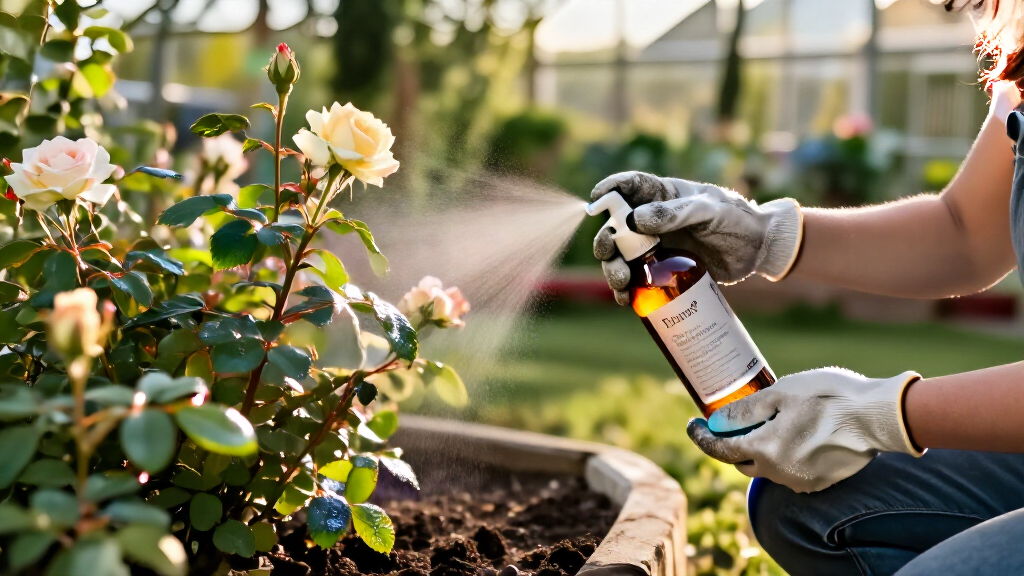
I compared the 12 products by the job they are designed to do: nourish roses, address insect pressure, manage disease, or combine care tasks. I also weighed application effort, treatment scope, format, and how easily a gardener can match the product to a particular rose-care routine. A fertilizer was judged as a feeding option, not as a pest treatment; sprays and protective granules were judged by the needs they target, not by their ability to replace sound watering and garden care.
The ranking favors versatility and a clear role without treating every product as interchangeable. BioAdvanced All-in-One Rose and Flower Care Granules take the top position for shoppers seeking a combined approach, while focused fertilizers and sprays rank for their more specific uses. Organic options remain strong picks for readers who prioritize that preference, but a specialized conventional product may suit a defined pest or disease concern better. Since exact needs vary by plant, pest, and label directions, I treat the product descriptions as a starting point rather than a universal treatment plan.
| rose care product | Brand | Target plants |
|---|---|---|
| BioAdvanced Disease Control fo | BioAdvanced | Roses, flowers, shrubs, trees, vines, and houseplants |
| Espoma Organic Rose-Tone 4-3-2 | Espoma | Roses and flowering plants |
| Farmer’s Secret Rose Booster F | Farmer’s Secret | — |
| Scotts Rose & Bloom Continuous | Scotts | Roses, annuals, and perennials |
| Miracle-GRO Water Soluble Rose | Miracle-GRO | — |
| BioAdvanced All-in-One Rose an | — | Roses and flowers |
| Jobe’s 4102 Rose Outdoor Ferti | — | — |
| BioAdvanced 2-in-1 Systemic Ro | — | — |
| BioAdvanced Rose & Flower Inse | — | Roses, flowers, vegetables, and outdoor plants |
| Jobe’s Organics Granular Rose | — | Roses, hydrangeas, hibiscus, azaleas, and flowering shrubs |
| Captain Jack’s Rose Rx 4-in-1 | Bonide | — |
| Dr. Earth Total Advantage Rose | — | — |
Factors to Consider When Choosing Best Rose Care Products
Start with the problem you are trying to solve, then choose the format and treatment scope that fit your garden. A product that feeds roses cannot automatically address insects or disease, and a combined-care formula may not be the right choice when you only need one targeted treatment.
Match the product to the symptom
Before buying, identify whether the concern is weak growth, limited flowering, visible insect activity, or signs of disease. These issues can look similar at a glance, so avoid treating every stressed rose with fertilizer. Extra feeding will not fix insect damage, and a pest spray is not a substitute for suitable nutrition. Check the product label for the specific problems it addresses and the plants it can be used on. If the cause is unclear, observe the plant and seek local gardening guidance before applying multiple treatments. This simple diagnosis can prevent unnecessary applications and make the product choice more precise.
Choose combined care or a targeted product
Products combining care functions can reduce the number of separate products in a shed, which may appeal to gardeners managing several roses. Their broader scope is not always an advantage: you may prefer a single-purpose fertilizer or spray when only one issue needs attention. Avoid layering products with overlapping ingredients or treatment claims unless their labels allow it. A targeted option can make it easier to follow one set of directions and monitor the result. A combined product suits convenience-minded shoppers, while separate products give more control over what gets applied and when.
Pick a format you can apply consistently
Water-soluble foods require mixing and careful measurement, so they suit gardeners comfortable with a recurring hands-on routine. Granules and spikes can reduce mixing, but placement and application timing still matter; they are not maintenance-free. Ready-to-use sprays are convenient for directed application, yet they may require repeat use according to the label. Think about how many plants you have, whether you can reach their bases or foliage, and how often you can tend them. The most useful format is the one you can apply correctly, rather than the one that sounds easiest on the package.
Decide how much organic preference matters
Organic-labeled options in this roundup include Espoma Rose-Tone, Jobe’s Organics Rose Fertilizer, Dr. Earth Total Advantage, and Captain Jack’s Rose Rx. Their presence gives shoppers alternatives across both feeding and spray categories, but organic does not mean risk-free or appropriate for every plant and setting. Read the label for use instructions, precautions, and the specific claims made for the product. Do not assume an organic fertilizer controls pests, or that an organic spray provides the same treatment scope as a different formula. Choose according to your gardening priorities and the actual problem you need to address.
Check coverage, timing, and repeat-care needs
Package size alone does not tell you how long a product will last; application rate, number of roses, and repeat schedule matter too. Concentrates may stretch across multiple applications but call for accurate dilution, while ready-to-use formats trade mixing for a more limited volume. Follow the label’s instructions for timing and frequency rather than adding more in hopes of faster results. If your roses need ongoing attention, consider whether the routine is manageable through the growing season. Matching expected coverage to your garden helps avoid running short or buying a format that is awkward for your plant count.
Treat plant health as more than a product choice
Rose care products work alongside basic practices, not in place of them. Watering habits, sunlight, airflow, soil conditions, and removing affected plant material can all shape how roses grow and how problems develop. Adding several products at once can make it hard to tell what helped or caused a reaction. Introduce treatments according to their labels and observe the plant before making further changes. If a rose continues to decline, reassess its growing conditions and the diagnosis rather than automatically increasing fertilizer or spray use.
Frequently Asked Questions
Should I buy a fertilizer or a rose disease and insect treatment first?
Choose according to the visible problem, not the broad label of rose care. If the main concern is feeding and bloom support, compare the fertilizer options; if you see insect activity or disease symptoms, look at products whose labels specifically address that issue. Fertilizer does not replace pest or disease control, and treatment products may not provide meaningful nutrition. When symptoms are uncertain, identify the cause before applying anything. This avoids spending effort on a product aimed at the wrong problem.
Is an all-in-one rose product better than buying separate products?
An all-in-one option can simplify storage and application when its stated uses match the needs of your garden. Separate products make more sense when you have a specific feeding need or a clearly identified pest or disease issue and want to treat only that concern. A combined formula may include functions you do not need, so compare its label with your actual symptoms. Do not combine products without checking their directions for compatibility and timing. Convenience matters, but the right scope matters more.
Which format is easiest for a new rose gardener to manage?
Ease depends on the task and your comfort with measuring, mixing, or applying products around plants. Ready-to-use sprays avoid dilution, while spikes and granules avoid mixing; water-soluble food calls for more active preparation. Each format still requires careful label reading and correct placement or coverage. A beginner may find one straightforward format easier, but should not assume it needs less attention after application. Start with one product that matches a clear need instead of assembling a multi-product routine immediately.
Can I use an organic fertilizer and a conventional rose spray in the same garden?
Gardeners can choose different product types for different tasks, but each product’s label governs where and how it may be used. An organic fertilizer and a conventional spray are not interchangeable, and the fertilizer will not control the problem targeted by the spray. Check directions for timing, plant compatibility, and any restrictions before using products close together. Avoid making multiple applications at once when you cannot tell how the rose responds. If you have concerns about combining treatments, ask a local gardening professional for advice based on the products and symptoms involved.
How do I choose between a concentrate and a ready-to-use spray?
A concentrate can suit gardeners treating multiple plants who are comfortable measuring and diluting it according to its label. A ready-to-use spray reduces preparation and may be more convenient for a small number of roses or occasional spot treatment. Compare the stated coverage and application instructions rather than judging by bottle size alone. Concentrates add measuring responsibility, while ready-to-use formats can use up their supply faster across a larger garden. Choose the format that fits your plant count and lets you apply the product accurately.
Conclusion
For most shoppers seeking one broad-care starting point, I recommend BioAdvanced All-in-One Rose and Flower Care Granules as the best overall pick. For best value in routine feeding, compare the straightforward fertilizer formats, with Scotts Rose & Bloom Continuous Release Plant Food as a practical choice for gardeners who want a release-style feeding option; for best for beginners, Miracle-GRO Water Soluble Rose Plant Food offers a clear, focused feeding role if mixing fits your routine. Best for organic-minded care goes to Espoma Organic Rose-Tone for its rose-focused fertilizer positioning and included soil test strips. For specific insect or disease concerns, choose a targeted spray or protective product only when its label matches the problem. The best fit is the product whose job, application style, and treatment scope line up with your roses—not simply the one with the broadest claims.