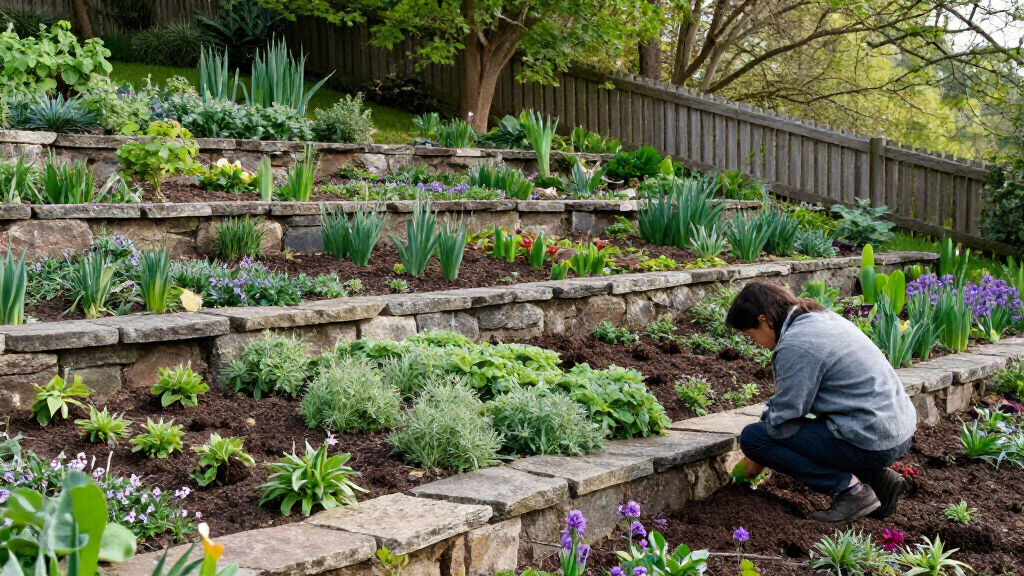

The best plants for sloping gardens combine spreading roots with growth suited to your sun, soil, and maintenance preferences. I’d rank Blue Rug Juniper as the strongest all-around live-plant option for a lasting, low-growing evergreen cover; Creeping Thyme stands out for sunny, drier slopes, while Black Scallop Ajuga offers a bolder foliage choice for shadier areas. The main tradeoffs are how quickly plants fill in, whether you want seeds or established starts, and how much trimming or containment a vigorous spreader may need. No single ground cover suits every slope, and drainage, exposure, and local growing conditions matter as much as the plant name. Read on for the full comparison and guidance on matching each option to your hillside.

Get garden gear delivered free with Prime
- Fast, free delivery on millions of items
- Prime Video, Amazon Music and more included
- Member-only deals all year
Complete the kit


Key Takeaways
- Blue Rug Juniper is the lead all-around live option: its low, evergreen habit suits buyers seeking year-round slope cover, while seed-based picks require more patience before they form a mat.
- Creeping Thyme offers two seed-format choices: both listings target ground cover, but large seed counts do not guarantee faster establishment or more reliable coverage on a steep, exposed bank.
- Aubrieta appears twice as a seed pick: compare the listings by quantity and seller details rather than treating duplicate plant types as meaningfully different landscape solutions.
- Established plants and seeds solve different problems: live juniper, ajuga, ivy, creeping Jenny, and drift roses give a head start; seeds can cover a broader area but need suitable conditions and time.
- Plant choice should follow site conditions: thyme and juniper are better candidates for sunnier, drier slopes, while ajuga and creeping Jenny are worth considering for shadier, moister areas—with spreading behavior checked before planting.
| Purple Aubrieta Rock Cress Seeds for Ground Cover |  | Best for Fine Gaps Between Stones | Seed quantity: 2,500+ | Plant type: Perennial ground cover | Flower color: Purple | VIEW LATEST PRICE | See Our Full Breakdown |
| 10 Blue Rug Juniper ‘Wiltonii’ Live Starter Plants |  | Best Evergreen Slope Stabilizer | Quantity: 10 live starter plants | Scientific name: Juniperus horizontalis ‘Wiltonii’ | Mature height: 4–6 inches | VIEW LATEST PRICE | See Our Full Breakdown |
| CarpetC Mixed Verbena Seeds, 1,500+, Creeping Perennial Ground Cover |  | Best for Long-Season Color in Warm Climates | Seed quantity: 1,500+ | Plant type: Verbena hybrida | Growth habit: Creeping, trailing ground cover | VIEW LATEST PRICE | See Our Full Breakdown |
| 2,000 Purple Aubrieta (Rock Cress) Flower Seeds |  | Best Aubrieta for Guided Seed Starting | Seed count: 2,000 | Plant: Aubrieta deltoidea (rock cress) | Flower color: Purple | VIEW LATEST PRICE | See Our Full Breakdown |
| Perfect Plants Red Drift Roses Live Plants, 1 Gallon, Ground Cover Bush |  | Best for Flowering Shrub-Like Coverage | Plant format: Live plant, 1-gallon size | Unit count: 1 | Mature height: 1–2 feet | VIEW LATEST PRICE | See Our Full Breakdown |
| Lemon Thyme Seeds, 10,000+ Seeds for Ground Cover and Herb Gardens |  | Best Fragrant Herb Ground Cover | Seed quantity: 10,000+ | Package weight: 1.05 ounces | Plant type: Perennial herb | VIEW LATEST PRICE | See Our Full Breakdown |
| Hillside Landscaping: A Complete Guide to Successful Gardens on Sloping Ground |  | Best Planning Resource for Slopes | Format: Book | Subject: Landscaping gardens on sloping ground | Title: Hillside Landscaping: A Complete Guide to Successful Gardens on Sloping Ground | VIEW LATEST PRICE | See Our Full Breakdown |
| Creeping Jenny (Lysimachia nummularia), 2 Live Plants |  | Best for Quick-Spreading Color | Pack size: 2 live plants | Botanical name: Lysimachia nummularia | Mature height: About 4 inches | VIEW LATEST PRICE | See Our Full Breakdown |
| Black Scallop Ajuga Live Ground Cover Plants, 2-Pack, 1-Quart Pots |  | Best for Shady, Year-Round Interest | Pack size: 2 plants | Pot size: 1 quart | Foliage: Glossy dark purple | VIEW LATEST PRICE | See Our Full Breakdown |
| 17,500 Creeping Thyme Seeds for Ground Cover |  | Best Value Seed Coverage | Seed count: 17,500 | Plant type: Perennial herb | USDA hardiness zones: 5–9 | VIEW LATEST PRICE | See Our Full Breakdown |
| 32,000+ Mixed Creeping Thyme Seeds – Ground Cover for Lawns & Gardens |  | Best for Large Sunny Slopes | Seed count: 32,000+ | Plant type: Creeping thyme | Bloom colors: Red, purple, blue, and bright red | VIEW LATEST PRICE | See Our Full Breakdown |
| English Ivy Groundcover and Climbing Vine, 50 Plants in 2-Inch Pots |  | Best for Shady Slope Coverage | Plant type: English ivy (Hedera helix) | Quantity: 50 rooted plants | Pot size and material: 2-inch degradable peat pots | VIEW LATEST PRICE | See Our Full Breakdown |
| plants for sloping garden | Plant type | USDA hardiness zones |
|---|---|---|
| Purple Aubrieta Rock Cress See | Perennial ground cover | 4–11 |
| 10 Blue Rug Juniper ‘Wiltonii’ | — | — |
| CarpetC Mixed Verbena Seeds | Verbena hybrida | — |
| 2,000 Purple Aubrieta | — | — |
| Perfect Plants Red Drift Roses | — | — |
| Lemon Thyme Seeds | Perennial herb | 4–11 |
| Hillside Landscaping: A Comple | — | — |
| Creeping Jenny | — | — |
| Black Scallop Ajuga Live Groun | — | 4–9 |
| 17,500 Creeping Thyme Seeds fo | Perennial herb | 5–9 |
| 32,000+ Mixed Creeping Thyme S | Creeping thyme | 5–9 |
| English Ivy Groundcover and Cl | English ivy (Hedera helix) | 4–9 |
More Details on Our Top Picks
Purple Aubrieta Rock Cress Seeds for Ground Cover
For a sunny slope broken up by rocks or edging, Purple Aubrieta offers a low-growing cover that can spread into narrow spaces where taller plants would look out of place. Its listed height is just 3 inches, making it a more restrained choice than CarpetC Mixed Verbena, which grows 8–12 inches tall and trails farther above the soil. Aubrieta is described as a perennial suited to zones 4–11, so it may return in a broad range of climates, though the listing’s summer-to-fall bloom period differs from the spring display associated with many rock-cress plantings. The tradeoff is that seeds need full sun and sandy, well-drained soil; they are a poor match for shaded or persistently wet slopes. Choose this for a low profile, not fast, instant coverage.
Pros:- Very low listed height suits spaces between stones and along rock-garden edges.
- Perennial growth is described as cold-hardy and returning year after year.
- Purple blooms can attract bees, butterflies, and other pollinators.
- Large seed quantity gives gardeners material for broad, gradual planting.
Cons:- Needs full sun and sandy, well-drained soil, limiting where it will thrive.
- At 3 inches tall, it may not provide substantial cover on its own.
- Seed-grown coverage takes time and is not an instant solution for bare soil.
Best for: Gardeners filling sunny, well-drained slope gaps between stones who want a low-growing perennial from seed.
Not ideal for: Buyers who need immediate erosion cover, have shade or heavy wet soil, or want taller plants to screen a slope.
- Seed quantity:2,500+
- Plant type:Perennial ground cover
- Flower color:Purple
- Expected height:3 inches
- Sunlight:Full sun
- Soil:Sandy, well-drained
- USDA hardiness zones:4–11
- Watering:Moderate
- Blooming period:Summer to fall
Our verdict“Pick this Aubrieta for low, flowering coverage in sunny rock gardens, but choose live Blue Rug Juniper if you need broader evergreen slope cover sooner.”
10 Blue Rug Juniper ‘Wiltonii’ Live Starter Plants
Blue Rug Juniper is the strongest fit here when the main job is covering a sunny incline with persistent foliage rather than seasonal flowers. Its listed 6–8-foot spread gives each low-growing plant room to cover ground, while a mature height of 4–6 inches keeps the planting close to the slope. Unlike Purple Aubrieta or CarpetC Mixed Verbena, it stays evergreen and is described as tolerant of drought, heat, and poor rocky soil once established. That broader, tougher habit comes with practical caveats: the starter plants need to be soaked before planting, and the product information gives conflicting hardiness ranges, listing both zones 5–10 and 3–9. I would verify local cold suitability before ordering. It also needs full sun and will not deliver the flowers or pollinator display of the seed-grown options.
Pros:- Wide 6–8-foot spread can cover substantially more ground than compact flowering Aubrieta.
- Evergreen foliage retains coverage through the year and shifts toward purple in winter.
- Tolerates drought, heat, and poor rocky soil once established.
- Low 4–6-inch mature height suits slopes where tall growth would obstruct views.
Cons:- Requires full sun and a 30-minute water soak after arrival before planting.
- Hardiness information conflicts between zones 5–10 and 3–9.
- Does not provide the flowering color or pollinator appeal of Verbena or Aubrieta.
Best for: Homeowners with sunny, rocky slopes who want low evergreen coverage and can give starter plants time to establish.
Not ideal for: Gardeners seeking flowers, planting in shade, or relying on a precise hardiness-zone match without checking the conflicting listing information.
- Quantity:10 live starter plants
- Scientific name:Juniperus horizontalis ‘Wiltonii’
- Mature height:4–6 inches
- Spread:6–8 feet
- Foliage:Silvery blue, turning purplish blue in winter
- Sunlight:Full sun
- Hardiness zones:Conflicting listing: 5–10 and 3–9
- Soil:Sandy soil
- Watering:Moderate; drought tolerant once established
Our verdict“Choose Blue Rug Juniper for broad, evergreen coverage on a sunny rocky slope, provided its local hardiness range checks out.”
CarpetC Mixed Verbena Seeds, 1,500+, Creeping Perennial Ground Cover
For a sunny slope where flowers matter as much as ground coverage, CarpetC Mixed Verbena brings a longer stated bloom window than either Purple Aubrieta seed listing: it can flower from late spring until frost. Its creeping stems form mats, with plants listed at 8–12 inches tall and 12–24 inches wide, so it makes a more noticeable, trailing display than 3-inch Aubrieta. The climate restriction is the deciding tradeoff: Verbena is perennial in zones 8–11 and annual in colder regions, while the Aubrieta options are listed for wider hardiness ranges. Seeds also need light to germinate and may take 20–30 days at the stated temperature, adding work before slope coverage develops. I’d choose it for warm-region color and pollinators, not as a dependable perennial in a cold climate.
Pros:- Long stated bloom period extends from late spring until frost.
- Creeping growth can form dense mats that help cover soil and suppress weeds.
- Mixed-color flowers attract bees, butterflies, and hummingbirds.
- Tolerates drought once established.
Cons:- Perennial only in zones 8–11; colder gardens must treat it as an annual.
- Seeds need light to germinate and can take 20–30 days under the listed conditions.
- Requires full sun and well-drained soil.
Best for: Gardeners in zones 8–11 who want a flowering, spreading ground cover for a sunny slope and are willing to start seeds indoors.
Not ideal for: Cold-climate buyers seeking a perennial planting or anyone needing immediate, low-maintenance erosion coverage.
- Seed quantity:1,500+
- Plant type:Verbena hybrida
- Growth habit:Creeping, trailing ground cover
- Height:8–12 inches
- Spread:12–24 inches
- Bloom period:Late spring until frost
- Hardiness zones:8–11
- Seed starting:Indoors 8–10 weeks before last frost
- Germination:20–30 days at 65–75°F
Our verdict“Choose Verbena over Aubrieta for a longer, taller flowering display in warm zones, but skip it if your slope needs a cold-hardy perennial.”
2,000 Purple Aubrieta (Rock Cress) Flower Seeds
This KVITER Purple Aubrieta is the more instruction-forward of the two rock-cress seed picks. Its packet includes a step-by-step growing guide, and the listing supplies germination timing and soil-temperature guidance—useful details for gardeners starting slope plants from seed rather than buying established cover. Like the other Aubrieta, it stays low and suits sunny rock gardens, walls, borders, and slopes; its listed height is 6 inches, compared with 3 inches for Purple Aubrieta Rock Cress Seeds for Ground Cover. The listing gives this option a spring-to-summer bloom period and zones 3–10, but it still depends on full sun and sandy soil. Seed starting also means coverage will take time. I’d favor it over the other Aubrieta when planting guidance matters more than the larger stated seed count or shorter listed height.
Pros:- Included step-by-step guide supports gardeners who are less familiar with starting Aubrieta.
- Low-growing habit is suited to slopes, walls, borders, and rock gardens.
- Listed as drought tolerant and deer resistant.
- Pollinator-attracting flowers add seasonal interest.
Cons:- Requires full sun and sandy soil, so it may not suit many heavy or wet sites.
- Six-inch listed height is taller than the other Aubrieta option’s 3-inch listing.
- Seed-grown plants take time to fill a slope compared with live Blue Rug Juniper.
Best for: Newer seed growers planting sunny rock gardens or slopes who want a growing guide and clear germination targets.
Not ideal for: Buyers needing immediate slope stabilization, a shade-tolerant plant, or ground cover for clay-heavy and poorly drained soil.
- Seed count:2,000
- Plant:Aubrieta deltoidea (rock cress)
- Flower color:Purple
- Expected height:About 6 inches
- Blooming period:Spring to summer
- Sunlight:Full sun
- Hardiness zones:3–10
- Germination:10–14 days
- Special features:Drought tolerant, deer resistant, pollinator-attracting
Our verdict“Pick this Aubrieta if you want guided seed starting for a sunny slope; choose the other Aubrieta listing if a lower stated height matters more.”
Perfect Plants Red Drift Roses Live Plants, 1 Gallon, Ground Cover Bush
Red Drift Roses suit a slope where the goal is a substantial, colorful planting rather than a close-to-the-ground carpet. These live plants mature to 1–2 feet tall and 2–3 feet wide, giving them more presence than Blue Rug Juniper or either Aubrieta, while the stated 8–9-month bloom period offers a long show of candy-pink flowers. The difference is that roses create clustered, bushier cover; they are not as low or as broadly spreading as the juniper for covering a large incline. They need full sun and moderate watering, and the listing says they do not ship to California or Arizona. Compared with seed-grown Verbena, this is a live-plant option with a taller form, but it occupies more space and does not have Verbena’s stated mat-forming habit.
Pros:- Long stated bloom season of 8–9 months adds extended color to a slope.
- Live plant format avoids starting ground cover from seed.
- Mature 2–3-foot width can create substantial flowering clusters.
- Described as drought tolerant and winter hardy, with plant food included.
Cons:- Taller, bushier growth is less suited to very low ground cover than Blue Rug Juniper or Aubrieta.
- Requires full sun and moderate watering.
- Does not ship to California or Arizona.
Best for: Gardeners with a sunny slope who want live, long-blooming rose clusters and have room for plants 1–2 feet tall.
Not ideal for: Buyers seeking a low, continuous erosion-control mat, gardeners without full sun, or customers in California or Arizona.
- Plant format:Live plant, 1-gallon size
- Unit count:1
- Mature height:1–2 feet
- Mature width:2–3 feet
- Sunlight:Full sun
- Moisture needs:Moderate watering
- Hardiness zones:5–10
- Bloom duration:8–9 months per year
- Color:Dark green foliage with candy-pink petals
Our verdict“Choose Red Drift Roses for a sunny slope where long-lasting flower clusters matter more than a low, continuous ground-cover mat.”
Lemon Thyme Seeds, 10,000+ Seeds for Ground Cover and Herb Gardens
Lemon thyme combines slope coverage with a useful harvest: its low, roughly 3-inch growth can soften a sunny bank while fragrant foliage adds a citrus note to an herb garden. The listing describes it as drought-tolerant once established, a helpful trait where watering a slope is difficult. Compared with the Black Scallop Ajuga, it suits sunnier, drier positions and offers edible herb foliage rather than evergreen dark leaves and blue flowers. Its 10,000+ seeds provide many planting points, but they do not create instant erosion cover; the plants spread gradually, so bare soil may remain exposed during establishment. Full sun and well-drained soil are requirements, not suggestions, and moderate watering is listed. I’d choose it for a patient gardener who wants a fragrant, pollinator-friendly planting, not for someone needing an immediate dense mat.
Pros:- Low, approximately 3-inch growth can cover ground without obscuring nearby plants.
- Drought-tolerant once established, making it suited to slopes that are harder to water.
- Citrus-scented foliage and summer-to-fall flowers add fragrance and pollinator interest.
- Large seed count offers many spots for planting across a broader area.
Cons:- Needs full sun and well-drained soil, limiting where it can thrive.
- Gradual spread means seed-grown coverage takes time to fill bare areas.
- Moderate watering is listed, so it still needs care while establishing.
Best for: Sunny, well-drained slopes where gardeners want low-growing fragrant herbs and can wait for seed-grown plants to fill in.
Not ideal for: Shady or poorly drained slopes, or sites that need immediate dense ground cover to protect exposed soil.
- Seed quantity:10,000+
- Package weight:1.05 ounces
- Plant type:Perennial herb
- Expected height:3 inches
- Sunlight:Full sun
- Soil type:Sandy soil
- Watering:Moderate
- USDA hardiness zones:4–11
Our verdict“Choose lemon thyme for a sunny slope where fragrant, drought-tolerant herb cover matters more than fast coverage.”
Hillside Landscaping: A Complete Guide to Successful Gardens on Sloping Ground
This is the lineup’s planning pick, not a plant: it is a guide to gardening on sloping ground, so it may help readers decide how to approach a hillside before choosing what to grow. That broader role separates it from the Creeping Jenny and Black Scallop Ajuga, which are live ground-cover plants with stated growth and care details. The available listing provides no contents, author, publication details, or specific techniques, so I can’t verify whether it covers planting plans, slope stabilization, drainage, or plant selection in the depth a buyer may want. That lack of detail makes this a less certain purchase than the seed and live-plant options. It makes the most sense for someone seeking a dedicated reference on sloping gardens, but readers who only need a low-growing cover should compare the plant listings directly.
Pros:- Its subject is specifically gardens on sloping ground.
- Offers a planning-oriented alternative to buying ground-cover plants without a broader hillside plan.
- May suit readers who prefer a guidebook format for researching a slope project.
Cons:- The provided product information does not describe its contents or specific techniques.
- No plant, seed, or other physical gardening feature is listed.
- Without details such as publication information or scope, buyers cannot judge how current or extensive the guidance is.
Best for: Gardeners planning a hillside layout who want a book focused on landscaping sloping ground rather than a single ground-cover plant.
Not ideal for: Buyers looking for live plants, seeds, or verified step-by-step guidance, since the supplied listing gives no further feature or contents details.
- Format:Book
- Subject:Landscaping gardens on sloping ground
- Title:Hillside Landscaping: A Complete Guide to Successful Gardens on Sloping Ground
Our verdict“Pick this guide if you want a slope-focused planning resource, but seek more listing details if you need to know exactly what advice it contains.”
Creeping Jenny (Lysimachia nummularia), 2 Live Plants
Creeping Jenny brings immediate planting material and bright foliage to a slope: this listing supplies two live plants rather than seeds, and their trailing habit can develop into a dense mat. Its chartreuse leaves stand out against the dark foliage of Black Scallop Ajuga, while its tolerance of partial shade gives it a wider light range than the full-sun Lemon Thyme. The tradeoff is water: Creeping Jenny calls for regular watering, so it is a weaker match for a dry, hard-to-reach bank than either thyme option once established. Its fast spread can help fill ground, but it may also need containment to keep it from occupying nearby beds. At about 18 inches of mature spread and 4 inches tall, it suits low cover more than a taller, structured planting.
Pros:- Two live plants avoid the longer start associated with seed-grown ground cover.
- Trailing growth can form a dense mat across low areas.
- Chartreuse foliage gives slopes a brighter contrast than the dark-leaved Ajuga.
- Grows in full sun or partial shade.
Cons:- Needs regular watering, making it less suited to dry slopes than established thyme.
- Fast-spreading growth may require active management.
- A mature height of about 4 inches may not provide the taller structure some planting plans need.
Best for: Gardeners who want live, trailing ground cover with bright foliage for a slope that receives sun or partial shade and can be watered regularly.
Not ideal for: Dry slopes with limited access to water, or tightly planned borders where fast-spreading growth would be difficult to contain.
- Pack size:2 live plants
- Botanical name:Lysimachia nummularia
- Mature height:About 4 inches
- Mature spread:About 18 inches
- Foliage:Chartreuse green
- Sun exposure:Full sun or partial shade
- Hardiness zone:USDA zones 4–9
- Watering:Regular
Our verdict“Choose Creeping Jenny for a watered slope where live plants and bright, spreading foliage are priorities.”
Black Scallop Ajuga Live Ground Cover Plants, 2-Pack, 1-Quart Pots
Black Scallop Ajuga is the strongest fit here for a partly shaded slope where evergreen color matters beyond the growing season. Its glossy dark purple foliage forms a dense carpet, while spring blue flower spikes add contrast. Compared with Creeping Jenny, it offers darker, evergreen foliage instead of chartreuse leaves and calls for moderate rather than regular watering; compared with Lemon Thyme, it tolerates partial shade rather than requiring full sun. The two quart-pot plants give a live start, but the listing does not state a mature spread, so it is hard to estimate how many plants a larger bank will need. Ajuga also prefers moist, well-drained soil, which rules it out for dry slopes without supplemental water. Its 6-inch height is low, though not as close to the ground as thyme.
Pros:- Evergreen foliage provides color beyond the growing season.
- Dense spreading growth can cover bare ground and help suppress weeds.
- Blue spring flowers contrast with glossy dark purple leaves.
- Partial-shade tolerance gives it a useful niche compared with full-sun lemon thyme.
Cons:- Prefers moist, well-drained soil and moderate watering, limiting use on dry slopes.
- The listing gives no mature spread, making coverage planning less precise.
- At about 6 inches tall, it is not as low-growing as either thyme option.
Best for: Gardeners covering a partly shaded, moderately moist slope who want evergreen foliage and spring flowers from live plants.
Not ideal for: Dry hillside sites without regular access to water, or buyers who need a stated spread to calculate coverage precisely.
- Pack size:2 plants
- Pot size:1 quart
- Foliage:Glossy dark purple
- Flower color:Blue
- Expected plant height:6 inches
- Sunlight exposure:Partial shade to full sun
- USDA hardiness zones:4–9
- Moisture needs:Moderate watering
Our verdict“Choose Black Scallop Ajuga for a partly shaded, adequately watered slope where evergreen foliage is more important than drought tolerance.”
17,500 Creeping Thyme Seeds for Ground Cover
This creeping thyme seed packet is the broad-coverage choice for gardeners willing to sow a slope and wait for perennial ground cover to establish. Its 17,500 seeds give more planting material than the Lemon Thyme Seeds listing’s 10,000+, and the product is described as low-maintenance and drought-tolerant once established. That makes it attractive for a sunny-to-partly shaded bank where ongoing watering is inconvenient, though its listed partial-shade exposure may make placement less straightforward than lemon thyme’s full-sun preference. Unlike Creeping Jenny, it starts from seed rather than live plants, so it will not provide immediate coverage and needs moisture during establishment before tolerating dry conditions. Its stated hardiness range is narrower than lemon thyme’s. I’d pick it for a larger area where patience and sowing are acceptable, not for rapid erosion cover.
Pros:- 17,500 seeds provide more planting material than the lemon thyme seed listing.
- Low moisture needs after establishment suit slopes that are difficult to water.
- Perennial growth can provide recurring ground cover in zones 5–9.
- Fragrant foliage and pollinator interest add value beyond soil coverage.
Cons:- Must establish before it tolerates dry conditions, so it needs early care.
- Seed-grown coverage is slower than starting with live Creeping Jenny or Ajuga plants.
- The listed USDA zones, 5–9, are narrower than the lemon thyme option’s range.
Best for: Gardeners sowing a broad slope who want a large quantity of low-maintenance perennial ground-cover seed and can water it while it establishes.
Not ideal for: Anyone needing immediate cover, gardeners outside USDA zones 5–9, or sites where the listed partial-shade exposure does not match conditions.
- Seed count:17,500
- Plant type:Perennial herb
- USDA hardiness zones:5–9
- Expected bloom period:Late spring to early fall
- Expected planting season:Spring or fall
- Sunlight exposure:Partial shade
- Moisture needs:Low
- Use:Outdoor ground cover
Our verdict“Choose this packet for a larger slope where you can establish seed-grown cover and want drought tolerance after the plants take hold.”
32,000+ Mixed Creeping Thyme Seeds – Ground Cover for Lawns & Gardens
For a broad, sunny bank where starting from seed is practical, 32,000+ mixed creeping thyme seeds offer a way to cover more ground than the small live-plant packs in this roundup. Creeping thyme is described as drought-tolerant and perennial, making it a better match for a dry, well-drained slope than English ivy, which favors shade and moderate watering. Its mixed red, purple, and blue blooms also bring pollinators to areas that might otherwise be difficult to plant.
The tradeoff is the establishment work: the tiny seeds need careful sowing and consistent moisture while germinating, so this is less immediate than transplanting rooted ivy or juniper starters. At 12 inches tall, it may also look less like a tight, low carpet than a buyer expects. I’d choose it for a large sunny area and skip it for a shaded bank or anyone who wants instant coverage.
Pros:- Large seed count suits broad areas better than small live-plant quantities.
- Drought-tolerant perennial ground cover can suit sunny, dry slopes once established.
- Mixed bloom colors add seasonal interest and attract bees and butterflies.
- Can also be sown in rock gardens, borders, and paver gaps.
Cons:- Requires consistent moisture during germination despite its drought tolerance after establishment.
- Very small seeds call for careful handling and shallow, precise sowing.
- Limited to USDA zones 5–9 and may take time to form useful slope coverage.
Best for: Gardeners covering a large, sunny, well-drained slope who can keep seedbeds moist during germination and are comfortable waiting for coverage to develop.
Not ideal for: Buyers seeking immediate erosion coverage, gardeners with shaded slopes, or anyone unable to water consistently during germination.
- Seed count:32,000+
- Plant type:Creeping thyme
- Bloom colors:Red, purple, blue, and bright red
- USDA hardiness zones:5–9
- Light:Full sun to partial shade
- Expected height:12 inches
- Blooming period:Spring to fall
- Planting period:Spring to early summer
- Soil:Well-draining potting mix
Our verdict“Choose this seed pack for economical, pollinator-friendly planting across a large sunny slope if you can manage careful sowing and establishment watering.”
English Ivy Groundcover and Climbing Vine, 50 Plants in 2-Inch Pots
This flat of 50 rooted English ivy plants is the more direct choice for a shaded slope where seed-sown creeping thyme is a poor fit. The plants are suited to partial to full shade, stay evergreen, and can be spaced to cover between 12.5 and 50 square feet, depending on planting distance. That gives buyers a clearer planting plan than a seed pack, while the degradable peat pots are intended to make transplanting easier.
Compared with the sunny-site focus of the 32,000+ Mixed Creeping Thyme Seeds, ivy is better matched to a cool, shaded bank, but it needs moderate watering while establishing and does not offer the same seasonal flower display. Its climbing habit may be useful on a trellis, though it can be a drawback if the goal is strictly a contained groundcover. Shipping is also unavailable to California, Washington, and Oregon.
Pros:- Fifty rooted plants provide a ready-to-transplant alternative to starting from seed.
- Evergreen foliage keeps the slope green through the year.
- Shade tolerance suits sites where creeping thyme is less appropriate.
- Can serve as groundcover, erosion control, or a climbing plant.
Cons:- Requires regular watering during establishment and moderate watering afterward.
- Best suited to partial or full shade rather than exposed, sunny slopes.
- Shipping is restricted in California, Washington, and Oregon.
Best for: Gardeners with a shady slope who want rooted, evergreen plants in a substantial quantity and can water them regularly while they establish.
Not ideal for: Buyers in California, Washington, or Oregon, gardeners planting a hot full-sun slope, or anyone seeking a non-climbing flowering groundcover.
- Plant type:English ivy (Hedera helix)
- Quantity:50 rooted plants
- Pot size and material:2-inch degradable peat pots
- Light:Partial shade to full shade
- USDA hardiness zones:4–9
- Coverage:12.5 sq ft at 6-inch spacing; 22.25 sq ft at 8-inch spacing; 50 sq ft at 12-inch spacing
- Watering:Moderate; water regularly while establishing
- Planting period:Spring to fall
- Shipping restrictions:Cannot ship to California, Washington, or Oregon; continental United States only
Our verdict“Pick this flat for a shaded slope where evergreen, rooted coverage matters more than flowers, provided it can be shipped to your state.”
How We Picked
I ranked the lineup by how directly each item can help a gardener cover and manage sloping ground, then weighed practical differences buyers face: plant form (seed or live start), likely time before visible coverage, growth habit, versatility, and the work needed to establish and maintain it. A product’s advertised seed count or pot size is not proof of hillside performance, so I treated those details as clues about format and scale rather than guarantees of germination, survival, or erosion control.
Blue Rug Juniper leads because a low-growing evergreen starter-plant format is a compelling fit for a permanent, low-profile slope planting. I placed other picks according to narrower strengths: creeping thyme for sunny sites, ajuga for contrasting foliage, and the seed listings for gardeners willing to sow and wait. Spreading plants such as English ivy and creeping Jenny have potential for coverage, but their vigor and local suitability call for caution; the hillside book earns a place as a planning resource, not as a plant. The ranking favors fit and useful tradeoffs over headline quantities.
| plants for sloping garden | Plant type |
|---|---|
| Purple Aubrieta Rock Cress See | Perennial ground cover |
| 10 Blue Rug Juniper ‘Wiltonii’ | — |
| CarpetC Mixed Verbena Seeds | Verbena hybrida |
| 2,000 Purple Aubrieta | — |
| Perfect Plants Red Drift Roses | — |
| Lemon Thyme Seeds | Perennial herb |
| Hillside Landscaping: A Comple | — |
| Creeping Jenny | — |
| Black Scallop Ajuga Live Groun | — |
| 17,500 Creeping Thyme Seeds fo | Perennial herb |
| 32,000+ Mixed Creeping Thyme S | Creeping thyme |
| English Ivy Groundcover and Cl | English ivy (Hedera helix) |
Factors to Consider When Choosing Best Plants For Sloping Gardens
Choosing plants for a slope is not just a matter of picking something that spreads. I’d start with the site and the job the planting needs to do, then decide how much time and follow-up care you can give it.
Match the Plant to Sun, Moisture, and Soil
Observe the slope through the day before choosing a ground cover: a sunny upper bank can be much drier than its shaded base. Check whether water runs off quickly, pools in low spots, or leaves the soil dry between rains. A plant suited to sun and lean soil may struggle in a cool, damp corner, while a moisture-loving spreader may need more attention on a dry bank. Test drainage and soil texture across more than one part of the slope, since conditions can change over a short distance. Do not choose by flower color alone; a poor site match can leave bare patches exactly where coverage matters most. Local extension advice can help confirm whether a plant is suitable for your region.
Choose Seed or Live Starts by Your Timeline
Seeds can be useful when you want to sow a broad area, but on a slope they may wash, shift, dry out, or germinate unevenly before they establish. Live plants cost more to install in labor and need deliberate spacing, yet they begin as rooted starts rather than seed scattered over exposed soil. A mixed approach can make sense: place starts in the most erosion-prone spots and sow between them where the soil is stable. Ask whether the seller provides sowing or planting guidance and check the expected growing conditions, rather than assuming a large seed count means rapid coverage. If bare ground is already eroding, planting alone may not protect it immediately; temporary erosion-control measures can bridge the establishment period.
Treat Coverage Speed and Erosion Control as Separate Questions
A ground cover can spread widely without quickly forming a dense, secure root network. The steepness of the bank, rainfall intensity, soil type, and plant maturity all affect how much soil remains in place. Avoid relying on newly sown seed or a few small starts to stabilize an actively washing slope. Where runoff cuts channels, address water flow first with appropriate grading, drainage, or professional advice; plants are not a fix for every drainage problem. For planting, closer spacing may shorten the time to a connected cover but raises the number of plants and the initial work. Plan for temporary mulch or other suitable surface protection that will not slide or smother the plants.
Check Spread, Containment, and Local Invasiveness
Fast-spreading plants can cover soil, but that same habit may carry them into lawns, paths, woodland edges, or neighboring beds. Before buying a vigorous ground cover, check regional invasive-plant guidance and ask how it behaves in your climate. Decide where its boundary will be and whether you can maintain a physical edge or remove runners. A plant that is appropriate in one region may escape cultivation in another, so a product’s ground-cover label is not a guarantee that it belongs in every garden. If containment would be difficult on a steep site, a slower or more easily managed option may be the safer choice even if it takes longer to fill in.
Plan Access and Maintenance Before Planting
Maintenance on a hillside is harder than on level ground: weeding, watering, pruning, and replacing dead plants can all involve awkward footing. Choose a layout that leaves safe access, especially if the slope is long or steep, and avoid planting rows that force repeated trips across unstable soil. Seeds often need more early attention to moisture and weed control, while live starts need watering until their roots settle in. Consider whether you can reach the whole area with a hose or whether watering will require carrying equipment. A lower-maintenance mature planting can still need seasonal edging or debris removal, so factor that work into the choice rather than focusing only on establishment.
Buy for the Whole Slope, Not the Package Headline
Estimate the area to be planted and compare the seller’s recommended spacing or sowing rate with that area. Seed counts alone do not tell you how many plants will establish, and a pack of a few live starts may cover less ground than the product name suggests. Check the delivered plant size, pot size, season of arrival, and replacement policy before ordering live material. A mix of ground cover and deeper-rooted shrubs or perennials can create a more resilient planting than a single blanket species, though the right mix depends on exposure and maintenance capacity. If you are new to hillside planting, buy a modest quantity first or trial a small section before committing the entire bank.
Frequently Asked Questions
Are seeds or live plants a better choice for a steep slope?
Live starts are often easier to position and less likely than loose seed to move before germination, but they still need watering and time to root into the bank. Seeds can be a practical way to cover a larger area, especially where the ground is stable and you can protect the seedbed while it establishes. On a steep or eroding slope, neither format gives instant protection, so temporary erosion control may be needed. You can also combine the two: use live plants in vulnerable spots and seed the more stable gaps. Choose based on slope severity, access for watering, and how much early care you can provide.
Can I plant ground cover on a slope that already has runoff channels?
Plants may help hold soil after they establish, but they are unlikely to correct concentrated runoff on their own. Channels often point to a water-flow problem that needs attention before planting, such as poorly directed drainage or excessive surface flow. Avoid covering the damage and assuming roots will stop it; ongoing water movement can wash out new plants and expose more soil. A drainage professional or local landscape specialist can help identify a suitable solution for a severe or expanding washout. Once runoff is managed, choose plants for the slope’s light, moisture, and soil conditions.
Is English ivy a safe choice for covering a hillside?
English ivy can spread over ground, but its vigorous growth makes it a poor fit in places where it is invasive or difficult to contain. Before planting, check local invasive-species guidance and consider whether it could reach nearby trees, natural areas, or neighboring property. Steep terrain can make removing unwanted runners especially difficult. If containment is uncertain, choose a locally suitable alternative with a more manageable spread. Coverage potential should not outweigh ecological fit and the maintenance you can realistically provide.
How should I compare two listings for the same kind of plant?
Start by checking whether each listing sells seeds or established plants, since those formats differ more than a headline quantity suggests. For seeds, look for clear sowing directions, regional suitability, and a recommended coverage rate; seed count alone does not predict the area that will establish. For live starts, compare the number of plants, pot size, shipping season, and spacing guidance. The two Aubrieta and two creeping thyme listings in this roundup illustrate why pack quantities are not enough to rank near-duplicate options. Choose the listing whose format and instructions match your slope and schedule.
Should I plant one ground cover across the whole slope or mix several?
A single plant can create a more consistent look and simplify care, but it also concentrates risk if part of the slope has different light, moisture, or soil conditions. A mix can match plants to distinct zones and add seasonal or textural variety, though it may take more planning to keep boundaries clear. Avoid mixing species solely for visual variety if their water needs or growth speeds conflict. On a long bank, map sun and drainage first, then group plants by conditions rather than scattering them evenly. Keep vigorous spreaders away from areas where they could crowd slower neighbors.
Conclusion
For the best overall live-plant choice, I’d pick Blue Rug Juniper for buyers seeking low, evergreen coverage on a suitable sunny or partly sunny slope. For value-minded gardeners, Creeping Thyme seeds offer a seed-based route for sunny sites, provided you can protect and tend the seedbed as it establishes; compare the two thyme listings by sowing guidance and coverage details, not seed count alone. For beginners, the Hillside Landscaping guide is the most useful starting point for planning the site before buying plants, while live starts may be easier to place than seed on a small, manageable area. For a premium visual accent, Red Drift Roses suit gardeners who want flowering shrubs rather than a uniform ground-cover mat and can provide suitable care. For shade, consider Black Scallop Ajuga; for a broader coverage project, weigh seed and live-plant formats carefully, and check the local spread risk of English ivy or creeping Jenny before planting. The right choice is the one that fits your slope’s conditions and your capacity to maintain it.
Fall yard work Picks

EGO Power+ SNT2420 24-Inch Two-Stage Self-Propelled Snow Blower (Battery and Charger Not Included)
As an affiliate, we earn on qualifying purchases.