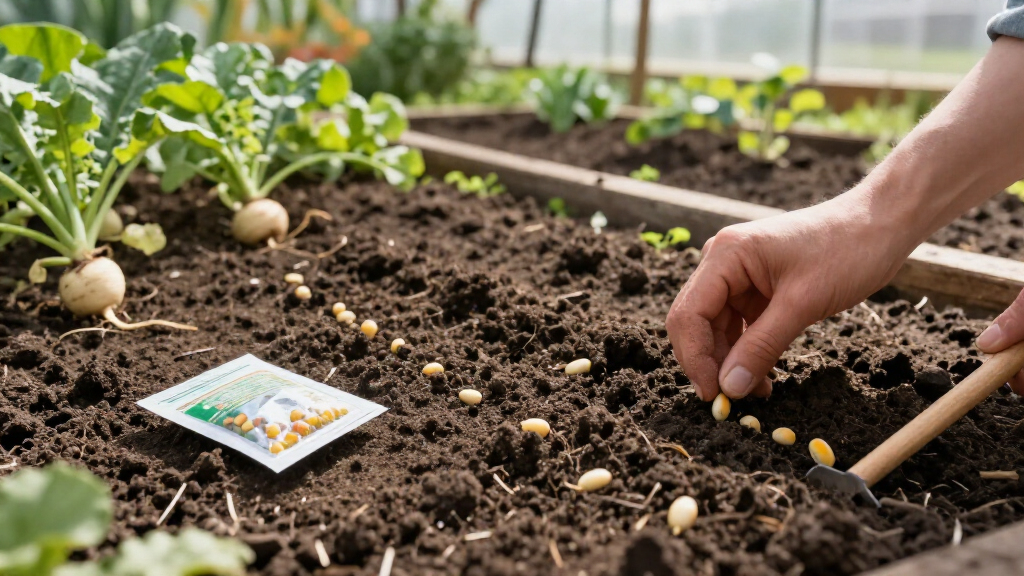

The best turnip seeds for most home gardens are Purple Top White Globe seeds: this familiar dual-purpose variety offers edible roots and greens, with several pack sizes to match different plots. For a broader taste comparison, the heirloom variety pack includes Purple Top, Golden Globe, and Snowball, while Hakurei hybrid seeds suit gardeners seeking a Japanese turnip option. The main tradeoffs are variety versus quantity, roots versus greens, and standard heirloom choices versus specialty types. A large seed count can be useful for succession sowing, but only if you have room and a plan to use the harvest. Read on for my full comparison and help matching a seed type and pack size to your garden.

Get garden gear delivered free with Prime
- Fast, free delivery on millions of items
- Prime Video, Amazon Music and more included
- Member-only deals all year
Complete the kit


Key Takeaways
- Purple Top White Globe is the most versatile pattern in this lineup: it appears in several pack sizes, making it easier to match a familiar root-and-greens crop to a small bed or larger planting.
- The variety packs trade focus for comparison: the three-variety heirloom pack and six-variety root vegetable pack make more sense for gardeners who want to sample options than for anyone seeking a large quantity of one turnip.
- Pack size changes the buying decision: 100- and 140-seed options are easier to use in a modest garden, while 5,000- and 10,000-plus counts call for ample space or repeated sowings.
- Some seeds serve a different harvest goal: Seven Top is the greens-focused choice, while the Hakurei hybrid, White Lady F1, White Egg, and Golden Globe options add distinct variety choices beyond standard Purple Top.
- Seed labels matter as much as quantity: organic, heirloom, non-GMO, and hybrid describe different attributes, so buyers should match the stated label and variety to their preferences rather than treating them as interchangeable quality grades.
| Purple Top Turnip Seeds, 1 Pack |  | Best Overall | Variety: Purple Top (Brassica rapa subsp. rapa) | Pack count: 1 pack | Seed attributes: Heirloom, open-pollinated, non-GMO, untreated | VIEW LATEST PRICE | See Our Full Breakdown |
| Heirloom Turnip Seed Variety Pack: Purple Top, Golden Globe and Snowball |  | Best for Variety | Varieties: Purple Top White Globe, Golden Globe, Snowball (White Egg) | Total seed count: Over 1,500 | Days to maturity: Snowball: 45 days; Purple Top: 55 days; Golden Globe: 65 days | VIEW LATEST PRICE | See Our Full Breakdown |
| Golden Globe Organic Turnip Seeds, Approx. 500 Seeds |  | Best Organic Pick | Variety: Golden Globe | Seed count: Approximately 500 | Seed attributes: USDA organic, non-GMO, heirloom, open-pollinated | VIEW LATEST PRICE | See Our Full Breakdown |
| Purple Top White Globe Turnip Seeds, 1,000 Count |  | Best for Storage | Variety: Purple Top White Globe (Brassica rapa) | Seed count: 1,000 | Root diameter: 3–4 inches | VIEW LATEST PRICE | See Our Full Breakdown |
| White Lady F1 Turnip Seeds, 100 Count |  | Best for Quick Harvests | Variety: White Lady F1 | Seed count: Minimum 100 seeds | Item weight: 3 g | VIEW LATEST PRICE | See Our Full Breakdown |
| Mountain Valley Seed Company Purple Top White Globe Turnip Seeds, 1 lb |  | Best for Bulk Heirloom Growing | Seed weight: 1 lb (16 oz) | Species: Brassica rapa | Seed type: Non-GMO, heirloom, open-pollinated | VIEW LATEST PRICE | See Our Full Breakdown |
| HAKUREI Japanese Hybrid Turnip Seeds (1400 Count) |  | Best for Partial-Shade Gardens | Variety: HAKUREI Japanese Hybrid | Seed count: 1,400 | Plant type: Vegetable | VIEW LATEST PRICE | See Our Full Breakdown |
| Purple Top White Globe Turnip Seeds, 1,000 Seeds |  | Best for Storage-Focused Harvests | Seed count: 1,000 | Root shape: Globe | Root color: White bottom, bright purple top | VIEW LATEST PRICE | See Our Full Breakdown |
| White Egg Turnip Seeds, Heirloom, Non-GMO, 100 Seeds |  | Best for Small Gardens and Sprouting | Seed count: 100 | Variety: White Egg turnip | Seed type: Heirloom, GMO-free | VIEW LATEST PRICE | See Our Full Breakdown |
| Seed Needs Root Vegetable Seeds Variety Pack, 6 Varieties |  | Best for Root-Garden Variety | Number of varieties: 6 | Included crops: Beet, carrot, kohlrabi, radish, rutabaga, and turnip | Crop type: Cool-weather crops | VIEW LATEST PRICE | See Our Full Breakdown |
| TomorrowSeeds Purple Top Turnip Seeds, 10,000+ Count |  | Best for High-Volume Root Harvests | Seed count: 10,000+ | Variety: Purple Top Turnip | Germination: 4–9 days | VIEW LATEST PRICE | See Our Full Breakdown |
| Seven Top Turnip Seeds, 1,000 Seeds, Non-GMO |  | Best for Turnip Greens | Seed count: 1,000 | Maturity: About 45 days | Germination rate: 85% | VIEW LATEST PRICE | See Our Full Breakdown |
| Turnip and Rutabaga Heirloom Seed Collection |  | Best Variety Collection | Included varieties: Purple Top turnip, Snowball White turnip, American Purple Top rutabaga | Pack format: 3 packs | Germination: 5–10 days | VIEW LATEST PRICE | See Our Full Breakdown |
| Purple Top White Globe Turnip Seeds, 5,000+ Heirloom Non-GMO Seeds |  | Best for Classic Purple Top White Globe Turnips | Seed count: 5,000+ | Variety: Purple Top White Globe | Maturity: 50–60 days | VIEW LATEST PRICE | See Our Full Breakdown |
| turnip seed | Seed count | Variety | Sunlight |
|---|---|---|---|
| Purple Top Turnip Seeds | — | Purple Top (Brassica rapa subsp. rapa) | Full sun |
| Heirloom Turnip Seed Variety P | — | — | — |
| Golden Globe Organic Turnip Se | Approximately 500 | Golden Globe | Full sun to partial shade |
| Purple Top White Globe Turnip | 1,000 | Purple Top White Globe (Brassica rapa) | — |
| White Lady F1 Turnip Seeds | Minimum 100 seeds | White Lady F1 | Full sun |
| Mountain Valley Seed Company P | — | — | — |
| HAKUREI Japanese Hybrid Turnip | 1,400 | HAKUREI Japanese Hybrid | — |
| Purple Top White Globe Turnip | 1,000 | — | — |
| White Egg Turnip Seeds | 100 | White Egg turnip | Full sun |
| Seed Needs Root Vegetable Seed | — | — | — |
| TomorrowSeeds Purple Top Turni | 10,000+ | Purple Top Turnip | Full sun or partial shade |
| Seven Top Turnip Seeds | 1,000 | — | Full sun |
| Turnip and Rutabaga Heirloom S | — | — | Full sun |
| Purple Top White Globe Turnip | 5,000+ | Purple Top White Globe | Full sun to partial shade |
More Details on Our Top Picks
Purple Top Turnip Seeds, 1 Pack
Purple Top turnips are my strongest all-around pick for gardeners who want a familiar dual-purpose crop: sweet white roots with purple shoulders, plus edible greens. Spring-to-fall planting and succession-sowing guidance make it easier to plan repeated harvests than with a single fixed sowing. Compared with the Heirloom Turnip Seed Variety Pack, this packet gives you one dependable type rather than three flavors and staggered maturity dates; that simpler choice suits gardeners who already know they want Purple Top. The tradeoff is that the one-pack format offers less variety, and the seeds need thinning to 3–6 inches apart. Cool weather and full sun also matter for good results, so this is less suited to a hot-season planting plan.
Pros:- Produces edible roots and leafy greens
- Suitable for spring and fall planting
- Untreated, non-GMO, open-pollinated heirloom seeds
- Succession planting can spread harvests over time
Cons:- Seedlings require thinning to 3–6 inches apart
- Best suited to cool weather and full sun
- One variety offers less culinary range than the three-variety pack
Best for: Home gardeners who want a classic Purple Top crop for both roots and greens, with the option to sow successive spring and fall plantings.
Not ideal for: Gardeners seeking several distinct flavors in one purchase or a crop for sustained hot weather.
- Variety:Purple Top (Brassica rapa subsp. rapa)
- Pack count:1 pack
- Seed attributes:Heirloom, open-pollinated, non-GMO, untreated
- Planting period:Spring to fall
- Spacing:3–6 inches apart
- Sunlight:Full sun
- USDA hardiness zones:4–11
- Expected plant height:12 inches
Our verdict“Choose this packet for a straightforward, heirloom Purple Top crop that can provide both roots and greens across cool-season sowings.”
Heirloom Turnip Seed Variety Pack: Purple Top, Golden Globe and Snowball
For gardeners who want to compare turnip flavors in the same garden, this set brings together Purple Top, Golden Globe, and Snowball, each in its own packet. The maturity range—from 45 days for Snowball to 65 for Golden Globe—can help extend picking rather than concentrating the whole crop at one time. That makes it a more flexible choice than the single-variety Purple Top packet, though it also asks you to manage three plantings and keep their labels straight. The seeds are open-pollinated, non-GMO heirlooms, with guidance for sowing and spacing. Regular moisture and fertile, well-draining soil are needed, and seedlings must be thinned to 4–6 inches apart. Skip this set if you want one consistent variety or have limited space for trying several crops.
Pros:- Includes three varieties with different flavors and uses
- Maturity dates range from 45 to 65 days
- Open-pollinated, non-GMO heirloom seeds sourced from US growers
- Planting and spacing guidance is provided
Cons:- Requires regular watering and fertile, well-draining soil
- Seedlings need thinning to 4–6 inches apart
- Three varieties take more planning and labeling than a single packet
Best for: Gardeners with room for several short rows who want to compare turnip flavors and stagger harvests.
Not ideal for: Small-space growers who want a single predictable variety or do not want to track multiple sowings.
- Varieties:Purple Top White Globe, Golden Globe, Snowball (White Egg)
- Total seed count:Over 1,500
- Days to maturity:Snowball: 45 days; Purple Top: 55 days; Golden Globe: 65 days
- Seed attributes:Heirloom, open-pollinated, non-GMO
- Planting depth:1/2 inch
- Spacing:Thin seedlings to 4–6 inches apart
- Sun exposure:Full sun to partial shade
- USDA hardiness zones:3–9
- Soil:Well-draining, fertile soil
Our verdict“Pick this set if flavor variety and a more extended harvest matter more to you than keeping the garden plan simple.”
Golden Globe Organic Turnip Seeds, Approx. 500 Seeds
Golden Globe is the focused choice here for gardeners who prefer sweet, crisp roots and want an organic seed option. The approximately 500 seeds give you room for repeated sowings, while the edible greens add another use beyond the root harvest. Unlike the three-variety pack, this packet commits to one flavor profile; that is an advantage if Golden Globe is the variety you want, but a limitation if you are still deciding what you like. The product is described as USDA certified organic, non-GMO, heirloom, and open-pollinated. Its main growing demand is steady moisture: dry soil can work against the crisp texture, and roots are best harvested at about 3 inches across. Compared with the Purple Top packets, this is the better match for a sweet-root preference, not for a classic purple-shouldered crop.
Pros:- Described as USDA certified organic, non-GMO, heirloom, and open-pollinated
- Produces sweet, crisp roots
- Edible greens can be served fresh or cooked
- Approximately 500 seeds allow for multiple sowings
Cons:- Requires regular watering and consistently moist soil
- Roots need timely harvest at about 3 inches for the stated texture
- Offers only Golden Globe, unlike the three-variety pack
Best for: Gardeners prioritizing certified-organic seed and sweet, crisp Golden Globe roots, with enough space for successive sowings.
Not ideal for: Growers who want multiple varieties in one purchase or cannot keep the soil consistently moist.
- Variety:Golden Globe
- Seed count:Approximately 500
- Seed attributes:USDA organic, non-GMO, heirloom, open-pollinated
- Growing environment:Outdoor
- Sunlight:Full sun to partial shade
- Planting period:Spring to summer
- Hardiness zones:3–11
- Watering:Regular; about 1 inch per week including rainfall
- Origin:USA
Our verdict“Choose this packet if organic Golden Globe roots are your priority and you can keep the crop evenly watered.”
Purple Top White Globe Turnip Seeds, 1,000 Count
This 1,000-count Purple Top White Globe packet suits gardeners who want a larger supply of a familiar, mild-sweet variety and value keeping part of the harvest. The listed roots reach 3–4 inches, mature in about 50–60 days, and can store for 4–6 months under proper conditions. Compared with the single-pack Purple Top seeds, this option gives a stated seed count and storage information; unlike the three-variety pack, it keeps the crop focused on one type. The tradeoff is that a larger packet can be more seed than a small plot needs, and turnips should be direct-sown because they do not transplant well. Even watering helps limit cracking and off flavors, while heat or delayed harvest can leave roots pithy or bitter.
Pros:- 1,000 seeds for a larger planting
- Mild, sweet 3–4 inch roots and edible greens
- Suitable for spring and fall sowing
- Roots can store for 4–6 months under proper conditions
Cons:- Must be direct-sown because plants do not transplant well
- Needs even watering to help prevent cracking and off flavors
- Heat or late harvest can make roots pithy or bitter
Best for: Gardeners planning a substantial spring or fall Purple Top planting and hoping to store part of the root harvest.
Not ideal for: Small-space growers who need only a modest sowing or gardeners who rely on transplanting seedlings.
- Variety:Purple Top White Globe (Brassica rapa)
- Seed count:1,000
- Root diameter:3–4 inches
- Days to harvest:50–60 days
- Planting depth:1/4–1/2 inch
- Plant spacing:4–6 inches
- Germination time:3–14 days
- USDA hardiness zones:3–12
- Packet and origin:Waterproof packet; USA-grown and packed
Our verdict“Choose this larger Purple Top packet if you can direct-sow a sizeable crop and want roots with stated storage potential.”
White Lady F1 Turnip Seeds, 100 Count
White Lady is the speed-focused option in this group, with edible roots reported in about 30 days under ideal conditions. Its smooth, sweet white roots can be eaten raw, and the tender greens broaden its use at the table. Compared with the Purple Top White Globe packet, which lists a 50–60 day harvest window, White Lady may suit gardeners seeking a faster crop—but the timing is conditional, not a guarantee. The packet contains at least 100 seeds, so it is a smaller commitment than the 1,000-count Purple Top option. The listing calls this an F1 variety while also describing the seeds as open-pollinated and heirloom; buyers who need a clearly defined seed-breeding type may want to verify that point. Full sun and regular watering are required.
Pros:- Roots may be ready in about 30 days under ideal conditions
- Sweet, smooth white roots can be eaten raw
- Tender greens suit salads and cooking
- At least 100 seeds make it a smaller planting commitment
Cons:- The 30-day timing depends on suitable seasonal and soil conditions
- Requires full sun and regular watering
- The F1 title conflicts with the listing’s open-pollinated and heirloom claims
Best for: Gardeners wanting a small packet of sweet white turnips for quick spring or fall meals, with greens for salads or cooking.
Not ideal for: Growers who need a large seed supply, cannot provide full sun and regular water, or require clear confirmation of seed type.
- Variety:White Lady F1
- Seed count:Minimum 100 seeds
- Item weight:3 g
- Days to harvest:Approximately 30 days under ideal conditions
- Planting season:Late winter, spring, and fall
- Sunlight:Full sun
- Soil type:Loam
- Hardiness zone:9
- Seed characteristics:Non-GMO, untreated; also described as heirloom and open-pollinated
Our verdict“Pick White Lady for a small, potentially fast crop of sweet white roots, but verify the seed-type details if that distinction matters to you.”
Mountain Valley Seed Company Purple Top White Globe Turnip Seeds, 1 lb
For gardeners who want a substantial supply of a familiar turnip, this one-pound heirloom packet is the strongest bulk pick in this group. It produces purple-top, white-bottom roots with mild, crisp flesh, reaching about 4–6 inches across in roughly 55 days. That clear maturity estimate makes crop planning easier than with the HAKUREI Japanese Hybrid listing, which gives no harvest timing or root-size details. The seed is also suitable for microgreens, giving the surplus a use before the main roots mature. The tradeoff is scale: a pound is far more seed than a small household plot may need, and these annual plants are not intended to overwinter. They also call for full sun and moderate watering, unlike the Seed Needs variety pack’s stated partial-shade exposure.
Pros:- One-pound supply suits larger plantings and repeat sowing.
- Heirloom, open-pollinated, non-GMO seed.
- Produces mild, crisp roots in about 55 days.
- Seed can also be grown for microgreens.
Cons:- A large quantity may be wasteful for a small garden.
- Annual plants are not intended to overwinter.
- Requires full sun and moderate watering.
Best for: Home gardeners or small market growers planting multiple rows who want an open-pollinated crop with a stated harvest window and a microgreen use for extra seed.
Not ideal for: Container growers and gardeners with only a small bed, since a one-pound supply may exceed their planting needs; also skip it if your site lacks full sun.
- Seed weight:1 lb (16 oz)
- Species:Brassica rapa
- Seed type:Non-GMO, heirloom, open-pollinated
- Days to maturity:About 55 days
- Root size:About 4–6 inches across
- Root color:Purple top, white bottom
- Sun exposure:Full sun
- Uses:Vegetable gardening and microgreens
Our verdict“Choose this bulk heirloom option if you have room to plant generously and want both mature turnips and microgreens from the same seed supply.”
HAKUREI Japanese Hybrid Turnip Seeds (1400 Count)
The standout here is partial-shade tolerance, a useful distinction for gardeners whose beds do not receive full sun all day. The packet contains 1,400 hybrid seeds, giving growers room for successive sowings or a larger planting than the 100-seed White Egg option. Compared with the Mountain Valley Purple Top White Globe seeds, this listing gives far less crop detail: it does not state days to maturity, root size, flavor, or a harvest guide. Its listed color is yellow, but the product information does not describe the roots further, so buyers seeking a well-documented purple-and-white globe should choose one of the Purple Top options instead. Moderate watering is still required, and shade tolerance should not be read as a fit for deeply shaded plots.
Pros:- Tolerates partial shade, offering more placement flexibility than full-sun listings.
- Contains 1,400 seeds for multiple sowings.
- Hybrid variety may offer greater crop consistency.
- Moderate watering needs are specified.
Cons:- No days-to-maturity or root-size information is provided.
- The listing gives little detail about flavor or culinary use.
- Still needs regular moderate watering and is not suited to deep shade.
Best for: Gardeners with beds that get partial sun and those who want a large seed count for repeated sowings of a hybrid turnip.
Not ideal for: Buyers who need a stated harvest window, root dimensions, or flavor description, or gardeners whose planting area is deeply shaded.
- Variety:HAKUREI Japanese Hybrid
- Seed count:1,400
- Plant type:Vegetable
- Seed type:Hybrid
- Sunlight exposure:Partial shade
- Moisture needs:Moderate watering
- Listed color:Yellow
Our verdict“Pick HAKUREI if partial shade and a generous seed count matter more to you than detailed harvest specifications.”
Purple Top White Globe Turnip Seeds, 1,000 Seeds
This is a straightforward choice for growers focused on classic purple-top roots with storage potential. The 1,000-seed packet produces globe-shaped turnips with bright purple tops, white bottoms, and a mildly sweet flavor; the listed harvest size is about 6 inches across. That makes the harvest target more explicit than the HAKUREI listing, which supplies no root dimensions, while the Mountain Valley seeds provide a narrower 4–6-inch range and a stated 55-day maturity estimate. This product does not give a days-to-maturity figure, so it is less helpful for timing harvests. It is also listed for outdoor, full-sun growing only, with moderate watering. Choose it for its clear root description, not for flexible placement or detailed scheduling guidance.
Pros:- 1,000 seeds provide room for repeat sowings.
- Mildly sweet, globe-shaped roots have a clearly stated harvest size.
- Purple-and-white coloring makes the variety easy to identify.
- Roots are described as suitable for storage and seeds are non-GMO.
Cons:- No days-to-maturity estimate is provided.
- Listed for outdoor use and full sun.
- Moderate watering is required.
Best for: Outdoor gardeners who want a large sowing of mildly sweet, purple-top globe turnips and plan to store part of the harvest.
Not ideal for: Gardeners needing a published maturity timeline, partial-shade adaptability, or seeds for indoor growing.
- Seed count:1,000
- Root shape:Globe
- Root color:White bottom, bright purple top
- Flavor:Mildly sweet
- Recommended harvest size:About 6 inches in diameter
- Sunlight exposure:Full sun
- USDA hardiness zone:3–9
- GMO status:Non-GMO
Our verdict“Choose this packet if you want a large planting of storage-suitable purple-top turnips and can supply full sun.”
White Egg Turnip Seeds, Heirloom, Non-GMO, 100 Seeds
With just 100 seeds, White Egg is the most manageable choice here for a small bed, a container start, or a gardener trying a different turnip shape without committing to a bulk packet. Its mild, sweet, tender flesh suits salads and steaming, and the seeds can also be grown for sprouts. Unlike the 1,000-seed Purple Top White Globe packet, this variety offers an egg-shaped white root rather than a classic purple shoulder, so it is better for cooks who value texture and mild flavor over the familiar look. Direct sowing in warm soil or starting in containers adds flexibility, though the listing still calls for full sun and moderate watering. It gives no exact maturity date, so the Mountain Valley option is easier to schedule by days to harvest.
Pros:- Compact 100-seed quantity suits small gardens and trial plantings.
- Heirloom, GMO-free seed with mild, sweet, tender flesh.
- Can be sown directly or started in containers.
- Seeds may also be grown for sprouts.
Cons:- Small seed count is limiting for larger beds or repeated broad sowings.
- No specific days-to-maturity figure is provided.
- Requires warm soil, full sun, and moderate watering.
Best for: Container gardeners, cooks seeking tender mild turnips, and growers who want a small packet that can also supply sprouts.
Not ideal for: Gardeners planting long rows or relying on a precise harvest schedule, since the packet is small and no maturity date is listed.
- Seed count:100
- Variety:White Egg turnip
- Seed type:Heirloom, GMO-free
- Root shape:Egg-shaped
- Flesh:White, mild, sweet, tender, fine-grained
- Sunlight:Full sun
- USDA hardiness zone:3–11 (also listed as 3–10)
- Additional use:Sprouts
Our verdict“Choose White Egg for a small planting of tender, mild roots or sprouts, but choose a larger packet for a substantial harvest.”
Seed Needs Root Vegetable Seeds Variety Pack, 6 Varieties
This pack is the broadest option for gardeners who want turnips as one part of a mixed root-vegetable bed, not the main event. It includes beet, carrot, kohlrabi, radish, rutabaga, and turnip seeds, with sowing instructions in tear- and moisture-resistant packets. That range offers more crop variety than any single-variety choice here, including the Mountain Valley Purple Top White Globe seeds, but it also means less focus on turnip-specific details: the listing does not identify the turnip variety, seed count, root traits, or maturity period. The stated partial-shade exposure and spring/fall planting window may help with general planning, though the crop-specific needs may differ across all six vegetables. Some seeds may be hybrids, so this is not the pick for gardeners seeking an all-heirloom collection.
Pros:- Includes six root-crop types in one collection.
- Packets provide sowing information.
- Tear- and moisture-resistant packaging supports seed storage.
- Designed for spring and fall planting.
Cons:- Turnip variety and turnip-specific seed count are not stated.
- Some included varieties may be hybrids.
- Growing needs can vary across the six crops, so shared listing details may not fit each one.
Best for: New or space-conscious gardeners who want to try several cool-weather root crops and appreciate packet-level sowing instructions.
Not ideal for: Turnip-focused growers who want a known variety, defined turnip seed count, or exclusively heirloom and open-pollinated seed.
- Number of varieties:6
- Included crops:Beet, carrot, kohlrabi, radish, rutabaga, and turnip
- Crop type:Cool-weather crops
- Planting period:Spring and fall
- Sunlight exposure:Partial shade
- Soil type:Loose, fertile soil
- Seed type:Mostly open-pollinated and heirloom; some hybrids
- Packaging:Tear-resistant and moisture-resistant
Our verdict“Choose this collection if crop variety matters more than turnip-specific detail or an all-heirloom seed selection.”
TomorrowSeeds Purple Top Turnip Seeds, 10,000+ Count
TomorrowSeeds Purple Top is the strongest fit here for gardeners who want a large seed supply of a classic dual-purpose turnip. Its 10,000+ seeds can support repeated sowings or a sizable plot, while the roots and greens both have kitchen uses. Compared with the Seven Top Turnip Seeds, this variety is better suited to harvesting edible roots; Seven Top is specifically grown for greens, with woody roots that should be left uneaten. Spring and fall planting, plus container compatibility, give this pick flexibility, but its listed 55-day harvest is slower than Seven Top’s greens at about 45 days. The tradeoff is scale: a very large count may be more seed than a small-space gardener can use, and the seeds need cool, dry storage between plantings.
Pros:- 10,000+ seeds support large plantings and successive sowings.
- Produces edible roots as well as greens.
- Suitable for spring and fall planting in cool weather.
- Heirloom, open-pollinated, and listed as untreated.
Cons:- The large seed count may exceed the needs of a small garden.
- Listed harvest time of 55 days is slower than Seven Top’s greens maturity.
- Seeds require cool, dry storage to preserve them for later sowings.
Best for: Gardeners planning a large bed or several spring and fall sowings who want both edible roots and greens.
Not ideal for: Small-space growers seeking only a modest seed packet or gardeners who want greens as quickly as possible.
- Seed count:10,000+
- Variety:Purple Top Turnip
- Germination:4–9 days
- Harvest:About 55 days
- Planting seasons:Spring and fall
- Sunlight:Full sun or partial shade
- Seed type:Heirloom, open-pollinated, non-GMO
- USDA zones:2–9
Our verdict“Choose TomorrowSeeds if you want a large supply of a traditional turnip that produces both roots and greens.”
Seven Top Turnip Seeds, 1,000 Seeds, Non-GMO
Seven Top has a narrow but useful purpose: harvesting tender greens rather than turnip roots. Greens mature in about 45 days and are described as suitable for freezing, so this packet fits cooks who want leafy harvests to preserve. That makes it a better greens-first choice than TomorrowSeeds Purple Top Turnip, which is intended to provide edible roots as well as greens and takes about 55 days to harvest. The tradeoff is explicit: Seven Top’s roots are woody and should not be eaten, so it is a poor match for anyone choosing turnip seeds for soups or roasted roots. Its 1,000-seed count is more manageable than TomorrowSeeds’ 10,000+, though the listed outdoor use and full-sun requirement leave less flexibility for growers with shaded or indoor setups.
Pros:- Tender greens mature in about 45 days.
- Greens are suitable for freezing.
- A 1,000-seed packet is more manageable than the 10,000+ count in TomorrowSeeds Purple Top.
- Listed as GMO-free.
Cons:- Roots are woody and should not be eaten.
- Designed for outdoor growing rather than indoor use.
- Listed for full sun, limiting suitability for partly shaded gardens.
Best for: Home cooks who want a dedicated crop of turnip greens for fresh meals or freezing.
Not ideal for: Gardeners who want edible turnip roots, container flexibility, or a crop for a partly shaded site.
- Seed count:1,000
- Maturity:About 45 days
- Germination rate:85%
- Primary use:Turnip greens
- Root use:Roots are woody and should not be eaten
- Sunlight:Full sun
- Soil type:Loam
- Watering:Moderate
Our verdict“Pick Seven Top when leafy greens are the goal and edible roots are not part of your harvest plan.”
Turnip and Rutabaga Heirloom Seed Collection
This collection is the most varied option in the group, pairing Purple Top and Snowball White turnips with American Purple Top rutabaga. That range suits gardeners who want to compare root types or spread harvests across different crops, rather than sow one large block of a single turnip like TomorrowSeeds Purple Top. The collection also has an early greens angle: leaves can be harvested in about 30 days, ahead of the roots at 50–65 days. Its untreated, open-pollinated seeds and options for rows, raised beds, or containers make it adaptable to different garden layouts. The tradeoff is that this is not a single-variety bulk packet, and the mix still depends on cool weather, full sun, and moderate watering; it is less appealing for hot-site gardeners or anyone who wants only one predictable crop.
Pros:- Includes two turnip varieties plus American Purple Top rutabaga.
- Greens can be harvested in about 30 days.
- Roots mature across a 50–65-day range.
- Untreated, open-pollinated seeds suit rows, raised beds, and containers.
Cons:- Three varieties provide less focus than a bulk packet of one turnip type.
- Cool-weather crops may perform poorly in hot growing conditions.
- Requires full sun and moderate watering.
Best for: Gardeners who want to grow several heirloom turnip and rutabaga types, with early greens and later roots.
Not ideal for: Growers in persistently hot conditions or buyers who want a large quantity of one specific turnip variety.
- Included varieties:Purple Top turnip, Snowball White turnip, American Purple Top rutabaga
- Pack format:3 packs
- Germination:5–10 days
- Greens harvest:About 30 days
- Root maturity:50–65 days
- Planting seasons:Spring and fall
- Sunlight:Full sun
- Seed type:Heirloom, non-GMO, open-pollinated, untreated
- USDA zones:4–11
Our verdict“Choose this collection if variety matters more than having a large, uniform planting of one turnip.”
Purple Top White Globe Turnip Seeds, 5,000+ Heirloom Non-GMO Seeds
Purple Top White Globe is the focused choice for gardeners seeking the familiar white root with a purple crown, with a 5,000+ seed count suited to more than a small trial planting. It produces edible roots and greens and matures in about 50–60 days, a slightly broader harvest window than the 55 days listed for TomorrowSeeds Purple Top Turnip. Both are large-count options for dual-purpose harvests; this packet adds specific planting depth, spacing, and soil-pH guidance, which can help gardeners plan a more orderly row. The tradeoff is that the count still calls for space and careful thinning, while its outdoor-use listing and well-draining soil requirement narrow the fit for growers with compact setups or unsuitable soil. Choose it for a classic variety, not a multi-crop collection like the Turnip and Rutabaga Heirloom Seed Collection.
Pros:- 5,000+ seeds support a substantial planting.
- Produces edible roots and greens.
- Matures in about 50–60 days and suits spring through fall growing.
- Provides planting depth, spacing, and soil-pH guidance.
Cons:- Plants need thinning to 4–6 inches apart.
- Requires well-draining soil with a pH of 6.0–7.5.
- Outdoor use may not suit gardeners seeking an indoor-growing option.
Best for: Gardeners with outdoor beds who want a substantial planting of classic purple-crowned, white-fleshed turnips and edible greens.
Not ideal for: Small-space growers who cannot thin plants or buyers who want several turnip and rutabaga varieties in one purchase.
- Seed count:5,000+
- Variety:Purple Top White Globe
- Maturity:50–60 days
- Planting depth:¼–½ inch
- Spacing:Thin to 4–6 inches; rows 18–24 inches apart
- Sunlight:Full sun to partial shade
- Soil pH:6.0–7.5
- Edible parts:Roots and greens
- USDA zones:2–9
Our verdict“Choose this packet for a sizable outdoor planting of classic Purple Top White Globe turnips with clear spacing guidance.”
How We Picked
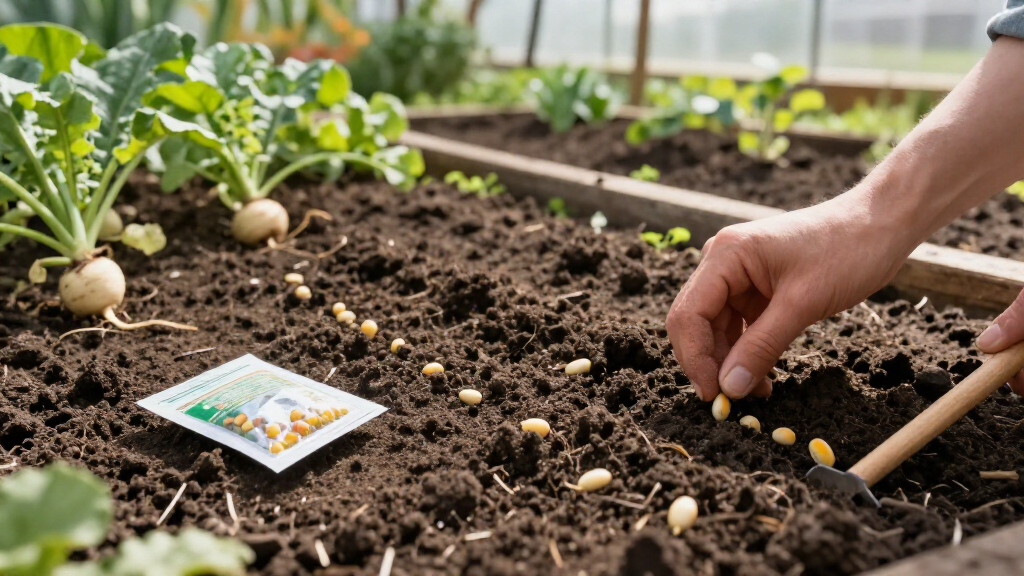
I compared these 14 listings by the information that helps a gardener make a practical choice: named variety, stated seed count or weight, and whether the pack is a single variety or a mix. I also considered the harvest emphasis suggested by the variety name, such as root-and-greens use, greens-first use, or a specialty Japanese turnip. Labels such as organic, heirloom, non-GMO, and hybrid were treated as distinct product attributes, not proof that one seed is universally better.
The ranking favors flexibility for the broadest range of home growers, then separates options by value, scale, and specific growing goals. Purple Top White Globe leads because multiple listings give buyers a familiar variety across a wide span of quantities. Mixed collections rank well for experimentation, while very large packs rank lower for a typical small garden because excess seed can go unused. Where a listing gives limited detail, I avoid assuming performance claims that are not stated and rank it for the needs its product name and count clearly serve.
| turnip seed | Sunlight |
|---|---|
| Purple Top Turnip Seeds | Full sun |
| Heirloom Turnip Seed Variety P | — |
| Golden Globe Organic Turnip Se | Full sun to partial shade |
| Purple Top White Globe Turnip | — |
| White Lady F1 Turnip Seeds | Full sun |
| Mountain Valley Seed Company P | — |
| HAKUREI Japanese Hybrid Turnip | — |
| Purple Top White Globe Turnip | — |
| White Egg Turnip Seeds | Full sun |
| Seed Needs Root Vegetable Seed | — |
| TomorrowSeeds Purple Top Turni | Full sun or partial shade |
| Seven Top Turnip Seeds | Full sun |
| Turnip and Rutabaga Heirloom S | Full sun |
| Purple Top White Globe Turnip | Full sun to partial shade |
Factors to Consider When Choosing Best Turnip Seeds
Choosing turnip seeds is not only a question of which variety sounds appealing. I would start with the harvest you want, then check how much seed you can realistically sow and whether the listing gives enough detail to identify what is in the packet.
Choose for roots, greens, or both
Before buying, decide what you want to eat: swollen roots, leafy tops, or both. A root-and-greens variety gives a flexible harvest, but a greens-focused choice such as Seven Top may fit better if leaves are your main goal. Root size, flavor, and texture can vary by variety, so a general label like “turnip” does not tell you everything about the eating experience. For a first planting, a familiar dual-purpose type can limit guesswork; for a more targeted kitchen garden, match the variety to your usual recipes. Avoid sowing a large quantity before trying a less familiar type, since preference is personal and surplus roots or greens can be hard to use.
Match seed count to planting space
Seed counts in this lineup range from small packets to 10,000-plus seeds, and the largest number is not automatically the best value for a home plot. Turnips are often sown in successive batches to spread harvests, so a larger packet can suit a gardener with room and a planned schedule. For one raised bed or a first trial, a modest count may be easier to manage and less likely to sit unused. Check whether the listing gives a count or a weight, since these figures are not directly comparable without more information. A common mistake is buying for the maximum possible planting rather than the amount you can thin, water, harvest, and eat.
Decide whether a mix is worth the tradeoff
A variety pack can help you compare colors, shapes, and types in one garden, but it divides the available seed among several crops. That makes a mix useful for exploration and less suited to anyone who wants a substantial planting of one dependable favorite. Read the variety names before buying: the three-turnip heirloom pack is more focused than a six-variety root vegetable collection that may include crops beyond turnips. Mixed packets can also make it harder to plan rows or label seedlings if the varieties are not clearly separated. Choose a mix when learning and tasting are part of the goal; choose a single-variety packet when consistency and quantity matter more.
Read labels as separate claims
Heirloom, organic, non-GMO, and hybrid describe different things, and none of those words alone predicts how a turnip will perform in your garden. Organic refers to a production standard when properly certified; check the listing or packet for certification details rather than relying only on a product title. Heirloom commonly signals an open-pollinated traditional variety, while hybrid identifies a crossbred variety and does not by itself mean the seed is genetically modified. Non-GMO is a separate claim and may matter to buyers who specifically seek it. Compare the exact variety and packet details first, then use labels as filters for your own preferences.
Pay for specificity, not just a larger packet
A higher seed count can reduce the need to reorder, but it does not help if the variety or harvest goal is a poor match. Specialty choices such as Hakurei, White Lady F1, or White Egg may be more appealing when you want a particular type rather than the broad familiarity of Purple Top White Globe. Before paying more for a named specialty or a large quantity, check whether the listing supplies useful details such as seed count, variety identity, and relevant growing information. If those details are sparse, a smaller packet can be a lower-commitment way to learn whether the type suits your garden. Spend for a specific trait you want, not for quantity or labeling that will not change how you grow or use the crop.
Plan sowing around the harvest you can use
Seed choice and sowing plan belong together: a generous packet is most useful when you can plant in batches rather than all at once. Succession sowing can spread harvest timing and reduce the chance of having too many roots ready together. It also gives you room to compare a standard type with a specialty variety across separate rows or planting dates. Follow the instructions on the seed packet for local timing, spacing, and depth, since conditions vary by region and season. Keep a simple label for each variety, especially when growing several types from a collection, so you can connect the harvest to the seed that produced it.
Frequently Asked Questions
Which turnip seeds are the safest starting point for a first garden?
I would start with a modest packet of Purple Top White Globe if you want a familiar, multipurpose crop and do not yet know how many turnips your household will use. It avoids the commitment of a very large count and gives you a baseline before trying specialty varieties. If comparing different types is part of the fun, the three-variety heirloom pack offers more variety but less seed of each type. Check the packet for sowing and spacing directions, then plant a small area rather than filling the whole bed. That gives you useful results without creating a large surplus.
Should I buy a 5,000- or 10,000-seed packet for a home garden?
Choose a count that matches repeated sowings and the amount of space you can tend, not the largest number listed. A large packet can suit a gardener with multiple beds, a community plot, or a plan to sow in batches over the season. For a small garden, a smaller packet is easier to use up and can leave room to try another variety. Check the product details for storage guidance and do not assume that every seed will remain viable indefinitely. If your planting plan is still uncertain, begin with a smaller quantity and scale up after one season.
Is a turnip variety pack better than buying one named variety?
A mix is a better fit when your goal is to sample several types or compare them at the table. The three-turnip collection keeps the comparison focused, while a broader root-vegetable pack may include crops other than turnips, so check its contents carefully. A single-variety packet gives you more control over how much of one type you sow and makes labeling simpler. It also works better when you already know what you like or want a consistent harvest. If you are undecided, a small single-variety packet plus a focused mix can be more informative than one large packet of an unfamiliar seed.
Do organic, heirloom, and non-GMO labels mean the same thing?
No. These terms describe different attributes, so compare them separately rather than treating them as a single quality scale. Organic refers to production practices and should be supported by appropriate certification information when that matters to you. Heirloom generally describes a traditional open-pollinated variety, while hybrid refers to a cross between selected parent lines; hybrid does not mean genetically modified. Non-GMO is a separate claim. Read the listing and packet details for the exact variety and any certification or claim that matters to your buying decision.
Which option makes sense if I mainly want turnip greens?
Seven Top is the clearest greens-focused choice by name in this lineup, so it is the first option I would compare if leafy harvests are your priority. Purple Top White Globe and other turnip varieties can also provide greens, but their listings are not framed as greens-first. Decide whether you want leaves alone or roots and leaves together before choosing. If both matter, a dual-purpose variety may make better use of limited garden space. For a greens-only plan, check the packet’s growing directions and sow enough for repeated leaf harvests without planting more than you can use.
Conclusion
For the broadest fit, I recommend Purple Top White Globe as the best overall choice: it is familiar, flexible, and offered in several quantities. The best value depends on your garden size, but a modest-count single-variety packet is the practical pick for many home growers who want to avoid excess seed; a large count makes more sense only with a planting plan. For a best premium or specialty choice, I would look at Hakurei or White Lady F1 when their named hybrid types match the harvest you want, while remembering that the listings provide less basis for broad performance claims. Beginners can start with a smaller Purple Top packet, and curious gardeners can choose the three-variety heirloom collection to compare types. If you mainly want greens, choose Seven Top; if you have space for repeated sowings, consider a larger Purple Top pack. Match variety and quantity to your meals and available bed space, and the choice becomes much clearer.