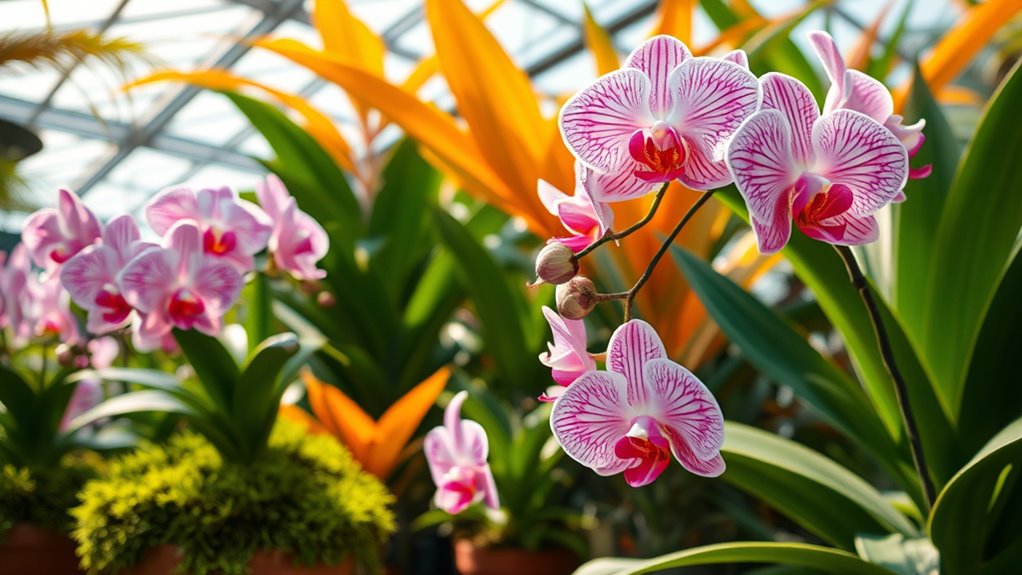

To grow orchids and tropicals successfully in your greenhouse, you need to mimic their natural habitat by maintaining high humidity, consistent warm temperatures, and good air circulation. Use well-draining media, follow proper watering schedules, and provide the right light levels. Regularly inspect for pests like mealybugs and scale, and practice proper pruning and repotting to keep plants healthy. If you continue, you’ll discover more tips to create stunning, vibrant displays in your greenhouse.
Key Takeaways
- Mimic native habitats with high humidity, good air circulation, and well-draining media for optimal orchid and tropical growth.
- Regularly inspect plants for pests like mealybugs and spider mites, and treat promptly with insecticidal soap or neem oil.
- Maintain stable warm temperatures, consistent moisture, and appropriate lighting to promote vibrant blooms and healthy plants.
- Practice proper watering, pruning, and repotting to prevent root rot and support overall plant vitality.
- Customize cultural practices to each species’ needs and fine-tune greenhouse conditions for spectacular exotic displays.

Exotic blooms captivate gardeners and nature enthusiasts alike with their vibrant colors and unusual shapes. When you decide to grow orchids and tropical plants in your greenhouse, you’re opening the door to a world of vivid displays and fascinating textures. To succeed, understanding the specific cultural practices for these plants is essential. Orchids, for example, thrive in conditions that mimic their native habitats—think high humidity, good air circulation, and well-draining media. Many tropical plants prefer warm temperatures and consistent moisture, so maintaining a stable environment is key. You’ll want to pay close attention to watering schedules, fertilization routines, and light levels to ensure your plants stay healthy and produce those stunning blossoms.
Managing pests is another critical aspect of caring for exotic blooms. These plants can be susceptible to common pests like mealybugs, scale insects, and spider mites, which can quickly damage or even kill your prized plants if left unchecked. Regular inspections are your first line of defense. If you notice pests, act promptly with targeted treatments—such as insecticidal soap or neem oil—to prevent infestations from spreading. It’s also wise to quarantine new plants before introducing them to your greenhouse to avoid bringing in unwanted pests or diseases. Proper sanitation, like removing fallen leaves and debris, helps reduce pest habitats and keeps your growing environment cleaner. Additionally, understanding the importance of proper watering techniques can help prevent issues like overwatering or underwatering that stress plants and make them more vulnerable to pests.
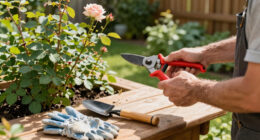
Cultural practices go beyond watering and pest control; they include pruning, staking, and repotting, all of which influence your plants’ health and flowering potential. For orchids, removing spent flowers and dead roots encourages new growth, while repotting every couple of years refreshes the growing medium and prevents root rot. Tropical plants benefit from pruning to maintain their shape and remove any diseased or damaged foliage. Staking taller plants prevents them from toppling over and ensures they display their blooms prominently. Each species has its own specific needs, so it’s important to research and tailor your cultural practices accordingly. Proper lighting conditions are also crucial for enhancing color accuracy and promoting prolific flowering. Incorporating specialized plant care techniques can also boost flowering success and overall vitality.
Furthermore, staying informed about AI security developments can help protect your digital resources, ensuring your gardening data and research are safeguarded against breaches and vulnerabilities. Creating the right environment and adhering to these cultural practices, combined with vigilant pest management, guarantees that your exotic blooms flourish. As you fine-tune your greenhouse conditions and care routines, you’ll be rewarded with spectacular displays that truly transform your space. Growing orchids and tropical plants isn’t just about aesthetics; it’s about cultivating a living collection that demands attention and dedication. With patience and consistent care, you’ll enjoy a vibrant, fragrant oasis filled with exotic beauty for years to come.

rePotme Grow Light for Orchids, Lumina Orchid, Full Spectrum Plant Light with Adjustable Height and Automatic Timer (White)
Elegant Design. Can Be Put Together in Seconds with No Tools.
As an affiliate, we earn on qualifying purchases.
As an affiliate, we earn on qualifying purchases.
Frequently Asked Questions
What Is the Best Time to Repot Orchids?
You should repot orchids when they’re not blooming, typically after their blooming cycles end. This is the best time because it minimizes stress on the plant. Check the orchid root health—remove any dead or rotting roots—and use fresh potting mix. Repotting during this period encourages healthy growth and prepares your orchid for the next blooming cycle, ensuring it stays vigorous and beautiful.
How Do I Prevent Pests in My Tropical Plants?
Think of pests as uninvited guests crashing your plant party. To prevent them, you need to master pest identification early. Keep your tropical plants healthy, since strong plants resist pests better. Use organic pest control methods like neem oil or insecticidal soap, which act like shields protecting your plants. Regular inspection and good hygiene are your best weapons, ensuring your tropical paradise stays pest-free and thriving.
What Humidity Levels Do Orchids Require?
For healthy orchids, maintaining proper humidity levels is key. You should aim for a humidity control range of 50-70%, depending on the orchid species. Consistent humidity helps prevent stress and promotes vibrant blooms. During dry periods, use a humidifier or place a water tray nearby to boost moisture. Good orchid care involves monitoring humidity regularly and adjusting as needed to keep your plants thriving.
How Often Should I Water Different Tropical Species?
Imagine your tropical plants thriving with just the right watering frequency, their leaves lush and vibrant. You should tailor your watering schedule to each species: some need weekly hydration, while others prefer more frequent, light watering. By observing your plants and understanding their specific needs, you guarantee proper tropical plant hydration. Consistent watering frequency helps prevent overwatering or underwatering, keeping your exotic blooms healthy, happy, and thriving in your greenhouse.
Can Orchids Tolerate Low Light Conditions Indoors?
Orchids can tolerate low light conditions indoors, but their shade tolerance varies by species. To guarantee healthy growth, you should focus on light optimization by placing your orchids near east or west-facing windows, avoiding direct sunlight. While some orchids thrive in low light, others need brighter spots. Observe your plant’s response and adjust its placement accordingly, providing the right balance of light to promote vibrant blooms and overall health.

Water Tray Saucer for Plants, Wavy Humidifier Plant Tray, Increases Moisture and Promotes Airflow, Protects Plant Roots, Waterproof Drip Tray for Indoor Tropical Plants, Monstera, Orchids
Natural Humidity Booster: Create the perfect microclimate for your moisture-loving tropicals. The unique wavy-surface design increases the water…
As an affiliate, we earn on qualifying purchases.
As an affiliate, we earn on qualifying purchases.
Conclusion
So, go ahead and fill your greenhouse with these stunning, exotic blooms. Because nothing says “I’ve got my life together” quite like bragging about your tropical orchids while everyone else is stuck in the cold. Who needs sunshine or a real vacation when you can just stare at your lush jungle of orchids from the comfort of your home? Just remember, with great blooms comes great responsibility—and a questionable bank account. Enjoy your jungle, plant parent!
![[Upgraded] DUSPRO Orchid Potting Mix for Repotting with Forest Moss, Pine Bark, Perlite & Pumice, Orchid Bark Potting Mix, Orchid Repotting Soil, Drainage Indoor Potting, Orchid Pot Not Included,1 QRT](https://m.media-amazon.com/images/I/51favFhay9L._SL500_.jpg)
[Upgraded] DUSPRO Orchid Potting Mix for Repotting with Forest Moss, Pine Bark, Perlite & Pumice, Orchid Bark Potting Mix, Orchid Repotting Soil, Drainage Indoor Potting, Orchid Pot Not Included,1 QRT
💡🍀 2025 UPGRADED FORMULA for OPTIMAL GROWTH: Our orchid bark potting mix now features an improved formula,replacing COCO…
As an affiliate, we earn on qualifying purchases.
As an affiliate, we earn on qualifying purchases.

ORCHID BEE HANDBOOK: An Insightful Guide to Orchid Bees – Feeding, Pollination, Behavior, Nesting Habits, and Conservation for Nature Enthusiasts
As an affiliate, we earn on qualifying purchases.
As an affiliate, we earn on qualifying purchases.