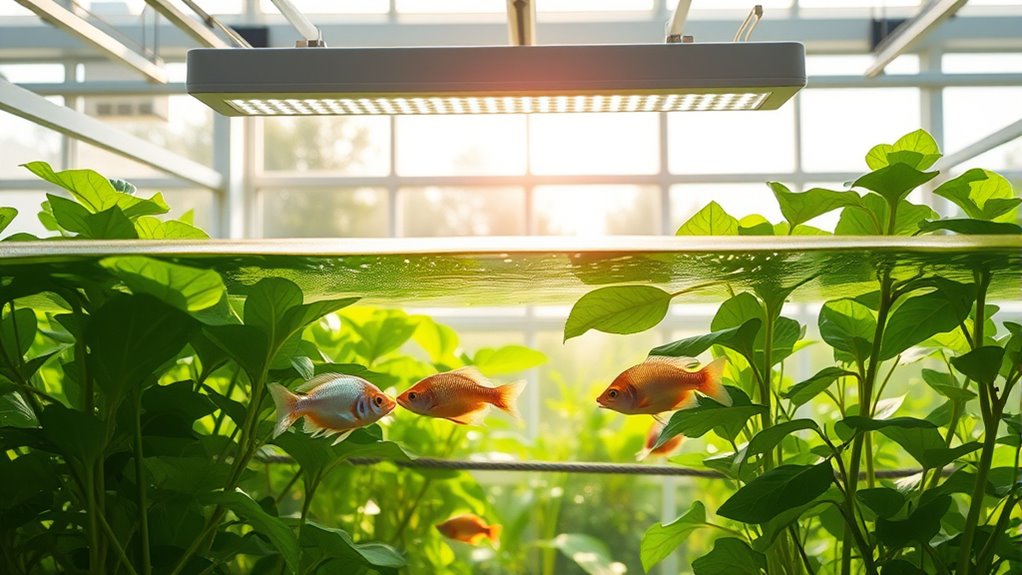

Aquaponics in your greenhouse allows you to raise fish and grow plants together efficiently. By combining these systems, you maximize space, reduce resource use, and create a self-sustaining environment that produces healthier crops faster. Maintaining ideal water quality, managing filtration, and ensuring fish health are key to success. If you keep these factors in mind, you’ll set up a resilient system that benefits both your fish and plants. Discover more ways to optimize your aquaponics setup as you go.

Get garden gear delivered free — and shop member deals
- Fast, free delivery on millions of items
- Access to Prime Big Deal Days deals on October 6–7
- Prime Video, Amazon Music and more included
Key Takeaways
- Integrate fish and plant cultivation to maximize greenhouse space and boost overall productivity.
- Maintain optimal water quality through regular testing, filtration, and aeration for healthy fish and plants.
- Use mechanical and biofilters to efficiently remove waste and convert it into nutrients for plants.
- Monitor and adjust water parameters like pH, ammonia, and oxygen levels to prevent stress and disease.
- Promote a self-sustaining environment that reduces chemical use and supports sustainable, eco-friendly growth.
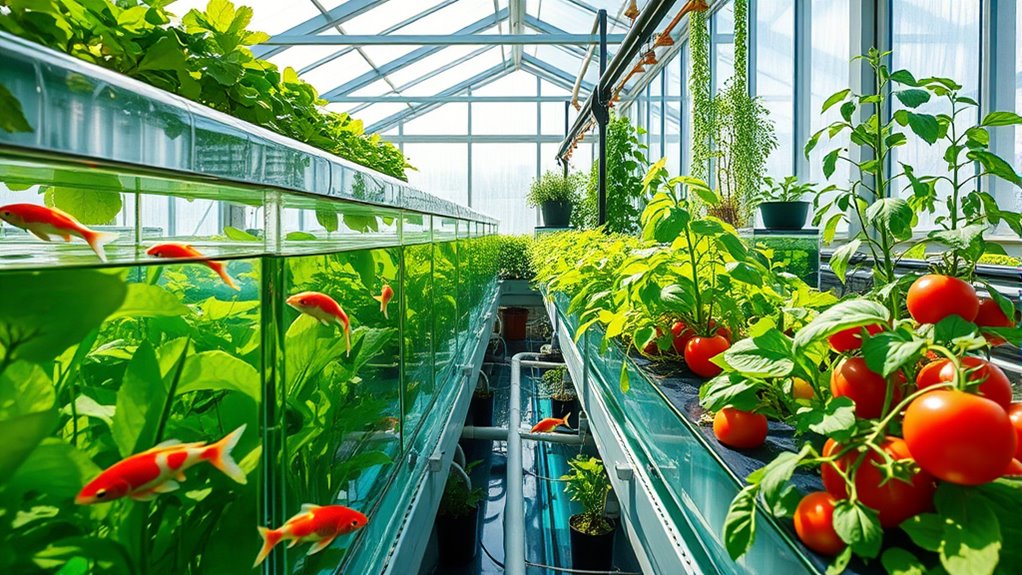
If you’re looking to maximize space and efficiency in your greenhouse, integrating aquaponics offers an innovative solution. By combining fish and plant cultivation in a symbiotic system, you create a self-sustaining environment that conserves resources while boosting productivity. Central to this setup is maintaining fish health, which directly influences the overall success of your system. Healthy fish are less prone to disease, stress, and mortality, ensuring a steady supply of nutrient-rich waste that fertilizes your plants. To achieve this, you need to monitor water quality meticulously, paying attention to parameters like temperature, pH, ammonia, nitrites, and nitrates. Proper water filtration is essential here—it removes solid waste, prevents toxin buildup, and maintains a clean environment for your fish. Using mechanical filters, biofilters, and regular water changes helps keep water clear and safe, promoting fish health and preventing disease outbreaks. When water filtration functions efficiently, your fish are less stressed and more resilient, which leads to better growth rates and healthier waste for your plants.
You should also consider the type of fish you choose, as different species have different tolerances and needs. Popular choices like tilapia, trout, or goldfish are hardy and adapt well to aquaponic systems. Make sure your filtration system is appropriately scaled to handle the volume of water and number of fish you keep. An effective filtration system not only removes physical debris but also fosters beneficial bacteria that convert fish waste into nutrients plants can absorb. This biological filtration is essential because it keeps ammonia and nitrite levels in check, safeguarding fish health.
In addition to filtration, maintaining ideal water conditions is key. Regular testing and adjustments ensure your water stays within safe ranges for your chosen fish. This ongoing management reduces stress and prevents common issues like algae overgrowth or oxygen depletion. Proper aeration, via air stones or diffusers, complements filtration by increasing oxygen levels, which is critical for fish health and overall system stability. When water filtration and fish health are prioritized, your aquaponics system becomes more reliable and productive. You’ll notice healthier plants, faster growth, and fewer problems related to disease or water quality. This integrated approach not only saves space but also reduces the need for chemical inputs, making your greenhouse more sustainable and eco-friendly.
As an affiliate, we earn on qualifying purchases.
Frequently Asked Questions
What Fish Species Are Best for Small-Scale Aquaponics Systems?
For small-scale aquaponics systems, you should consider fish like tilapia, goldfish, or koi because of their hardy nature and adaptability. Fish selection depends on your local climate and system size, so choose species that thrive in smaller environments. Goldfish and koi are great for beginners, while tilapia grows quickly and provides more biomass, making them ideal for efficient nutrient cycling in compact setups.
How Much Space Is Needed to Start an Aquaponics Greenhouse?
Think of your aquaponics greenhouse as a seed that needs space to grow. You’ll want at least 100-200 square feet for a small setup, but larger systems thrive with more room for hydroponic integration and fish tanks. Consider using renewable energy sources to power your system efficiently. With a clear plan, you can optimize your space and create a balanced environment where fish and plants flourish together.
What Are the Common Pests and Diseases in Aquaponic Systems?
You’ll encounter common pests like aphids, snails, and whiteflies, which can harm your plants. Diseases such as root rot and fungal infections also pose risks. To manage these, practice pest control by introducing beneficial insects and maintaining cleanliness. Disease prevention involves proper water quality, adequate filtration, and regular monitoring. Staying vigilant helps keep your aquaponic system healthy, ensuring both your fish and plants thrive.
How Often Should I Test Water Quality Parameters?
Imagine you’re running a small aquaponic system and notice fish are less active. You should test water quality parameters at least twice a week to catch issues early. Regular water testing and parameter monitoring help you maintain a balanced environment. Consistent checks guarantee ideal conditions for your fish and plants, preventing problems before they become serious. So, make it a routine for a healthy, thriving system.
Can Aquaponics Be Integrated With Existing Traditional Gardening?
Yes, you can integrate aquaponics with traditional gardening by combining systems carefully. Use companion planting to enhance plant health and soil compatibility, ensuring your garden thrives alongside the aquaponics setup. You might dedicate specific areas for each method or create a hybrid system. Just remember to monitor water quality and nutrient levels, adjusting as needed, so both systems support one another effectively.
Conclusion
Imagine your greenhouse as a thriving ecosystem, where fish and plants support each other like a well-choreographed dance. When you embrace aquaponics, you’re not just growing food – you’re creating a resilient, sustainable environment. Think of it as nurturing a living, breathing partnership that rewards you with fresh produce and healthy fish. With each harvest, you’ll see firsthand how working in harmony with nature transforms your greenhouse into a vibrant, self-sustaining oasis.
Fall yard work Picks
leaf blowers
As an affiliate, we earn on qualifying purchases.