Greenhouses boost your climate change resilience by giving you a controlled environment that shields crops from extreme weather like droughts, floods, and frosts. They let you grow a variety of crops year-round, despite unpredictable conditions, and use energy-efficient materials and renewable sources to lower environmental impact. Advanced systems help you conserve resources while maintaining ideal growing conditions. Keep exploring to discover how greenhouses can help you build a more sustainable and resilient farming future.
Key Takeaways
- Greenhouses provide controlled environments that protect crops from unpredictable weather extremes like droughts and frosts.
- They enable crop diversification, reducing risks associated with climate-related disruptions.
- Using energy-efficient materials and renewable energy, greenhouses lower greenhouse gas emissions and environmental impact.
- Automated systems optimize temperature and humidity, conserving resources while maintaining ideal growing conditions.
- Greenhouses enhance climate resilience, ensuring stable food production despite changing weather patterns.
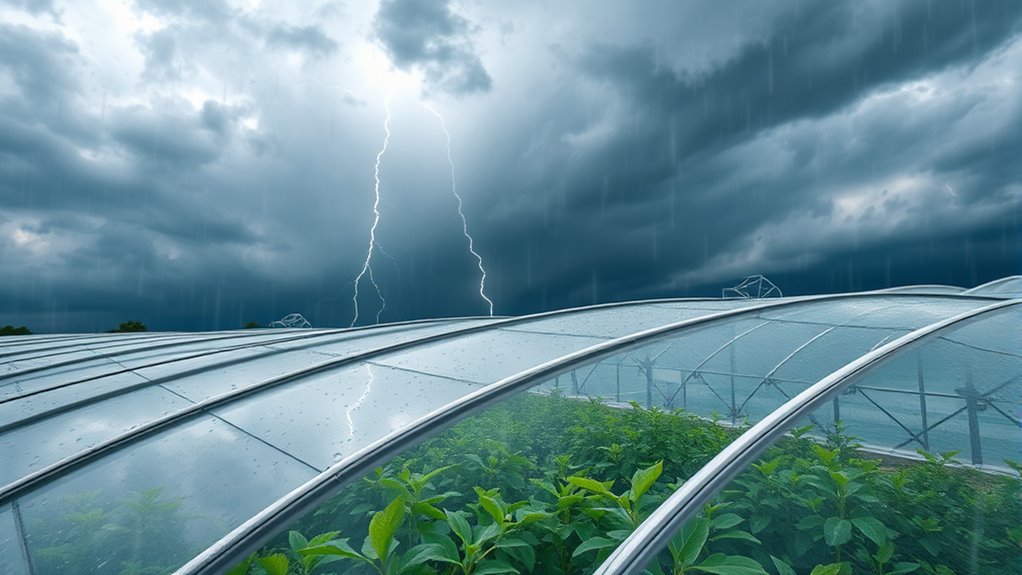
Greenhouses play a crucial role in agriculture by providing controlled environments for crop growth, but they also impact climate change in complex ways. As climate patterns become more unpredictable, greenhouses serve as a key tool for adapting to weather extremes. By designing greenhouses as sustainable buildings, you can considerably reduce their environmental footprint while enhancing resilience against climate disruptions. Sustainable building practices—such as using energy-efficient materials, incorporating renewable energy sources, and optimizing insulation—help lower greenhouse gas emissions and make these structures more eco-friendly. When you focus on sustainability, you not only protect the environment but also ensure that your greenhouse remains a reliable source of food production despite shifting climate conditions. Implementing eco-friendly features within greenhouse design further amplifies their role in reducing environmental impact and increasing climate resilience.
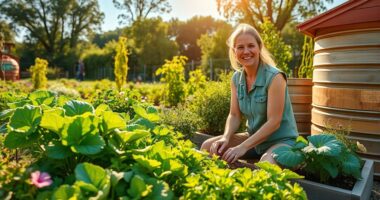
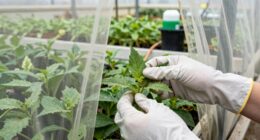
One major advantage of greenhouses in climate resilience is their ability to support crop diversification. With climate change causing unpredictable weather events like droughts, floods, and unseasonal frosts, traditional farming becomes riskier. Greenhouses allow you to grow a variety of crops in a controlled setting, reducing dependency on a single crop or seasonal cycle. This diversification spreads risk, making your food supply more secure. For example, you can grow heat-loving vegetables during colder months or delicate crops that wouldn’t normally survive outside. This flexibility helps buffer your farm against climate variability, ensuring a steady harvest even when external conditions are unfavorable.
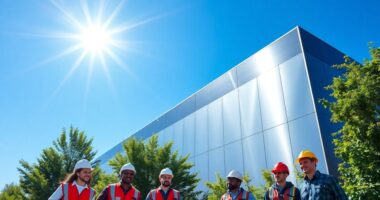
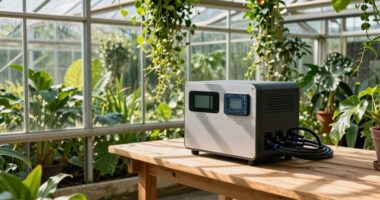
Moreover, greenhouses enable you to implement energy-efficient systems that minimize resource use. Automated ventilation, smart shading, and temperature control help maintain ideal growing conditions while conserving energy. When these systems are integrated into a sustainable building framework, they contribute to reducing overall carbon emissions. Additionally, greenhouses can incorporate renewable energy sources such as solar panels or wind turbines, further decreasing their environmental impact. This combination of sustainable design and technological innovation makes greenhouses a resilient, eco-friendly option for future-proofing agriculture against climate change.

SUNGIFT Walk-in Greenhouse for Outdoors, 57x61x80 Inch Large Greenhouse, 3 Tiers 10 Shelves Mini Green House Kit with Observation Windows Roll-up Door Zipper, Plant Garden Hot House for Herbs, Flowers
Large space: Overall size of greenhouse is 57 x 61x 80 Inch. Indoor greenhouse constructed with 10 sturdy…
As an affiliate, we earn on qualifying purchases.
As an affiliate, we earn on qualifying purchases.
Frequently Asked Questions
Can Greenhouses Reduce Overall Carbon Emissions?
Greenhouses can reduce your overall carbon footprint by improving energy efficiency in food production. By optimizing conditions, you use less energy for heating, cooling, and lighting, which cuts emissions. Additionally, greenhouses enable local food growth, decreasing transportation emissions. Implementing renewable energy sources further enhances their eco-friendly benefits. So, when managed well, greenhouses help you lower emissions and promote more sustainable agriculture practices.
How Do Greenhouses Impact Local Climate Patterns?
Greenhouses impact local climate patterns by creating a controlled environment that modifies urban heat and microclimates. You can see this effect as they trap heat, raising temperatures around them, which can contribute to urban heat island effects. By altering the natural microclimate, greenhouses can increase local temperatures, influence air circulation, and even affect humidity levels, ultimately shaping the immediate climate patterns in their surroundings.
Are Greenhouses Sustainable in the Long Term?
Greenhouses can be sustainable long-term if you focus on energy efficiency and resource management. By using renewable energy sources, insulating properly, and optimizing heating and cooling systems, you reduce energy consumption. Implementing water recycling and sustainable materials also minimizes environmental impact. With careful planning and ongoing maintenance, greenhouses remain a viable, eco-friendly option for supporting agriculture and food security amid changing climate conditions.
What Are the Costs Associated With Greenhouse Climate Adaptation?
Did you know that greenhouse climate adaptation costs can range from thousands to millions of dollars? You’ll need to take into account economic feasibility and technological investments, which can be significant. Upfront expenses for climate control systems, insulation, and automation are high, but long-term benefits include resilience against weather extremes. Balancing these costs is essential for sustainable growth, and careful planning helps guarantee your greenhouse remains both resilient and economically viable.
How Do Greenhouses Influence Biodiversity?
Greenhouses influence biodiversity by supporting biodiversity conservation and ecosystem preservation. They create controlled environments that protect rare or endangered species from harsh weather, allowing you to cultivate diverse plants and animals that might struggle in the wild. This helps maintain ecological balance, promotes genetic diversity, and preserves ecosystems. By providing safe habitats, greenhouses enable you to contribute actively to biodiversity efforts and safeguard essential species for future generations.

WTC100 Wireless Temperature Controller Digital Plug-in Thermostat Outlet Remote Control Heating Cooling Mode for Window A/C Fan Heater Greenhouse Homebrewing Reptile (Built-in Temp Sensor)
Heating & Cooling Mode: Automatically turn on/off heating devices or cooling devices through your preset target temperature. Maintains…
As an affiliate, we earn on qualifying purchases.
As an affiliate, we earn on qualifying purchases.
Conclusion
Think of greenhouses as your personal fortress against nature’s unpredictable storms. Just like a sturdy shield deflects arrows, they protect your plants from extreme weather and climate fluctuations. By embracing this green sanctuary, you’re not just growing food—you’re building resilience and securing your future. As the climate shifts, your greenhouse stands firm, a resilient haven amid chaos. Together, you and your greenhouse forge a sustainable path through nature’s unpredictable storms.

Solar Powered Fan, 30W Large Solar Fan Exhaust Dual Exhaust Fan, Equipped with Two IPX7 Waterproof Fans, Suitable for air Ventilation & Circulation in Chicken Coops, Greenhouses, Sheds, Pet Houses
ADVANCED 30W MONOCRYSTALLINE TECHNOLOGY – Unlike cheaper polycrystalline options, our 30W monocrystalline silicon panel ensures maximum efficiency and…
As an affiliate, we earn on qualifying purchases.
As an affiliate, we earn on qualifying purchases.

GREENHOUSE CONSTRUCTION HANDBOOK: YOUR GUIDE TO BUILDING, DESIGNING, AND CUSTOMIZING YOUR PERFECT GROWING SPACE.
As an affiliate, we earn on qualifying purchases.
As an affiliate, we earn on qualifying purchases.