To make your greenhouse energy-efficient, focus on passive solar design with proper orientation and high-quality glazing that maximizes sunlight while retaining heat. Incorporate thermal mass like water barrels or stone walls to stabilize temperature and use natural ventilation with vents or automated openers to regulate airflow. Shade devices help prevent overheating, and strategic placement of vents improves airflow. Continue exploring these features to optimize your greenhouse’s sustainability and plant health.
Listen free for 30 days with Audible
Thousands of audiobooks and originals — cancel anytime.
As an affiliate, we earn on qualifying purchases.
Key Takeaways
- Orient the greenhouse east-west to maximize solar heat gain and optimize sunlight exposure.
- Use high-transparency glazing materials like tempered glass or polycarbonate for efficient sunlight transmission.
- Incorporate thermal mass and heat-absorbing interior surfaces to retain and distribute heat effectively.
- Design for natural ventilation with strategically placed vents and automated openers to regulate temperature passively.
- Include shading devices and strategic thermal mass to prevent overheating and stabilize interior temperatures.

Have you ever wondered what makes a greenhouse truly effective? One of the key factors is how well it harnesses natural energy sources to minimize reliance on artificial heating and cooling. Incorporating passive solar design is essential because it allows you to maximize sunlight during the day, warming the interior naturally without extra energy costs. You want your greenhouse positioned and constructed to absorb as much solar heat as possible, which means choosing the right orientation—generally aligning the longest side east-west to capture maximum sunlight. Using glazing materials that transmit sunlight efficiently, like tempered glass or clear polycarbonate, ensures that warmth penetrates deeply into the space. Dark-colored or heat-absorbing materials on the interior can also help retain heat longer, making your greenhouse warmer during cooler months.
Natural ventilation is another vital feature that greatly boosts energy efficiency. Instead of relying solely on electric fans or exhaust systems, designing your greenhouse to promote airflow can keep temperatures balanced and humidity in check. This involves strategically placing vents, windows, or louvered openings at high and low points so that warm air rises and escapes while cooler air enters from below. You might consider automated vent openers that respond to temperature changes, providing ideal airflow without manual intervention. Properly designed natural ventilation not only cools the space during hot days but also prevents mold and disease by reducing excess humidity. It’s an eco-friendly approach that reduces energy consumption and creates a healthier environment for plants.
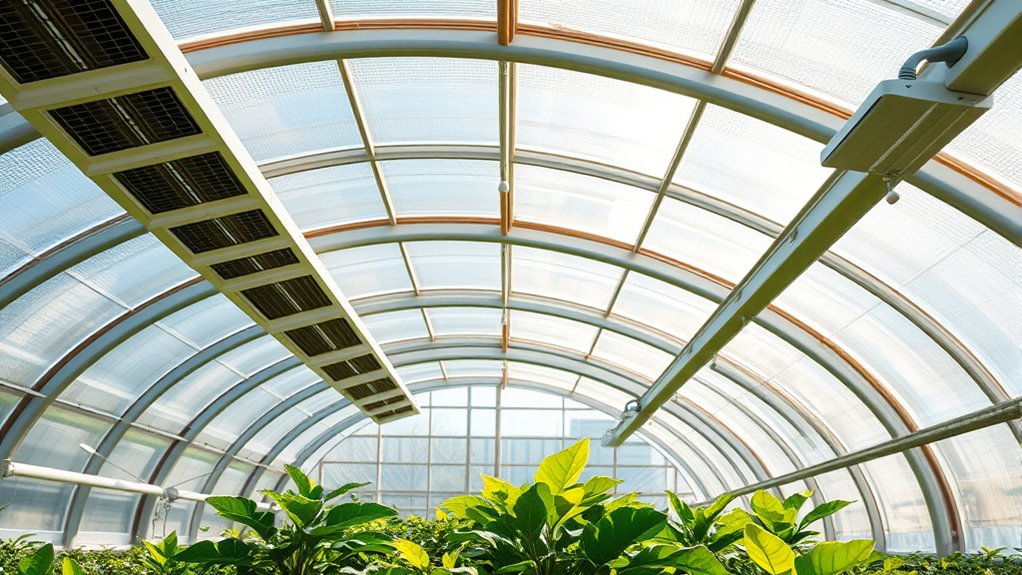
Strategic vents and automated openers enhance airflow, reducing energy use and preventing mold for healthier plants.
Both passive solar and natural ventilation work together to create a self-regulating greenhouse environment. When sunlight heats the interior, vents can be opened to let out excess heat, and as the temperature drops, they close to trap warmth. This seamless cycle minimizes the need for mechanical heating and cooling systems, saving you money and reducing your carbon footprint. Additionally, thoughtful placement of shading devices or thermal mass—like water barrels or stone walls—can further stabilize interior temperatures, making your greenhouse more resilient against temperature swings. Incorporating sustainable design practices further enhances energy efficiency and environmental friendliness.
In essence, focusing on passive solar principles and natural ventilation transforms your greenhouse into an energy-efficient space that leverages natural forces. You’ll enjoy healthier plants, lower energy bills, and a more sustainable operation overall. By designing with these features in mind, you create a space that’s not only productive but also respectful of the environment, proving that smart design can lead to considerable savings and improved plant growth.
energy-efficient greenhouse glazing
As an affiliate, we earn on qualifying purchases.
As an affiliate, we earn on qualifying purchases.
Frequently Asked Questions
How Do Greenhouse Design Features Impact Overall Energy Consumption?
Design features like thermal regulation and shading strategies markedly cut your greenhouse’s energy consumption. Thermal regulation helps maintain consistent temperatures, reducing heating and cooling needs. Shading strategies, such as adjustable shades or natural cover, prevent overheating during hot days, lowering the reliance on energy-intensive cooling systems. By implementing these features, you optimize energy use, creating a more sustainable environment while saving costs and enhancing plant growth conditions.
What Materials Are Best for Sustainable Greenhouse Construction?
Choosing sustainable materials for your greenhouse is like picking the best tools for a craftsman—essential for quality and longevity. Opt for materials like recycled aluminum, polycarbonate panels, and sustainably sourced wood, which enhance construction sustainability. These choices reduce environmental impact while maintaining durability. Careful material selection guarantees your greenhouse stays energy-efficient and eco-friendly, supporting your goal of a greener, more sustainable growing environment.
How Can Natural Ventilation Reduce Energy Use in Greenhouses?
You can reduce energy use in your greenhouse by optimizing natural airflow through strategic placement of vents and windows. Proper ventilation systems facilitate natural airflow, helping to cool or warm the space without relying heavily on mechanical systems. By enhancing airflow, you maintain ideal conditions efficiently, lowering energy consumption. This approach not only cuts costs but also creates a healthier environment for your plants, making your greenhouse more sustainable and eco-friendly.
Are There Specific Design Features That Optimize Solar Heat Gain?
You can optimize solar heat gain by focusing on solar orientation and glazing selection. Position your greenhouse to maximize sun exposure during winter while minimizing excessive heat in summer. Choose glazing materials with high transmittance to allow more sunlight inside, but also consider coatings or tints that reduce heat loss. Properly orientating your structure and selecting the right glazing helps harness solar energy efficiently, lowering your heating costs and improving overall energy efficiency.
How Does Insulation Affect Greenhouse Energy Efficiency?
Insulation substantially boosts greenhouse energy efficiency by enhancing thermal resistance, trapping heat, and reducing heat loss. You’ll want to choose quality insulation materials that create a snug, sealed space, preventing chilly drafts and conserving warmth. The better your insulation, the less energy you’ll need to maintain ideal conditions. This simple strategy, strengthened by sturdy insulation materials, ensures your greenhouse stays warm, welcoming, and efficiently eco-friendly, even in chilly weather.
Conclusion
By incorporating energy-efficient design features, you transform your greenhouse into a thriving oasis that conserves resources and boosts plant health. Think of it as a well-shielded fortress, where sunlight and warmth are carefully harnessed and protected. With smart insulation, natural ventilation, and sustainable materials, you create a haven that’s both productive and eco-friendly. Embrace these features, and watch your greenhouse flourish like a lush, resilient garden, standing strong against the elements while nurturing growth.
College move-in / dorm season Picks
dorm essentials
As an affiliate, we earn on qualifying purchases.