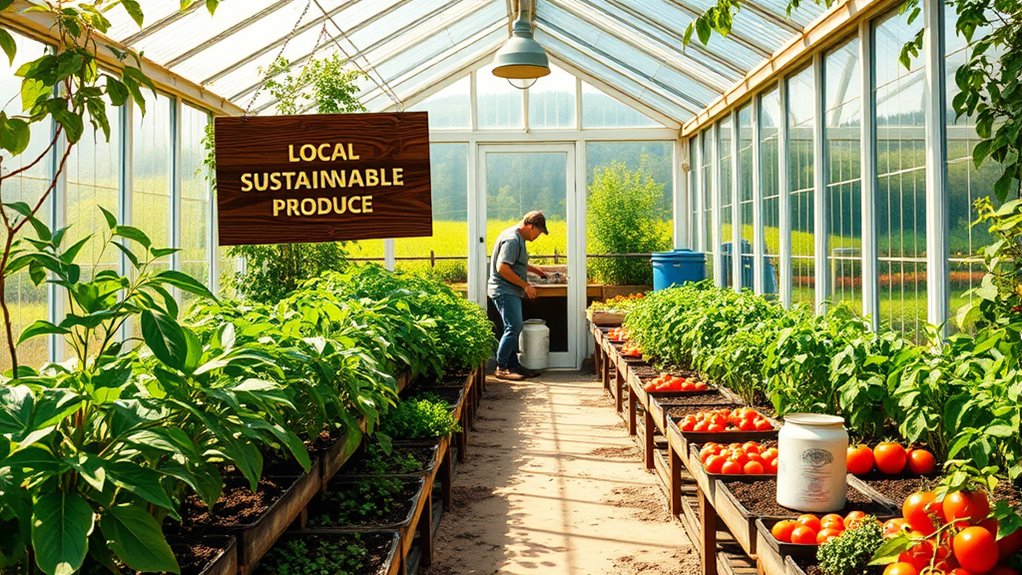

Starting a greenhouse small business lets you grow fresh, sustainable produce locally while maximizing space and conserving water. You can implement eco-friendly practices like organic fertilizing, integrated pest management, and community-driven marketing to appeal to health-conscious customers. Using innovations like hydroponics speeds growth and extends your season. By focusing on quality, transparency, and engaging with your community, you build trust and loyalty. Keep exploring to learn more about creating a thriving, eco-conscious greenhouse enterprise.

Get garden gear delivered free — and shop member deals
- Fast, free delivery on millions of items
- Access to Prime Big Deal Days deals on October 6–7
- Prime Video, Amazon Music and more included
Key Takeaways
- Utilize hydroponic systems to maximize space efficiency and ensure year-round, sustainable local produce.
- Implement integrated pest management and organic practices to maintain healthy crops and appeal to eco-conscious consumers.
- Build relationships with community markets, CSA programs, and local venues to promote sustainability and boost sales.
- Share your story through social media and farm tours to foster trust and attract environmentally-minded customers.
- Continuously experiment with crops, techniques, and marketing strategies to adapt and grow your small greenhouse business sustainably.
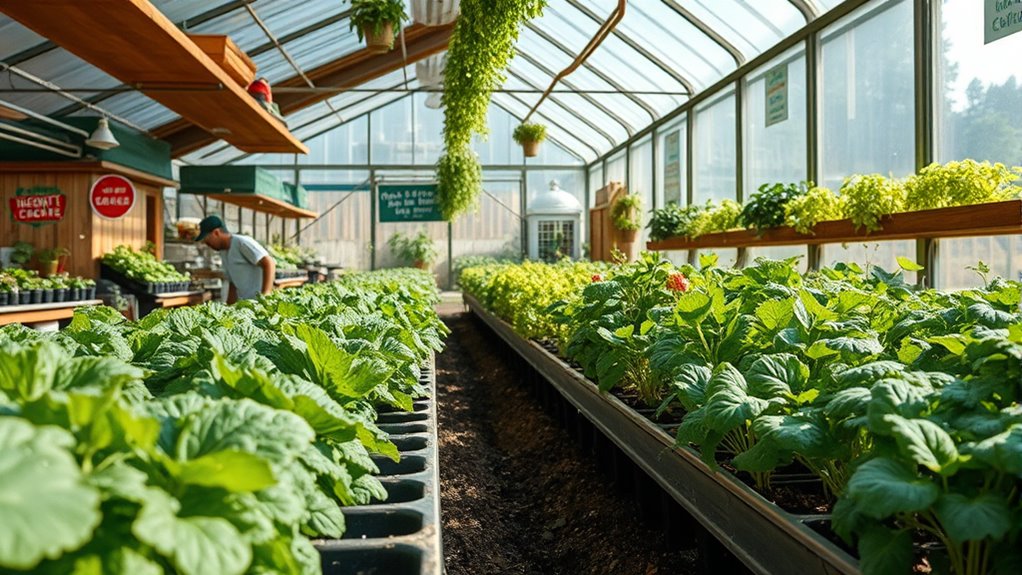
Starting a greenhouse small business can be a rewarding way to turn your passion for plants into a profitable venture. When you focus on local and sustainable produce, you’re not only providing fresh food to your community but also reducing your environmental footprint. To succeed, you need to pay close attention to your growing methods, especially if you’re considering innovative techniques like hydroponic systems. These soilless setups allow you to grow plants efficiently, using less water and space while speeding up growth cycles. They’re particularly useful if you want to maximize production in a limited area or extend your growing season. Plus, hydroponic systems make pest management easier because you can closely monitor and control the environment, reducing reliance on chemical pesticides.
Hydroponic systems boost efficiency, conserve water, and simplify pest control in your sustainable greenhouse.
When managing pests in your greenhouse, integrated pest management (IPM) is your best approach. It combines biological, cultural, and physical controls to keep pests at bay without harming your plants or the environment. For example, introducing beneficial insects like ladybugs can naturally reduce aphids, while physical barriers such as insect screens prevent pests from entering your greenhouse. Regular monitoring is essential—inspect your plants frequently so you catch infestations early before they become severe. Maintaining cleanliness and proper sanitation also helps; remove plant debris and dead leaves that could harbor pests or diseases. If you do need to use chemical controls, choose targeted, eco-friendly options and apply them carefully to avoid disrupting your beneficial organisms. Emphasizing natural pest control methods can further enhance the sustainability of your operation.
Another vital aspect of your small business is creating a sustainable supply chain. Focus on growing heirloom or organic varieties that appeal to health-conscious consumers. Use composting and organic fertilizers to nourish your plants, reducing chemical runoff and promoting soil health. When it comes time to harvest, prioritize freshness and quality, packaging your produce attractively for local markets or direct sales at farmers’ markets and community-supported agriculture (CSA) programs. Building relationships with customers who value sustainability and local produce will help establish a loyal clientele.
Marketing your greenhouse business involves sharing your story, emphasizing your sustainable practices, and demonstrating how your produce benefits the community. Use social media platforms to showcase your growing process, highlight your commitment to eco-friendly methods, and engage with potential customers. Offering farm tours or workshops can also attract attention and build trust within your local area. As you develop your business, stay adaptable by experimenting with new crops, techniques, and pest management strategies, ensuring you maintain high-quality produce and a sustainable operation. Ultimately, with careful planning and dedication, your greenhouse can thrive as a local, eco-conscious enterprise that benefits both your community and the environment.
As an affiliate, we earn on qualifying purchases.
Frequently Asked Questions
How Do I Price My Produce Competitively Locally?
To price your produce competitively locally, start with market analysis by researching nearby vendors’ prices. Use effective pricing strategies like cost-plus pricing, ensuring you cover expenses while staying attractive to customers. Adjust your prices based on quality, seasonality, and demand to stay competitive. Regularly monitor local market trends and customer feedback, so you can fine-tune your prices and maintain a strong, sustainable position in your community.
What Permits or Licenses Are Needed for a Greenhouse Business?
Starting your greenhouse business is like planting a seed—you need the right permissions to grow strong. You’ll need to navigate zoning regulations that define where you can operate, and secure environmental permits to protect your surroundings. Check local government websites or contact your city’s planning office to find specific licenses required. Securing these permits guarantees your venture stays within legal boundaries and flourishes without unexpected storms.
How Can I Extend My Growing Season Effectively?
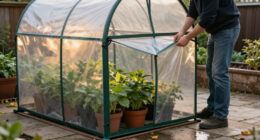
To extend your growing season effectively, focus on season extension techniques like using row covers, hoop houses, or additional insulation. Manage heat efficiently by installing ventilation systems, fans, or heaters to prevent overheating and cold damage. Consistently monitor your greenhouse temperatures, adjusting airflow and shading as needed. These strategies help you maximize productivity year-round, ensuring your produce stays healthy and abundant regardless of outside weather conditions.
What Are the Best Marketing Strategies for Local Sales?
You should focus on community engagement and social media marketing to boost local sales. Engage your community through farmers markets, local events, and partnerships with nearby businesses. Use social media platforms to showcase your produce, share behind-the-scenes content, and promote special offers. By building relationships and maintaining active online presence, you’ll attract loyal customers who appreciate your sustainable practices and fresh, local produce.
How Do I Manage Pest Control Sustainably in a Greenhouse?
Did you know that sustainable pest control methods can reduce chemical use by up to 90%? To manage pests sustainably in your greenhouse, focus on biological control by introducing natural predators like ladybugs or lacewings. Companion planting also helps deter pests naturally. These methods keep your produce safe, promote healthy growth, and align with your eco-friendly goals, ensuring your greenhouse remains productive without harmful chemicals.
Conclusion
Starting a greenhouse small business puts you at the heart of your community’s sustainability. By selling locally and embracing eco-friendly practices, you’re planting seeds for a greener future—one tomato, lettuce, and pepper at a time. Your passion fuels growth, and each harvest is a proof to your dedication. Keep nurturing your dreams, and like a well-tended garden, your business will flourish, blossoming into a vibrant legacy that benefits both you and the planet.
Fall yard work Picks
leaf blowers
As an affiliate, we earn on qualifying purchases.