
To fix fungus gnats from the start, focus on the soil surface where larvae breed. Keep the topsoil dry, loosen it to improve aeration, and avoid overwatering. You can add a layer of sand or diatomaceous earth to dry out the surface and disrupt gnat habitats. Clearing debris and managing moisture at this level are key. If you want to know more practical ways to break their cycle, there’s more to discover below.
Key Takeaways
- Improving soil surface dryness through aeration and adding materials like sand or diatomaceous earth discourages gnat breeding.
- Regularly inspecting and disturbing the topsoil reveals larvae early, preventing infestation escalation.
- Using organic barriers such as cinnamon or neem oil on the soil surface deters adult gnats from laying eggs.
- Ensuring proper drainage and avoiding overwatering reduces persistent surface moisture that attracts fungus gnats.
- Applying soil surface treatments like solarization or beneficial nematodes targets larvae directly at their breeding sites.

HARRIS Diatomaceous Earth Food Grade, Half Pound with Easy Application Puffer Tip
100% Chemical-Free: Made from 8oz of food-grade freshwater diatomaceous earth with no additives or fillers. Safe for use…
As an affiliate, we earn on qualifying purchases.
As an affiliate, we earn on qualifying purchases.
Why Fungus Gnats Keep Coming Back
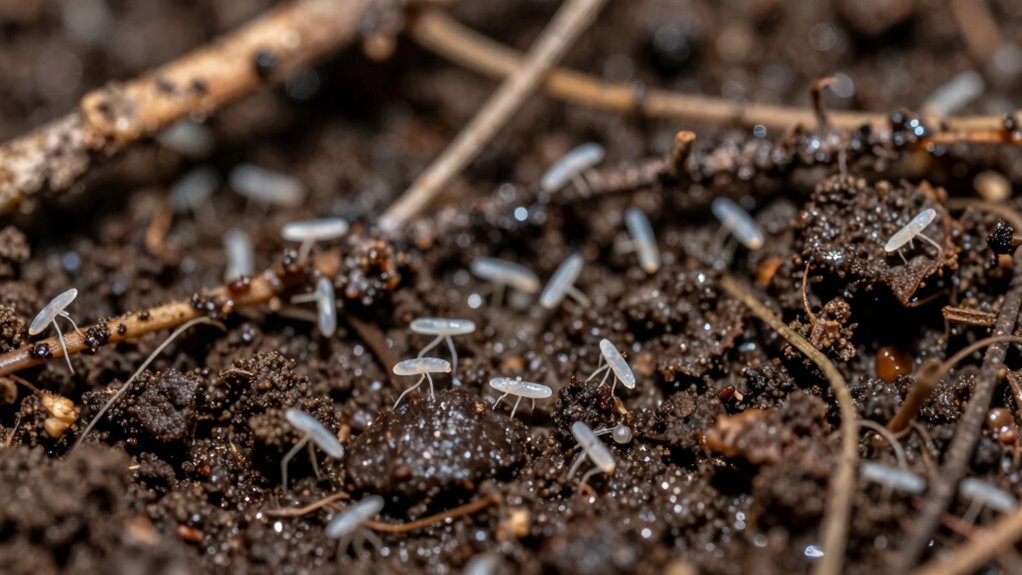
Fungus gnats often keep returning because their larvae thrive in moist, organic-rich soil that you might not realize is still contaminated. Poor soil aeration creates a perfect environment for larvae to develop, as excess moisture and compacted soil hinder oxygen flow. When soil remains too damp, it encourages not only gnat larvae but also damages your plant’s health, leading to weak roots and stunted growth. To break this cycle, you need to improve soil aeration by loosening the soil and avoiding overwatering. Proper soil care and healthy, well-aerated soil make it harder for fungus gnat larvae to survive, reducing their numbers naturally. Proper soil care ultimately supports your plants’ essentiality and helps prevent the persistent return of these pests.

Soil Aeration Tubes 10PCS, Drainage Ventilate Tool,Plant Accessories
Prevent Root Rot & Promote Healthy Growth: Our ventilation stakes create air channels deep in the soil, effectively…
As an affiliate, we earn on qualifying purchases.
As an affiliate, we earn on qualifying purchases.
Why Your Soil Surface Is the Key to Control
Your soil surface plays a vital role in controlling fungus gnats, starting with surface moisture. Regularly inspecting the top layer helps you spot excess dampness that attracts larvae. By ensuring proper surface drying, you create an environment less inviting for gnats and break their life cycle. Additionally, maintaining good indoor air quality can help reduce humidity levels that favor gnat development. Incorporating energy-efficient solutions can further improve indoor conditions and reduce humidity. Monitoring environmental conditions and making adjustments can also significantly help in managing gnat populations effectively. Implementing proper ventilation systems can aid in dispersing excess moisture and maintaining optimal airflow to keep the soil surface dry. Understanding soil chemistry can help you choose the right amendments to improve drainage and reduce moisture retention.
Surface Moisture Matters
Since fungus gnats thrive in moist environments, keeping the soil surface dry is essential for control. Proper pest identification helps you recognize when gnats are present and confirms moisture as a key factor. When soil remains consistently damp, it creates an ideal breeding ground. To reduce surface moisture, improve soil aeration by gently loosening the soil or using sand or gravel on top. This allows excess water to evaporate and prevents the surface from staying wet. Additionally, soil aeration techniques can further enhance moisture evaporation and discourage gnat breeding. Improving watering practices is crucial, as overwatering exacerbates surface moisture problems. Avoid overwatering to maintain less hospitable conditions for fungus gnat larvae. Drying out the soil surface disrupts their life cycle and limits their population. Furthermore, understanding the importance of drainage systems can help prevent excess moisture accumulation. Incorporating moisture management strategies can create a less attractive environment for pests. Being aware of soil surface conditions helps you adjust your approach more effectively and prevent pest infestations. Remember, moisture control isn’t just about watering habits; it’s about creating an environment that’s less attractive to these pests.
Soil Surface Inspection
Inspecting the soil surface regularly can reveal early signs of fungus gnat activity and help you gauge moisture levels. Look for surface debris like mold, decaying plant matter, or tiny flying insects. Poor soil aeration often leads to compacted soil, trapping moisture and creating ideal breeding spots for gnats. Clearing surface debris improves air circulation and reduces hiding places for larvae. Check for uneven soil texture or crusts that indicate poor drainage or overwatering. By maintaining a clean, well-aerated surface, you prevent fungus gnats from establishing a foothold. Regular inspections allow you to catch problems early, adjust watering habits, and keep the soil environment less inviting for gnats. Staying vigilant at the soil surface is a simple yet effective step toward control. Soil aeration is crucial for preventing moisture buildup and disrupting gnat breeding environments, ensuring healthier plant roots and less pest pressure.
Proper Surface Drying
Maintaining a dry soil surface is essential for controlling fungus gnats because moist conditions attract them and support their breeding. To achieve this, improve soil aeration by gently loosening the top layer, preventing excess moisture buildup. Adjust your watering schedule to avoid overwatering; let the soil dry out between waterings. Consistent drying disrupts the gnats’ lifecycle, reducing their population. Use a moisture meter if needed to monitor the soil’s surface moisture levels. Remember, the goal isn’t to keep the soil completely dry but to prevent persistent dampness that creates a breeding ground. Proper surface drying makes it harder for fungus gnats to lay eggs and develop, giving you a critical edge in pest control. Additionally, understanding the soil moisture balance can help you fine-tune your watering practices for optimal pest prevention. Maintaining the right soil surface conditions is vital for long-term fungus gnat management, especially since moisture levels directly influence gnat activity and reproduction. Being aware of environmental factors can further enhance your efforts to create an inhospitable environment for these pests.

Earth's Ally 3-in-1 Insecticide, Miticide, Fungicide for Plants – Copper Fungicide Spray Alternative – Insect Repellent & Pest Control for Indoor Outdoor Organic Gardening – 32 Oz RTU
3-IN-1 GARDEN SPRAY – Earth’s Ally 3-in-1 Plant Spray is an insecticide, miticide and fungicide. The houseplant pest…
As an affiliate, we earn on qualifying purchases.
As an affiliate, we earn on qualifying purchases.
How Gnat Larvae Thrive in the Topsoil
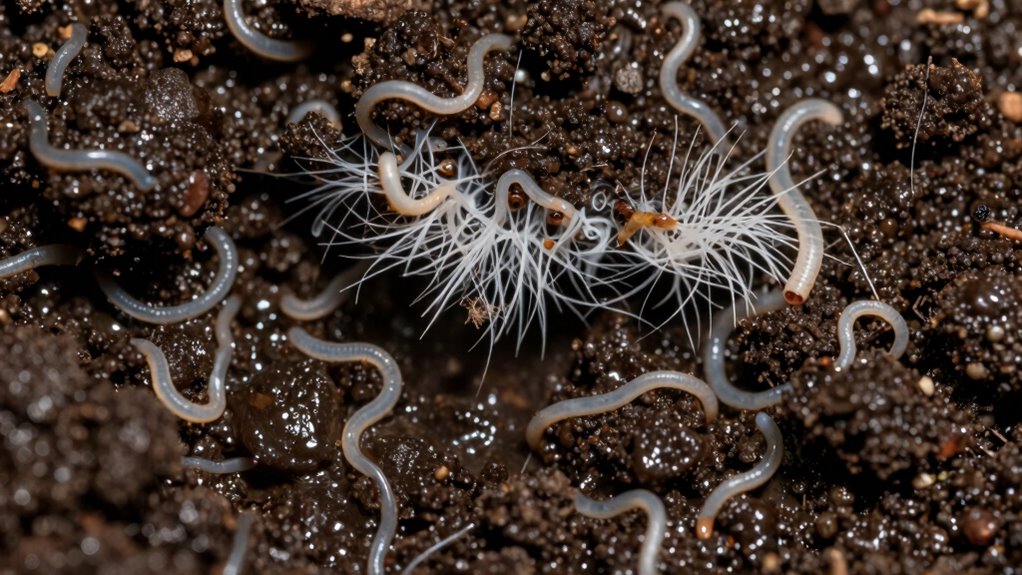
Gnat larvae thrive in topsoil because it provides the perfect environment for their development. Well-aerated soil allows for oxygen to reach the larvae, supporting their growth and survival. When the soil isn’t compacted, larvae find it easier to move and feed. Organic matter, such as decaying plant material and compost, acts as a food source, fueling their rapid reproduction. The moist, nutrient-rich top layer creates ideal conditions for larvae to mature quickly. If your soil stays damp and rich in organic debris, it becomes a haven for fungus gnat larvae. Proper soil management and managing organic matter levels can disrupt their habitat, making it less hospitable for these tiny pests and helping you control infestations more effectively. Ensuring proper drainage and avoiding overwatering are crucial steps in reducing their population. Additionally, understanding the life cycle of fungus gnats can help in timing control measures more effectively. Incorporating biological control methods, such as beneficial nematodes, can further help in managing gnat populations naturally.

The Environmental Factor NemaKnights Slow-Release Nematodes – Biological Pest Control for Fungus Gnats, Thrips, & Whiteflies (280g, Treats Up to 50 Planters)
SLOW-RELEASE NEMATODES FOR EFFECTIVE PEST CONTROL – Ready-to-use granular formulation that provides continuous protection against fungus gnats, thrips,…
As an affiliate, we earn on qualifying purchases.
As an affiliate, we earn on qualifying purchases.
How to Spot Fungus Gnat Infestations
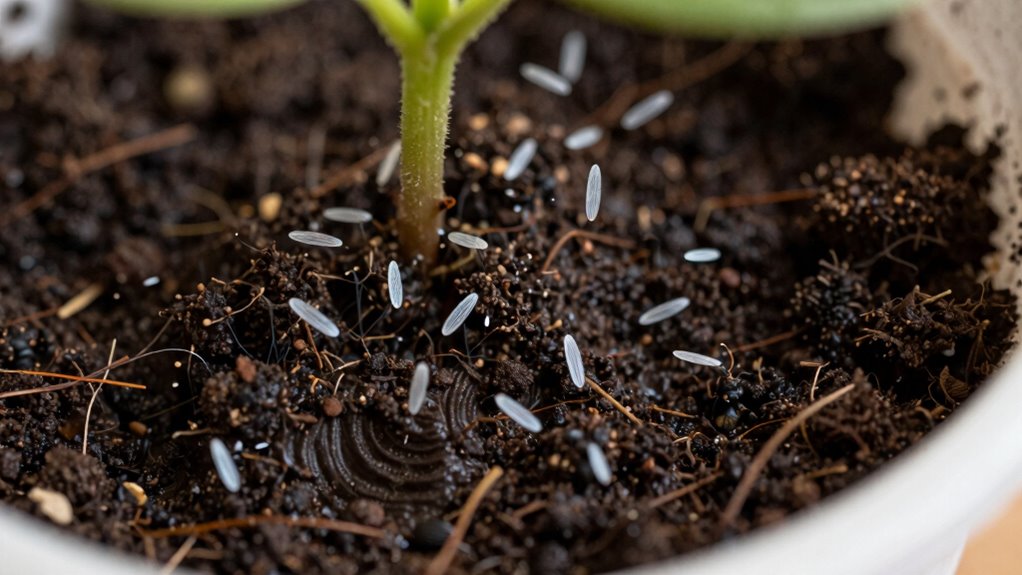
You can spot a fungus gnat problem by watching for tiny, moving larvae in your soil. Keep an eye out for small, dark worms on the surface or just below the top layer. Additionally, persistently damp soil signals that conditions are ideal for these pests to thrive. Using targeted soil analysis can help confirm infestations early on. Regularly inspecting soil moisture levels and proper drainage can further reduce the risk of infestation. Monitoring watering habits ensures that soil remains less hospitable for fungus gnats and their larvae. Maintaining optimal soil surface conditions also plays a crucial role in preventing these pests from establishing themselves.
Visible Larvae Signs
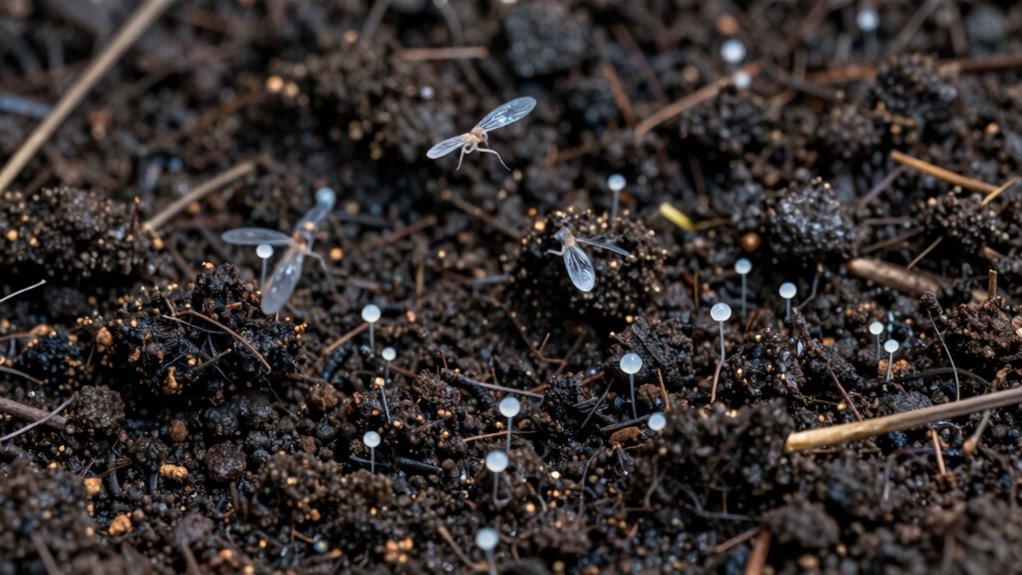
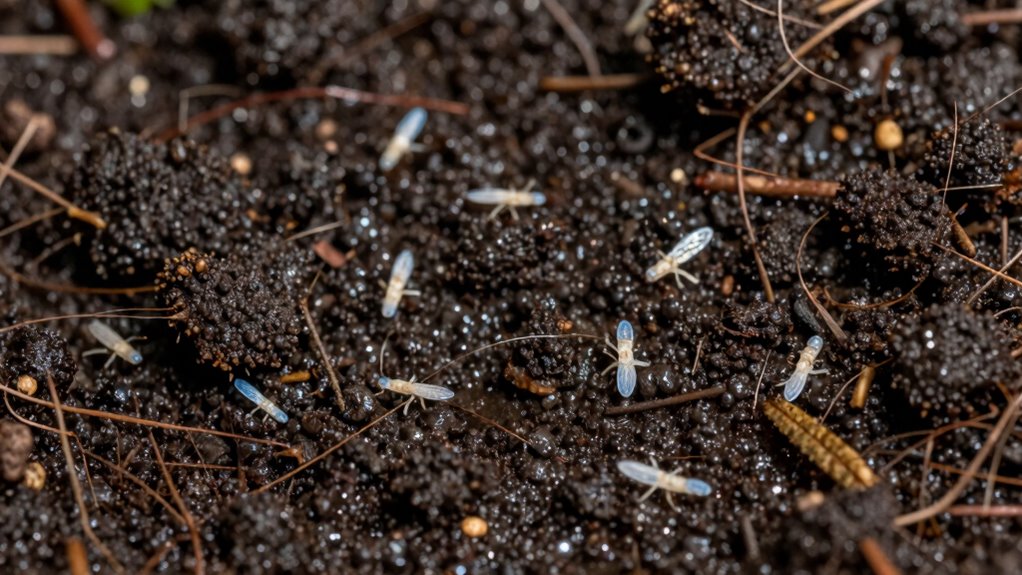
One of the clearest signs of a fungus gnat infestation is spotting tiny larvae in the soil. These larvae often hide beneath soil crusts or within layers of organic matter, making them tricky to see at first glance. Look closely at the soil surface; if you notice transparent or white, legless worms, it’s likely fungus gnat larvae. They thrive in moist, rich organic matter, where they feed and develop. Sometimes, you might see small, dark specks attached to the larvae—these are their waste. If you gently disturb the soil and see these tiny creatures wriggling, it confirms an infestation. Regular inspection of the soil surface and organic matter gives you a clear sign of fungus gnat presence before they become unmanageable.
Damp Soil Indicators
Moist soil is a common sign of a fungus gnat problem, especially when it persists despite proper watering routines. Damp soil creates ideal conditions for fungus gnats to thrive, as their larvae feed on decaying organic matter. Poor root aeration can cause soil to stay overly wet, making it harder for roots to breathe and encouraging gnat development. Additionally, organic mulching can retain too much moisture if not managed properly, providing a perfect breeding ground for larvae. If you notice consistently damp soil surface even after watering adjustments, it’s a clear indicator of an infestation. Improving root aeration by loosening the soil and reducing excessive organic mulching helps dry out the environment, disrupting gnat breeding cycles and reducing their presence.
How to Treat the Soil Surface to Kill Eggs and Larvae
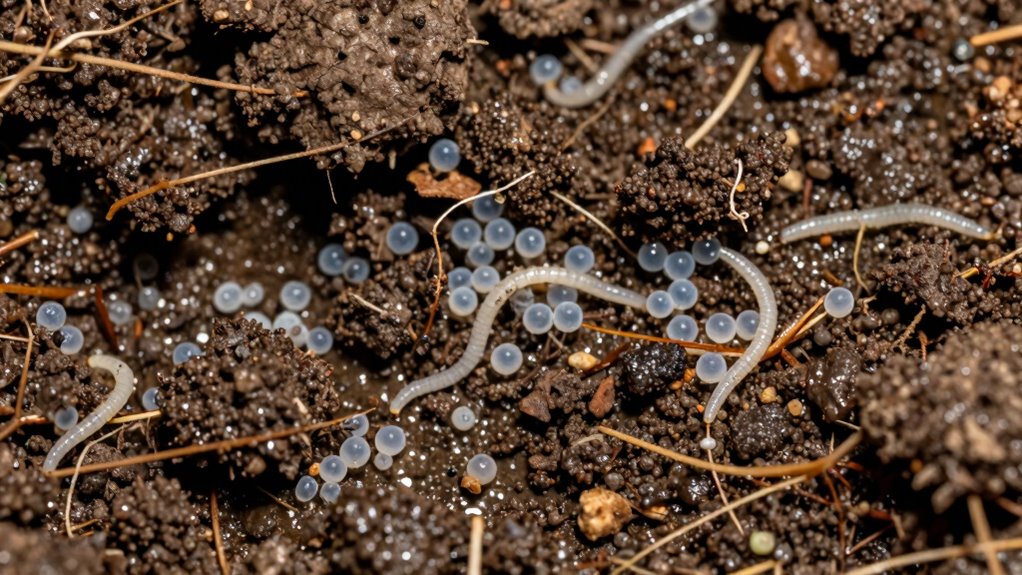
Treating the soil surface is a crucial step in eliminating fungus gnat eggs and larvae. Start with soil sterilization by gently heating or solarizing the top layer to kill existing pests. This method is effective for reducing the egg and larval population without chemicals. Organic treatments also work well; apply biological control agents like beneficial nematodes or Bacillus thuringiensis israelensis (Bti). These naturally occurring organisms target gnat larvae directly in the soil, disrupting their development. Be sure to evenly distribute the treatments across the soil surface and maintain moisture to encourage microbial activity. Regularly monitor the soil surface for signs of new gnat activity, and repeat treatments as needed. Combining soil sterilization with organic treatments provides a safe, effective way to break the gnat lifecycle at its soil stage.
Long-Term Tips to Keep Soil Gnat-Free
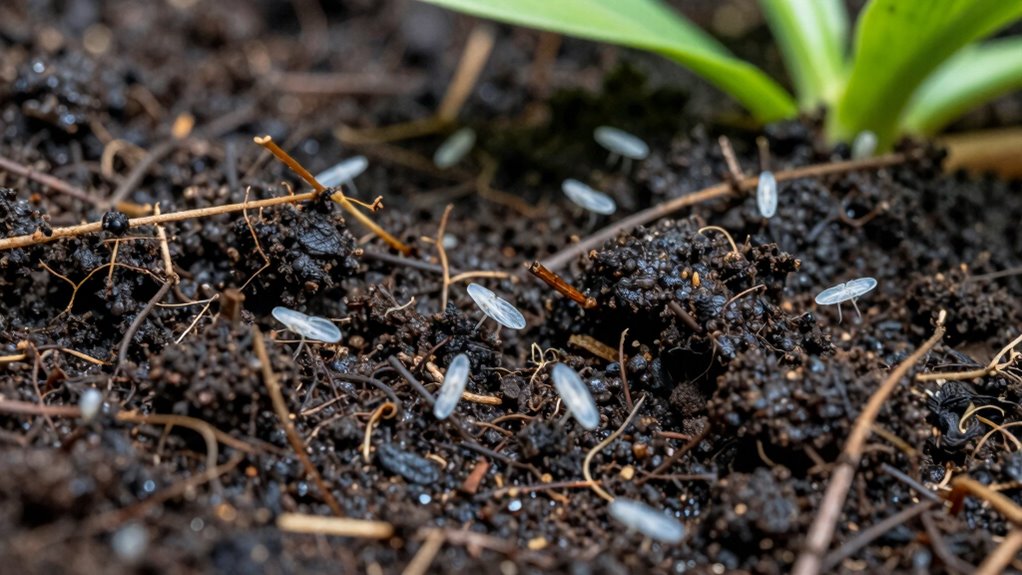
Maintaining a healthy, well-drained soil environment is essential for keeping fungus gnats at bay in the long run. Prioritize root health by avoiding overwatering, which creates ideal conditions for larvae. Proper compost management also helps; keep compost dry and aerated to prevent gnat breeding spots.
| Soil Condition | Gnat Prevention Strategy |
|---|---|
| Moisture Levels | Ensure soil dries between waterings |
| Organic Material | Use compost sparingly and manage properly |
| Root Health | Prevent root rot with proper watering |
DIY Solutions to Prevent Fungus Gnats
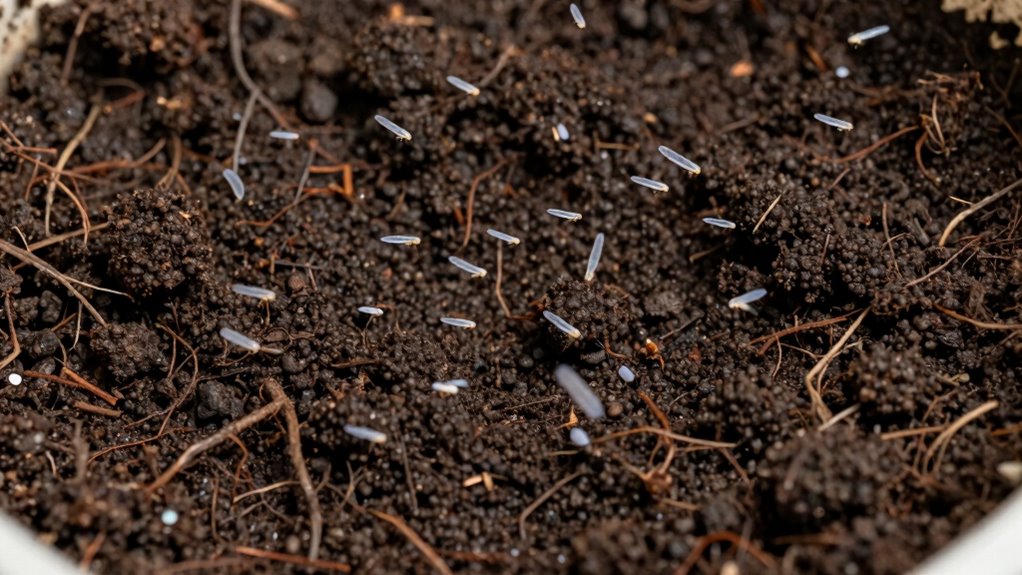
To prevent fungus gnats from infesting your plants, you can create simple DIY solutions that target their breeding habits. Start by improving soil aeration; gently loosen the soil surface to disrupt the gnat larvae’s environment and reduce moisture buildup. Using organic repellents like cinnamon or neem oil on the soil surface creates a natural barrier that deters gnats from laying eggs. You can also apply a layer of sand or diatomaceous earth to dry out the topsoil, making it less attractive for breeding. These methods combine to reduce moisture and disrupt gnat life cycles effectively. Regularly monitoring your soil and maintaining proper watering habits will enhance these DIY solutions, creating an inhospitable environment that keeps fungus gnats at bay.
Frequently Asked Questions
Can Overwatering Contribute to Fungus Gnat Problems?
Yes, overwatering can definitely contribute to fungus gnat problems. When your soil moisture levels stay high due to frequent watering habits, it creates an ideal environment for fungus gnats to thrive. These pests lay their eggs in wet soil, and larvae feed on decaying organic matter. To prevent issues, let the soil surface dry out between waterings and adjust your watering habits to maintain proper soil moisture levels, discouraging gnats from settling in.
Are Fungus Gnats Harmful to Plant Roots?
Fungus gnat larvae are like tiny pests nibbling at your plant’s roots. Yes, they can cause harm by damaging roots, which hampers nutrient uptake. The larvae burrow into the soil and feed on root tissues, leading to root damage that stunts plant growth and weakens overall health. If you see signs of infestation, act quickly to control the larvae before your plant suffers lasting harm.
How Quickly Do Fungus Gnat Eggs Hatch?
Fungus gnat eggs typically hatch within 4 to 6 days, depending on soil conditions. During this period, egg incubation occurs at the soil surface, where warmth and moisture accelerate hatch timing. You might notice tiny larvae emerging shortly after, especially if your soil stays damp. To prevent rapid hatching, keep your soil dry and avoid overwatering, disrupting the egg incubation process and breaking the gnat life cycle.
Do Certain Soil Types Attract Fungus Gnats More?
Yes, certain soil types attract fungus gnats more. You’ll find that soils with high moisture retention and organic matter, like rich compost or potting mixes, create ideal conditions for them. These soils stay damp longer, encouraging egg laying and larval development. To reduce attraction, opt for well-draining soil with less organic material, allowing surface moisture to evaporate quickly and making your plants less appealing to these pests.
Is There a Natural Predator for Fungus Gnats?
Yes, there are natural predators for fungus gnats, and they’re like tiny superheroes hidden in your soil! Beneficial insects such as predatory nematodes, Hypoaspis mites, and certain beetles hunt down and feast on these pesky pests, keeping their populations in check. Introducing these natural predators creates a biological army that fights fungus gnats without harsh chemicals, transforming your garden into a pest-free paradise with nature’s own cleanup crew.
Conclusion
To keep fungus gnats at bay, stay vigilant, stay consistent, and stay proactive. Monitor your soil surface regularly, treat it promptly, and prevent future infestations by maintaining dry, healthy soil. Recognize the signs early, apply effective solutions consistently, and practice good plant hygiene. With these habits, you’ll stop the cycle, break the infestation, and enjoy thriving plants free from fungus gnats. Your efforts today will protect your plants tomorrow.