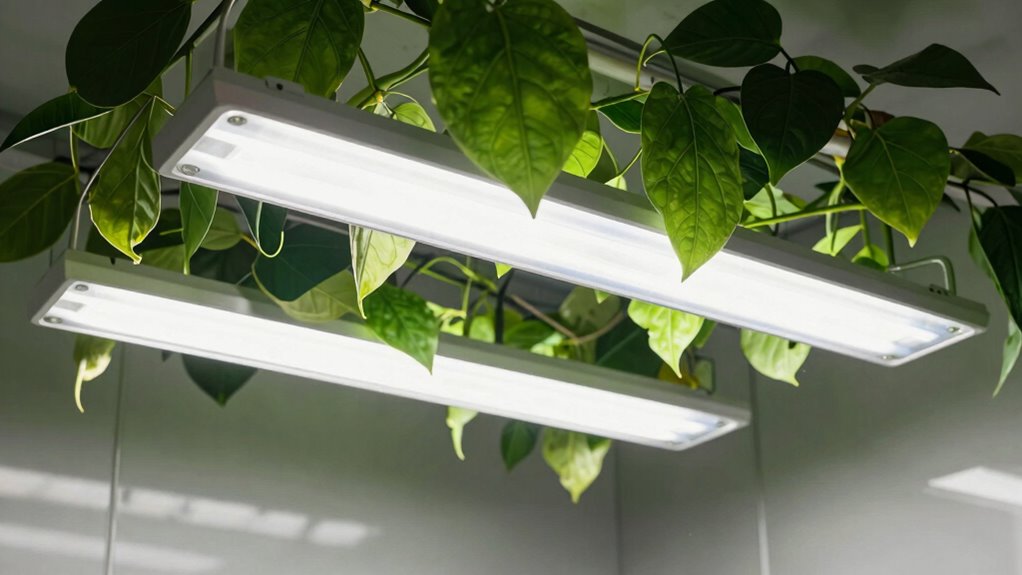
To hang grow lights properly and prevent cooking your canopy, hang them 18-24 inches above your plants for full-spectrum LEDs, adjusting as they grow. Keep lights closer during vegetative stages and raise them during flowering to avoid heat stress. Use reliable hardware, like adjustable chains or hooks, and regularly check their stability. Balancing light intensity with heat management is key; proper setup helps your plants thrive without damage. Continue exploring essential tips to keep your grow environment safe and healthy.

Get garden gear delivered free — and shop member deals
- Fast, free delivery on millions of items
- Access to Prime Big Deal Days deals on October 6–7
- Prime Video, Amazon Music and more included
Key Takeaways
- Hang lights 18-24 inches above the canopy and adjust height as plants grow to prevent heat stress.
- Use adjustable hardware like chains or ratchet straps for precise height control during different growth stages.
- Incorporate dimmable lights and heat shields to manage intensity and reduce radiant heat.
- Monitor plant response regularly and increase light distance during flowering to avoid light burn.
- Maintain proper airflow and temperature control to prevent heat buildup and protect the canopy.
adjustable grow light hanging kit
As an affiliate, we earn on qualifying purchases.
As an affiliate, we earn on qualifying purchases.
How to Prevent Heat Damage From Grow Lights
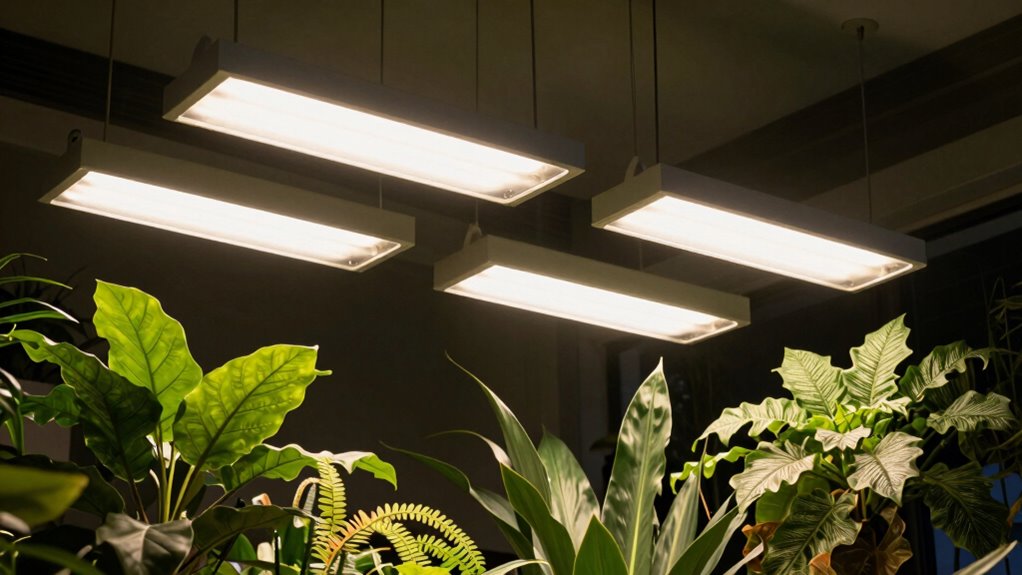
To prevent heat damage from grow lights, you need to carefully manage their placement and operation. Use reflective coverings around your grow area to direct light efficiently and reduce the need for excessive intensity, which can generate more heat. Installing heat resistant fixtures ensures your setup can handle higher temperatures without risk of melting or damage. Keep your lights at the proper distance from your plants—usually recommended by the manufacturer—to avoid overheating the canopy. Regularly check your grow environment’s temperature and adjust your lighting schedule accordingly. Proper ventilation also helps dissipate heat effectively. Proper lighting setup minimizes the risk of heat stress and guarantees your plants thrive under ideal conditions.
Choosing the Right Grow Light for Your Indoor Garden
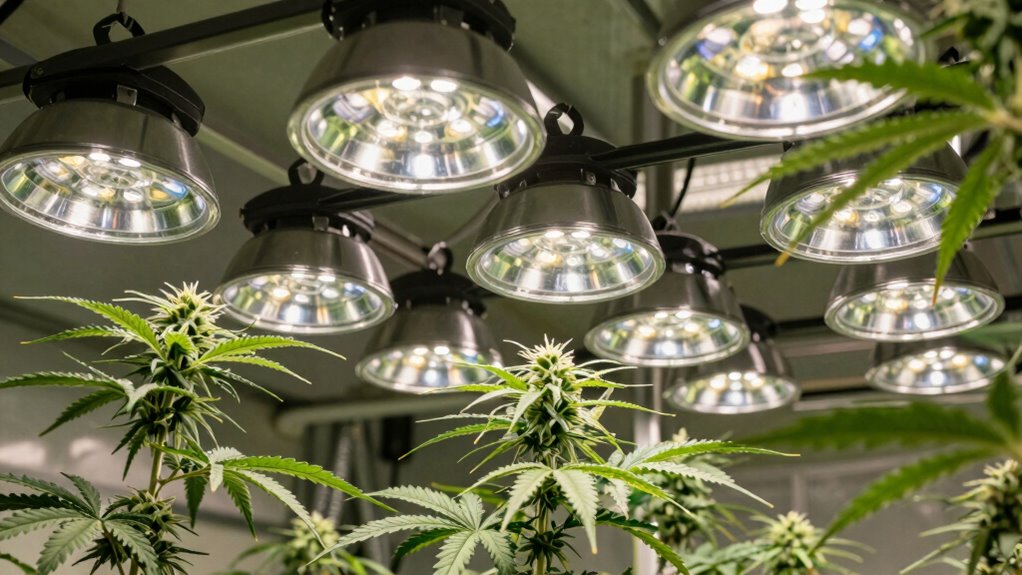
Selecting the right grow light is essential for ensuring healthy plant development indoors. You need to consider the light spectrum because different stages of growth require specific wavelengths—blue for vegetative growth and red for flowering. A full-spectrum LED provides the most versatility, supporting your plants throughout their life cycle. Energy efficiency is also vital; choosing lights with high efficiency means less electricity use and lower costs. LED grow lights are popular because they deliver the right spectrum while consuming less power compared to traditional options like HID or fluorescent lights. Additionally, understanding the importance of light spectrum can help you optimize your plant growth and prevent issues such as light burn or inadequate development. By matching the light spectrum to your plants’ needs and prioritizing energy efficiency, you create an ideal environment that promotes healthy growth without wasting energy or risking light burn.
How to Hang Grow Lights Safely and Effectively
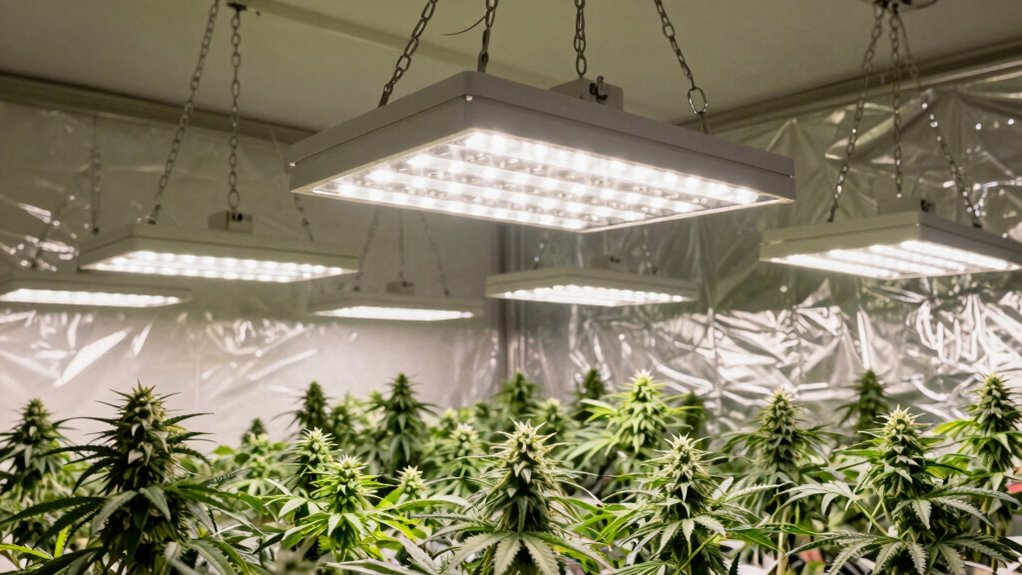
To hang your grow lights safely and effectively, you need to focus on proper height placement so your plants get enough light without burning. Make sure you use secure mounting techniques to prevent accidents and keep everything stable. Don’t forget to adjust the light intensity as your plants grow to optimize their health and growth. Additionally, considering the projector technology used in your lighting setup can help improve color distribution and overall efficiency.
Proper Height Placement
Ever wonder how high to hang your grow lights for ideal plant growth? The proper height depends on your light spectrum and light duration. For full-spectrum LEDs, start with lights about 18-24 inches above your canopy to provide even coverage without burning plants. If your lights have a broader spectrum or higher light intensity, raise them to prevent heat stress and light burn. Keep in mind that as plants grow, you’ll need to adjust the height to maintain the right distance—closer for seedlings, further for mature plants. Light duration also affects placement: longer light cycles may require slightly increased distance to avoid overexposure. Monitoring your plants’ response helps fine-tune height, ensuring they get optimal light without risking damage. Incorporating European cloud innovation can help optimize your lighting setup with energy-efficient solutions that support sustainable growth.
Secure Mounting Techniques
Ensuring your grow lights are securely mounted is essential for safety and consistent plant growth. Proper mounting prevents accidents and maintains the correct light placement. Use reliable mounting hardware options like hooks, ratchet straps, or adjustable chains to secure your lights firmly. Regular grow light maintenance includes checking these mounts for wear or looseness. When installing, consider weight capacity and stability to avoid light falls that could harm plants or damage equipment. Make sure the hardware is compatible with your grow light’s weight and design. For added safety, use anchors or ceiling mounts if mounting on ceilings or beams. Always double-check connections and tighten hardware after setup to keep your grow lights safe and effective. Proper mounting techniques are crucial to prevent equipment failure and ensure optimal plant growth conditions.
Adjust Light Intensity
Adjusting the light intensity of your grow lights is crucial for ideal plant development and energy efficiency. Light dimming allows you to control the brightness, preventing light stress or stretch. Use dimmable fixtures or adjustable controls to fine-tune intensity as plants grow. Incorporate heat shields to manage heat output and protect your canopy from overheating, especially when lights are hung closer. Heat shields also reduce radiant heat transfer, making dimming more effective and safer. Regularly monitor your plants’ response and adjust the light accordingly. Properly controlling light intensity ensures healthy growth, excellent yields, and prevents damage caused by excessive heat or light. Remember, balancing brightness with heat management is key to a successful grow setup.
How to Adjust Light Distance During Vegetative and Flowering Stages
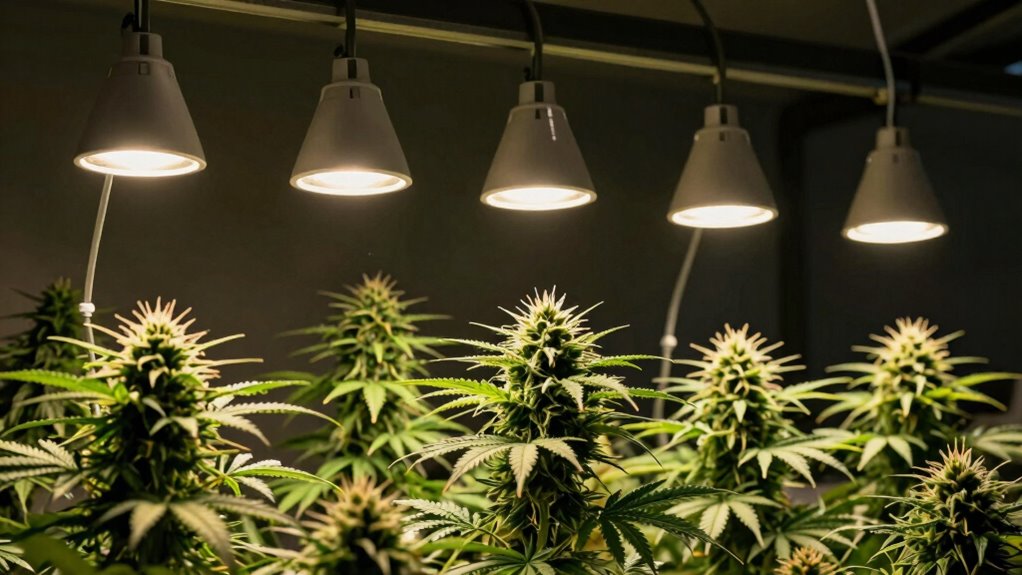
To optimize your plant’s growth, you need to regularly modify the distance between your hanging grow lights and the canopy during both the vegetative and flowering stages. As your plants develop, adjusting light distance helps maintain the ideal light spectrum and prevents light stress. During vegetative growth, keep the lights closer to encourage strong, healthy foliage, but avoid burning the leaves. During flowering, slightly increase the distance to prevent light burn while ensuring your plants still receive sufficient light intensity. Remember, the light duration and spectrum change between stages, so adapt accordingly. Use these tips to adjust effectively:
- Keep lights closer during vegetative stage for vigorous growth
- Increase distance during flowering to prevent heat stress
- Monitor plant response and make incremental adjustments
- Regularly measuring and adjusting light distance helps prevent light stress and supports healthy development
Common Heat Stress Signs and How to Avoid Them
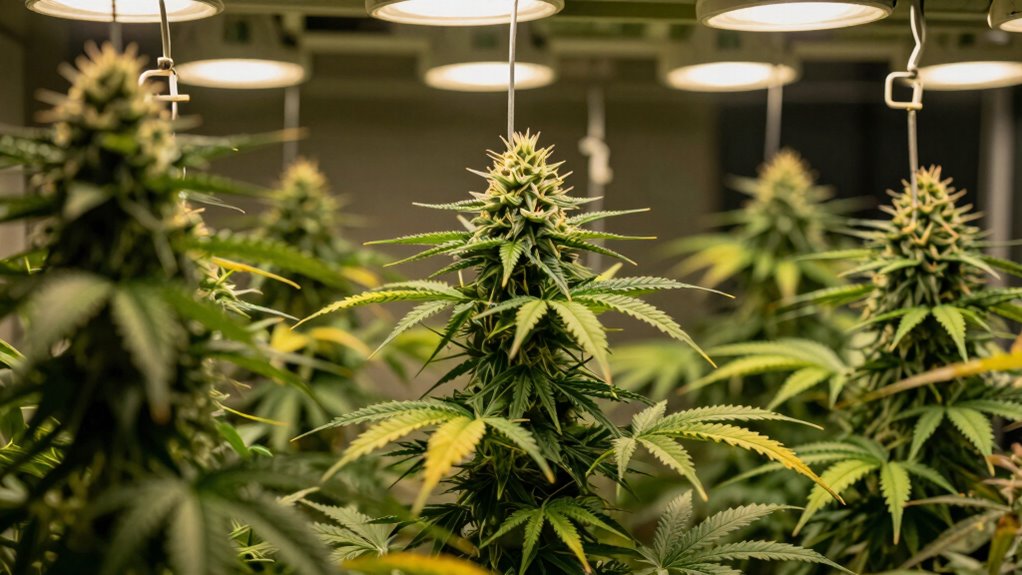
Heat stress is one of the most common issues growers face when managing grow lights, and recognizing its signs early can save your plants from damage. Look for wilting or curling leaves, which often indicate your plants are struggling with temperature or watering issues. Leaves turning yellow or brown, especially at the edges, can signal nutrient deficiencies worsened by heat. If your plants seem droopy despite adequate watering, it might be a sign that the heat is disrupting nutrient uptake or causing stress. To avoid this, ensure proper light distance, maintain good airflow, and avoid overwatering. Keeping temperature levels in check and monitoring your plants closely helps prevent heat stress from compromising their health or growth. Additionally, understanding how air quality considerations can influence plant health can help you optimize your grow environment.
Monitoring and Managing Temperature Under Your Grow Lights
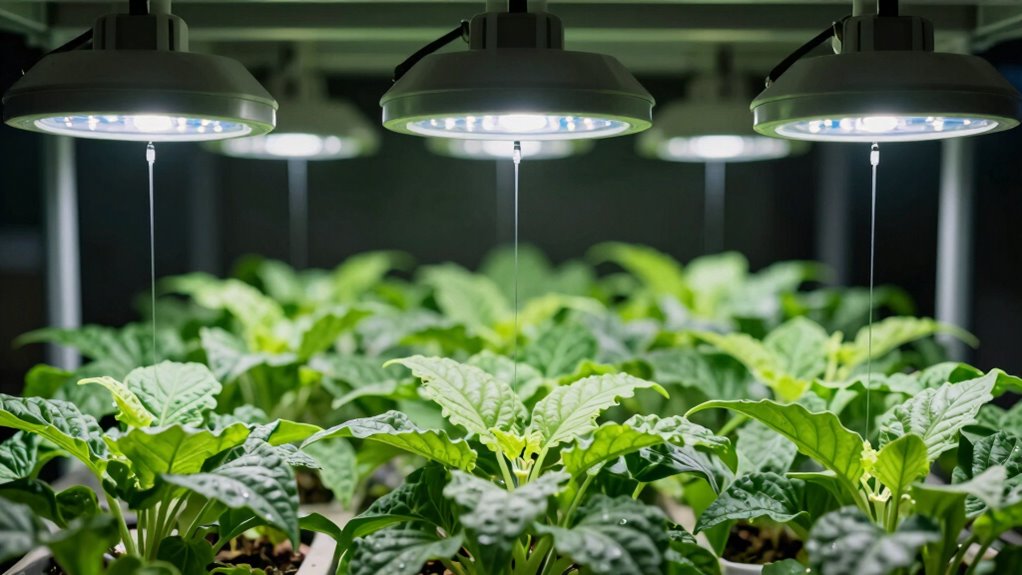
Monitoring and managing temperature under your grow lights is essential for healthy plant development. Keeping temperatures perfect prevents stress and promotes vigorous growth. Use temperature sensors to get real-time readings and identify hot spots. To maintain ideal conditions, consider ambient cooling methods like fans or air conditioners. These help disperse heat and stabilize the environment. Regularly check sensor data to adjust your setup promptly. You can also automate temperature control with thermostats linked to cooling systems. Be proactive to avoid overheating, which can damage plants or hinder growth. Remember, climate control systems ensure your canopy stays within the safe temperature range. This way, you prevent thermal stress and create an ideal environment for your plants to thrive.
Frequently Asked Questions
How Often Should I Replace My Grow Lights?
You should replace your grow lights every 12 to 24 months, depending on their bulb lifespan. Over time, their light spectrum shifts, reducing effectiveness and potentially stressing your plants. Keep an eye on light intensity and color quality; if they dim or change, it’s time for a new bulb. Regularly replacing your lights guarantees peak growth, prevents issues, and maintains a healthy, productive canopy.
Can LED Grow Lights Cause Heat Buildup?
They say “a little knowledge is a dangerous thing,” and yes, LED grow lights can cause heat buildup if not managed properly. While LED efficiency minimizes heat compared to traditional lighting, it’s still essential to monitor temperatures to prevent damage. Proper hanging height and ventilation help keep heat levels in check, ensuring your plants thrive without risking heat stress or canopy cooking.
What’s the Best Way to Measure Canopy Temperature?
To measure canopy temperature accurately, you should use a reliable sensor for temperature monitoring. Place the sensor at canopy level, close to the plants but not touching them, to get precise readings. Make certain it’s positioned away from direct light and airflow, which can skew results. Regularly check and record the readings to maintain ideal temperature, preventing heat buildup and ensuring healthy plant growth.
Are Adjustable Grow Lights Better for Plant Health?
Adjustable grow lights are like a maestro conducting a symphony; they give you control over spectral quality and light intensity, ensuring your plants get just the right signals to thrive. By tweaking height and angle, you prevent light stress and optimize growth. This flexibility helps you customize lighting to your plants’ needs, promoting healthier, more vigorous growth—and ultimately, a better harvest.
How Do I Prevent Light Burn During Flowering?
To prevent light burn during flowering, you need to control light intensity and maintain proper light distance. Keep your grow lights at the right distance—usually 12-24 inches, depending on the light type—and adjust as plants grow. Watch for signs of stress, like leaf curling or bleaching, and lower the light if needed. Consistently monitoring and adjusting light distance helps prevent light burn and promotes healthy flowering.
Conclusion
Remember, a well-hung grow light is like a good neighbor—keeping the right distance and monitoring heat guarantees your plants thrive without getting burned. By choosing the right lights, hanging them safely, and adjusting as needed, you prevent heat stress and promote healthy growth. Don’t forget, “An ounce of prevention is worth a pound of cure.” Stay attentive, stay proactive, and your indoor garden will flourish beautifully under the perfect glow.
Fall Picks
fall essentials
As an affiliate, we earn on qualifying purchases.