TL;DR

Get garden gear delivered free with Prime
- Fast, free delivery on millions of items
- Prime Video, Amazon Music and more included
- Member-only deals all year
Grow Organic has published a nine-step guide to growing larger garlic bulbs, emphasizing suitable varieties, healthy planting cloves, about six inches of spacing and steady care. The article says results vary with climate, soil and variety; it does not report a new trial or guarantee giant bulbs.
Grow Organic has published a nine-step guide to growing larger garlic bulbs, recommending gardeners focus on variety, planting stock, spacing and seasonal care rather than relying on extra fertilizer. The article presents the steps as practical guidance, not as results from a reported experiment, and says outcomes depend on climate, soil and garlic variety.
The guide begins with choosing garlic suited to local conditions. It distinguishes hardneck garlic, which produces a flower stalk called a scape and often does well in colder regions, from softneck garlic, which generally suits milder climates and tends to store longer. Those are broad tendencies, the source says, and actual performance varies. Elephant garlic can produce very large bulbs, but it is related to leeks rather than being true garlic.
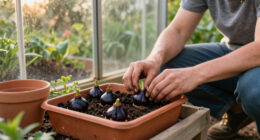
For planting stock, Grow Organic advises selecting large, firm, healthy cloves and rejecting cloves with mold, soft spots or damage. It recommends separating cloves shortly before planting and leaving their papery skins intact. Fall planting gives roots time to develop before spring growth, while spring planting can work but often produces smaller bulbs. The guide estimates that many fall-planted garlic crops take about eight to nine months to grow.
Spacing and growing conditions are central to the advice. The article gives six inches between cloves as a starting point for larger bulbs, with planting depth adjusted to climate and local guidance. It recommends full sun, well-drained soil, mature compost when needed, and soil testing before adding amendments. A pH near 6.0 to 7.0 is described as suitable. Garlic should be rotated away from other onion-family crops, though rotation cannot eliminate every soil disease.
The Practices Behind Bulb Size
The guide matters to home gardeners because garlic size is influenced by decisions made well before harvest. Clove size, spacing and growing conditions shape the plant’s early growth, while moisture, weeds and harvest timing affect how bulbs develop and store. The article’s emphasis on these factors offers a practical alternative to assuming that added fertilizer alone will produce larger bulbs.
It also sets limits on what gardeners can expect. The source does not promise a particular bulb size or say the steps will work equally in every region. Instead, it links results to local climate, soil and variety, making local planting calendars and soil tests part of the advice. That caveat is relevant for gardeners deciding whether a small harvest reflects care, unsuitable conditions or a variety that does not match their growing season.
Products Worth Considering

Takywep 6 x 9 ft Walk-In Greenhouse with Polycarbonate Panels

Traeger Pro 22 Wood Pellet Grill and Smoker, 572 sq. in.

10 x 10 ft Walk-In Pop-Up Greenhouse
As an affiliate, we earn on qualifying purchases.
A Season-Long Growing Plan
The nine recommendations follow garlic from variety selection through curing. In early growth, the source says, nitrogen can support leaf development, and healthy leaves contribute to bulb formation. But fertilizer needs depend on soil fertility and compost already used; late-season nitrogen may delay bulbing. Grow Organic advises starting with a soil test and following product label rates if fertilizer is needed, rather than applying multiple feeds without a clear reason.
Garlic has shallow roots and competes poorly with weeds, according to the article. Mulch can help retain moisture and suppress weeds, while straw can protect beds from winter temperature swings in cold areas. Gardeners should keep moisture consistent in spring, avoid waterlogged soil and reduce irrigation as bulbs approach maturity. For hardneck varieties, the guide recommends cutting the curling scape without removing leaves; the stalk is edible and can be used in cooking.
Harvest timing is a balance: lifting too early can limit bulb size, while waiting too long can allow wrappers to split. Grow Organic suggests checking a sample when lower leaves have browned but several upper leaves remain green. Lift bulbs gently, then cure them in shade with airflow until their necks and wrappers dry.
“Extra fertilizer alone will not turn a weak crop into jumbo garlic.”
— Grow Organic, in its garlic-growing guide
Results Depend on Local Conditions
The source does not report controlled trials comparing the nine steps, quantify how much any one practice changes bulb size, or provide a guaranteed outcome. It also does not specify a publication date in the supplied material. Its guidance is general: planting dates and depth vary by region, and gardeners are directed to local Extension advice for schedules suited to their conditions.
The article gives six inches as a spacing starting point and notes that depth advice differs. Gardeners should check whether local measurements refer to the clove base or the soil above its tip. The source also leaves fertilizer amounts dependent on soil test results and earlier amendments. Which variety will perform best in a particular garden likewise depends on local temperatures, day length and growing conditions.
Check Conditions Before Planting
The guide’s practical next step for gardeners is to match the variety and planting schedule to local conditions before setting cloves in the ground. A soil test and local Extension guidance can help inform amendments, planting depth and timing. During the season, gardeners can monitor weeds and moisture, feed only when needed, and remove scapes from hardneck plants when they begin to curl.
As harvest approaches, check lower leaves and lift a sample bulb before deciding when to harvest the rest. After lifting, cure the crop in a shaded, airy place. The source also recommends keeping records of spacing, variety and growing conditions; those notes can help gardeners compare their own results across seasons, though the article does not offer a specific follow-up study or measurement target.
Key Questions
How far apart should garlic cloves be planted for larger bulbs?
Grow Organic gives about six inches between cloves as a starting point. The right arrangement can depend on local growing advice and conditions.
When should garlic be planted?
The guide says fall planting gives roots time to develop before strong spring growth and is common in many regions. Planting dates differ by climate, so it recommends checking local Extension guidance.
Does more fertilizer make garlic bulbs bigger?
Not necessarily. The article says fertilizer needs depend on soil fertility and compost, and warns that extra nitrogen late in growth can delay bulb development. It recommends soil testing and following product label rates when fertilizer is needed.
When is garlic ready to harvest?
Start checking when lower leaves have browned while several upper leaves remain green. Lift a sample to inspect the cloves and wrappers; harvesting too early may limit size, while waiting too long can allow wrappers to split.
Is elephant garlic a true garlic?
No. The source says elephant garlic is related to leeks, not true garlic, though it can produce large bulbs and has a milder flavor.
Source: rss