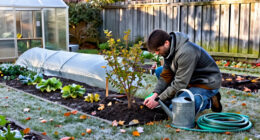
Before upgrading to advanced greenhouse systems, you need a strong grasp of fundamental climate control and pest management. Learn how to regulate temperature, humidity, and ventilation using simple tools like fans and shade cloths. Understand pest identification, prevention, and biological controls to keep pests under control. Mastering these basics will make it easier to operate automated systems and advanced pest strategies later. Keep exploring to uncover more about building a resilient greenhouse environment.

Get garden gear delivered free with Prime
- Fast, free delivery on millions of items
- Prime Video, Amazon Music and more included
- Member-only deals all year
Key Takeaways
- Master fundamental climate control skills, including temperature, humidity, and ventilation management.
- Develop pest identification, monitoring, and basic control techniques.
- Gain experience with manual climate and pest management to build confidence.
- Understand core greenhouse systems to facilitate troubleshooting and system optimization.
- Build a strong foundation in basic greenhouse management for smoother transition to advanced technologies.

If you’re new to greenhouse gardening, it’s essential to master the fundamentals before diving into more advanced systems. One of the first things you need to understand is how to create a stable environment inside your greenhouse. Climate control is vital because it directly influences plant health and productivity. You’ll want to learn how to regulate temperature, humidity, and ventilation effectively. Proper climate control helps prevent stress on your plants, reduces disease risk, and encourages steady growth. Initially, simple tools like fans, heaters, and shade cloths can help you manage these factors. As you gain experience, you can explore automated systems, but knowing the basics guarantees you can troubleshoot and optimize your setup.
Alongside climate control, pest management is another key aspect to grasp early on. Pests can quickly become a significant problem in a greenhouse, especially when plants are growing in a controlled environment that sometimes favors certain pests. You should learn how to identify common pests and understand their life cycles. Preventative measures like maintaining cleanliness, using pest-proof screens, and inspecting plants regularly are fundamental steps. Biological controls, such as introducing beneficial insects, can be effective, but only if you know how and when to use them. Early intervention is essential because pests can spread rapidly and cause considerable damage if left unchecked. Additionally, understanding pest life cycles can help you time your interventions more effectively. Knowing how pests develop can also assist you in choosing the right pest control methods for each stage of infestation. Developing a routine for regular monitoring can significantly improve your ability to catch issues early. Furthermore, understanding environmental factors that influence pest outbreaks can help you prevent infestations before they start.
Once you’re comfortable with climate control and pest management, you’ll find it easier to shift into more advanced systems. Automated climate control systems, such as thermostats linked to fans and misters, can take some of the guesswork out of maintaining ideal conditions. However, understanding the principles behind climate regulation guarantees you can fine-tune these systems or troubleshoot issues when they arise. Similarly, advanced pest management techniques—like integrated pest management (IPM)—rely on your ability to monitor pests and apply targeted solutions. Mastering the basics before moving on allows you to use these sophisticated methods more effectively. Gaining a clear understanding of climate control fundamentals can significantly improve your ability to manage complex systems later on.
Ultimately, the key to progressing into more advanced greenhouse systems is a solid foundation in managing your environment and pests. These foundational skills help you become more proactive rather than reactive, giving you better control over your greenhouse’s health and productivity. Building confidence in these areas makes it easier to adopt more complex technologies and strategies later on. So, focus on learning how to regulate climate and manage pests effectively—these are the cornerstones that will support your success as you grow into more sophisticated greenhouse systems. Developing a comprehensive knowledge of basic greenhouse management will set the stage for success with increasingly complex setups.
As an affiliate, we earn on qualifying purchases.
Frequently Asked Questions
How Do I Determine the Right Time to Upgrade My Greenhouse System?
You should upgrade your greenhouse system when your plants’ growth stalls or pests become harder to control, indicating your current setup isn’t sufficient. Watch for uneven temperatures, poor humidity regulation, or increased pest issues, as these signal the need for more advanced systems. Upgrading helps optimize plant growth, improve pest control, and create a better environment, ensuring your greenhouse remains productive and efficient as your needs evolve.
What Are the Common Mistakes Beginners Make With Advanced Greenhouse Technology?
Research shows 60% of beginners struggle with advanced greenhouse tech, especially plant monitoring and irrigation control. You might make mistakes like neglecting regular system calibration or over-relying on automation without manual checks. Always monitor your systems closely, make sure sensors are calibrated correctly, and understand each feature’s limits. This helps prevent costly errors, keeps your plants healthy, and lets you fine-tune your greenhouse for maximum growth.
How Much Does Transitioning to an Advanced System Typically Cost?
Shifting to an advanced greenhouse system usually costs between $10,000 and $50,000, depending on the size and features. You should do a thorough cost analysis and budget planning to understand expenses like automation, climate control, and infrastructure upgrades. Consider ongoing maintenance costs too. Proper planning helps guarantee your investment aligns with your goals, avoiding surprises and making the changeover smoother and more affordable.
What Training or Certifications Are Recommended for Managing Advanced Systems?
You should pursue certifications in hydroponic techniques and climate control management to effectively handle advanced greenhouse systems. Look for programs offered by agricultural colleges or industry organizations that cover automation, environmental monitoring, and nutrient management. Hands-on training and workshops can deepen your understanding. Gaining these credentials guarantees you can optimize plant growth, troubleshoot issues, and maintain climate stability, leading to a successful shift into more sophisticated greenhouse operations.
How Can I Troubleshoot Technical Issues in Complex Greenhouse Setups?
To troubleshoot technical issues in complex greenhouse setups, start by checking sensor calibration to guarantee accurate readings. Next, examine system integration points where different components connect, as faults often occur there. Use troubleshooting guides specific to your system, and run diagnostics to identify faults. Keep detailed logs of issues and resolutions, which can help you spot patterns and prevent future problems. Staying familiar with your system’s operation is key to quick, effective troubleshooting.
Conclusion
Before diving into advanced greenhouse systems, make sure you’ve mastered the basics; they’re the roots that support your growth. Think of these foundational skills as a sturdy trunk, anchoring your future innovations. Once you have a solid grasp, the complex systems will feel less like uncharted waters and more like a well-mapped journey. With patience and practice, you’ll be able to navigate even the most intricate setups with confidence—your greenhouse’s success is just around the corner.
Halloween Picks
halloween
As an affiliate, we earn on qualifying purchases.