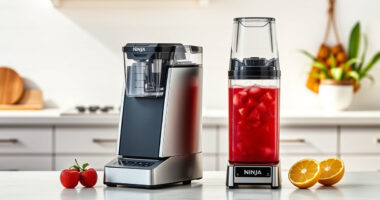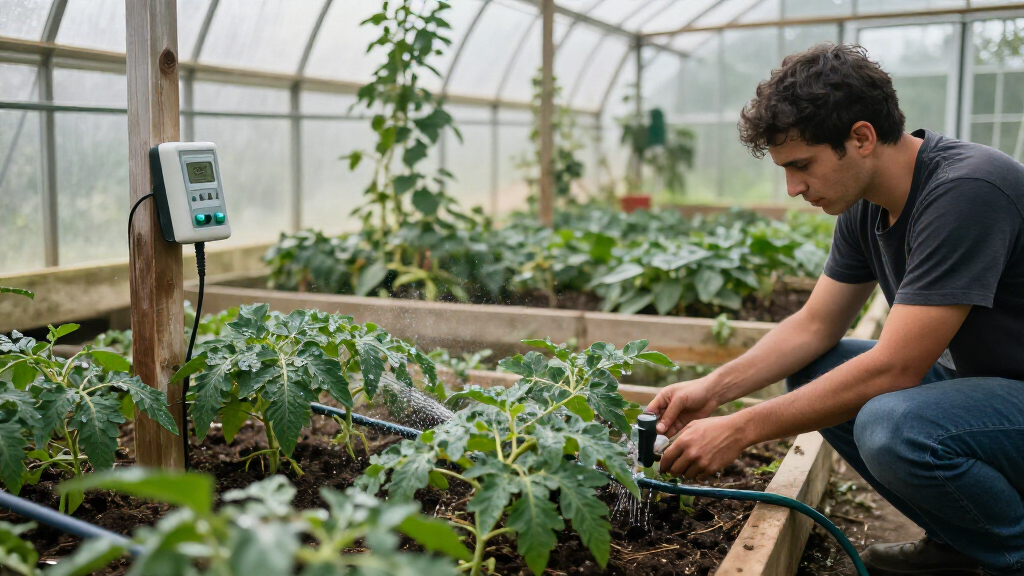

“Garden automation” can mean very different purchases. A smart irrigation system controls watering through a timer, soil or weather data, and zone valves. A robotic garden care system uses a machine to perform a physical task, most commonly mowing, and some newer products target other repetitive chores. The real decision is whether your time and garden need relief from watering decisions or from hands-on maintenance.

Get garden gear delivered free with Prime
- Fast, free delivery on millions of items
- Prime Video, Amazon Music and more included
- Member-only deals all year

GoveeLife H5901 Smart WiFi Sprinkler Timer with Gateway, 1 Outlet
- ✔ Outlets: 1
- ✔ Watering modes: Continuous, intermittent, custom
- ✔ Schedules: Up to 10
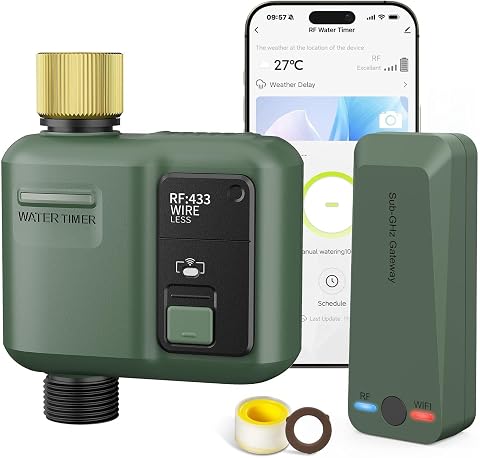
Smart WiFi Water Timer for Garden Hose with Brass Inlet
- ✔ Model: HCT-633-2-T
- ✔ Connectivity: 2.4 GHz WiFi with dedicated gateway
- ✔ Stated RF range: Up to 984 ft (300 m)

FrankEver Smart Sprinkler Controller, 6-Zone, WiFi & Bluetooth
- ✔ Zones: 6
- ✔ Connectivity: WiFi, Bluetooth
- ✔ Power output: 24 VAC
Smart irrigation usually costs less to extend across a garden and can help reduce unnecessary watering, but it does not mow, prune, or remove weeds. A garden robot can take a recurring physical job off your list, yet it costs more, needs suitable terrain and upkeep, and handles only the task it was designed for. Choose irrigation automation if watering is the recurring burden; choose a robot if a compatible maintenance task consumes more of your time. Owners with both needs may eventually use both, but neither is a complete automated garden.
At a Glance
| Criteria | Smart irrigation systems | Robotic garden care systems | Winner |
|---|---|---|---|
| Primary job | Schedules and adjusts watering across irrigation zones. | Performs one physical care task, commonly mowing, with capabilities varying by model. | Depends |
| Coverage and flexibility | Can serve beds, lawns, containers, and multiple zones when plumbing supports them. | Limited to the robot’s task and passable operating area; obstacles and terrain can restrict coverage. | A |
| Setup and compatibility | Requires compatible valves, controller wiring, Wi-Fi or a hub, and a workable irrigation layout. | Requires suitable access, boundaries or mapping, charging, and a garden compatible with the model. | A |
| Upfront and ongoing cost | Usually lower entry cost; expansion can add sensors, valves, and installation expense. | Generally higher purchase cost; blades, batteries, repairs, and setup add to ownership cost. | A |
| Water and resource efficiency | Can reduce avoidable watering when schedules use local conditions and are configured well. | May reduce some labor or inputs, but benefits depend on task and operating conditions. | A |
| Maintenance and reliability | Controller and sensors need checks; valves, filters, and pipes still need seasonal care. | Needs cleaning, inspection, consumables, charging access, and occasional recovery from problems. | A |
| Best garden fit | Gardens with irrigation infrastructure and recurring watering needs. | Properties where a suitable repetitive task takes substantial time. | Depends |
GoveeLife H5901 Smart WiFi Sprinkler Timer with Gateway, 1 Outlet
For a garden watered from a single hose connection, the GoveeLife H5901 covers more of the everyday automation brief than the other hose timer here. It offers up to 10 schedules and three modes, while its weather-adaptive feature can adjust watering around rain, light, temperature, and humidity. That can reduce the need to keep revising a fixed routine as conditions shift, although buyers should still review the schedule to ensure it suits their plants and local watering needs.Compared with Shrivee, GoveeLife has a longer stated gateway-to-device range, an IP67 rating instead of IP55, and a two-year rather than one-year warranty. It also lists watering time and volume charts, which provide a useful view of what the timer is doing. The brass inlet and UV-stabilized shell are meaningful outdoor design details, but this remains a one-outlet hose timer; it cannot independently manage separate installed sprinkler zones like FrankEver.There are setup constraints. The gateway uses 2.4 GHz WiFi, and the device expects a 3/4-inch threaded connection. The stated pressure range begins at 7.25 PSI, so a low-pressure supply could be a poor match. This is our first choice for a hose-fed garden that needs remote schedules and weather-aware adjustments, not for a property that needs zone-by-zone control.
Pros:
- Weather adaptation can account for rain, light, temperature, and humidity.
- Three watering modes and up to 10 schedules support varied routines.
- IP67 protection, brass inlets, and a UV-stabilized shell suit outdoor placement.
- Includes Alexa and Google Assistant support plus watering time and volume charts.
Cons:
- Connected operation depends on a 2.4 GHz gateway.
- Single outlet and 3/4-inch threaded connection limit its fit for some layouts.
- Low-pressure water supplies may not operate the valve reliably.
Best for: Gardeners with one hose-fed watering point who want weather-responsive schedules, app monitoring, and outdoor-rated construction.
Not ideal for: Owners of multi-zone installed irrigation, gardens with incompatible fittings or weak water pressure, and users who need a different WiFi band.
Bottom line: Choose GoveeLife for the broadest hose-timer feature set in this comparison, provided one outlet and its connection and pressure requirements fit your garden.
“Choose GoveeLife for the broadest hose-timer feature set in this comparison, provided one outlet and its connection and pressure requirements fit your garden.”
Smart WiFi Water Timer for Garden Hose with Brass Inlet
The Shrivee HCT-633-2-T is a straightforward fit when the garden’s needs are more about choosing a watering routine than managing several irrigation zones. Its timed and weekly cycles cover scheduled watering, while mist mode, manual operation, and rain delay address situations where a standard recurring schedule is too blunt. Control runs through Smart Life or Tuya, with Alexa and Google Assistant support for voice operation.Against GoveeLife, Shrivee gives buyers an explicitly listed 1-minute-to-24-hour duration range and names mist and rain delay as separate modes. But GoveeLife offers more schedules, a longer stated gateway range, stronger listed water resistance, and a longer warranty. Shrivee’s brass inlet and built-in filter are practical details intended to support a secure, cleaner connection; its IP55 housing offers less protection than GoveeLife’s IP67 rating, so placement deserves care.The included gateway is required for connected features and uses 2.4 GHz WiFi. Its stated 984-foot range is a product specification, not a guarantee through walls or dense planting. Unlike the FrankEver, it does not provide six-zone management or listed standalone local web control. We recommend it for a modest hose-fed setup where misting and app-based scheduling matter more than broad system coverage.
Pros:
- Timed, weekly, mist, rain-delay, and manual modes cover varied hose-watering needs.
- Watering duration can be set from 1 minute to 24 hours.
- Brass inlet and built-in filter are designed to help reduce leaks.
- Works with Smart Life or Tuya and supports Alexa and Google Assistant.
Cons:
- Connected functions require the included gateway and 2.4 GHz WiFi.
- IP55 protection is lower than GoveeLife’s IP67 rating.
- The stated range can vary with walls and outdoor conditions; warranty is one year.
Best for: Hose-garden owners who want timed cycles, misting, rain delay, and Smart Life or Tuya app control.
Not ideal for: Buyers who need multiple irrigation zones, higher stated outdoor protection, or a longer listed warranty.
Bottom line: Pick Shrivee when mist, rain delay, and familiar app control matter more than maximum range, weather adaptation, or multi-zone capability.
“Pick Shrivee when mist, rain delay, and familiar app control matter more than maximum range, weather adaptation, or multi-zone capability.”
FrankEver Smart Sprinkler Controller, 6-Zone, WiFi & Bluetooth
The FrankEver FK-06X addresses a different scale of garden automation from the two hose timers: it is built to control six irrigation zones. That makes it the natural candidate for a lawn and garden with separate circuits, where beds, turf, or a greenhouse need distinct watering routines. Its weather API automation can adjust schedules to current conditions, and support for soil-moisture sensors points to more tailored control than a single timer attached to a tap.Its defining advantage over GoveeLife and Shrivee is local operation. The product description says watering can be managed through a web interface or manual buttons without internet access, reducing dependence on a cloud connection for basic control. WiFi and Bluetooth add connectivity options, and Home Assistant support may fit an established automation setup. That flexibility carries a learning curve: buyers who want a quick hose-timer setup may find integration work excessive.FrankEver also brings tradeoffs that matter outdoors. The listed controller body is plastic, and the supplied details do not give an IP rating, so we would confirm appropriate mounting and protection for the installation. It requires a 24 VAC irrigation setup rather than attaching directly to a garden hose. Compared with the simpler hose timers, it is more capable for installed zones but less suitable as a plug-on solution; choose it for system architecture, not convenience alone.
Pros:
- Controls six zones for distinct lawn, bed, or greenhouse schedules.
- Local web interface and manual buttons support operation without internet.
- Weather API automation and soil-moisture sensor compatibility enable advanced routines.
- WiFi, Bluetooth, Home Assistant support, and a three-year warranty are listed.
Cons:
- Requires a 24 VAC irrigation setup rather than a hose connection.
- Home Assistant integration may require technical setup.
- Plastic construction is specified, with no water-resistance rating provided in the supplied details.
Best for: Homeowners with a wired irrigation system who need separate control for up to six zones, local operation, or Home Assistant integration.
Not ideal for: Small hose-watered gardens, buyers seeking a simple gateway timer, or anyone unwilling to configure smart home integrations.
Bottom line: FrankEver is the right specialist for six-zone irrigation and local control, but it is a poor substitute for a simple hose-mounted timer.
“FrankEver is the right specialist for six-zone irrigation and local control, but it is a poor substitute for a simple hose-mounted timer.”
As an Amazon Associate we earn from qualifying purchases.
Key Differences
The systems automate different parts of garden work. Irrigation controllers coordinate water delivery: they can skip or adjust runs when supported weather data or soil readings indicate that watering is unnecessary. Their reach depends on the installed irrigation network, so a controller cannot help much where hoses, valves, or zone coverage are missing. A robot handles a bounded physical task. A mower can keep suitable lawn areas cut, but it does not water borders or care for plants outside its programmed job.
The cost and effort tradeoff follows from that difference. Irrigation automation is often the more affordable first step, especially when a garden already has zones and valves. Its value comes from more consistent scheduling and less manual intervention, not from eliminating garden care. A robot costs more and takes more planning, but can return time every week when the garden, terrain, and chosen task suit it. Neither choice guarantees lower bills or maintenance: settings, climate, site conditions, and the machine’s service needs determine the result.
For most homeowners deciding on one system, the best choice is the one aimed at the recurring problem they actually have. If watering is irregular or time-consuming, start with irrigation. If watering is already easy but mowing takes hours, consider a robot. A garden with substantial needs in both areas may benefit from combining systems, while a small garden with little irrigation or lawn work may not justify either investment.
Detailed Comparison
Primary job (major difference)
Neither system replaces the other. Smart irrigation wins when missed or inefficient watering is the problem; a robotic system wins when a repetitive physical chore such as mowing is the burden. The gap is major because the products perform different jobs. Buying a robot will not fix dry beds, and installing a controller will not reclaim the hours spent mowing.
Coverage and flexibility (Smart irrigation systems wins — moderate)
Smart irrigation has the broader reach across different plantings when the garden has appropriately arranged zones: lawns, beds, and containers can all be served by compatible watering lines. A robot is tied to its particular task and the space it can safely traverse. The advantage for irrigation is moderate to major, though it disappears where plumbing or water access is inadequate. Robot buyers should check slope, paths, obstacles, and coverage limits for the specific model.
Setup and compatibility (moderate difference)
Irrigation automation needs a compatible controller and working valves, wiring, and water zones; adding it to a basic hose setup may require more installation than expected. Robots require a suitable operating area and may need boundary setup, mapping, or a clear route to charging. Irrigation has a slight general advantage when infrastructure already exists, but the winner depends on the garden and model. Neither is plug-and-play in every yard.
Upfront and ongoing cost (Smart irrigation systems wins — major)
Smart irrigation usually wins on entry cost, particularly when replacing an existing timer. Sensors, extra valves, professional installation, or extensive zoning can narrow that advantage. Robotic systems typically cost more to buy and may need replacement blades, batteries, repairs, or setup work. The price gap is often major, but paying more for a robot makes sense when its time savings address a frequent, disliked chore.
Water and resource efficiency (Smart irrigation systems wins — moderate)
Irrigation controllers have the clearer direct role in managing water: weather-aware schedules or soil sensors can prevent watering when conditions do not call for it. Results depend on sound zone design, correct settings, local climate, and any data or sensor limits. A robot may improve efficiency for its specific task, but that is not a substitute for water management. Irrigation wins by a moderate margin for water-conscious buyers; savings are not automatic.
Maintenance and reliability (Smart irrigation systems wins — moderate)
Both systems still need attention. Controllers and sensors may need seasonal checks, and valves, filters, pipes, and emitters remain mechanical components that can clog or fail. Robots add moving parts, batteries, cutting components, and the possibility of needing help when blocked or outside their operating area. Irrigation generally asks less routine hands-on attention, a moderate advantage, though a faulty underground line can be harder to diagnose than a visible robot issue.
Best garden fit (major difference)
Irrigation suits gardens with multiple watering zones, established plumbing, or plants that need consistent schedules during busy or dry periods. Robots suit properties with a substantial, compatible task and enough open, accessible area for the machine to operate. This is a major fit question rather than a universal win: a robot can be poor value on a tiny or fragmented lawn, while smart watering adds little where hand-watering is easy and infrequent.
Smart irrigation systems: Pros and Cons
Pros:
- Automates schedules across compatible watering zones.
- Can use weather data or soil sensors to adjust watering.
- Often costs less to start than a garden robot.
- Can serve lawns and planted areas through suitable irrigation hardware.
Cons:
- Does not perform physical garden maintenance.
- Benefits depend on sound zone layout, settings, and compatible infrastructure.
- Valves, pipes, and emitters still need seasonal maintenance.
- A basic hose-only garden may need substantial setup before automation helps.
Robotic garden care systems: Pros and Cons
Pros:
- Can reduce time spent on its specific repetitive physical task.
- Operates on a schedule with less hands-on attention during routine use.
- May suit larger properties where the chosen chore recurs often.
Cons:
- Usually costs more upfront and has ongoing parts and service needs.
- Works only within its task and site compatibility limits.
- Terrain, obstacles, boundaries, or charging access can restrict coverage.
- Does not address watering or other garden jobs outside its design.
Who Should Choose What
Choose Smart irrigation systems if:
- Watering multiple zones by hand or with a basic timer takes regular effort.
- You want schedules that can respond to weather or soil readings.
- Your garden already has compatible valves and irrigation lines.
- Reducing unnecessary watering matters more than automating mowing.
Choose Robotic garden care systems if:
- A compatible recurring task, such as lawn mowing, takes significant time.
- Your site has suitable terrain, access, and operating space for the specific model.
- You are willing to pay more for time saved on a job you currently do often.
- Your watering setup already works and physical maintenance is the bigger pain point.
Skip both if: Your garden is small, easy to water and maintain by hand, or lacks a recurring task that justifies the purchase and upkeep.
Value for Money
Smart irrigation is usually the better value for buyers who want to make watering more consistent or avoid watering on a fixed schedule when conditions have changed. It costs less to enter in many setups, but its financial return depends on local water costs, existing infrastructure, and whether the controller actually prevents unnecessary runs. Do not buy it expecting a large bill reduction without checking how it will control each zone.
Pay more for a robotic system only when it can take over a task that recurs often and the site fits its operating limits. The useful comparison is the purchase and upkeep cost against the time you would otherwise spend on that task, not against the price of an irrigation timer. For an owner with a large lawn and a suitable robot route, that trade may be worthwhile. For a garden without much lawn or with difficult terrain, the added cost may buy little convenience. If the budget allows only one, choose the system that addresses the more frequent burden.
Final Verdict
These are complementary tools, not competing versions of one product. For a typical homeowner choosing a first garden automation purchase, smart irrigation is the stronger starting point when several areas need reliable watering: it is generally cheaper to add and has a direct role across different plantings. Choose a robotic care system when a compatible physical job, especially recurring mowing, takes enough time to justify its higher cost and upkeep. The biggest deciding factor is the task you want removed from your routine. If neither task is frequent or difficult, skip both and keep the simpler setup.
Frequently Asked Questions
Can a garden robot replace a smart irrigation system?
No. A robot performs its designed physical task, such as mowing, while an irrigation controller manages watering through compatible valves and zones. A robot does not water plants.
Which garden automation system is cheaper to start with?
Smart irrigation is often cheaper when a compatible irrigation system is already installed. If it needs new valves, lines, or professional work, compare the full setup cost with the robot models you are considering.
Will smart irrigation lower my water bill?
It can reduce avoidable watering when schedules, zones, and local weather or soil inputs are configured well. Savings vary with climate, water rates, existing habits, and the condition of the irrigation system.
Is a robotic lawn mower worth paying more for?
It can be worth the higher price if your lawn suits the model and mowing is a frequent task you want to hand off. Check the specific model’s terrain, boundary, and maintenance requirements; a difficult or fragmented lawn can reduce the time saved.