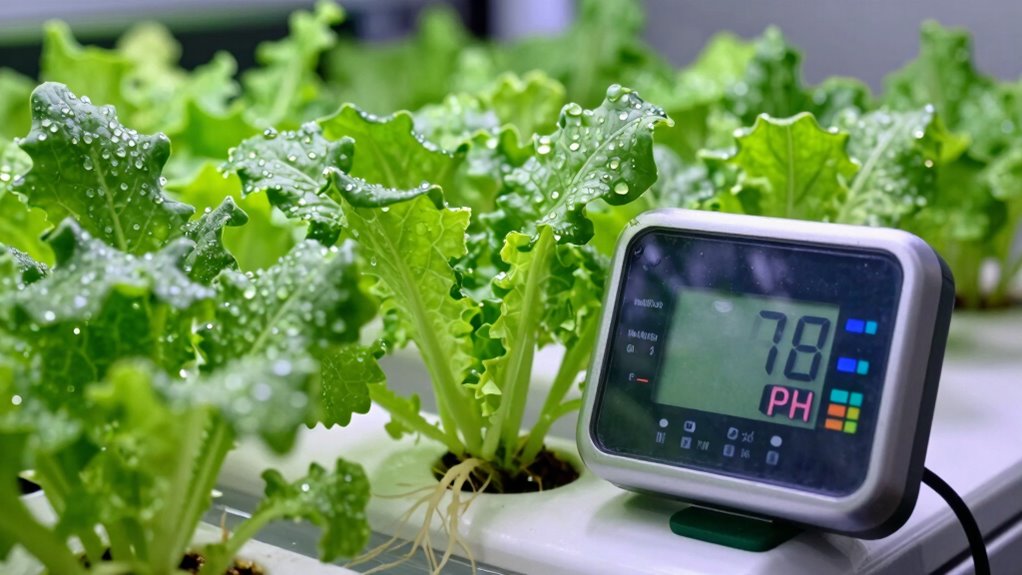

To succeed in hydroponics, you need to master your EC and pH levels, which are the two numbers that determine nutrient availability and plant health. Regularly measure these values with proper tools, adjust them carefully, and keep them within ideal ranges—around 1.5-2.5 mS/cm for EC and pH 5.5-6.5. Consistent monitoring and precise control prevent deficiencies, toxicities, and growth issues. If you keep these factors in check, your plants will thrive; learn more to enhance your setup further.
Key Takeaways
- Regularly calibrate and maintain accurate pH and EC measurement tools for reliable readings.
- Keep pH within 5.5-6.5 and EC between 1.5-2.5 mS/cm for optimal nutrient uptake.
- Monitor and adjust pH and EC levels daily to prevent deficiencies or toxicities.
- Use high-quality water and proper buffering solutions to maintain stable nutrient conditions.
- Avoid common mistakes like neglecting calibration, which can lead to imbalanced environments and reduced yields.
How to Measure EC and pH in Hydroponics
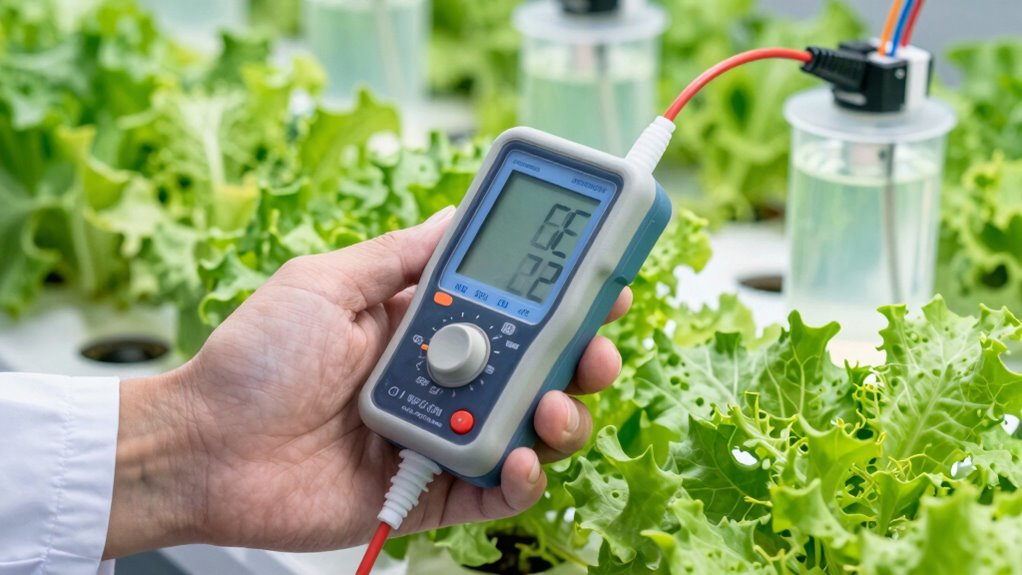
To guarantee healthy plant growth in hydroponic systems, accurately measuring EC (electrical conductivity) and pH levels is vital. You’ll want to use reliable measurement techniques, such as digital meters or test kits, to get precise readings. Regular calibration methods are essential for maintaining accuracy; for example, calibrate your pH meter with standard solutions and your EC meter with a reference solution. Always rinse your probes thoroughly before measurement to prevent contamination. When measuring, ensure sensors are fully submerged and keep the devices at consistent temperatures. Proper calibration and measurement techniques help you track nutrient levels accurately, avoiding issues caused by incorrect readings. Additionally, understanding the role of color accuracy in projectors can enhance your visual assessments and troubleshooting. Consistent, correct measurements form the foundation for ideal plant health and maximize your hydroponic success.
What Are the Ideal EC and pH Levels for Hydroponic Crops
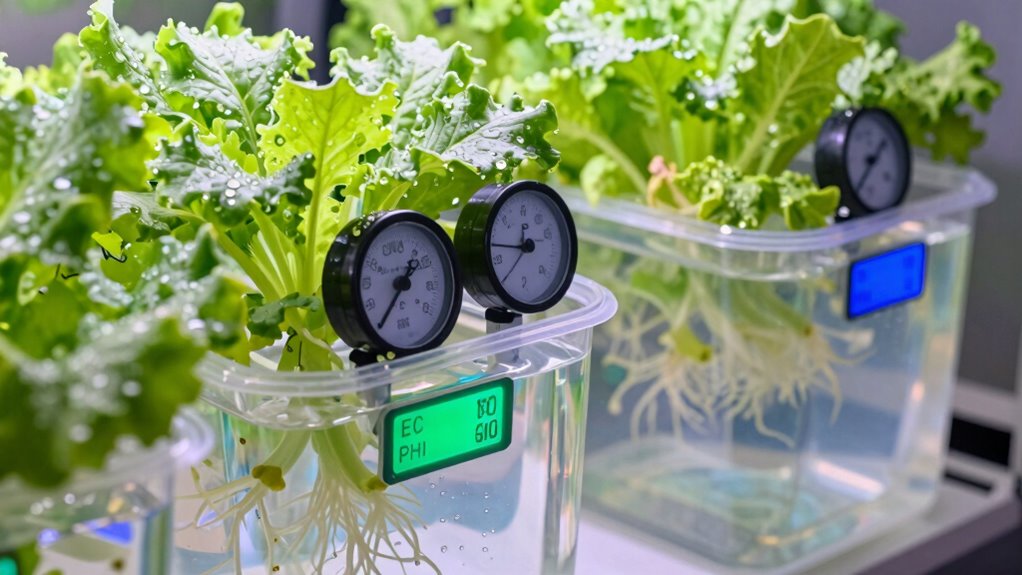
Maintaining the right EC and pH levels is key to guaranteeing your hydroponic crops thrive. Typically, an EC of 1.5 to 2.5 mS/cm suits most vegetables, while fruiting plants like tomatoes need slightly higher levels. For pH, a range of 5.5 to 6.5 ensures perfect nutrient availability. When pH drifts outside this range, nutrient deficiencies can occur, even if your EC is correct. Proper pH buffering helps stabilize these levels, preventing sudden swings that can harm plants. Regular monitoring allows you to adjust nutrient solutions promptly, avoiding imbalances that lead to deficiencies. Knowing these ideal ranges helps you create a balanced environment where plants absorb nutrients efficiently, promoting healthy growth and maximizing yields. Additionally, understanding how EC and pH interact can help optimize your nutrient uptake for healthier plants.
How to Maintain Optimal EC and pH Levels for Healthy Plants
To keep your plants healthy, you need to monitor your nutrient solution’s EC and pH levels regularly. When you spot deviations, adjust them precisely to stay within the ideal range. Consistent attention ensures your plants get the nutrients they need for optimal growth. Incorporating Free Floating techniques can help maintain a balanced environment and promote healthy root development.
Monitoring Regularly
How often should you check your nutrient solution? Ideally, you should monitor your pH and EC levels daily to keep your plants healthy. Regular checks help catch fluctuations early, especially since pH buffering can cause sudden shifts. Use a reliable pH meter and verify your EC meter is calibrated correctly—EC calibration is essential for accurate readings. Consistent monitoring allows you to maintain stable nutrient levels, preventing deficiencies or toxic buildups. Keep a log of your readings to identify trends and make informed adjustments. Don’t ignore small changes; they can impact plant health over time. Additionally, utilizing energy-efficient cloud servers can support your data management and monitoring systems more sustainably. By staying vigilant, you guarantee your hydroponic system remains in peak condition, supporting vigorous growth and maximizing yields.
Adjusting Precisely
Once you’ve established a routine of regular monitoring, the next step is making precise adjustments to keep your nutrient solution within ideal EC and pH ranges. To do this effectively, understand pH buffering; it helps resist pH swings, so add acids or bases gradually. EC calibration ensures your readings are accurate—use calibration solutions regularly. When adjusting pH, add small amounts of pH Up or Down, then wait and recheck. For EC, modify nutrient concentrations carefully, avoiding overfeeding. Use the following guide:
| Action | Tool/Method | Tip |
|---|---|---|
| Adjust pH | pH Up/Down solutions | Add slowly, stir, and re-measure |
| Calibrate EC | EC calibration solutions | Verify your meter periodically |
| pH Buffering | Buffer solutions | Maintain stable pH in your system |
| Nutrient EC | Precise measurement | Avoid sudden changes, monitor closely |
Additionally, understanding pH buffering can significantly improve your ability to maintain stable conditions in your system.
Troubleshooting EC and pH Imbalances in Hydroponics
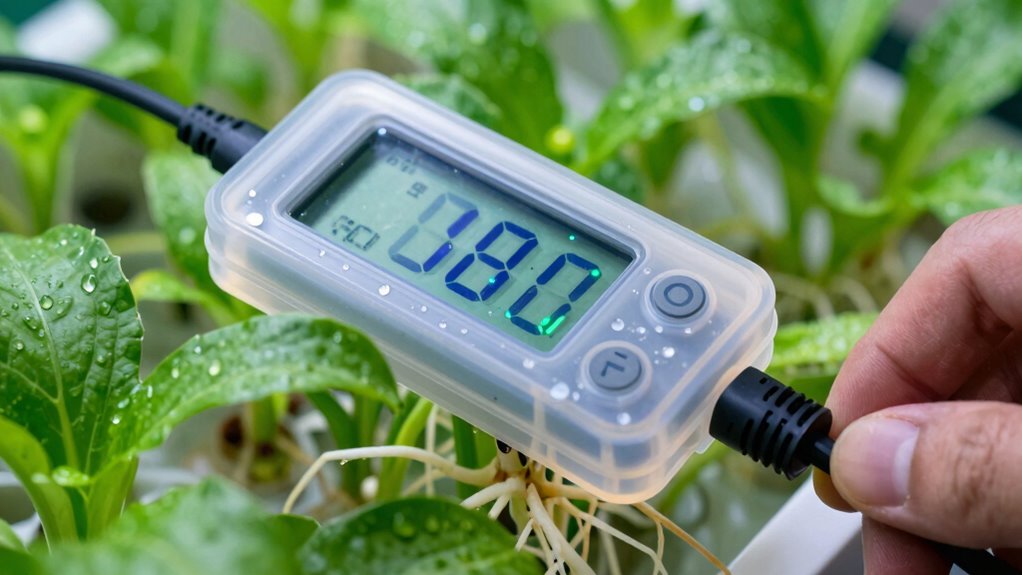
When your plants show signs of stressed growth or nutrient deficiencies, it’s time to check your EC and pH levels. You can spot imbalances by observing changes in plant health and color. To fix issues, adjust your nutrient concentrations and pH to bring everything back into the ideal range. Properly using kitchen tools can help measure and correct these levels more accurately, leading to healthier, more vigorous plants.
Detecting Imbalance Signs
Detecting signs of imbalance in your hydroponic system is crucial for maintaining ideal plant health. When EC and pH drift, your plants may show early warning signs like stunted growth or leaf discoloration. Look closely at nutrient deficiencies or compromised root health, which often indicate imbalance. Use this table to identify symptoms:
| Symptom | Possible Cause |
|---|---|
| Wilting leaves | pH too high or low |
| Yellowing leaves | Nutrient lockout |
| Root browning | Excessive EC or poor oxygenation |
| Slow growth | Imbalanced pH or nutrient levels |
| Leaf edges browning | Nutrient deficiencies |
Monitoring these signs helps you catch issues early, preventing long-term damage to your plants. Stay alert and act swiftly to maintain optimal conditions. Regularly checking your EC and pH levels ensures a balanced environment vital for healthy plant development.
Correcting Nutrient Levels
If you notice signs of imbalance like yellowing leaves or slow growth, it’s time to correct your nutrient levels by adjusting EC and pH. Proper adjustments help prevent nutrient deficiencies and guarantee your roots absorb what they need. First, test your current EC and pH levels to identify discrepancies. Then, use the following to fix issues:
- Add pH up or down solutions carefully to reach ideal pH for your crop
- Dilute concentrated nutrients to correct EC without shocking your plants
- Flush the root zone if salts have built up, ensuring proper nutrient availability
- Regularly monitor levels to maintain stability and prevent future imbalances
- Understanding media literacy can help you interpret online testing tools and data more accurately.
Tools and Tips for Regular Monitoring of EC and pH
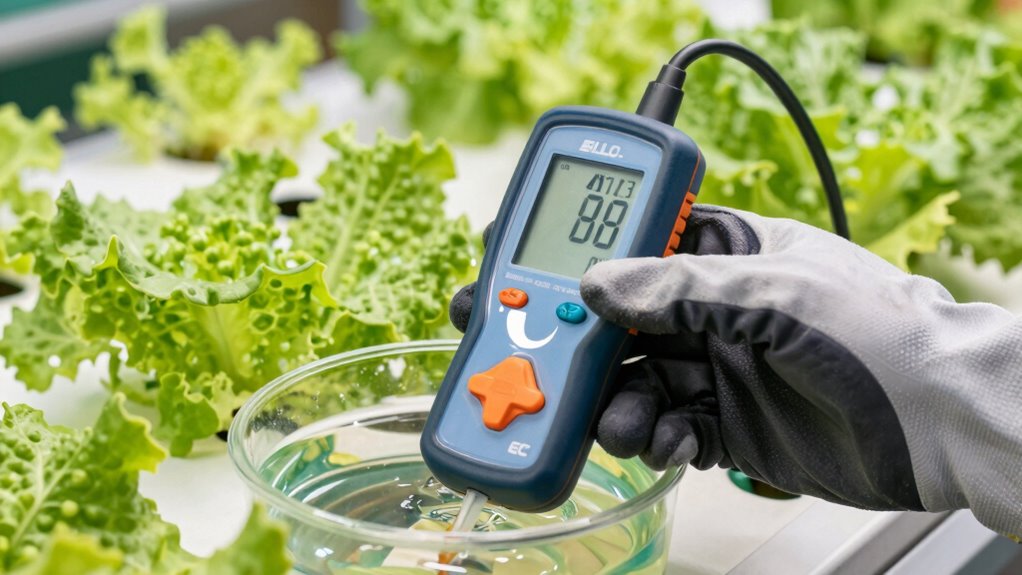
Maintaining accurate EC and pH levels requires having reliable tools and establishing a consistent monitoring routine. Invest in a quality pH meter and EC meter, and regularly calibrate your equipment, especially EC calibration, to guarantee precision. Use pH buffering solutions to calibrate your pH meter, preventing drift over time. Keep your sensors clean and stored properly to preserve accuracy. Check your nutrient solution daily, recording readings to spot trends or issues early. Consistent testing helps you adjust quickly, avoiding nutrient imbalances. Remember, stable equipment and routine calibration are key for dependable measurements. By staying diligent and using proper tools, you’ll maintain ideal conditions for healthy plant growth and maximize your hydroponic success. Incorporating water quality management practices can further enhance your monitoring accuracy and plant health.
How Proper EC and pH Control Can Boost Your Hydroponic Yields
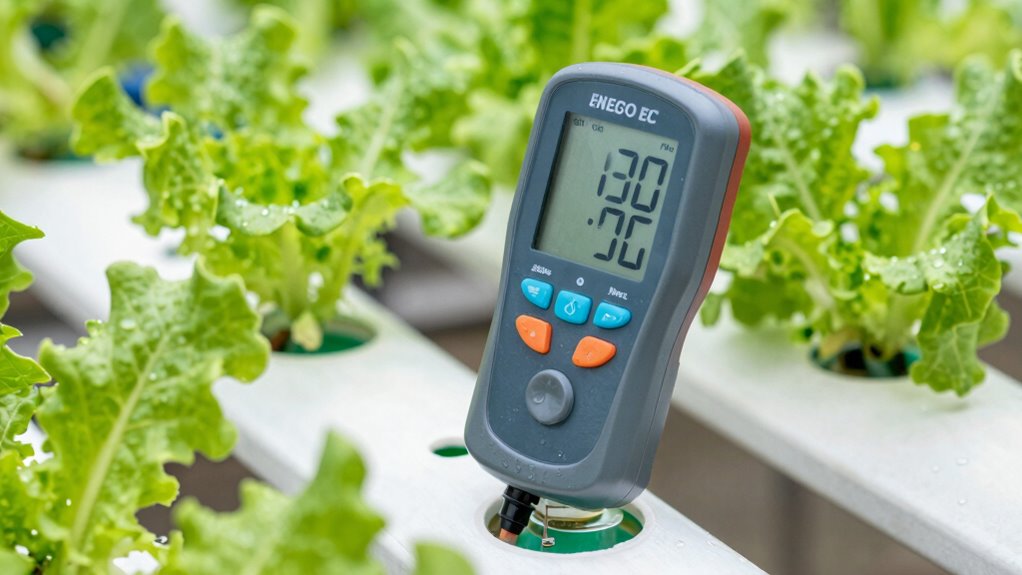
Consistently monitoring and adjusting your EC and pH levels not only keeps the nutrient solution balanced but also directly influences plant growth and yield. When water quality is ideal, nutrient uptake becomes more efficient, leading to healthier plants and bigger harvests. Proper control ensures the right nutrient balance, preventing deficiencies or toxicities that can stunt growth. To maximize results, focus on:
- Regularly testing water and nutrient solutions
- Adjusting pH to match plant needs
- Using high-quality water sources for consistency
- Maintaining stable EC levels for optimal nutrient concentration
- Implementing safe backup systems like generators and portable power stations to ensure continuous operation during outages.
Common Mistakes to Avoid When Managing EC and pH
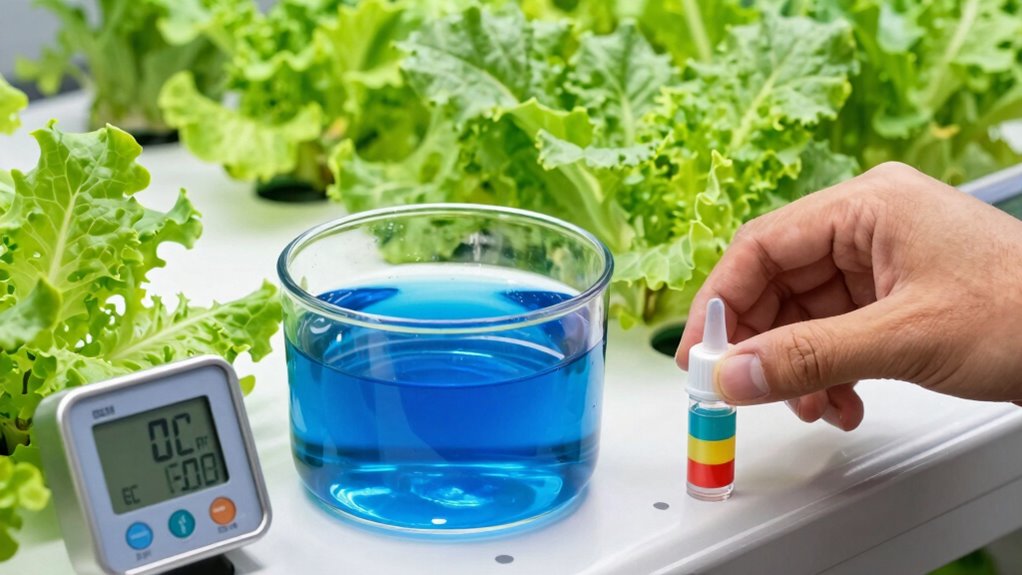
One common mistake growers make is neglecting to calibrate their testing equipment regularly, which can lead to inaccurate readings and improper adjustments. When EC and pH are off, you risk nutrient deficiencies that harm plant health. Incorrect pH levels can cause nutrients to become locked out in the root zone, preventing roots from absorbing essential nutrients. Overlooking the importance of consistent calibration means you might unknowingly create an imbalanced environment, stressing your plants and reducing yields. Additionally, failing to monitor changes in the root zone’s pH can cause gradual nutrient lockout, making deficiencies harder to diagnose. To avoid these mistakes, always calibrate your meters regularly, monitor pH and EC levels diligently, and adjust promptly to maintain a stable environment that promotes healthy root development and ideal nutrient uptake.
Frequently Asked Questions
How Often Should I Check EC and pH Levels in My Hydroponic System?
You should check your EC and pH levels at least once a day to ensure ideal nutrient absorption and root health. Regular monitoring helps you catch imbalances early, preventing nutrient lockout or root problems. If your system experiences changes in temperature or nutrient solution, consider checking more frequently. Consistent adjustments keep your plants healthy, maximizing growth and yield in your hydroponic setup.
Can Fluctuating EC and pH Levels Harm My Plants?
Imagine your plants as delicate dancers, and fluctuating EC and pH levels as sudden gusts of wind that can topple them. Yes, rapid shifts can cause nutrient toxicity and pH drift, stressing your plants and hindering growth. Consistent monitoring helps prevent these fluctuations, ensuring your plants stay balanced and healthy. Keep a close eye, and you’ll maintain a stable environment for ideal growth.
What Are the Signs of EC or pH Imbalance in Hydroponic Crops?
If your hydroponic crops show stunted growth, yellowing leaves, or wilting, you’re likely dealing with an EC or pH imbalance. These signs can cause nutrient deficiencies, making plants unable to absorb essential nutrients properly. Additionally, if roots appear brown or slimy, root rot might be setting in due to improper pH or EC levels. Regularly monitor and adjust your levels to keep your plants healthy and thriving.
Are There Natural Methods to Adjust EC and pH Levels?
You can naturally adjust EC and pH levels by using organic amendments and natural buffering agents. For example, adding compost teas or seaweed extracts can help fine-tune nutrient concentrations, while lime or natural acids like apple cider vinegar can balance pH. Keep in mind, it’s a balancing act, so always monitor closely to avoid swings. Think of it as watering a garden—patience and gentle tweaks yield the best results.
How Do Different Crop Types Affect Optimal EC and pH Settings?
Different crop types influence ideal EC and pH settings because each species has specific tolerance levels and crop-specific nutrients. You should adjust your nutrient solutions based on the particular plant’s needs, ensuring you don’t over- or under-supply. For example, leafy greens thrive at lower EC and pH levels, while fruiting plants often require higher EC for healthy growth. Always tailor your environment to match the crop’s unique requirements.
Conclusion
Think of EC and pH as the heartbeat of your hydroponic garden—when they’re in sync, your plants thrive. I once saw a grower fix a simple pH tweak, and suddenly, their tomatoes doubled in size. Just like tuning an instrument, monitoring these two numbers keeps your crops singing. Stay vigilant, troubleshoot early, and you’ll cultivate a healthy, bountiful harvest that’s music to your ears.