
TL;DR

Get garden gear delivered free — and shop member deals
- Fast, free delivery on millions of items
- Access to Prime Big Deal Days deals on October 6–7
- Prime Video, Amazon Music and more included
Homes & Gardens has published a practical guide to choosing a pruning saw by branch size, workload and access. It compares folding and fixed designs, straight and curved blades, and several recommended models; the guidance is not a report of a new product launch or safety rule.
Homes & Gardens has published a guide to choosing a pruning saw, explaining how blade shape and whether a saw folds can affect its usefulness in the garden. The advice is aimed at people cutting branches too thick for pruners or loppers but not large enough to call for a chainsaw, with the choice depending on the work, wood size and access to the cut.
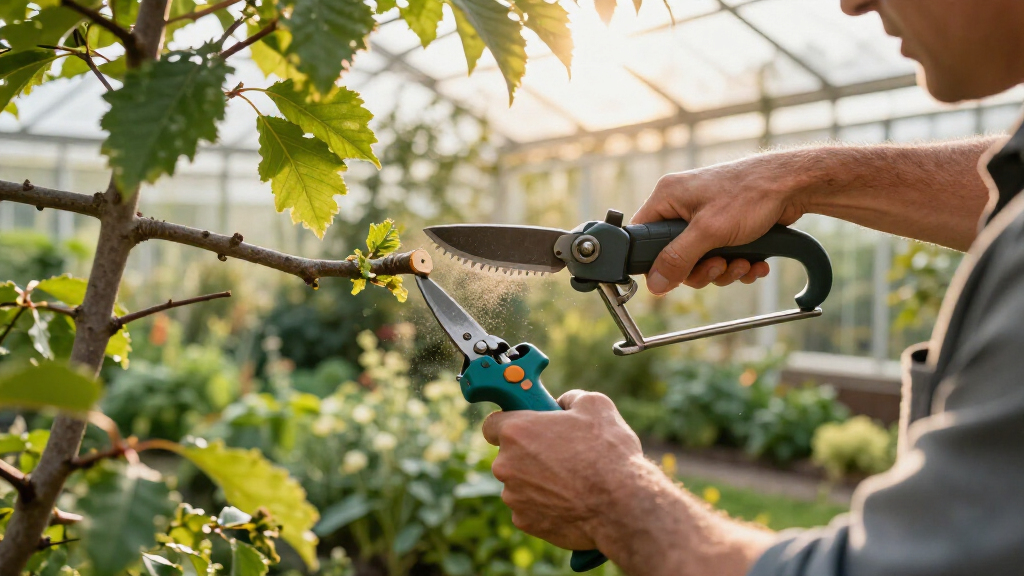
The guide describes two main design choices: folding or fixed blades, and straight or curved blades. Folding saws tuck the blade into the handle, making them easier to store and carry. Fixed saws take up more room, but the guide says their larger size can make them more suitable for heavier pruning. Curved blades are recommended for cuts above or below the gardener, while straight blades can offer more control in tight spaces and for smaller branches around shoulder to waist height.
For a portable general-purpose option, the article recommends the FELCO 602 folding saw. It lists a 4.7-inch chrome-plated blade, a lightweight 160-gram design and replaceable parts. The writer also recommends the Stihl PR 16 as an alternative, saying its teeth can cut branches up to 65 millimeters. The guide notes that a new folding saw’s safety catch may feel stiff at first.
For larger cuts, the article points to the Corona RazorTOOTH, a fixed curved-blade saw described as suitable for branches up to eight inches in diameter. It also highlights the Saboten straight-blade saw for precision work and tight spaces, and the premium Silky Sugoi, whose 16.5-inch curved blade is listed for branches up to 8.3 inches in diameter. These capacities are the source’s product descriptions, not independently verified measurements.
Matching the Saw to the Cut
The choice affects more than storage. A saw that suits the branch diameter and cutting position can make routine pruning more manageable, while a bulky fixed tool may be inconvenient for someone doing only occasional work. Conversely, frequent heavy pruning may call for a longer, sturdier saw rather than a small folding model. The guide gives readers a way to narrow the options before comparing specific products.
The distinctions also matter for comfort and control. A curved blade may help when reaching low or high branches, while a straight blade can be easier to place precisely in a confined area. The Homes & Gardens writer emphasizes that the right tool depends on the task, rather than naming one saw as suitable for every garden.
Where Pruning Saws Fit
The source places pruning saws between hand pruners or loppers and chainsaws: they are intended for thicker stems and branches that the smaller tools cannot handle but do not require powered cutting equipment. It says gardeners may encounter this kind of wood when pruning trees and large shrubs in fall or winter. That is seasonal guidance in the article, not a universal schedule for every plant or region.
Its recommendations draw on product descriptions and the writer’s reported experience using pruning tools. The writer says an older FELCO folding saw lasted many years and describes using folding saws on fruit trees, ornamental trees and thick shrub stems. Those experiences explain the recommendations but do not establish comparative test results across all saws or gardens.
““The best pruning tools fit your needs and budget.””
— Homes & Gardens gardening writer
Limits of the Product Comparisons
The supplied source does not give a publication date, prices or a testing method, and it does not say how the listed models performed in a controlled comparison. Product specifications and suitability claims are presented by the guide; they are not accompanied here by independent verification. The source text also ends during its description of the Silky Sugoi, so further details about that model are unavailable.
It is also unclear which saw would suit a particular reader without knowing the kinds of plants, branch sizes, working positions and frequency of pruning involved. The article offers selection principles, but it does not provide plant-specific pruning instructions or establish that every listed model is available in every market.
Check Fit Before Buying
Readers can use the guide’s criteria to compare blade length, shape, storage and replaceable parts against their own garden work. The writer specifically suggests trying a folding saw’s opening and locking catch before committing, since the mechanism can feel stiff when new and may vary by brand. Checking current specifications and availability with a retailer would help confirm whether a model still matches the guide’s description.
Before making a cut, gardeners should also follow the saw maker’s instructions and choose a tool suited to the branch and position. The source does not set out a full safety procedure, so it does not resolve questions about safe technique, protective equipment or when work at height should be left to a professional.
Key Questions
When is a pruning saw useful?
The guide says pruning saws are for thicker stems and branches that are too large for pruners or loppers but do not require a chainsaw.
Should I choose a folding or fixed pruning saw?
A folding saw is compact and easier to carry or store. A fixed saw takes up more space and, according to the guide, can suit heavier pruning. Consider how often you prune and the size of the wood.
Is a curved or straight blade better?
The article recommends curved blades for cutting lower or higher branches and straight blades for precision work in tighter spaces. The better fit depends on where and what you need to cut.
Which pruning saw models does the guide recommend?
It highlights the FELCO 602 as a folding general-purpose option, the Corona RazorTOOTH as a fixed curved saw, the Saboten as a straight-blade choice, and the Silky Sugoi as a premium curved saw. These are the source’s recommendations, not a verified ranking.
Source: rss
Fall yard work Picks
leaf blowers
As an affiliate, we earn on qualifying purchases.