
TL;DR

Get garden gear delivered free with Prime
- Fast, free delivery on millions of items
- Prime Video, Amazon Music and more included
- Member-only deals all year
A Gardening Know How report outlines how gardeners can grow saffron crocus (Crocus sativus) and harvest its red stigmas at home. The plant needs sun and well-drained soil; poisonous lookalikes and wet summer soil pose risks. The report does not establish a retail price or guarantee a particular harvest.
Saffron crocus can be grown in a sunny home garden, where its fall flowers produce the red stigmas used as saffron, according to a Gardening Know How report. The guide says well-drained soil is the main requirement and warns that gardeners must identify the plant correctly because some similar-looking autumn bloomers are poisonous.
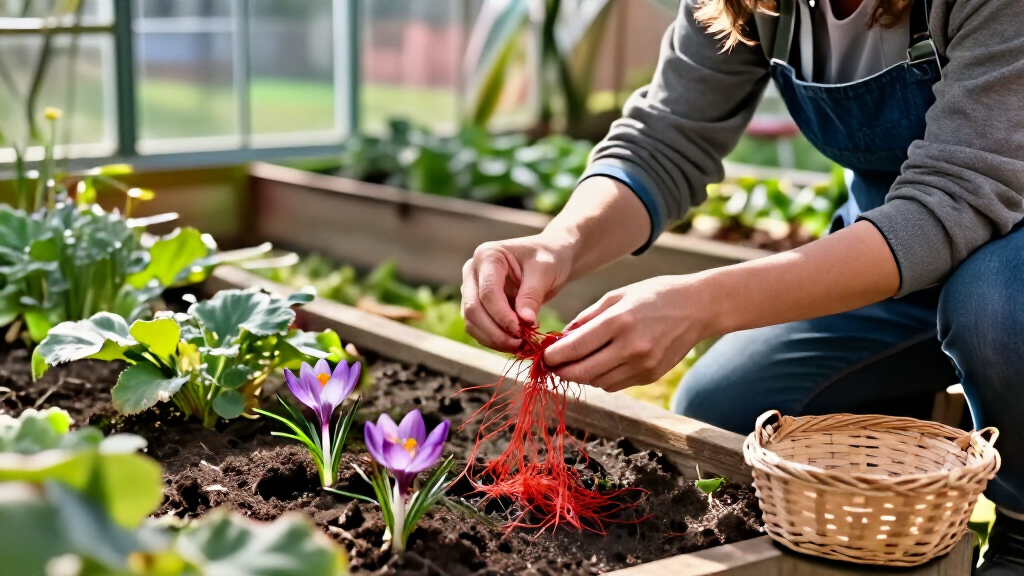
The spice comes from Crocus sativus, a fall-blooming crocus with lavender flowers and three red stigmas per bloom. Those stigmas are picked and dried. The report says roughly 150 flowers yield one gram of dried saffron threads, helping explain why harvesting the spice is labor-intensive. That figure describes the work involved; the report does not provide a current market price.
Gardeners usually plant the bulb-like corms in August or September, although the guide says October planting can also work. It recommends placing them about 4 to 6 inches deep and 3 to 4 inches apart, pointed end up, in a sunny site. Saffron crocus is described as hardy in zones 5 through 8; zone 4 can work when soil drains especially well. Corms may be planted in the ground or in containers around a foot wide, set on the ground over winter.
Flowers generally open in October or November. The guide recommends picking the stigmas after morning dew has dried, ideally before flowers open fully, and leaving the yellow stamens behind. Threads need to dry completely before storage in a tightly sealed jar kept away from light. The corms multiply, the report says, but some may not flower until their second year, so a small first-season harvest is possible.
What Home Saffron Growing Requires
Growing saffron at home offers gardeners a way to harvest a spice that is usually sold in small quantities, while also adding purple fall flowers to a yard. But the guide’s account makes clear that a home planting is not a quick route to a large supply: each flower yields only three stigmas, and they must be harvested and dried carefully. The reported figure of about 150 blooms per gram gives readers a sense of the labor involved without promising a particular yield from any garden.
The practical takeaway is that site conditions matter more than specialized equipment. Saffron crocus can suit a border, lawn or container, but standing water can rot corms. Gardeners with heavy clay may need a raised bed or a container with suitable drainage. Corms also need time to establish, and foliage should be allowed to yellow naturally so it can feed the next season’s corms.
Correct identification is a safety issue, not just a gardening detail. Some plants sold under names such as autumn crocus or meadow saffron are poisonous Colchicum, according to the report. The guide advises buying labeled corms from a trusted supplier and checking plant identity before harvesting or eating anything.
As an affiliate, we earn on qualifying purchases.
Planting, Dormancy and Harvest
The report describes saffron crocus as a fall-blooming plant that grows from corms. Planting is usually done in late summer, with the flowers appearing in autumn. After its growing season, the plant becomes dormant around June or July. The guide warns that summer irrigation intended for nearby crops, such as tomatoes, can leave the corms too wet during dormancy.
Care continues after flowering: leaves should remain until they yellow on their own, rather than being cut early. The report also advises against fresh manure and heavy nitrogen. Voles and squirrels may dig up corms, so a protective mesh barrier is suggested; netting may be used where deer browse winter foliage. These are recommendations in the gardening report, not guarantees against pests or crop loss.
Harvesting involves separating the three red stigmas from each flower, then drying them until they are fully dry before storage. The guide says the threads can be steeped in warm water and used in dishes such as rice or seafood stew. It also advises moderation and consulting a doctor about possible medication interactions or pregnancy-related risks before consuming saffron.
““Good drainage is the key to growing these corms successfully in all zones.””
— Gardening Know How report
Yield, Price and Planting Results
The report does not state a current saffron price, give a typical home-garden yield, or compare the cost of growing corms with buying spice. Its estimate of 150 flowers per gram is presented as a production figure, not as a guaranteed yield for a given planting. Results may vary with location, drainage, weather, corm quality and establishment time.
The guide says October planting may work, but does not quantify how results compare with planting in August or September. It also does not specify a universal drying time or provide independent testing of storage life. Gardeners should follow the corm supplier’s instructions and local growing guidance, and confirm plant identity before harvesting.
From Corms to Fall Flowers
For gardeners considering a planting, the next step is to choose a sunny site with reliable drainage and obtain corms labeled Crocus sativus. Planting is generally recommended in August or September; October is described as a later option. Once planted, corms should be watered in, then monitored for soggy soil and animal disturbance.
If flowers appear in October or November, gardeners can pick the red stigmas after dew dries and dry them fully before storage. The report says corms can multiply over time, though a larger harvest is not assured and some new corms may take until the second year to flower. The guide offers no follow-up data on yields or costs, leaving those outcomes dependent on individual growing conditions.
Key Questions
Can saffron crocus grow in a home garden?
Yes. The Gardening Know How report says it can grow in a sunny garden or container, provided the corms have well-drained soil. It describes the plant as hardy in zones 5 through 8, with zone 4 possible in very well-drained ground.
When should saffron crocus corms be planted?
The report gives August or September as the usual planting period and says October can also work. It recommends planting corms 4 to 6 inches deep and 3 to 4 inches apart.
How much saffron does one flower produce?
Each saffron crocus flower has three red stigmas, which are harvested for the spice. The report estimates that roughly 150 flowers produce one gram of dried threads; actual home harvests can vary.
Are autumn crocus lookalikes safe to harvest?
No assumption of safety is warranted. The report warns that some plants sold as autumn crocus or meadow saffron are poisonous Colchicum. It advises harvesting only from correctly identified Crocus sativus obtained from a trusted source.
When are saffron threads ready to store?
Threads should be completely dry before being sealed in a jar and kept away from light. The report also advises caution with consumption during pregnancy and recommends consulting a doctor about possible medication interactions.
Source: rss
Halloween Picks
halloween
As an affiliate, we earn on qualifying purchases.