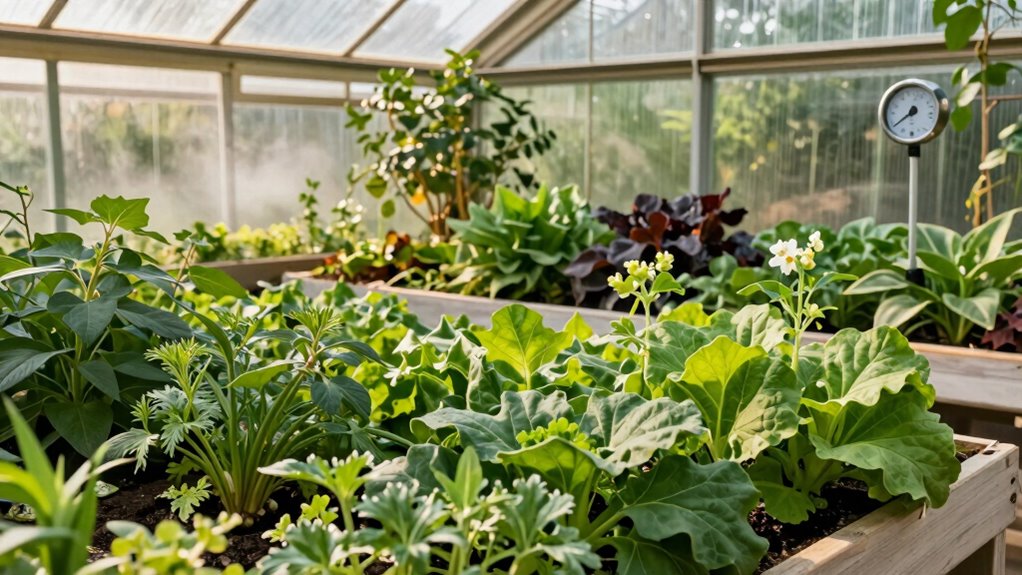

Focusing on climate stability in your greenhouse is more beneficial than aiming for perfection because it creates consistent soil moisture, which promotes healthier roots and stronger plants. Stable conditions also make pest management easier and reduce plant stress, leading to better yields. Trying for perfect conditions often causes fluctuations that harm plants and waste resources. If you want to discover practical ways to achieve this balance, keep exploring the key benefits of maintaining a steady climate.

Get garden gear delivered free — and shop member deals
- Fast, free delivery on millions of items
- Access to Prime Big Deal Days deals on October 6–7
- Prime Video, Amazon Music and more included
Key Takeaways
- Consistent climate prevents microclimates that foster pests and diseases.
- Stable conditions promote healthier root systems and steady plant growth.
- Climate stability reduces resource waste and minimizes the need for frequent adjustments.
- Maintaining steady moisture levels enhances plant resilience and nutrient uptake.
- Long-term success relies on reliable, predictable environmental conditions over perfection.
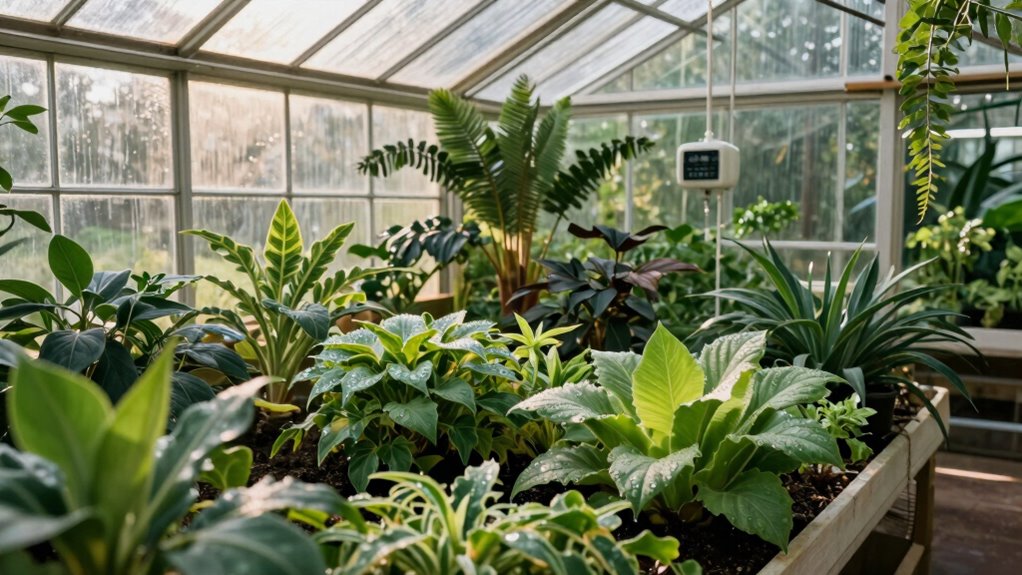
While working towards perfect climate conditions might seem ideal, recent research shows that maintaining climate stability is far more beneficial in the long run. In a greenhouse, fluctuating temperatures and humidity levels can lead to unpredictable soil moisture conditions, which directly impact plant health. When soil moisture swings wildly, plants struggle to absorb nutrients efficiently, making them more vulnerable to pests and diseases. Consistent moisture levels create a stable environment that supports healthy root systems and promotes steady growth. Instead of obsessing over hitting perfect setpoints, your focus should be on maintaining a reliable climate that keeps soil moisture within optimal ranges. This approach minimizes stress on plants and encourages resilient growth, which is crucial for a productive greenhouse. Maintaining climate stability also helps prevent microclimates from forming, which can otherwise complicate pest control efforts. Pest management becomes significantly easier when climate stability is prioritized. Fluctuating conditions can weaken plants, lowering their defenses and inviting pest infestations. Sudden shifts in temperature or humidity can also create microclimates favorable to pests, making infestations more difficult to control. By ensuring a stable environment, you reduce the likelihood of pests thriving and spreading. Consistent climate conditions help keep pests at bay, reducing the need for chemical interventions and making natural pest control methods more effective. When soil moisture remains constant, plants develop stronger, more resilient tissues, which are less appealing to pests and less susceptible to infection. This stability creates a healthier overall ecosystem within your greenhouse, where pests are less likely to find a hospitable habitat. Additionally, climate variability can contribute to increased plant stress and reduce overall crop yields, emphasizing the importance of maintaining stability. Moreover, research indicates that microclimate formation can lead to uneven growth patterns, complicating crop management and harvesting. Furthermore, striving for climate perfection can lead to overcompensation—adjusting settings repeatedly in pursuit of ideal conditions. This constant tinkering can cause soil moisture levels to become erratic, undermining plant health and complicating pest management efforts. Instead, maintaining a steady climate reduces the need for frequent adjustments, allowing your soil moisture levels to stay within a range that supports plant vigor and pest resistance. Over time, this consistency fosters a self-sustaining environment where plants develop natural defenses, reducing the reliance on external inputs. You’ll find that a stable climate enhances overall productivity, saves you time, and minimizes resource waste. Ultimately, your goal should be to establish a climate that remains steady and predictable. By doing so, you create a thriving environment where soil moisture remains consistent, pests are kept in check, and plants grow stronger. Perfection is less important than stability, as the latter offers a reliable foundation for sustained plant health and easier pest management. When you prioritize climate stability over chasing elusive perfect conditions, you set your greenhouse up for long-term success and resilience.
greenhouse climate control system
As an affiliate, we earn on qualifying purchases.
As an affiliate, we earn on qualifying purchases.
Frequently Asked Questions
How Does Climate Stability Affect Plant Growth Over Time?
Climate stability directly benefits your plant growth by maintaining microclimate consistency, which helps plants develop stronger roots and healthier foliage. When seasonal variation is minimized, plants don’t struggle with sudden temperature shifts, reducing stress and disease risk. This consistent environment promotes steady growth over time, allowing your plants to thrive without the disruptions caused by fluctuating weather. Ultimately, climate stability creates a ideal, reliable setting for long-term plant health.
Can Striving for Perfect Climate Control Damage Plant Health?
Certainly! Here’s the modified text with alternative words replacing “striving”:
—
Achieving perfect climate control can actually harm plant health by disrupting the microclimate balance. Over-tight regulation may create stress, weaken plants, and make them more susceptible to pests. Instead, focus on maintaining a stable environment that supports natural resilience. This approach aids pest prevention and encourages healthy growth, proving that consistent climate stability is more beneficial than chasing perfection. Keep a balanced microclimate for thriving, pest-resistant plants.
What Are Common Challenges in Maintaining Climate Stability?
You’ll face challenges like maintaining consistent soil health and pest management, which are essential for climate stability. Fluctuations in temperature or humidity can harm soil microbes and weaken plant defenses. You need to monitor these factors regularly and adapt your strategies to prevent pests and preserve soil vitality. Staying vigilant helps you avoid big disruptions, ensuring your greenhouse environment remains stable without aiming for perfect, but unmanageable, conditions.
How Does Climate Stability Reduce Energy Costs in Greenhouses?
Think of your greenhouse as a ship steering through rough seas—climate stability acts like a steady anchor, preventing wild swings. By maintaining consistent temperatures and humidity, you boost energy efficiency, reducing the need for constant heating or cooling. This stability leads to significant cost savings, as you use less energy overall, making your greenhouse more economical and sustainable. Ultimately, climate stability keeps your operation smooth and your expenses manageable.
Is Climate Perfection Achievable With Current Technology?
Achieving climate perfection with current technology is unlikely. While genetic engineering can develop resilient plant varieties and renewable energy can power greenhouses sustainably, perfect climate control remains elusive due to unpredictable weather and technological limits. You can optimize conditions, but absolute perfection is challenging. Aiming for climate stability, rather than perfection, offers reliable growth conditions, reduces energy costs, and increases overall greenhouse efficiency.
Conclusion
So, you see, chasing that perfect climate might seem ideal, but it’s often a fool’s errand. Instead, embracing stability offers a more reliable, resilient path—yet, ironically, most greenhouse growers still obsess over perfection. It’s almost humorous how the quest for flawless conditions can distract you from the true secret: consistent, stable environments foster healthier plants. Sometimes, it’s the imperfectly perfect balance that actually wins the race, proving that stability really does beat perfection—if only we’d realize it sooner.
Halloween Picks
halloween
As an affiliate, we earn on qualifying purchases.