
TL;DR

Get garden gear delivered free — and shop member deals
- Fast, free delivery on millions of items
- Access to Prime Big Deal Days deals on October 6–7
- Prime Video, Amazon Music and more included
There is no calendar date that works for every lawn: keep mowing while grass is actively growing, then make a final cut after growth slows or stops. The right height depends on grass type, and mowing should be avoided when turf is wet, frozen or frosted.
Homeowners should keep mowing while their grass is actively growing and make the final cut after growth slows or stops, according to a Country Living report on preparing lawns for winter. Because timing depends on location, weather and grass type, there is no single date that applies to every yard.
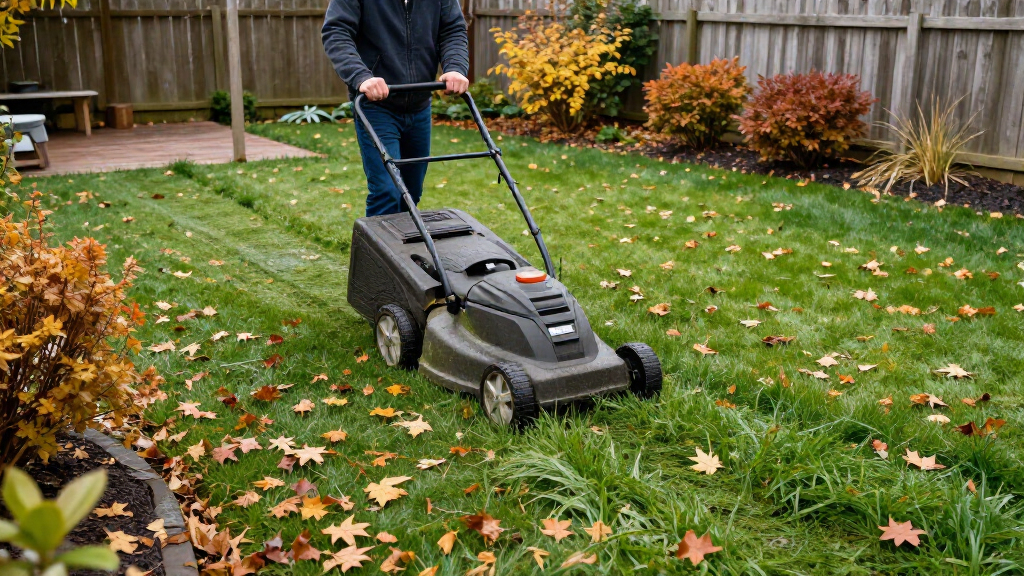
The report advises against mowing grass when it is wet, frozen or covered in frost. Mowing late in the season is not inherently harmful if the lawn is dry and still growing, but traffic on frozen turf can damage grass, while heavy equipment on wet soil can contribute to compaction. A sharp blade and a dry, frost-free day help make the final cut cleanly.
The final mow should follow the one-third rule: do not remove more than one-third of a grass blade at once. Leaving grass excessively long may allow it to mat under snow, increasing the risk of snow mold and providing cover for voles. Cutting too short can also cause problems by reducing the leaf area available to produce energy and leaving turf more exposed to cold, drought and winter injury.
Recommended final heights vary. The report gives ranges of 2½ to 4 inches for tall fescue, 2 to 3½ inches for Kentucky bluegrass, perennial ryegrass and fine fescue, and shorter ranges for several warm-season grasses: ½ to 1½ inches for Bermudagrass, 1 to 2 inches for zoysiagrass, 1½ to 2 inches for centipedegrass and 2½ to 3 inches for St. Augustinegrass. These are general guidelines; shady lawns may do better when kept slightly higher, and cultivar recommendations can differ.
A Final Cut That Protects Turf
Timing and cutting height affect how a lawn enters its dormant or slow-growth period. Grass left too long can mat beneath snow, while grass cut too short may have less capacity to withstand winter stress. A final mow at an appropriate height is a practical way to reduce those risks without assuming every lawn follows the same seasonal schedule.
The guidance also cautions against treating a first frost as a universal mowing deadline. Cool-season grasses may keep growing into late fall, while warm-season grasses slow as temperatures fall and may stop growing before or around the first frost. Waiting for growth to slow, while watching local conditions, is more useful than relying on a fixed date.
electric lawn scarifier for healthy lawn
As an affiliate, we earn on qualifying purchases.
As an affiliate, we earn on qualifying purchases.
Cool- and Warm-Season Timing
Tall fescue, Kentucky bluegrass, perennial ryegrass and fine fescue are cool-season grasses that grow most actively in spring and fall. The report says mowing may continue until growth has nearly stopped, which can be late October or later in some regions. A final height of about 2½ to 3½ inches suits many cool-season lawns, though the appropriate height depends on the turf.
Bermudagrass, zoysiagrass, centipedegrass and St. Augustinegrass are warm-season grasses that slow as temperatures cool and eventually become dormant. The timing varies by location. The report advises continuing to mow while these grasses are growing, then making the final cut at the range recommended for that species. It specifically cautions against scalping centipedegrass or St. Augustinegrass before winter.
Other fall tasks also depend on grass type. The report says early fall is generally the best time to overseed cool-season lawns, while warm-season lawns are usually aerated during active growth in late spring or summer. It recommends testing soil before applying lime or fertilizer. Cool-season lawns may benefit from a regionally appropriate fall fertilization program; late nitrogen on warm-season lawns can delay dormancy and raise cold-injury risk.
Local Conditions Set the Date
The report does not give a single cutoff date because the final mowing window depends on regional weather, local conditions and turf species. Its height ranges are general recommendations, not guarantees for every cultivar or site. It advises homeowners who are unsure of their grass type or its ideal height to contact a local cooperative extension service.
The source provides no specific forecast or location-based schedule for an individual lawn. It is therefore not possible to determine from the report alone when a particular yard will stop growing or when its last mow should take place. Soil and fertilizer needs also depend on test results rather than a blanket seasonal prescription.
Watch Growth Before the Last Mow
For now, homeowners can monitor whether the lawn is still growing and continue mowing as needed, following the one-third rule. When growth has slowed or stopped, make the final cut on a dry, frost-free day and set the mower according to the grass type rather than using one height for all lawns.
Before winter, remove or mulch leaves depending on how thickly they cover the turf. A light layer can be mulched into the lawn, but dense mats should be raked or removed because they can block light and trap moisture. Soil testing can guide any lime or fertilizer application, and homeowners can ask their local cooperative extension service for region-specific advice.
Key Questions
When should I stop mowing before winter?
There is no fixed date. Keep mowing while the grass is actively growing, then make the final cut after growth slows or stops. The timing varies with location, weather and turf type.
Should I mow my lawn before the first frost?
Not necessarily. Warm-season grass may stop growing before or around the first frost, while cool-season grass may continue growing later. Avoid mowing when grass is frosted or frozen, and base the last mow on growth and local conditions.
How short should I cut grass for winter?
The right height depends on the species. The report lists general ranges from ½ to 1½ inches for Bermudagrass to 2½ to 4 inches for tall fescue, with different recommendations for other grasses. Do not remove more than one-third of the blade at once.
Can I mow wet or frozen grass?
The report advises against it. Frozen turf can be damaged by mower traffic, and heavy equipment on wet soil can contribute to compaction. Wait for a dry, frost-free day.
What should I do with fallen leaves?
A light layer can be mulched into the lawn, but remove or rake dense leaf mats that block light and trap moisture. Leaves can also be composted or used in landscape beds.
Source: rss
Fall Picks
fall essentials
As an affiliate, we earn on qualifying purchases.