To keep your busy greenhouse running smoothly, focus on a design that emphasizes easy drainage, such as sloped floors and gravel beds, to prevent water issues. Incorporate pest-proof barriers and removable panels for simple inspections and quick access. Guarantee good ventilation and site placement in a sunny, breezy area to reduce pests and maintain ideal humidity. Use automatic watering systems and plan a low-maintenance layout—this guide reveals how to combine these strategies effectively.

Get garden gear delivered free — and shop member deals
- Fast, free delivery on millions of items
- Access to Prime Big Deal Days deals on October 6–7
- Prime Video, Amazon Music and more included
Key Takeaways
- Incorporate automated systems for watering, ventilation, and climate control to reduce manual effort during busy periods.
- Design accessible layouts with removable panels and clear pathways for quick inspections and maintenance.
- Use durable, low-maintenance materials that require minimal cleaning and repair.
- Implement effective drainage and pest control measures to prevent issues from escalating when attention is limited.
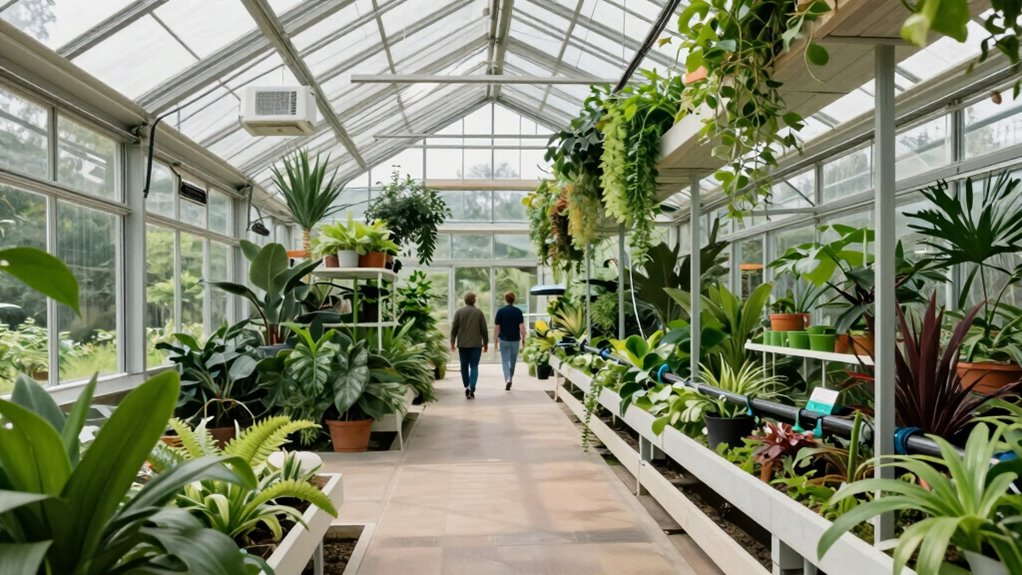
- Position the greenhouse in a well-ventilated, sunny area to naturally support plant health with minimal intervention.
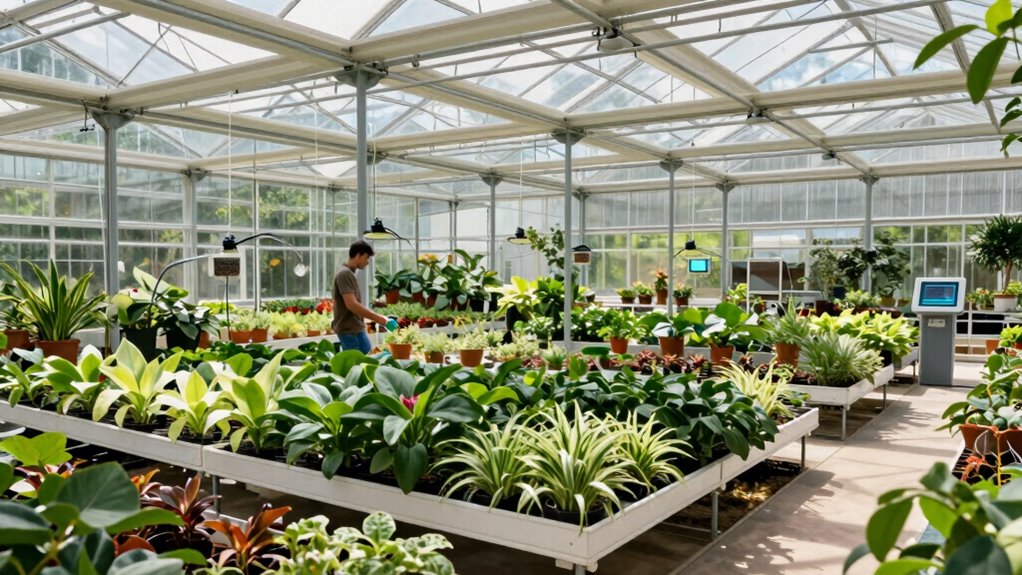
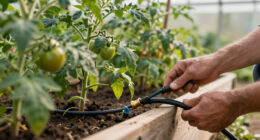
When you’re busy, maintaining a greenhouse can seem overwhelming, but thoughtful design can make it manageable. The key is creating a space that works efficiently without demanding constant attention. Start by focusing on your drainage systems. Proper drainage is essential to prevent waterlogging, which can harm your plants and create breeding grounds for pests. Incorporate sloped floors or install drainage channels that direct excess water away from plant beds. Using gravel or perforated pipes beneath the soil can improve drainage and reduce maintenance. When water drains effectively, you’ll spend less time dealing with soggy soil and root issues, freeing you up for other tasks.
Effective drainage prevents waterlogging, reduces maintenance, and keeps your greenhouse healthier and more manageable.
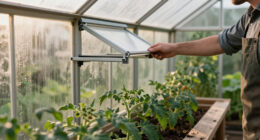
Next, consider pest control from the outset. An effective design minimizes the risk of pests taking hold, especially when you’re not around to manage every issue immediately. Use physical barriers like fine mesh screens on vents and doors to keep pests out. Incorporate pest-proof containers and avoid overusing chemical treatments, which can harm beneficial insects. Position your greenhouse in a sunny, well-ventilated area to discourage pests that thrive in damp or shady spots. Regularly inspect plants for early signs of pests, but choose a design that makes inspections straightforward. For example, raised beds or removable panels allow quick access to vulnerable areas, enabling prompt action before pests spread. Integrating drainage systems into your greenhouse design can further reduce pest issues by preventing excess moisture, which attracts certain pests and promotes disease. Additionally, paying attention to ventilation can help maintain optimal humidity levels, reducing pest attraction and supporting plant health. Implementing automatic watering systems can also save time while ensuring your plants receive consistent moisture and reducing potential overwatering issues that attract pests. Maintaining a consistent maintenance routine is also crucial to prevent pest infestations and keep your greenhouse functioning smoothly during busy periods.
automatic greenhouse watering system
As an affiliate, we earn on qualifying purchases.
As an affiliate, we earn on qualifying purchases.
Frequently Asked Questions
What Are the Initial Costs of Building a Busy-Friendly Greenhouse?
The initial costs of building a busy-friendly greenhouse typically range from $10,000 to $50,000, depending on size and materials. You should focus on cost estimation and budget planning early on, considering essentials like durable framing, climate control systems, and automated watering. Factor in permits and site prep too. Proper planning helps avoid surprises and guarantees your greenhouse can handle increased activity without breaking your bank.
How Often Should I Perform Maintenance During Peak Seasons?
During peak seasons, you should perform maintenance weekly to keep your greenhouse running smoothly. Focus on seasonal pruning to promote healthy growth and prevent disease, and implement crop rotation to reduce pest build-up and improve soil health. Regular checks on ventilation, watering systems, and structural integrity are also essential. This routine helps you stay ahead of problems, ensuring your busy greenhouse remains productive and efficient throughout the busy periods.
Can Automation Systems Handle All Aspects of a Busy Greenhouse?
Automation systems can handle many aspects of a busy greenhouse, like climate control and water management. For example, a commercial greenhouse in Florida uses automated systems to regulate temperature and humidity, reducing manual labor and ensuring ideal conditions. While automation covers most tasks, you’ll still need manual oversight for complex decisions, pest control, or system maintenance. Overall, automation considerably boosts efficiency but doesn’t entirely replace human involvement.
What Are the Best Practices for Pest Control When Busy?
When your greenhouse gets busy, focus on integrated pest management by using natural predators like ladybugs and predatory mites to control pests naturally. Apply organic sprays, such as neem oil or insecticidal soap, as needed to target specific issues without harmful chemicals. Regular monitoring helps you catch problems early, and combining biological controls with organic sprays keeps pest populations in check, ensuring healthy plants despite the busy schedule.
How Do I Train Staff to Operate Efficiently Under Pressure?
Imagine your staff as a well-oiled machine, each part working seamlessly together. To achieve this, you need effective staff training and efficiency strategies. Lead by example, run drills to simulate busy moments, and provide clear checklists. Encourage open communication, so they adapt quickly under pressure. Regularly review procedures, celebrate quick problem-solving, and foster a team mindset. This way, your greenhouse runs smoothly, even when demand spikes.
Conclusion
Remember, a well-designed greenhouse is like a well-oiled machine—you can’t afford to let it stall when things get busy. By streamlining your layout, automating key processes, and planning for quick access, you’ll keep everything running smoothly. Don’t forget, “A stitch in time saves nine,” so investing in thoughtful design now pays off later. Stay proactive, adapt as needed, and your greenhouse will thrive even on the busiest days.
Fall yard work Picks
leaf blowers
As an affiliate, we earn on qualifying purchases.