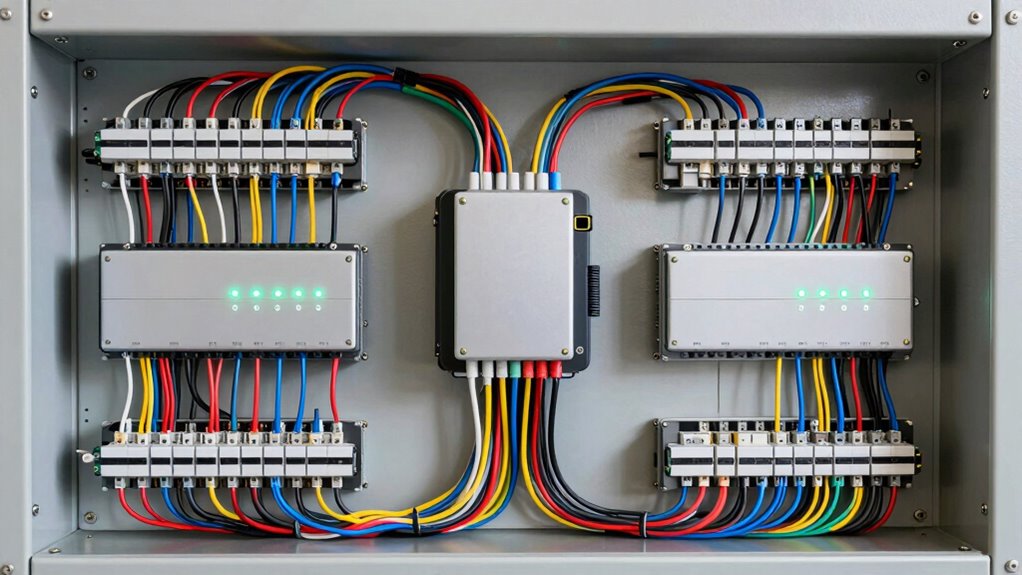

To plan control wiring without ending up with an spaghetti mess, start by evaluating your system needs and future expansion plans. Create a clear wiring diagram using standardized symbols, labels, and color coding to make troubleshooting easier. Choose reliable components, route wires neatly, and secure them with ties and clips. Always test thoroughly before finalizing. Keep everything organized and update your plan as your system grows—learn more to keep your wiring clean and efficient.
Key Takeaways
- Develop detailed wiring diagrams with standardized symbols to visualize connections and prevent confusion.
- Plan cable routing strategically using labels, color coding, and organized cable management tools for clarity.
- Select high-quality components and label wires clearly for easy identification and maintenance.
- Test all connections thoroughly with proper tools before system activation to catch errors early.
- Regularly inspect and update wiring documentation to maintain organization and ensure long-term reliability.
Why Planning Your Automation Wiring Saves Time and Troubles
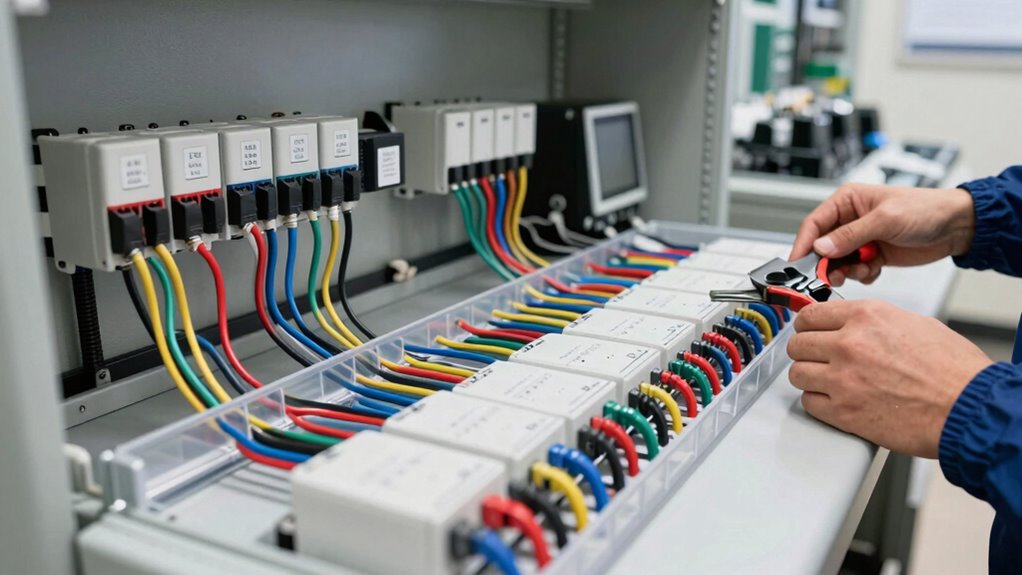
Planning your automation wiring ahead of time is essential because it helps you identify potential issues before they become costly mistakes. By mapping out your wiring layout, you guarantee smooth wireless integration and efficient power distribution. Proper planning prevents tangled cables and minimizes troubleshooting later on. You’ll know exactly where to place controllers, sensors, and power supplies, saving time during installation. It also allows you to contemplate future upgrades, making expansion easier. When you plan ahead, you reduce the risk of wiring errors that can cause system failures or safety hazards. Additionally, considering essential oils for system maintenance can help keep your equipment functioning smoothly and extend its lifespan. Overall, thoughtful planning streamlines the entire setup process, saves you money, and ensures your automation system operates reliably from the start.
Assess Your System Needs and Future Expansion Plans
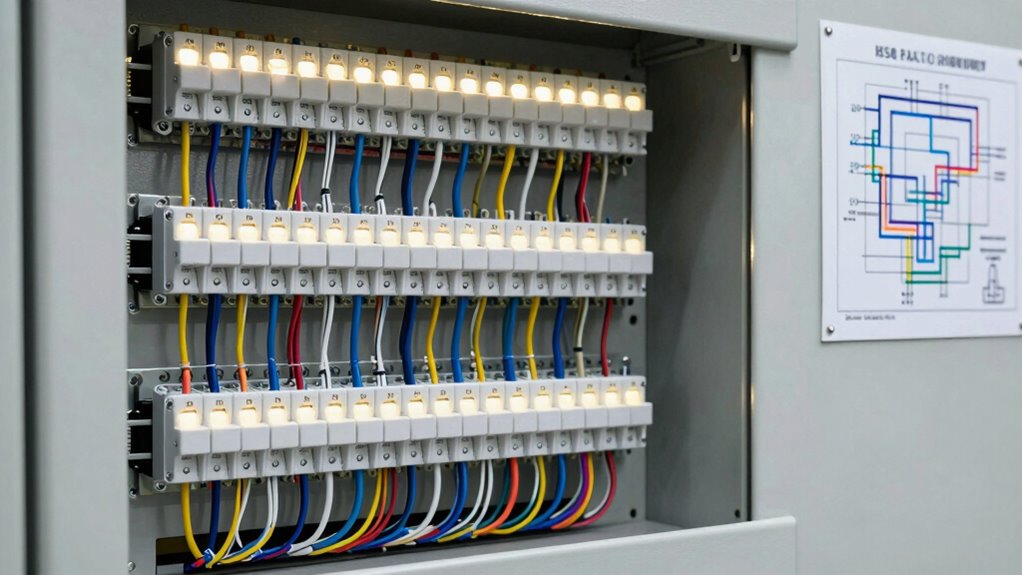
Understanding your current system requirements and future expansion goals is crucial for effective automation wiring. By evaluating your existing setup, you ensure the system can handle your operational needs now, avoiding bottlenecks. Consider how many devices, sensors, and controllers you’ll need initially, and plan for scalability. Think about your long-term growth; will you add more machinery or integrate new technologies later? Incorporate future proofing strategies to prevent costly rewiring down the line. Designing with system scalability in mind helps you create a flexible, adaptable control system. This foresight ensures your wiring plan accommodates growth, saves time, and reduces disruptions during upgrades. Taking the time to evaluate both present needs and future plans leads to a streamlined, reliable automation setup. Integrating smart technology can enhance your system’s expandability and adaptability for future innovations.
Design a Clear Wiring Diagram for Easy Maintenance
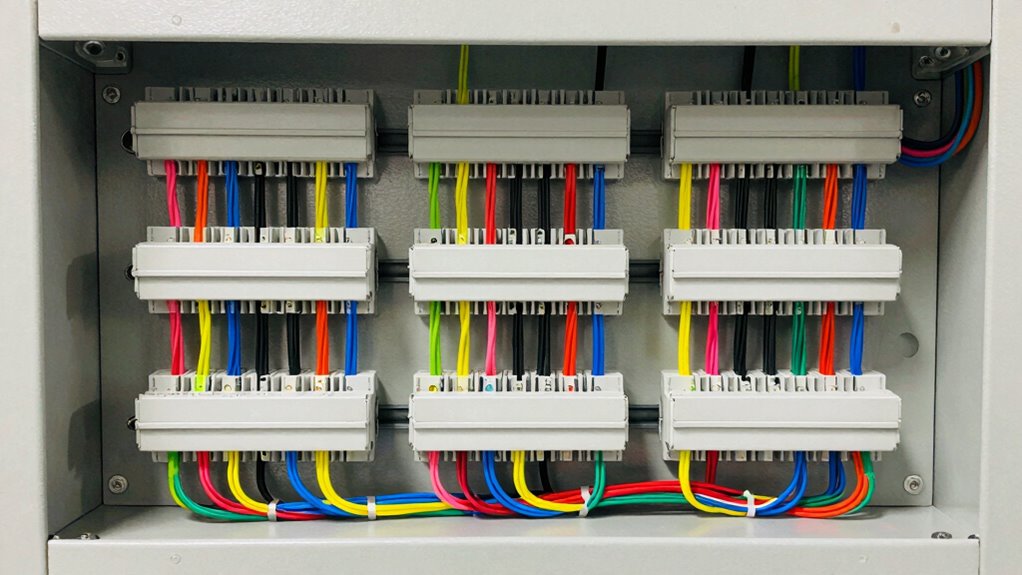
Creating a clear wiring diagram is essential for simplifying maintenance and troubleshooting. Use standardized circuit diagrams and wiring standards to guarantee consistency and understanding. A well-organized diagram helps you quickly identify connections and component functions, reducing errors. To emphasize the importance of clarity, consider this table:
| Symbol | Description | Wiring Standard |
|---|---|---|
| 🔌 | Power supply | IEC |
| 💡 | Indicator light | UL |
| ⚙ | Motor controller | NEC |
This visual aid highlights how consistent symbols and standards improve readability. When designing your diagram, keep it neat, label everything clearly, and follow wiring standards to facilitate future maintenance. A clear, standardized circuit diagram minimizes confusion and saves time during troubleshooting. Additionally, adopting energy-efficient practices can contribute to sustainable and secure solutions.
Choose Components That Make Wiring Simple and Reliable
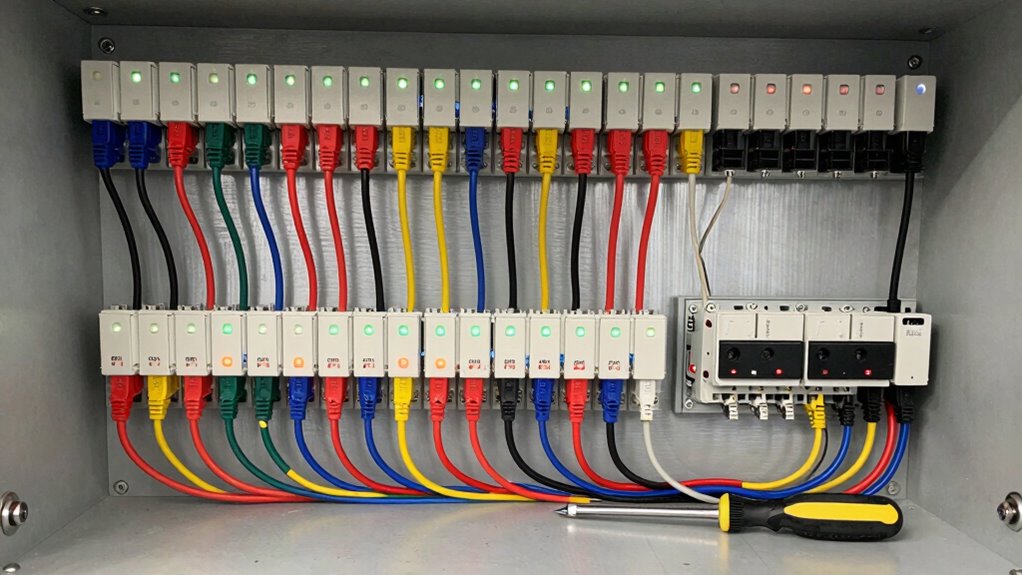
Using clear labeling practices helps you identify wiring quickly and reduces mistakes during maintenance. Choosing high-quality connectors guarantees your connections stay secure and reliable over time. Prioritizing these components makes your automation wiring simpler and more dependable. Incorporating practical guidance on device compatibility ensures your system functions smoothly and safely.
Clear Labeling Practices
Clear labeling is essential for making wiring simple and reliable, especially in automation projects. Using consistent color coding helps you quickly identify circuits and connections, reducing errors during installation and troubleshooting. Pair color coding with clear, legible labels to guarantee each wire’s purpose is obvious at a glance. Avoid vague or ambiguous labels; instead, be specific about component functions and connection points. Proper label clarity minimizes confusion, saves time, and prevents costly mistakes. When planning your wiring, consider label placement so they’re visible and durable under operational conditions. A well-organized labeling system streamlines maintenance and upgrades, keeping your control panel neat and manageable. Clear, consistent labels transform a potential spaghetti mess into an efficient, professional wiring layout. Additionally, understanding color accuracy in projectors can help ensure that your control signals and indicators are easily distinguishable, further enhancing the clarity of your wiring system.
Use Quality Connectors
Choosing high-quality connectors is essential for ensuring your wiring is both simple to install and reliable over time. Good connector quality reduces connection failures and minimizes troubleshooting later on. When selecting connectors, prioritize those with secure terminals and corrosion-resistant materials to enhance wiring durability. Reliable connectors make it easier to assemble, disassemble, and maintain your control system, saving you time and effort. Investing in quality components prevents issues like loose connections or voltage drops, which can compromise your automation system’s performance. Remember, the right connectors are a vital part of a clean, organized wiring setup. By choosing durable, well-made connectors, you create a more dependable control system that stands up to environmental stresses and prolonged use. Proper connector selection ensures your wiring remains resilient and dependable over the long term.
Use Color Coding and Labels to Speed Up Troubleshooting
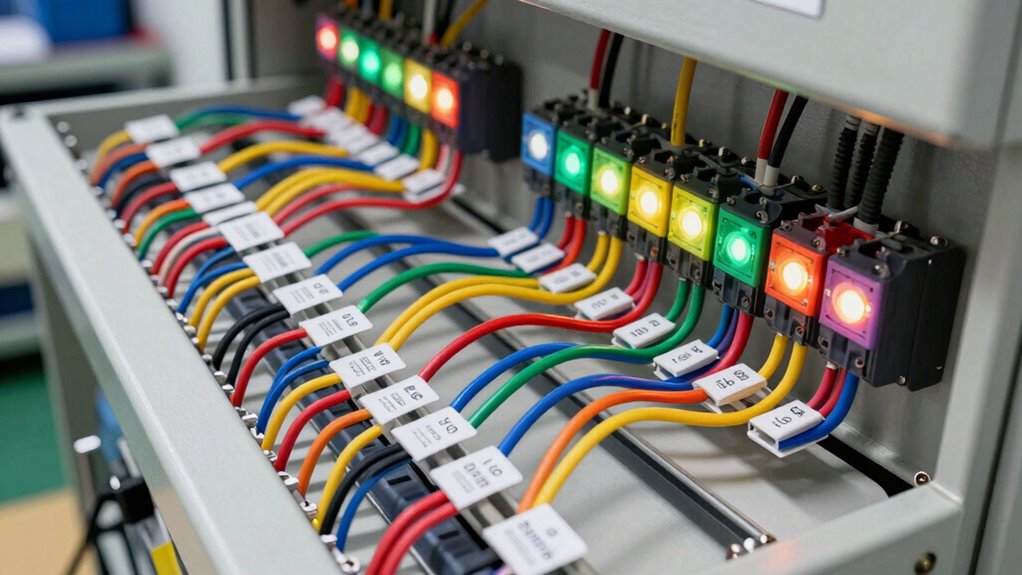
Color coding and labels are essential tools that can substantially reduce troubleshooting time in automation wiring. By implementing effective color coding, you create a visual guide that instantly indicates wire functions, such as power, ground, or signal lines. Label strategies further streamline diagnostics by clearly identifying each wire’s purpose and connection point. Consistent use of colors and labels helps you quickly locate issues without tracing every wire manually, saving time and reducing errors. When planning your wiring, assign specific colors for different signals and guarantee labels are durable and easy to read. Proper wiring organization and adherence to safety standards further enhance system reliability. This organized approach keeps your system understandable and accessible, especially during maintenance or repairs. Ultimately, good color coding and labeling make troubleshooting faster, more efficient, and less prone to mistakes.
Route and Secure Wires to Keep Your System Neat
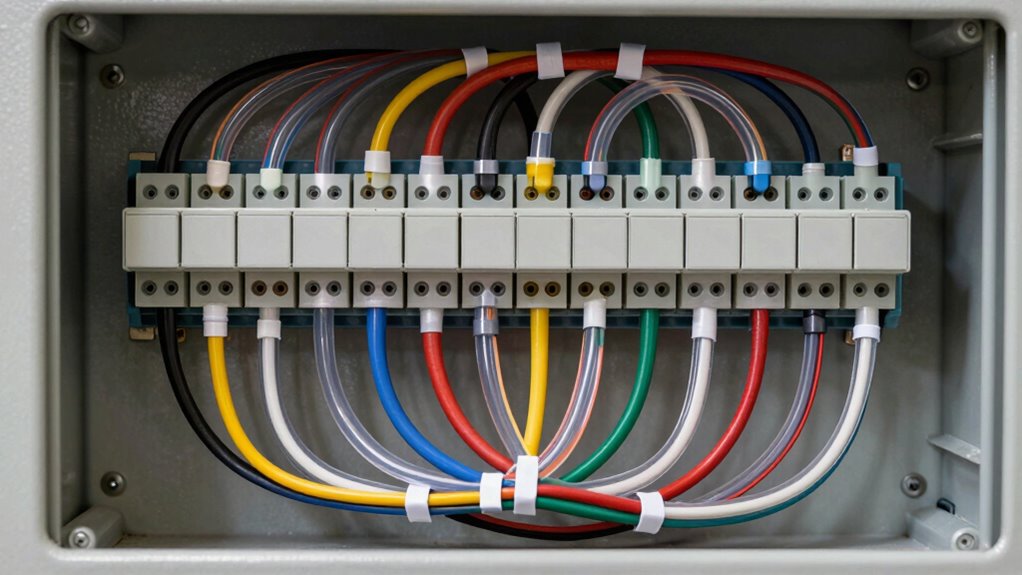
Once you’ve labeled and color-coded your wires, the next step is to route and secure them properly. Good cable management and wire routing are essential for a neat, safe system. Use cable ties, clips, or conduits to keep wires organized and prevent tangling. Follow a logical path along your control panel or equipment, avoiding sharp bends or pinched cables. Secure wires to the chassis or mounting surfaces at regular intervals to prevent movement. Keep power and signal lines separate to reduce interference. Proper routing not only keeps your setup tidy but also makes future troubleshooting easier. Remember, organized wiring minimizes accidental disconnections and damage. Take your time to plan a clean, structured route — a well-managed system saves you headaches down the line. Incorporating power tool safety practices during installation can help prevent accidents and ensure a safer workspace.
Test and Verify Your Wiring Before Final Assembly
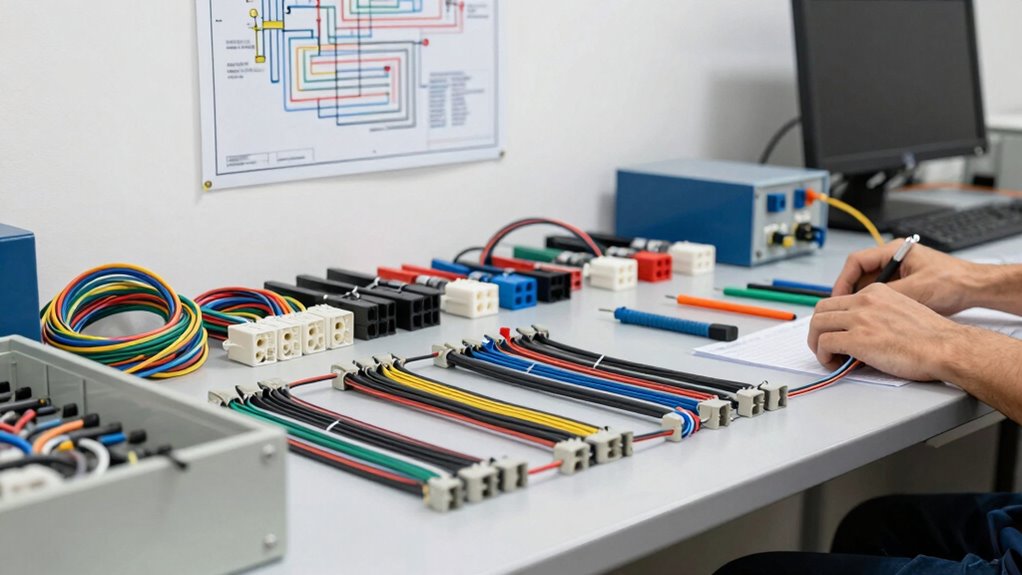
Before final assembly, it’s vital to test your wiring thoroughly to catch any issues early. Use proper verification tools like multimeters or continuity testers to guarantee connections are solid. Taking these steps saves time and prevents potential failures down the line. Additionally, understanding herbal teas and their effects can help you select suitable options if you wish to incorporate relaxation techniques during your testing process.
Conduct Thorough Testing
Conducting thorough testing is essential to guarantee your wiring functions correctly and safely. Begin by checking all connections for proper placement and secure contacts. Verify sensor calibration to ensure accurate readings and reliable operation. Follow safety protocols strictly to prevent electrical hazards during testing. Use a multimeter to measure voltages and resistance, confirming that signals are within expected ranges. Test control circuits individually before integrating them into the system. Look for any wiring errors, shorts, or open circuits, and correct them immediately. Document all test results for future reference and troubleshooting. Testing procedures help catch issues early, reducing the risk of system failure or safety incidents after final assembly. Proper testing ensures your automation wiring is both reliable and safe from the outset.
Use Proper Verification Tools
Using proper verification tools is essential to guarantee your wiring is accurate and safe before final assembly. Circuit simulation allows you to model your control system virtually, catching potential errors early. This step helps validate wiring logic and identify issues before physical setup, saving time and reducing rework. Voltage testing is equally important; by measuring voltage levels at various points, you confirm correct connections and proper power flow. These tests ensure that switches, relays, and sensors operate as intended, preventing costly mistakes later. Employing these verification tools gives you confidence that your wiring is reliable, minimizing risks of shorts or malfunctions. Always verify with circuit simulation and voltage testing before final assembly to ensure your automation controls work flawlessly and safely.
Maintain and Update Your Wiring Plan for Long-Term Reliability
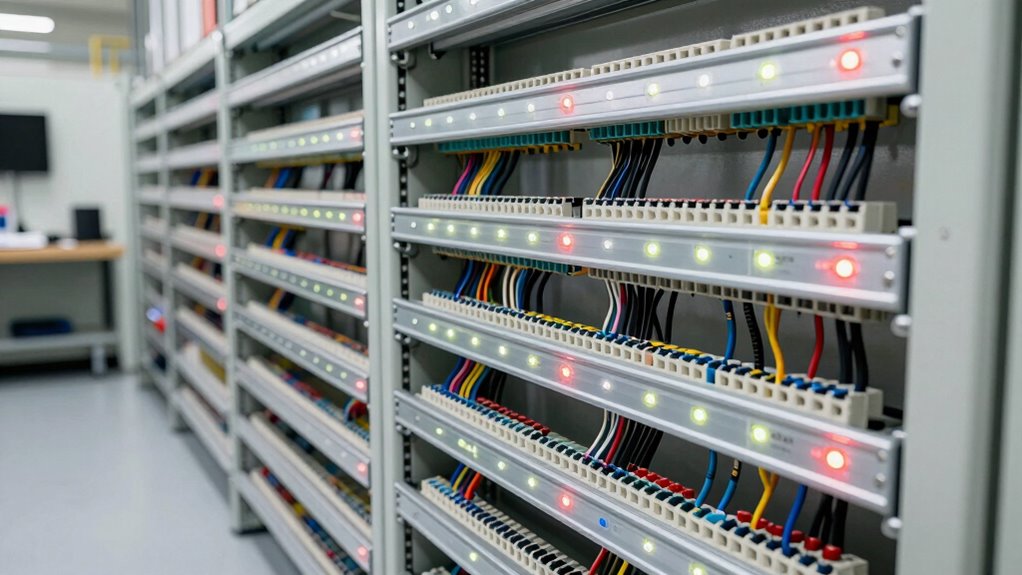
To guarantee your wiring system remains reliable over time, it’s essential to regularly maintain and update your wiring plan. This ensures your cable management stays organized and minimizes downtime. Start by reviewing your current wiring layout for any signs of wear or disorganization. Keep labeling standards consistent to make future troubleshooting easier. Update documentation whenever you add or change connections to prevent confusion. Regularly inspect cable routes to identify potential issues early. Keep your wiring plan current to adapt to evolving system requirements.
Regularly review and update your wiring plan to ensure ongoing reliability and organization.
- Reassess cable management to prevent tangles and damage
- Update labels following established standards
- Document all modifications promptly
- Check for loose or damaged connections
- Schedule periodic reviews for ongoing reliability
Frequently Asked Questions
What Tools Are Best for Automation Wiring Projects?
For automation wiring projects, you should use tools like wire strippers, crimping tools, and cable management accessories to guarantee a clean setup. These help you handle different connector types efficiently and keep cables organized. Investing in label makers and cable ties also simplifies troubleshooting and maintenance, preventing a spaghetti mess. With the right tools, you can create a neat, reliable wiring system that’s easier to troubleshoot and modify later.
How Do I Prevent Electrical Interference in Wiring?
In a previous project, I prevented interference by implementing proper grounding techniques and shielding methods. You should guarantee all cables are grounded securely and use shielded cables, especially near motors or heavy machinery. Keep power and signal cables separated, and route them away from potential interference sources. These steps minimize electrical noise, ensuring reliable communication and operation throughout your automation system.
What Safety Precautions Should I Follow During Wiring?
You should always prioritize safety during wiring by following proper grounding techniques and using consistent color coding. Make certain all equipment is properly grounded to prevent electrical shock or damage. Use color-coded wires to identify circuits easily and avoid mistakes. Turn off power before working, wear protective gear, and double-check connections. These precautions help maintain safety, reduce errors, and ensure reliable operation of your automation system.
How Often Should I Review and Update My Wiring Plan?
Like tending a garden, you should review and update your wiring plan regularly. Typically, check your wiring documentation every year or after significant changes to guarantee safety and efficiency. This plan revision frequency helps prevent chaos and keeps your system running smoothly. By staying proactive, you catch potential issues early, maintaining a clear, organized wiring layout that’s easy to manage and troubleshoot.
What Are Common Wiring Mistakes to Avoid?
You should avoid common wiring mistakes like neglecting proper grounding and ignoring color coding. Grounding issues can cause safety hazards and equipment damage, so verify all grounds are correctly connected. Use consistent color coding for wires to prevent confusion during maintenance or troubleshooting. Double-check connections and follow wiring standards to keep your control system safe, organized, and easy to troubleshoot, reducing potential errors and equipment failures.
Conclusion
By planning your automation wiring carefully, you can reduce setup time by up to 30% and minimize troubleshooting headaches. A clear, organized wiring system not only saves you time but also enhances safety and reliability. Remember, a well-designed wiring plan now can prevent costly errors later. Investing a little effort upfront makes your automation system more manageable and efficient—saving you hours and headaches in the long run.