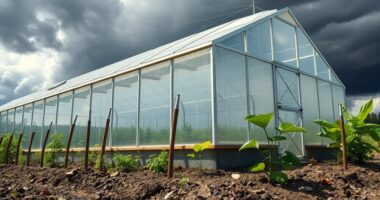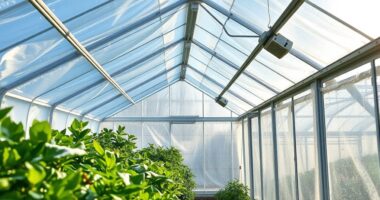
To plan your greenhouse’s electrical system, start by evaluating your energy needs for lighting, fans, and heating. Incorporate solar panels to reduce reliance on the grid and guarantee you size them correctly for year-round use. Organize wiring safely with weatherproof conduits, grounding, and dedicated circuits. Place outlets and switches strategically for convenience and efficiency. Using smart controls can optimize power use and protect equipment. Keep safety and future expansion in mind to build a reliable, eco-friendly system that lasts.
Key Takeaways
- Assess your greenhouse’s energy needs for lighting, fans, watering, and heating to determine the required power capacity.
- Plan electrical wiring with proper grounding, weatherproof conduit, and organized layout to ensure safety and ease of maintenance.
- Place outlets and switches strategically for accessibility, and use energy-efficient LED grow lights and appliances.
- Incorporate automation devices like timers, thermostats, and moisture sensors to optimize environmental control.
- Design the electrical system for future expansion, efficiency, and sustainability, integrating solar power for renewable energy.
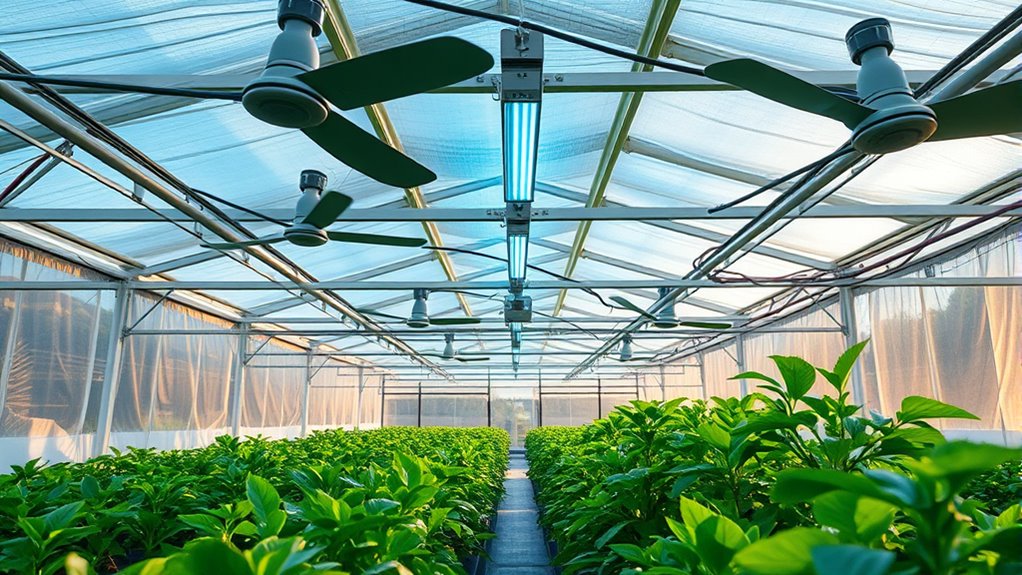
Planning for electricity in your greenhouse is vital to make certain your plants thrive year-round. Whether you’re growing vegetables, flowers, or exotic plants, having a reliable power setup ensures your environment stays ideal. One of the best ways to power your greenhouse efficiently is by integrating solar power. Solar panels harness sunlight, providing a clean, renewable energy source that can substantially reduce your reliance on the grid and lower energy costs over time. Before installing solar power, you need to carefully assess your energy needs, including lighting, fans, watering systems, and heaters. Once you have a clear estimate, you can determine the size and number of solar panels required to meet your demands. Proper planning guarantees that your system will generate enough electricity, even during cloudy days or shorter winter daylight hours.
Solar power is an efficient, eco-friendly way to energize your greenhouse year-round.
While solar power is a great option, it’s equally important to focus on your electrical wiring. Good wiring practices guarantee safety and efficiency. You should plan your wiring layout carefully, ensuring that all electrical components are properly grounded and protected from moisture, which is plentiful in greenhouse environments. Use weatherproof conduit and connectors to safeguard your wiring from corrosion and damage. Running electrical wiring from your power source to various fixtures—lights, fans, heaters—should be organized neatly to prevent hazards and make future upgrades easier. It’s wise to install a dedicated circuit for your greenhouse, so that overloads won’t trip your main household breaker. Additionally, consider incorporating power management tools to optimize energy use and prevent overloads.
When planning your electrical wiring, consider the placement of outlets and switches, aiming for easy access and minimal disruption to your plants. For lighting, choose energy-efficient LED grow lights, which consume less power and produce less heat, helping maintain suitable temperatures. Fans are essential for air circulation and temperature regulation, especially during hot days; ensure you have enough outlets to power multiple fans if necessary. For heating, electric heaters can be plugged into dedicated circuits or powered via your solar setup, if capacity allows.
Additionally, think about automation options—timers, thermostats, and moisture sensors—that can connect to your electrical wiring. These devices help maintain ideal growing conditions without constant manual adjustments. Planning your electrical system thoughtfully ensures safety, efficiency, and flexibility, giving you peace of mind and supporting healthy plant growth. With a well-designed setup, your greenhouse can operate smoothly every season, all while reducing energy costs and environmental impact.
Frequently Asked Questions
What Are the Latest Energy-Efficient Lighting Options for Greenhouses?
You should consider LED growlights and solar-powered fixtures for the latest energy-efficient options in your greenhouse. LED growlights provide bright, targeted lighting while consuming less electricity and producing less heat, making them ideal for plant growth. Solar-powered fixtures harness sunlight, reducing your energy bills and carbon footprint. Together, these options help optimize plant health and save energy, ensuring a sustainable and cost-effective greenhouse operation.
How Can I Calculate the Total Electricity Load for My Greenhouse?
To calculate your greenhouse’s total electricity load, start with an electrical load calculation by listing all equipment, such as lights, fans, and heaters. Estimate each item’s power consumption in watts, then multiply by their daily usage hours to get daily energy use. Add these values to find the total power consumption estimation, which helps you determine the overall electrical load needed. This guarantees your system supports your greenhouse efficiently and safely.
Are There Government Incentives for Renewable Energy Installations in Greenhouses?
Are you aware that government incentives can help you save on renewable energy? You might qualify for solar rebates or federal tax credits that reduce installation costs for your greenhouse. These programs are designed to encourage sustainable practices and make renewable energy more accessible. Check with local and federal agencies to see what incentives are available in your area, so you can maximize your savings while powering your greenhouse sustainably.
What Safety Precautions Should I Take When Installing Electrical Systems Outdoors?
When installing electrical systems outdoors, you should prioritize safety by following proper grounding practices to prevent shocks. Use weatherproofing methods, like sealed boxes and outdoor-rated cables, to protect components from moisture and weather damage. Always turn off power before working, and double-check connections. Consider consulting a professional to ensure installations meet local codes and standards, reducing risks and ensuring long-term safe operation of your outdoor electrical system.
How Do I Plan for Backup Power During Outages?
To plan for outages, you should consider battery backups and generator sizing. Install battery backups for critical systems like fans and lighting, ensuring continuous operation. Assess your greenhouse’s power needs to determine the right generator size, so it can handle peak loads during outages. Regularly test your backup systems and keep fuel or batteries replenished. This way, your greenhouse stays operational, even during power interruptions.
Conclusion
By carefully planning your greenhouse’s electrical system, you guarantee everything runs smoothly—like a well-orchestrated symphony. From lighting to fans, attention to detail keeps your plants happy and healthy. Remember, neglecting this step is like trying to sail without a compass—you’re bound to get lost. So, take your time, plan thoroughly, and create a reliable, efficient setup. Your green oasis will flourish, shining bright like a diamond in the rough.