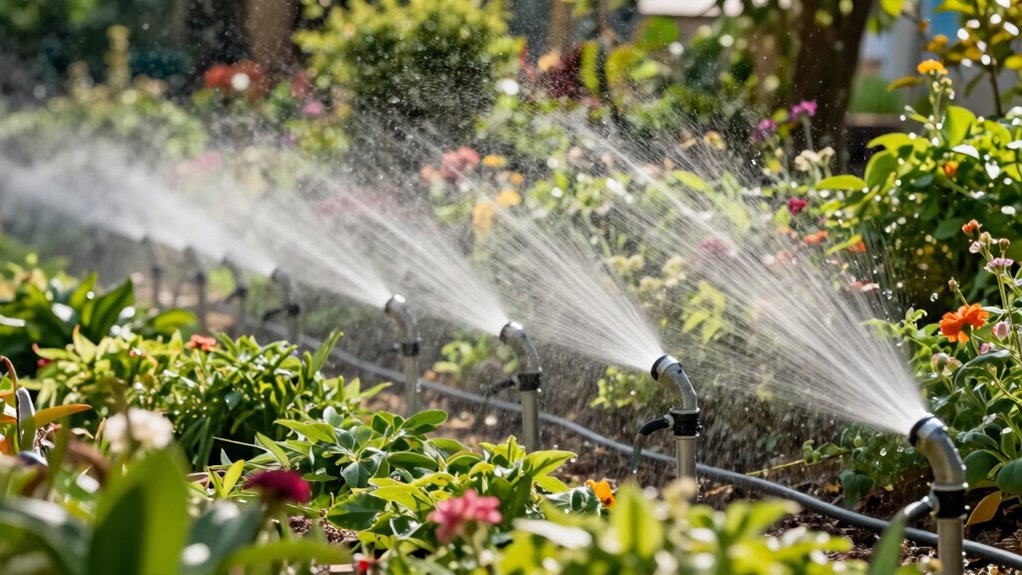

To guarantee real coverage, position your nozzles evenly along your misting line, considering spray angles and overlap zones to avoid dry spots. Mount nozzles at appropriate heights above the soil or plants, aiming for uniform mist distribution across high-traffic, sensitive, and hidden areas. Avoid clustering or obstructions, and make sure the spray overlaps slightly for even watering. If you want detailed tips on perfect nozzle placement, keep exploring to optimize your system’s efficiency.
Key Takeaways
- Mount nozzles at heights that allow mist to drift over targeted plant surfaces and pest-prone areas effectively.
- Space nozzles evenly with slight overlap to ensure uniform mist coverage and prevent dry patches.
- Position nozzles to avoid obstructions, ensuring airflow and proper spray dispersion across the intended zones.
- Prioritize high-traffic, sensitive, and pest-prone zones for nozzle placement to maintain consistent soil moisture and plant health.
- Adjust nozzle angles and placement based on soil moisture readings and visual coverage for optimal mist distribution.
Why Proper Nozzle Placement Is Key to a Successful Misting System

Proper nozzle placement is essential for guaranteeing your misting system works effectively. When you position nozzles correctly, you promote even coverage, which helps maintain ideal soil moisture levels. This is similar to drip irrigation, where precise delivery prevents dry spots and overwatering. If nozzles are too close or too far apart, you risk uneven water distribution, leading to stressed plants or wasted water. Proper placement also minimizes mist drift and runoff, making your system more efficient. Think of it as creating a balanced watering pattern that adapts to your space’s needs. By paying attention to nozzle positioning, you ensure each plant receives the right amount of moisture, supporting healthy growth and conserving water. Ultimately, good nozzle placement is the foundation of a reliable, effective misting system.
Assess Your Space: Measure and Map for Even Coverage
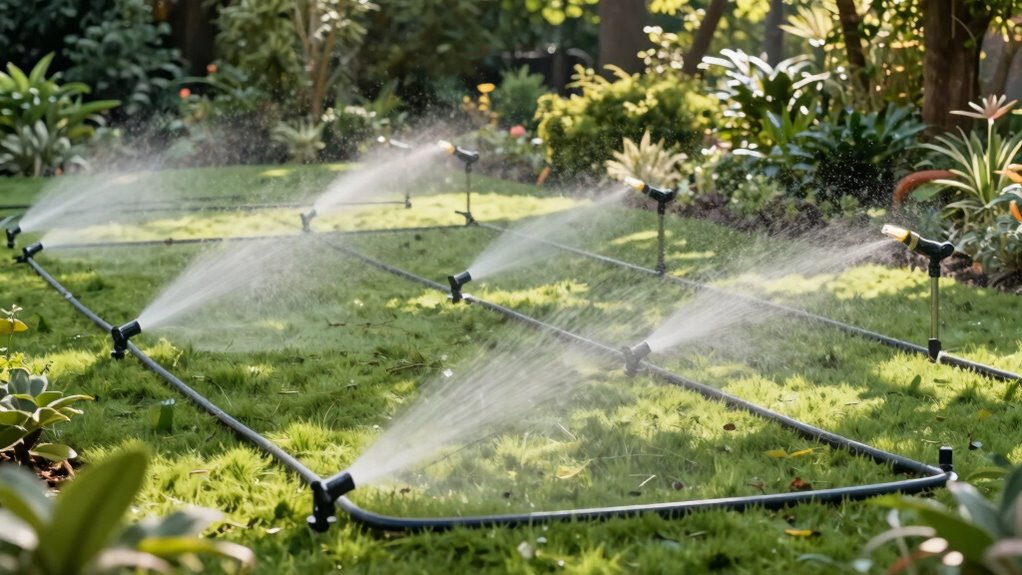
Start by measuring your space carefully to understand its dimensions. Next, create a detailed map of where your nozzles will go, ensuring even coverage across the area. Finally, identify any potential coverage gaps so you can adjust your layout for ideal mist distribution. For outdoor setups, consider the water resistance of your nozzles and equipment to ensure durability in varying weather conditions.
Measure Space Dimensions
Have you accurately gauged your space yet? Precise measurements are essential to ensure even coverage with your misting system. Start by measuring the length and width of the area you want to water, noting any irregular shapes. This helps you plan the layout effectively, avoiding dry spots or oversaturation. Keep soil moisture in mind, as uneven terrain or compacted soil can affect how water distributes. Using a tape measure or laser device can improve accuracy. Remember, proper measurement also helps determine the right drip irrigation components and nozzle placement. Taking the time to map out your space ensures your misting line operates efficiently, conserving water and promoting healthy plant growth. Color accuracy is crucial for assessing how well your system distributes water evenly across different areas.
Map Nozzle Placement
Wondering where to place your nozzles for ideal coverage? Start by mapping your space, noting key areas that need consistent moisture. Use a tape measure to mark designated spots, ensuring even spacing between nozzles. Position each nozzle so its spray overlaps with neighboring ones, avoiding dry patches. Keep in mind that drip emitters attached nearby can help maintain soil moisture levels precisely where plants need it most. Avoid placing nozzles too close to roots or uneven terrain, which could cause uneven coverage. Use your soil moisture readings to guide placement, ensuring each zone receives adequate watering. Proper mapping helps you visualize coverage, prevent dry spots, and optimize your misting line’s efficiency. Proper planning and careful placement will help you achieve uniform watering and healthier plants.
Identify Coverage Gaps
To guarantee your misting system provides uniform coverage, it’s essential to identify any gaps in your setup. Start by inspecting your drip line layout and checking for uneven spray patterns or dry spots. Use a soil moisture meter to measure moisture levels across different areas of your space, paying close attention to spots that seem under-watered. Mapping these areas helps you pinpoint coverage gaps and adjust nozzle placement or add additional nozzles where needed. Be sure to observe how the mist interacts with the soil moisture levels, ensuring even distribution. Addressing these gaps early prevents dry patches and guarantees consistent humidity. Regularly evaluating soil moisture and reviewing your drip line layout keeps your misting system functioning efficiently and delivers the full coverage your space requires. Understanding reliable, well-researched methods ensures your system remains effective over time.
Identify the Most Important Areas to Cover
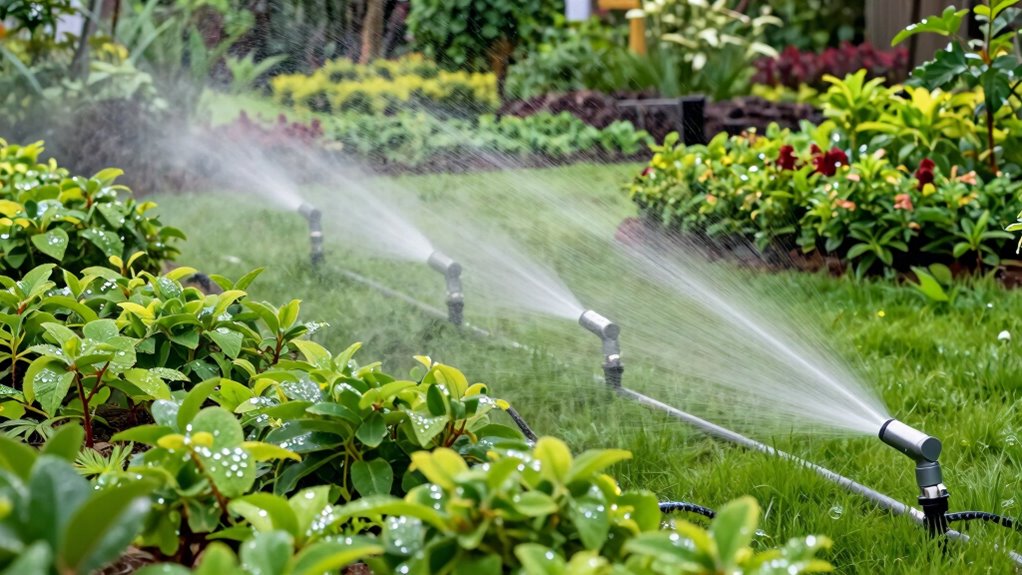
You need to prioritize your misting coverage on high-traffic garden zones and sensitive plant areas. These spots require more consistent moisture to stay healthy and thriving. Focus your layout on these key areas to guarantee ideal growth and protection. Proper art care practices can further enhance plant health and longevity.
High-traffic Garden Zones
High-traffic garden zones are the areas that receive the most foot traffic and, consequently, need the most consistent and thorough watering. These spots experience frequent soil moisture loss and are more affected by wind effects, which can dry out plants quickly. To guarantee proper coverage, mount nozzles where foot traffic is highest, typically along pathways or near seating areas. Use the following layout as a guide:
| Zone | Nozzle Placement | Key Consideration |
|---|---|---|
| Pathways | Near edges, facing inward | Reduce wind effects |
| Entrance | Directly overhead | Maintain soil moisture |
| Sitting Areas | Close to ground level | Minimize runoff |
| Play Zones | Slightly elevated | Maximize coverage |
| Garden Edges | Slightly angled | Prevent dry patches |
Prioritize these areas for thorough misting to ensure consistent soil moisture and mitigate wind effects. Additionally, consider proper nozzle placement to optimize coverage and watering efficiency.
Sensitive Plant Areas
Have you considered which areas host the most delicate or vulnerable plants? These sensitive zones require careful attention to guarantee proper moisture levels. Nozzles should be strategically mounted to provide even coverage, especially where drip irrigation alone might not reach. Maintaining consistent soil moisture is vital for fragile plants, preventing stress or disease. Focus on mounting nozzles close to the root zones of these plants, avoiding dry spots or overly saturated areas. By monitoring soil moisture regularly, you can adjust the misting to meet their specific needs. Remember, these vulnerable plants often need more precise watering than hardy species, so placing nozzles thoughtfully is essential for their health and longevity. Proper coverage guarantees they thrive without risking over- or under-watering. Utilizing smart irrigation systems can further optimize watering schedules based on real-time soil moisture data.
Choose the Right Nozzles and Mounting Heights for Your Needs
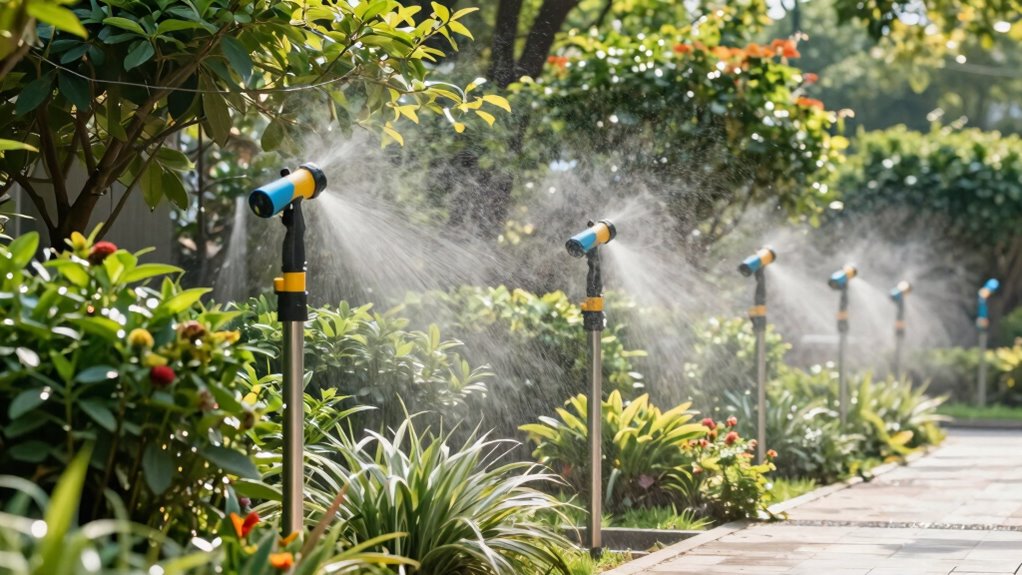
Selecting the right nozzles and mounting heights is essential to achieving effective misting coverage. The nozzle’s spray angle determines how wide or narrow the mist disperses, impacting coverage. For broader areas, choose nozzles with a wider spray angle; for targeted spots, a narrower angle works best. Mounting height influences droplet size and distribution—too high, and coverage becomes uneven; too low, and it may cause oversaturation. Use drip emitters to control flow and ensure consistent watering. Here’s a quick guide: Free Floating is a technique that can be incorporated into misting systems to optimize coverage and water efficiency.
Plan Your Misting Line for Optimal Coverage and Water Efficiency
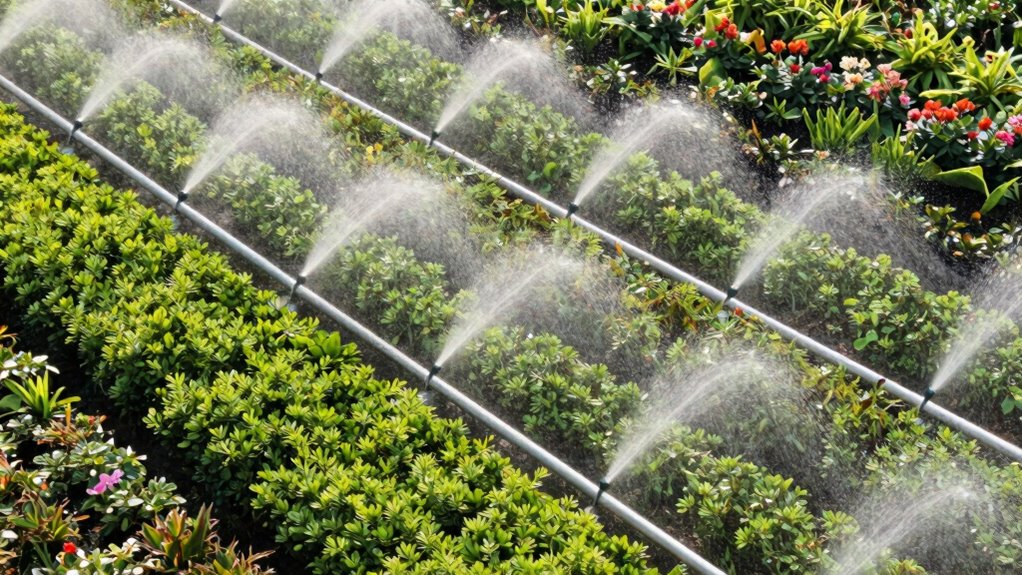
To achieve ideal coverage and water efficiency, planning your misting line carefully is key. Start by mapping out your area and considering existing irrigation systems like drip irrigation or sprinkler systems. Use this as a guide to determine where to place nozzles for even distribution. Keep in mind that overlapping spray zones prevent dry spots and ensure full coverage. Avoid unnecessary lengthening of the line, which can lead to water waste and pressure issues. Space nozzles appropriately, considering flow rates and pressure regulation. Incorporate pressure regulators if needed, to maintain consistent misting. Proper planning minimizes water usage while maximizing effective cooling or humidification. Additionally, integrating smart home technology can help monitor and adjust water flow for optimal performance. With a thorough layout, your misting system becomes both efficient and reliable, saving water and enhancing coverage.
Where and How to Mount Nozzles for Cooling and Shade
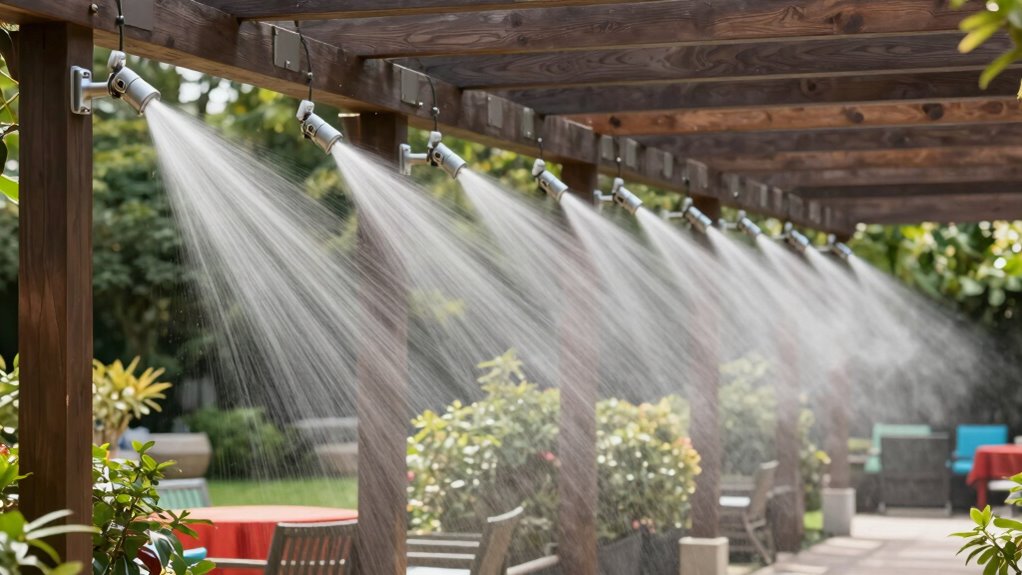
Properly mounting nozzles is essential for effective cooling and shade, ensuring that mist reaches the targeted areas without unnecessary waste. You should position nozzles where airflow and coverage are maximized, avoiding obstructions that block the mist. Think of sprinkler positioning similar to drip irrigation—aim for even distribution while avoiding oversaturation. Mount nozzles at a height that allows the mist to drift naturally over the desired shaded area, typically just above foliage or open spaces. Use sturdy brackets to secure nozzles firmly, preventing misalignment. Keep in mind that the goal is to create a uniform mist curtain, so avoid clustering nozzles too close together. Proper placement enhances cooling efficiency and conserves water, giving you the best shade and comfort. Additionally, considering robotic irrigation systems can improve the precision and efficiency of your misting setup.
How to Position Nozzles for Garden and Pest Control Effectiveness
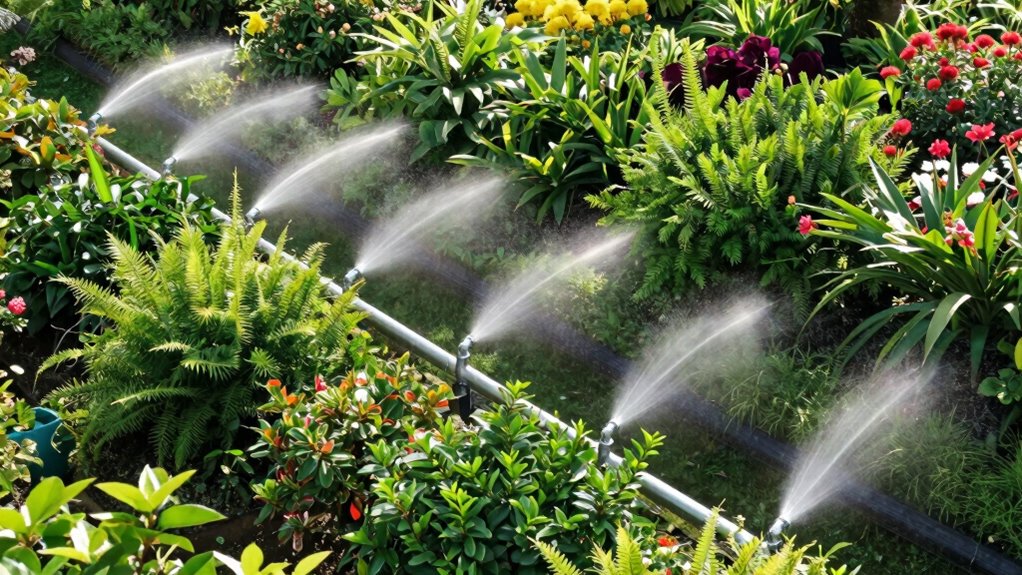
Positioning nozzles correctly is essential for maximizing the effectiveness of garden and pest control treatments. To guarantee thorough coverage, place nozzles where the mist can reach all plant surfaces and pest-prone areas. Proper placement helps prevent missed spots and reduces the need for repeat applications. Consider integrating your misting system with drip irrigation lines to deliver fertilizers directly to roots, enhancing plant health and pest resistance. Adjust nozzle angles and heights to target specific zones, focusing on problem areas without oversaturating. Consistent, well-planned placement ensures even distribution of pest control agents and nutrients, making your treatments more efficient. Avoid misplacing nozzles where wind or obstructions can reduce spray effectiveness, and always test the coverage before full deployment.
Avoid Common Mistake: Overlapping Nozzles and Coverage Gaps
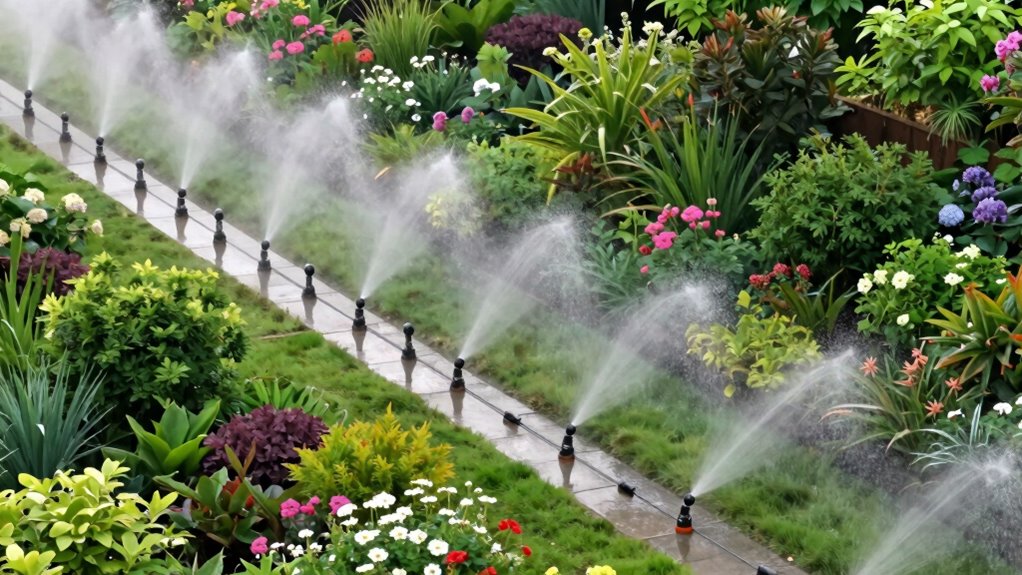
To guarantee even coverage, you need to focus on proper nozzle spacing so the mist overlaps just enough without causing excessive wetting. Maintaining consistent spray patterns helps prevent gaps or overly dense areas in your misting line. Pay close attention to these points to avoid common mistakes and improve your system’s efficiency.
Proper Nozzle Spacing
Ensuring correct nozzle spacing is essential to achieve even mist coverage without wasting water or creating dry spots. You want to position nozzles so that their spray patterns overlap slightly, avoiding gaps that leave soil moisture uneven. Placing nozzles too close causes excessive overlap, leading to overwatering and runoff, while spacing them too far apart risks dry patches. Measure carefully based on the spray radius, considering the soil moisture needs of your plants. Use drip emitters as a reference point to gauge how far mist should extend, ensuring consistent coverage. Proper spacing maintains ideal soil moisture, promoting healthy growth. Take the time to plan your layout, adjusting distances as needed to prevent dry spots and overwatering, ultimately creating a more efficient and effective misting system.
Consistent Spray Patterns
Achieving consistent spray patterns is key to a well-functioning misting system, but it’s easy to fall into the trap of over-overlapping nozzles or leaving coverage gaps. When nozzles overlap excessively, you risk uneven soil moisture and water waste, which can harm plants or promote disease. Conversely, gaps in coverage leave areas under-watered, stressing your plants and compromising growth. To prevent this, carefully plan your nozzle placement, ensuring even spacing and proper spray angles. Use drip irrigation principles to maintain uniform distribution, avoiding zones of excess or deficiency. Regularly check the spray patterns during operation, adjusting nozzles if needed. Consistent coverage helps maintain ideal soil moisture levels, promoting healthy plant development and efficient water use.
Fine-Tune Your Nozzle Placement After Installation
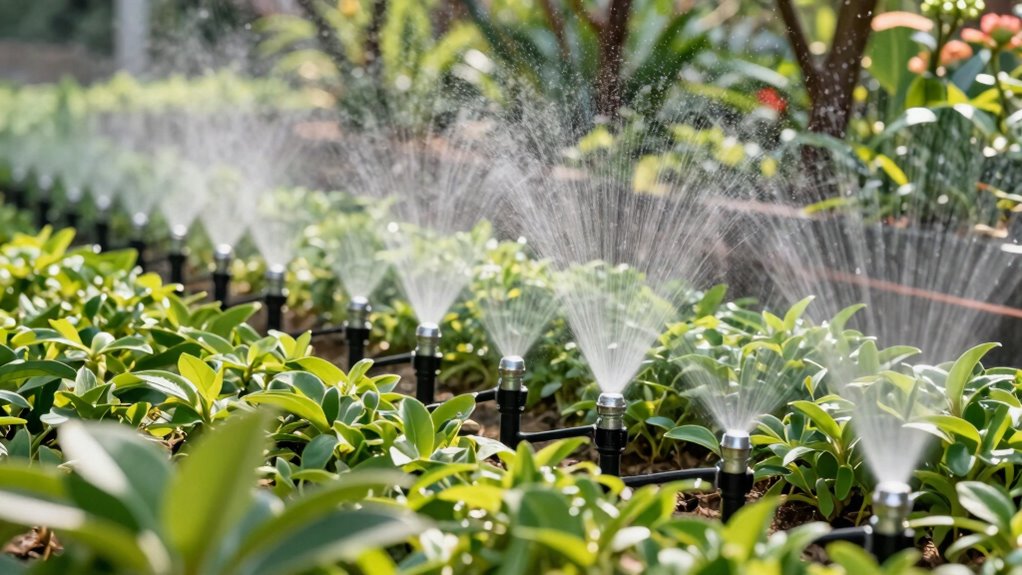
After installing your misting lines, it’s crucial to fine-tune your nozzle placement to guarantee ideal coverage. Start by inspecting your drip emitter placement to ensure nozzles are positioned where they can evenly distribute mist across your target area. Adjust the hose routing if necessary to eliminate any kinks or sharp bends that could restrict flow or cause uneven spray patterns. Check that nozzles are aligned properly and not obstructed by nearby objects. It’s helpful to run the system briefly and observe the spray coverage, making small positional tweaks as needed. Proper hose routing prevents unnecessary pressure loss, ensuring consistent mist delivery. Fine-tuning your nozzle placement after installation helps achieve the best coverage, efficiency, and water distribution for your misting system.
Troubleshoot Coverage Problems and Reconfigure Your System
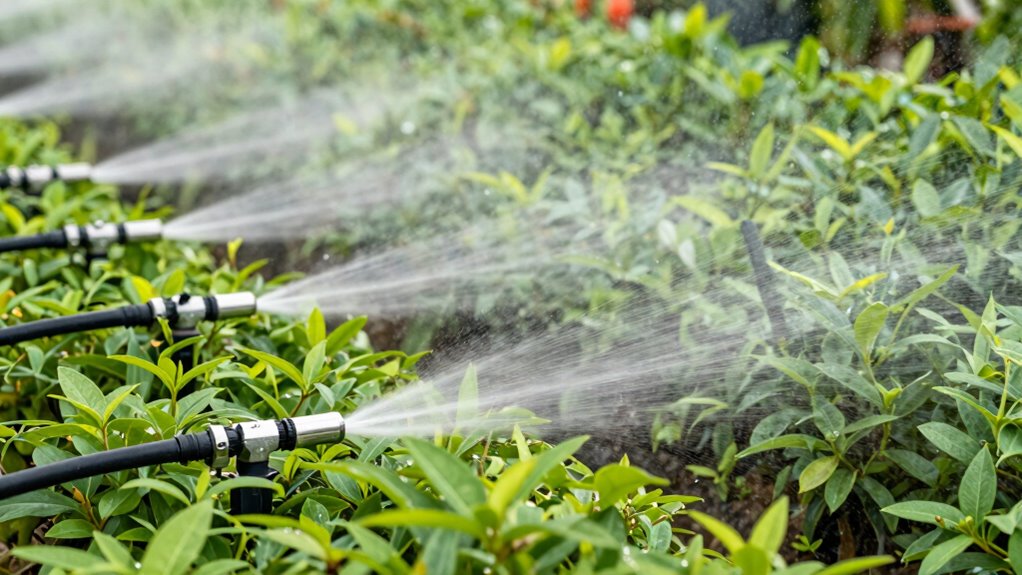
If you notice uneven mist coverage or dry spots despite proper nozzle placement, it’s time to troubleshoot your system. First, check your drip irrigation supply for clogged emitters or leaks that reduce pressure, affecting mist distribution. Adjust nozzle angles or replace damaged nozzles to improve coverage. Consider your soil moisture levels—dry patches may indicate insufficient mist or uneven distribution. Reconfigure your layout by repositioning nozzles to target dry areas specifically. Here’s an idea of typical coverage zones:
| Nozzle Position | Soil Moisture Level | Coverage Area |
|---|---|---|
| Corner | Dry | Limited, uneven |
| Center | Moist | Consistent, full |
| Edge | Dry | Patchy, sparse |
| Midpoint | Moist | Ideal, even |
| Perimeter | Slightly dry | Partial, needs fix |
Frequently Asked Questions
How Do Wind Conditions Affect Nozzle Placement Decisions?
Wind conditions considerably impact your nozzle placement decisions, as wind drift can cause mist to stray from its target area. To minimize drift, you should adjust nozzle height to higher positions where wind is less turbulent, ensuring better coverage. When wind is strong, position nozzles to reduce exposure to gusts, and consider using wind-resistant nozzles. This way, you achieve effective coverage despite changing wind conditions.
What Safety Considerations Are Necessary When Mounting Nozzles?
When mounting nozzles, you need to prioritize safety. Always wear proper safety gear, including gloves and eye protection, to prevent injuries. Confirm electrical safety by turning off power sources before installation and avoiding contact with live wires. Mount nozzles securely to prevent accidents, and check for stable support structures. Follow safety protocols diligently, so you protect yourself and ensure the misting system operates safely and effectively.
Can Adjustable Nozzles Improve Coverage Flexibility?
Yes, adjustable nozzles can improve coverage flexibility by allowing you to modify spray patterns and flow rates. With variable flow options, you can fine-tune mist output to suit different areas, while fixed-angle nozzles provide consistent coverage. By using adjustable nozzles, you gain greater control over your system, ensuring even distribution and peak efficiency across various conditions and spaces.
How Often Should Nozzle Positions Be Reevaluated?
You should reevaluate your nozzle positions whenever you notice uneven coverage or changes in your system, such as a clogged drip emitter or variations in pipe diameter. Regular checks, ideally every few months, keep your system optimized. Changes in pressure, plant growth, or debris can affect performance, so stay vigilant. Don’t wait for problems to worsen—your misting system’s efficiency depends on timely adjustments and consistent monitoring.
What Are the Best Mounting Techniques for Uneven Surfaces?
When mounting nozzles on uneven surfaces, you should use adjustable brackets or clamps that accommodate surface irregularities, ensuring mounting stability. Secure nozzles firmly to prevent movement caused by uneven terrain or vibrations. Consider adding shims or flexible mounting arms to improve stability and alignment. This approach helps maintain effective mist coverage, even on challenging surfaces, and reduces the risk of misalignment or damage over time.
Conclusion
By carefully planning your misting line layout, you’ll guarantee every corner is covered efficiently. Don’t worry if it takes some tweaking—imagine your garden thriving with evenly distributed moisture, pests kept at bay, and water saved. With thoughtful nozzle placement, you’ll see how a well-designed system transforms your space into a lush, healthy oasis. Trust the process, adjust as needed, and enjoy the beautiful results of your perfectly misted haven.