To keep your rainwater plumbing clean and mosquito-free, guarantee you install proper filters like mesh screens, secure lids on storage tanks, and regularly maintain gutters and downspouts to prevent debris buildup. Use opaque containers to inhibit algae growth and prevent mosquitoes from breeding. Proper pipe sizing, secure fittings, and routine inspections also help maintain water quality over time. If you want to learn how to set up a safe, algae and mosquito-resistant system, keep exploring these essential tips.
Listen free for 30 days with Audible
Thousands of audiobooks and originals — cancel anytime.
As an affiliate, we earn on qualifying purchases.
Key Takeaways
- Install secure, opaque lids and covers on storage tanks to prevent mosquito breeding and algae growth.
- Use corrosion-resistant, properly sized pipes and secure fittings to ensure leak-free, clean water flow.
- Incorporate mesh screens and filters at entry points to block debris, pests, and prevent contamination.
- Maintain gutters and downspouts regularly, ensuring proper slope and free flow away from the foundation.
- Conduct routine inspections and cleaning of the entire system to prevent blockages, leaks, algae, and mosquito habitats.

Wells Lamont Women's PU Coated Grip Gardening Gloves 3-Pack, Medium
- Breathable Polyester Shell: Ensures dry, comfortable hands
- PU-Coated Palm for Grip: Provides secure, slip-resistant hold
- Ergonomic Fit: Enhances dexterity and control
As an affiliate, we earn on qualifying purchases.
Why Proper Plumbing Is Essential for Safe Rainwater Harvesting
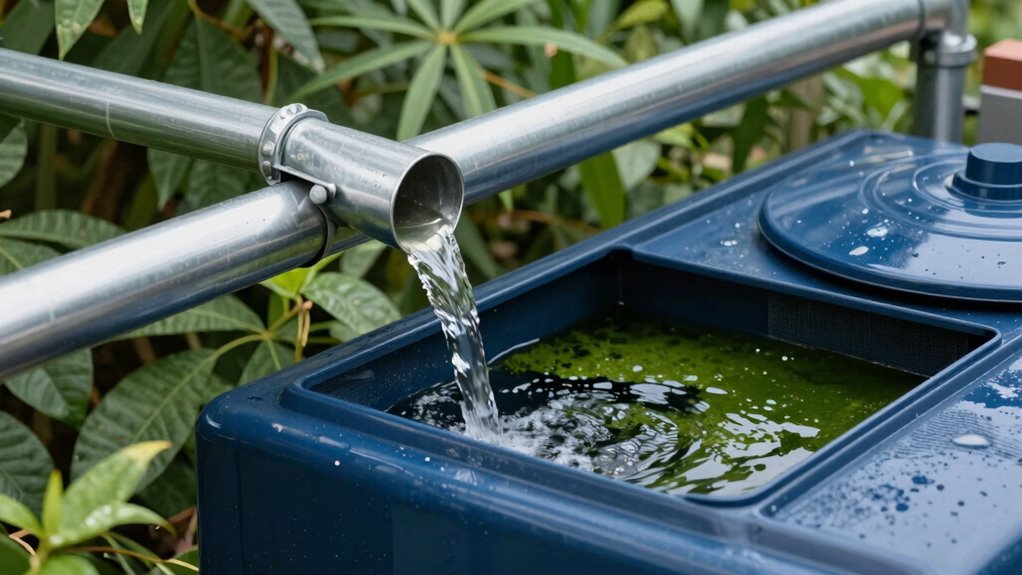
Proper plumbing is essential for safe rainwater harvesting because it guarantees that the water you collect remains clean and free from contaminants. High-quality rainwater depends on maintaining good rainwater quality throughout the system, which starts with durable, well-designed plumbing. Durable plumbing prevents leaks, blockages, and contamination sources that could compromise water safety. Using corrosion-resistant materials ensures your system remains intact over time, reducing the risk of debris or pollutants entering your storage tanks. Properly installed plumbing minimizes the chances of backflow, mosquito breeding, or algae growth, all of which can harm water quality. When your plumbing is reliable and resilient, you protect your harvest from potential hazards, ensuring the water stays safe for use and that your rainwater harvesting system works efficiently for years. Implementing innovative European cloud solutions can help monitor and manage your system remotely, ensuring optimal performance and safety.
How to Choose the Right Filtration System to Keep Water Clean

Choosing the right filtration system is essential because it directly impacts the quality of the rainwater you collect. You’ll want to contemplate various filtration options, such as mesh screens, sand filters, or activated carbon filters, depending on your water purification needs. Mesh screens are great for removing large debris and leaves, while sand filters help eliminate smaller particles. Activated carbon filters improve water clarity and reduce odors. Think about your water’s intended use—if you plan to use rainwater for drinking, invest in more advanced filtration options. Proper filtration minimizes contaminants and prevents algae buildup, ensuring your water stays clean and safe. Additionally, selecting a properly maintained filtration system is crucial for ongoing water quality and system efficiency. Selecting an appropriate system tailored to your setup will save you time and effort in maintaining water quality.
Setting Up Secure Storage to Prevent Mosquitoes and Contamination

To keep your rainwater safe and mosquito-free, you need to guarantee your storage is properly secured. Installing a secure lid and using covered containers help prevent pests and debris from getting in. Regular maintenance checks will keep your system functioning properly and prevent contamination. Incorporating multi-functional gear into your setup can also streamline your storage solutions and ensure efficiency.
Secure Lid Installation
Installing a secure lid on your rainwater storage tank is crucial to keep out mosquitoes and prevent contamination. Proper lid sealing guarantees that debris, insects, and dirt can’t enter the tank, maintaining water quality. Make sure the lid fits tightly and is made from durable, weather-resistant material to withstand the elements. Check for gaps or cracks regularly and reseal or replace the lid as needed. A well-sealed lid also helps reduce evaporation and keeps unwanted pests away. When installing, ensure the lid is secure but easy to remove for maintenance or cleaning. This simple step plays an essential role in protecting your rainwater supply, keeping it clean, safe, and ready for use without inviting algae, mosquitoes, or other contaminants. Additionally, selecting a lid with proper insulation can help regulate temperature and inhibit algae growth inside the tank.
Covered Storage Containers
Have you considered how your storage containers can prevent mosquitoes and contaminants from entering your rainwater supply? Covered storage containers are essential for maintaining clean rainwater storage. A secure lid keeps out insects, debris, and dirt, reducing the risk of mosquito breeding and contamination. Guarantee your containers fit tightly and are designed for outdoor use. Regular container maintenance is key—check for cracks, clean the interior, and remove any debris that could harbor bacteria or larvae. Using opaque containers also helps prevent algae growth by limiting sunlight exposure. Properly ventilated storage options can also help control humidity and reduce stagnant water issues that attract pests. By choosing the right covered storage options and maintaining them properly, you’ll keep your rainwater supply safe, clean, and ready for use while minimizing health risks.
Regular Maintenance Checks
Regular maintenance checks are essential to ensuring your rainwater storage remains secure and safe from mosquitoes and contaminants. In an urban landscape, where space is limited, staying vigilant helps prevent issues before they develop. Regularly inspect your storage containers and plumbing standards to identify any cracks, leaks, or debris buildup. Clean screens and inlet points to stop mosquitoes from breeding, and ensure lids are tightly secured to keep out pests and debris. Check that your overflow systems are functioning correctly, preventing standing water around the setup. Additionally, maintaining proper water quality standards helps ensure your rainwater remains safe for use. By establishing a routine, you reduce contamination risks and keep your rainwater clean. Consistent maintenance aligns with plumbing standards, guaranteeing your system remains efficient and safe for use. This proactive approach protects your water supply and maintains hygiene.
Installing Gutters and Downspouts for Optimal Water Flow
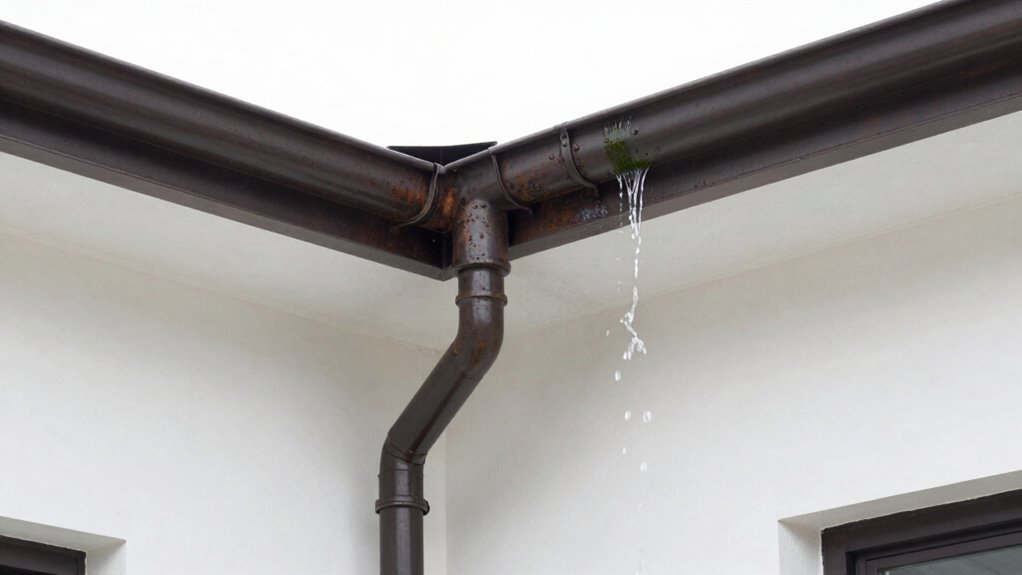
To guarantee your gutters and downspouts work effectively, you need to focus on proper placement and routing. Correctly positioned gutters will direct water away from your home’s foundation, while well-routed downspouts prevent pooling. When installed with these points in mind, your system will maintain ideal water flow and protect your property. Incorporating innovative planter designs can also help manage excess water runoff and reduce erosion around your home.
Proper Gutter Placement
Are you unsure how to position your gutters for maximum effectiveness? Proper gutter placement is key to guiding water away from your home and preventing debris buildup. Install gutters with a slight slope—about a quarter inch every 10 feet—to guarantee water flows smoothly toward downspouts. Position them so they extend beyond the roof edge, capturing as much runoff as possible. Avoid gaps or sagging sections that can cause water to pool or overflow. Keep gutters clear of debris to prevent clogging, which can lead to water spilling over and causing damage or mosquito breeding grounds. Regularly check the placement and condition of your gutters, especially after storms, to maintain ideal water flow and minimize maintenance needs. Proper gutter placement helps keep your home dry and reduces algae growth. Additionally, ensuring your gutters are correctly installed can deter mosquito breeding grounds, since standing water is a prime habitat for mosquitoes.
Downspout Routing Tips
Proper downspout routing is essential for directing water away from your foundation and preventing erosion or flooding. To achieve effective rainwater diversion, ensure your downspouts are aligned properly, guiding water smoothly toward designated drainage areas. Avoid sharp bends that can cause blockages or slow water flow. Instead, use gentle extensions or elbows to maintain a steady, unobstructed path. Position downspouts away from walkways and entrances to prevent pooling or slippery surfaces. Check that the outlet points direct water at least 3 to 4 feet from your home’s foundation. Keep the alignment consistent with your gutter slope to optimize flow and avoid water backup. Proper routing minimizes standing water, reduces mosquito breeding sites, and promotes a clean, efficient rainwater management system. Additionally, incorporating smart drainage solutions can help monitor water flow and prevent backups automatically.
Ensuring Water Flow
Installing gutters and downspouts correctly is essential for ensuring ideal water flow away from your home. Properly aligned gutters prevent overflow and direct water efficiently into downspouts. Use pipe insulation where necessary to prevent freezing and reduce noise, especially in colder climates. Regular valve maintenance ensures your system remains clear and functional, allowing smooth water flow. Check that downspouts are unobstructed and extend far enough from your foundation to avoid pooling. Secure all components firmly to prevent sagging or detachment during storms. Maintaining a clean and well-inspected system minimizes algae buildup and mosquito breeding sites. Proper water management is crucial for protecting your property’s foundation and overall safety. When installed properly, your gutters and downspouts will work effectively, guiding rainwater away from your home and protecting your property’s foundation.
Maintaining Your Rainwater Plumbing for Hygiene and Efficiency

Regular maintenance is essential to keep your rainwater plumbing hygienic and functioning efficiently. Proper upkeep prevents algae buildup, mosquito breeding, and blockages that can hamper plumbing efficiency. To maintain peak rainwater hygiene, consider:
- Regularly cleaning gutters and downspouts
- Inspecting and removing debris from filters and screens
- Flushing out storage tanks periodically
- Checking for leaks or cracks in pipes
- Adding biological or chemical treatments to prevent algae growth
These steps ensure your rainwater system stays clean and efficient, reducing health risks and conserving water. Consistent upkeep not only prevents contamination but also prolongs the lifespan of your plumbing. Staying proactive guarantees your rainwater harvest remains safe, hygienic, and fully operational, making your setup reliable and eco-friendly.
Common Mistakes to Avoid When Installing Rainwater Plumbing
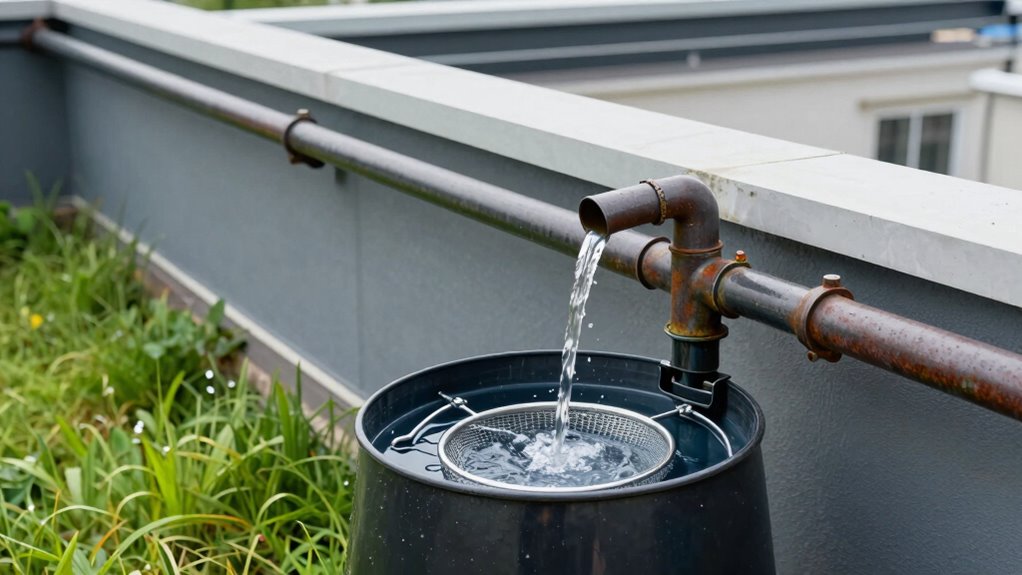
When setting up your rainwater plumbing system, overlooking common installation mistakes can lead to long-term issues like leaks, contamination, or inefficient water flow. One mistake is ignoring local rainwater harvesting regulations, which might require specific permits or standards. Failing to follow these rules can cause legal problems or system failures. Additionally, choosing the wrong materials can compromise your system’s eco-friendliness; avoid cheap or non-eco friendly pipe materials that may degrade or leach contaminants. Proper pipe sizing and secure fittings are vital to prevent leaks and blockages. Also, neglecting to install screens or covers invites mosquitoes and debris, risking contamination. Careful planning and adherence to regulations, along with selecting sustainable materials, ensure a safe, efficient, and eco-conscious rainwater system.
Troubleshooting Tips for Long-Term Safety and Performance

To guarantee your rainwater plumbing system stays safe and performs well over the long term, proactive troubleshooting is essential. Regular checks help prevent issues like pipe corrosion and water discoloration, which can compromise water quality. Keep an eye out for leaks or unusual smells that signal problems early. Ensure your filters are clean and free of debris. Inspect pipes for corrosion or buildup, replacing any damaged sections promptly. You should also monitor water clarity; discoloration might indicate rust or algae growth. Maintain proper drainage to avoid stagnant water that invites mosquitoes. Ultimately, check seals and connections to prevent leaks. Taking these steps consistently will help maintain a safe, algae-free, and mosquito-resistant rainwater system that functions reliably for years.
Frequently Asked Questions
How Often Should I Clean My Rainwater Plumbing System?
You should clean your rainwater plumbing system at least twice a year, ideally in spring and fall. During gutter maintenance, check for debris and flush out any buildup. Regularly replace filters to prevent algae and mosquito breeding. If you notice clogs or algae growth, clean more often. Keeping up with these steps guarantees your system stays clean, efficient, and mosquito-free, protecting your water quality all year round.
What Are the Best Materials for Mosquito-Proof Rainwater Storage?
Think of your rainwater storage like a fortress, where material choice is your best defense. For mosquito prevention, select materials like UV-stabilized HDPE or sealed metal tanks, which are durable and resistant to pests. These materials prevent mosquitoes from breeding and keep algae at bay. Properly sealed, sturdy materials guarantee your water stays clean, safe, and mosquito-free, giving you peace of mind with your rainwater system.
Can I Use Rainwater for Drinking Without Additional Treatment?
You shouldn’t drink rainwater without proper treatment, as rainwater filtration is vital for water safety. While it may seem clean, it can contain bacteria, viruses, or pollutants. Use a reliable filtration system to remove harmful contaminants and assure the water is safe for drinking. Always test the water periodically, and consider boiling it for added safety, especially if you’re uncertain about its purity.
How Do I Detect Leaks or Blockages in My Rainwater Plumbing?
You should first investigate leak detection methods, like checking for wet spots or low water levels, to confirm a leak. For blockage prevention, listen for unusual sounds or reduced water flow. Regularly inspect your pipes and filters, and consider installing sensors for early detection. If you notice any signs, address issues promptly to prevent further damage and maintain a clean, efficient rainwater system.
What Safety Precautions Should I Take During Installation?
During installation, you should always wear Personal Protective Equipment like gloves and goggles to prevent injuries. Make sure to follow Electrical Safety protocols by turning off power supplies when working near electrical systems. Use insulated tools and avoid working in wet conditions to prevent shocks. Keep your workspace organized to reduce accidents and double-check all connections before completing the setup. Prioritizing safety helps guarantee a smooth, accident-free installation process.
Conclusion
By paying close attention to your rainwater plumbing, you create a gentle flow of nature’s gift that’s both safe and inviting. With thoughtful setup and regular care, you’ll keep your water pure and welcoming, avoiding any unwelcome guests like mosquitoes or algae. Think of it as nurturing a little garden of hydration—easy, rewarding, and always ready to serve you well when you need it most.
Pool season Picks
robotic pool cleaners
As an affiliate, we earn on qualifying purchases.