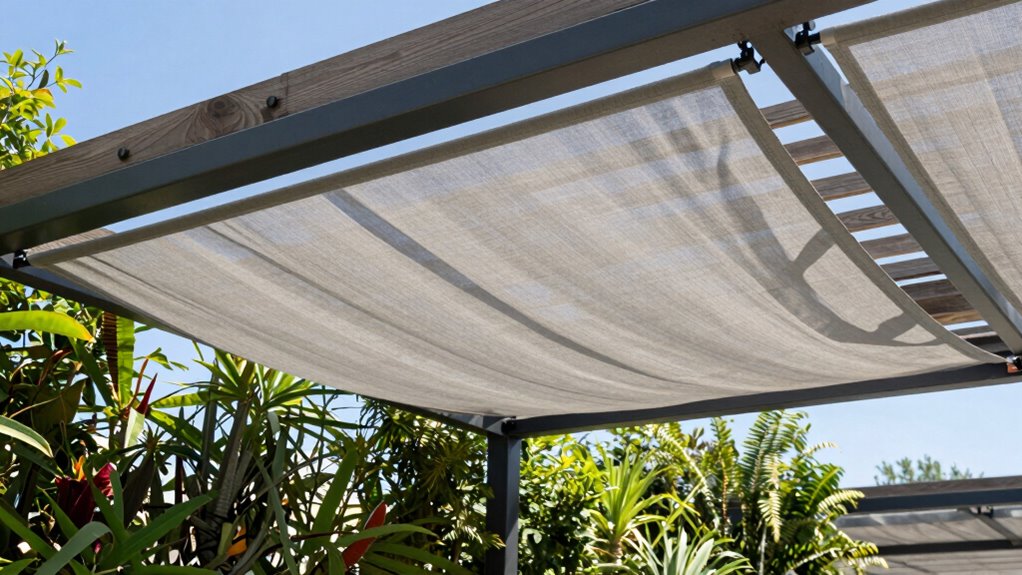

To add shade without blocking airflow, choose open-design materials like breathable fabrics, slats, or perforated panels that allow breezes to pass through. Position your shade structures thoughtfully, placing gaps and openings to promote ventilation and avoiding blocking prevailing winds. Consider adjustable shades to control both sun and breeze, and angle or elevate them to enhance airflow. Proper placement and material choices make your outdoor space comfortable and breezy—discover more ways to optimize your shade system.
Key Takeaways
- Use open-weave fabrics or perforated materials to provide shade while allowing airflow.
- Position shade structures where prevailing breezes naturally flow through the space.
- Incorporate adjustable or tilt features to control both shade coverage and ventilation.
- Elevate or angle shades to facilitate better wind passage and prevent hot air trapping.
- Ensure open gaps and strategic placement to promote continuous airflow around shaded areas.
How Shade Systems Impact Breeze and Comfort
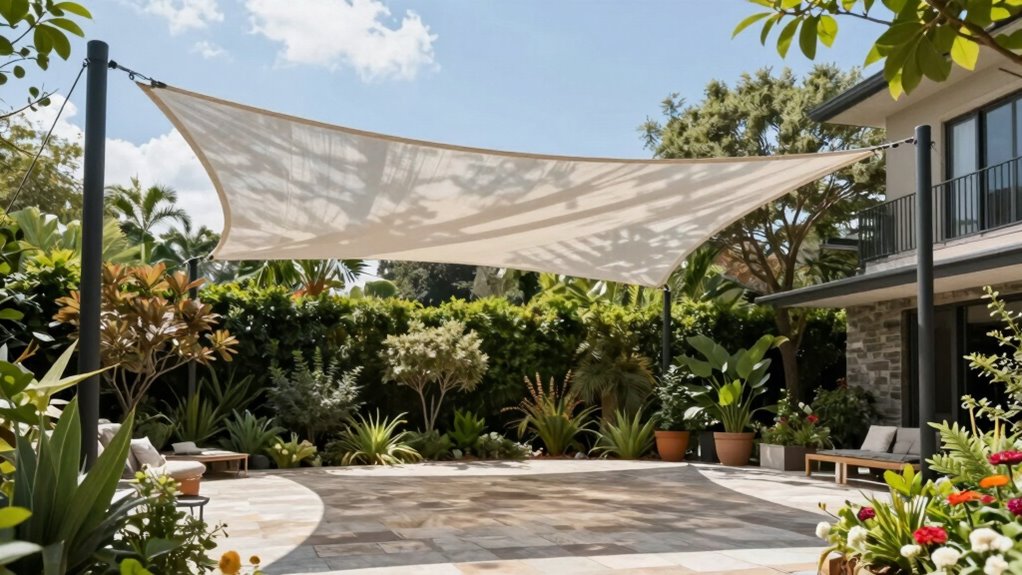
Shade systems play a crucial role in controlling how breeze moves through outdoor spaces. The shade material you choose markedly impacts airflow restriction. Heavier fabrics or dense materials can block wind, reducing the breeze and making the area feel stuffy or uncomfortable. Lighter, more breathable fabrics allow air to flow freely, keeping your space cool and fresh. The design of the shade system also matters; solid screens or tightly woven fabrics tend to restrict airflow more than open-weave or slatted options. By understanding how different shade materials affect airflow, you can select a system that provides shade without sacrificing comfort. Properly balanced, your shade system can create a cool, breezy environment that invites relaxation and outdoor enjoyment. Choosing breathable fabrics can significantly enhance airflow and comfort in your outdoor space.
Choosing the Right Shade Type to Keep Your Outdoor Space Breezy
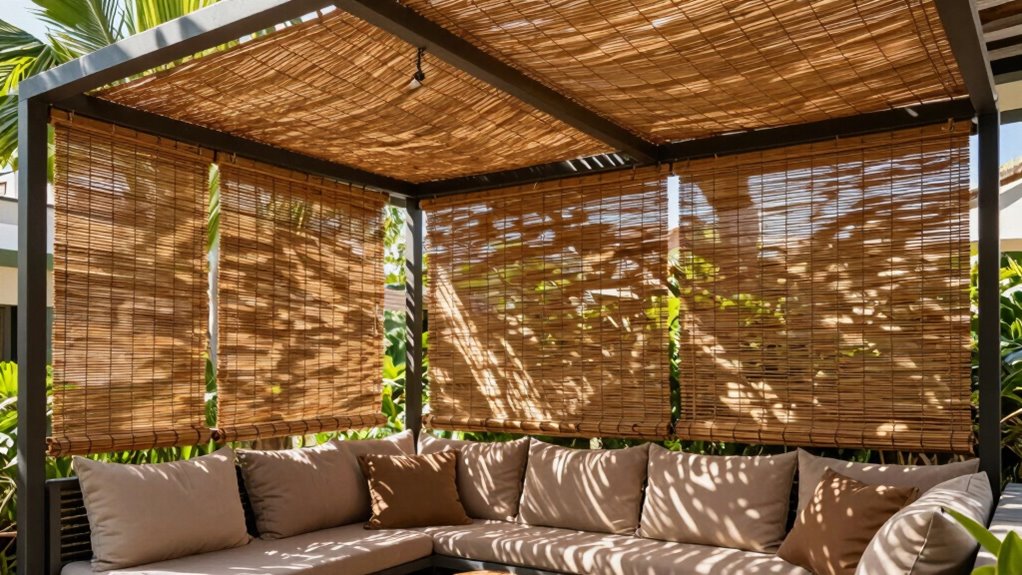
When selecting a shade type, consider materials that allow airflow to keep your space breezy. Think about style options that promote ventilation and how to incorporate features that enhance airflow. Balancing material breathability, shade design, and ventilation tips will help you create a comfortable, airy outdoor area. Additionally, choosing shades with high airflow capacity can significantly improve ventilation without sacrificing shade effectiveness.
Material Breathability Factors
Choosing the right shade material is essential if you want to maintain a breezy and comfortable outdoor space. Material breathability directly impacts airflow, so look for fabrics or materials that allow air to pass through easily. Consider the material’s durability; sturdy options like polyester or acrylic resist wear and tear while maintaining breathability. Color selection also plays a role—lighter colors reflect sunlight, reducing heat buildup and helping keep the area cool. Darker shades may absorb more heat and restrict airflow, making the space less comfortable. By selecting materials that balance durability with high breathability, you ensure your outdoor area stays airy and inviting without sacrificing protection from the sun. This thoughtful choice enhances comfort and prolongs the lifespan of your shade system. Material breathability is a key factor in maintaining an outdoor space that remains cool, comfortable, and well-ventilated.
Shade Style Considerations
Selecting the right shade style is essential for maintaining a breezy, comfortable outdoor space. Your choice impacts airflow, sunlight, and overall aesthetics. Lighter color choices, like whites or pastels, reflect heat and keep the area cooler, while darker shades absorb more heat, which might make the space less comfortable. Consider aesthetic considerations too; a style that complements your outdoor decor enhances the space’s appeal. For example, sleek awnings provide a modern look, while drapes or fabric shades add a casual, inviting vibe. Opt for designs that allow airflow—such as open slats or breathable fabrics—to prevent trapping heat. Additionally, incorporating Free Floating elements can help maintain a natural airflow pattern, ensuring your outdoor area stays cool, airy, and visually appealing. Balancing style and function guarantees your outdoor area stays cool, airy, and visually appealing.
Ventilation Integration Tips
To keep your outdoor space breezy and comfortable, it’s important to choose shade types that promote airflow. Solar shading options like open lattice or fabric with gaps allow wind flow to pass through, preventing stuffiness. Avoid solid, heavy shades that block air movement, as they can trap heat and reduce ventilation. Consider shades that can be adjusted or tilted to optimize airflow while providing shade. Installing shades at an angle encourages wind to circulate better, enhancing ventilation. Keep in mind that lightweight materials or mesh fabrics support natural ventilation without compromising sun protection. Properly integrating these designs ensures your outdoor area stays cool and breezy, even on hotter days, while still offering effective shading.
How to Position Shade Structures for Maximum Ventilation
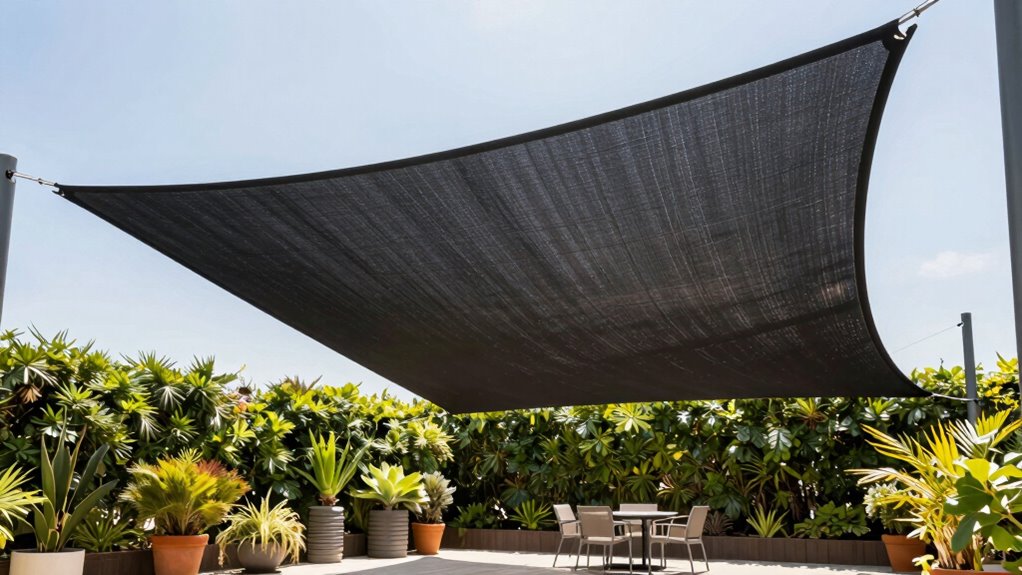
Properly positioning your shade structures is essential to maximize ventilation and keep the area comfortable. Focus on shade placement that promotes airflow by placing structures where prevailing breezes naturally flow through the space. Avoid blocking pathways or creating stagnant zones by ensuring open gaps between shade elements and nearby obstacles. Angle the shades to allow air to circulate underneath and around them, rather than trapping hot air. Consider the sun’s path and wind direction throughout the day to optimize airflow. Elevate shade structures slightly or use open frameworks to encourage better ventilation. Additionally, ventilation principles can guide you in designing shade layouts that enhance airflow efficiency. By carefully planning shade placement with airflow optimization in mind, you’ll create a cooler, more comfortable environment without sacrificing shade coverage.
Open-Design Shade Materials That Promote Airflow
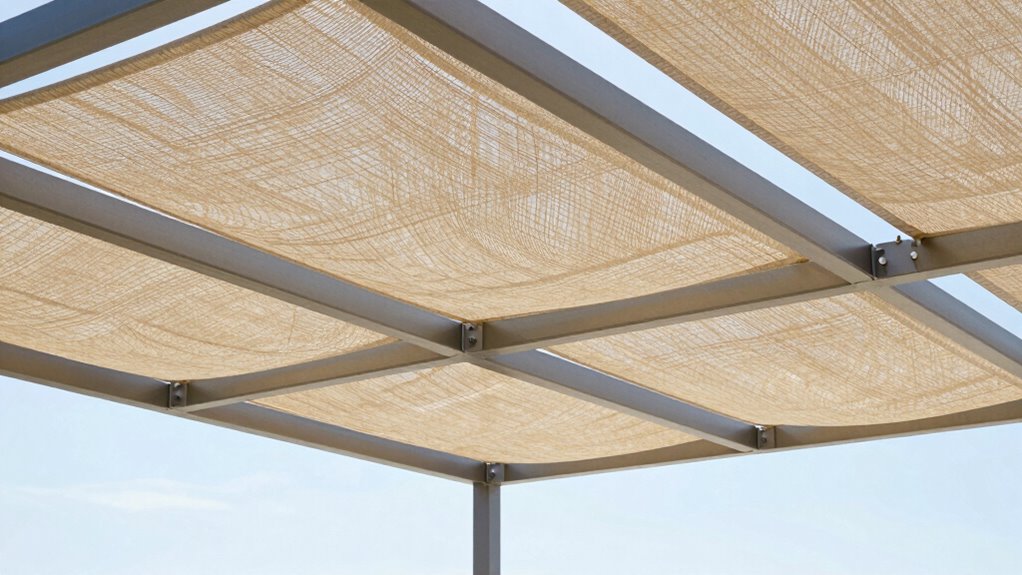
Open-weave and perforated materials allow air to flow freely through your shade system, keeping the space cooler and more comfortable. These designs reduce heat buildup and improve ventilation without sacrificing shade. Choosing the right open-design material can make a noticeable difference in airflow and overall comfort. Incorporating open-design shade materials can enhance your truck bed’s ventilation and ensure a more pleasant environment during your adventures.
Perforated Material Benefits
Perforated materials are an excellent choice for shade systems because they allow air to flow freely through the structure. Using perforated material as your shade fabric helps create a comfortable environment by promoting natural ventilation. This open design reduces heat buildup and prevents stuffiness under the shade, making it ideal for warm climates or busy outdoor areas. The small holes in the shade fabric also maintain privacy while still letting in light and air. Additionally, perforated materials are durable and easy to maintain, ensuring your shade system remains functional over time. By choosing perforated shade fabric, you optimize airflow without sacrificing shade coverage, making your outdoor space more inviting and comfortable. Proper material selection can significantly enhance the longevity and effectiveness of your shade system. This simple upgrade can considerably improve the overall usability of your shaded area.
Open Weave Design
Open weave design is an effective way to enhance airflow in shade systems, making outdoor spaces more comfortable on hot days. By choosing shade fabric with an open weave, you allow air to pass through while still providing shade. This design reduces heat buildup and keeps your area cooler without sacrificing coverage. Open weave fabrics come in various textures and densities, giving you options to balance shade and ventilation. Here’s a quick comparison:
| Feature | Benefits |
|---|---|
| Shade fabric | Provides UV protection and airflow |
| Open weave | Ensures ventilation and reduces heat |
| Material options | Offers durability and style |
| Installation ease | Fits seamlessly into existing systems |
Using open weave shade materials helps you enjoy outdoor comfort without blocking airflow. Additionally, selecting ventilated shade fabrics can further improve airflow and overall comfort in your outdoor space.
Using Adjustable Shades to Control Sun and Breeze
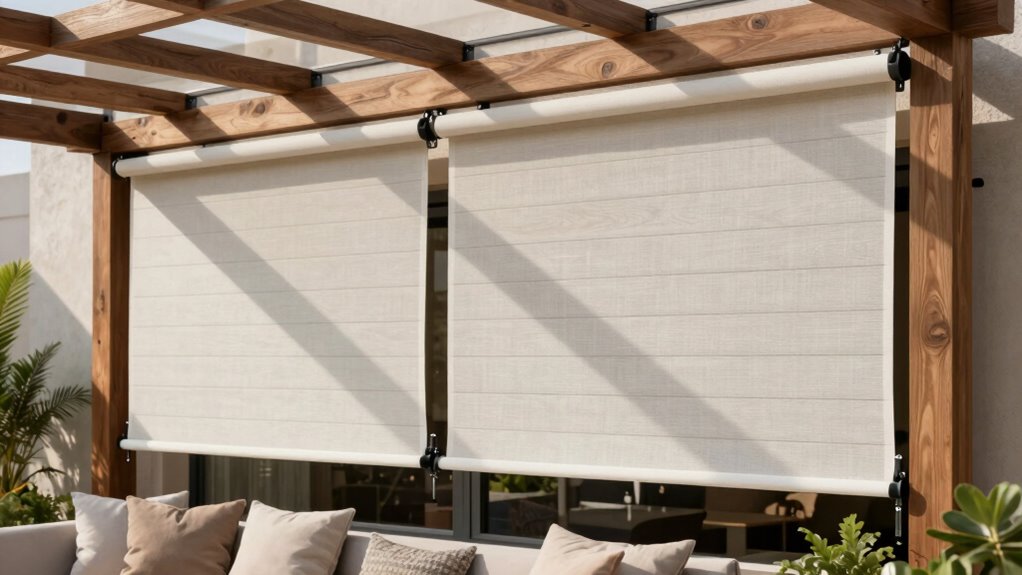
Adjustable shades give you the flexibility to control both sunlight and airflow, making it easy to create a comfortable outdoor space. With smart controls, you can easily adjust the shades remotely or set them to respond automatically to the sun’s position, optimizing your comfort throughout the day. These shades let you block harsh rays when needed while still allowing breezes to flow through, promoting natural ventilation. By fine-tuning shade positions, you enhance energy efficiency, reducing the need for artificial cooling and heating. This control helps maintain a pleasant temperature without sacrificing airflow. Whether you want more shade during peak sun hours or a breeze on warm days, adjustable shades give you the power to customize your outdoor environment effortlessly. Discover Trusted Businesses and Services Near You.
Design Tips: Gaps and Openings for Better Ventilation
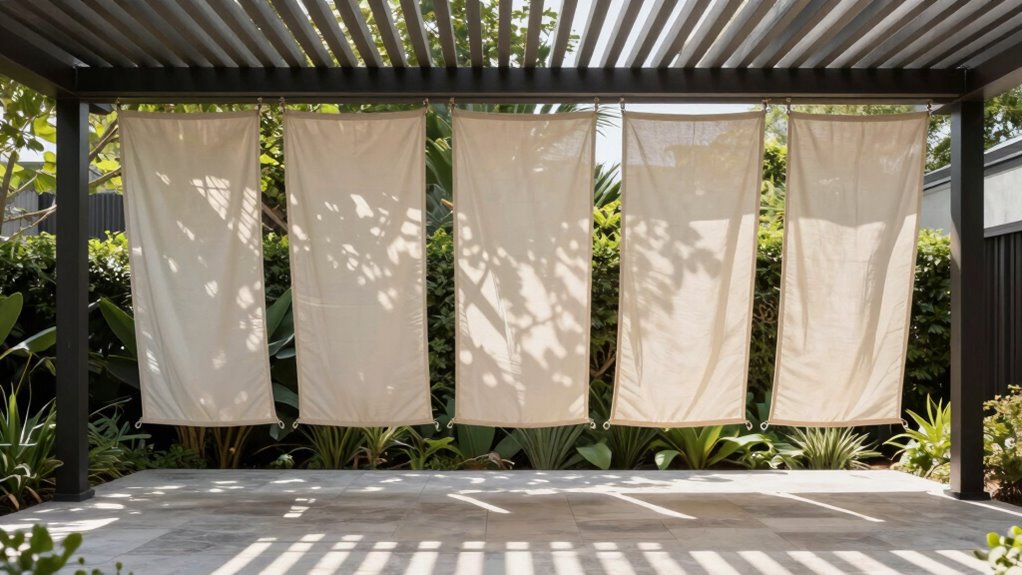
To maximize natural ventilation in your outdoor space, incorporating thoughtfully designed gaps and openings is key. Proper placement guarantees airflow without sacrificing shade. Consider these tips:
Maximize outdoor airflow with well-placed gaps that blend function and style seamlessly.
- Vary the size and placement of gaps to promote consistent breeze flow while maintaining aesthetic balance; choose colors that complement your shade structure for a cohesive look.
- Use strategic openings near high-traffic or wind-exposed areas to boost ventilation, ensuring they blend seamlessly with your overall color coordination.
- Balance gaps on all sides to prevent uneven airflow, creating a harmonious design that enhances both function and visual appeal.
- When planning your openings, consider cabling and infrastructure needs to ensure that ventilation improvements do not interfere with electrical or network setups.
These small adjustments improve airflow without disrupting your space’s aesthetic, making your shade system both functional and visually pleasing.
Common Mistakes That Block Breeze When Installing Shade Structures
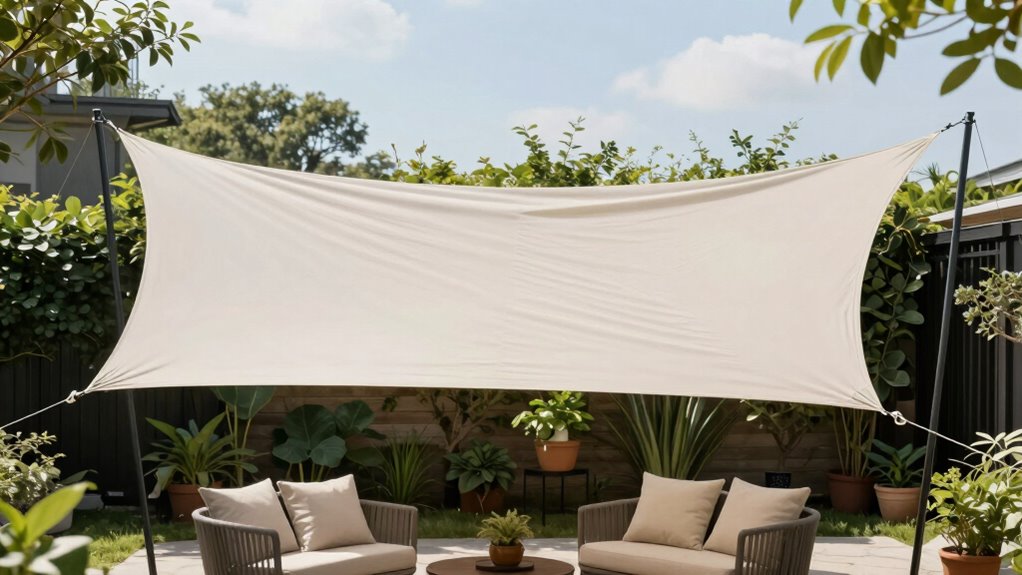
When installing a shade structure, overlooking the importance of proper placement and sizing of gaps can easily block airflow. One common mistake is choosing the wrong shade material that’s too dense, which hampers breeze rather than enhancing comfort. Additionally, setting the installation height too low or too high can obstruct natural airflow paths. For example, hanging a shade too close to the ground or too close to the ceiling reduces ventilation. Make certain there’s enough space between the shade and the area beneath it, and select a lightweight, permeable shade material that allows air to flow freely. Proper placement and appropriate installation height are essential to avoid creating an airtight barrier, so always consider airflow when planning your shade structure to maintain a cool and breezy environment.
Natural Ventilation Techniques to Enhance Shade Benefits
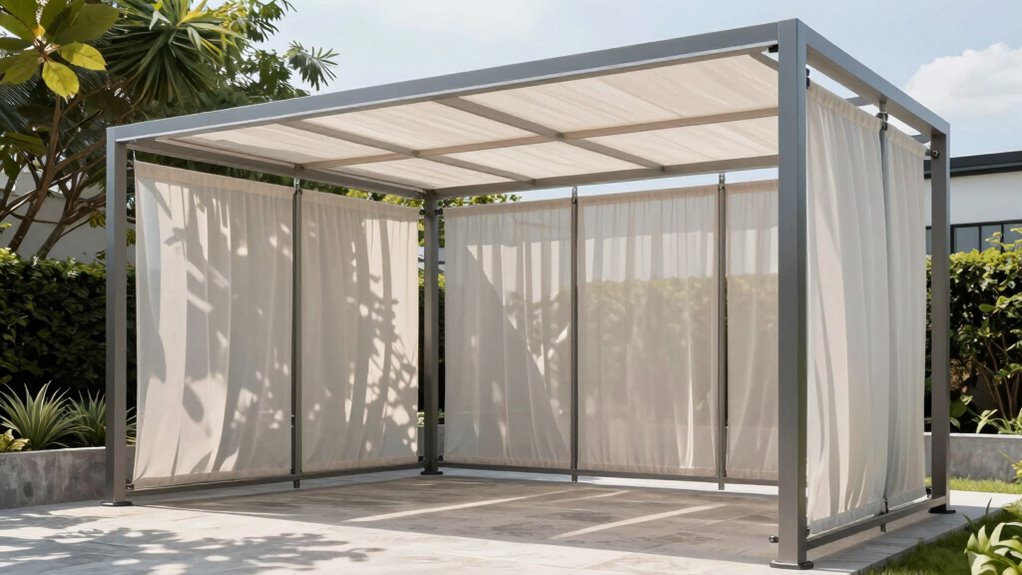
Harnessing natural ventilation can considerably boost the comfort and effectiveness of your shade system. To maximize airflow, consider these techniques:
- Plant integration: Planting trees or shrubs nearby creates gaps for breeze to flow through while providing additional shade. Choose plants that won’t obstruct airflow.
- Color selection: Light-colored shades reflect heat, allowing cooler air to circulate beneath them, enhancing ventilation.
- Design placement: Position shade structures strategically to catch prevailing winds, ensuring they don’t block natural breezes. Incorporate open sides or adjustable panels to facilitate airflow.
Maintaining Your Shade and Ventilation System for Long-Term Comfort
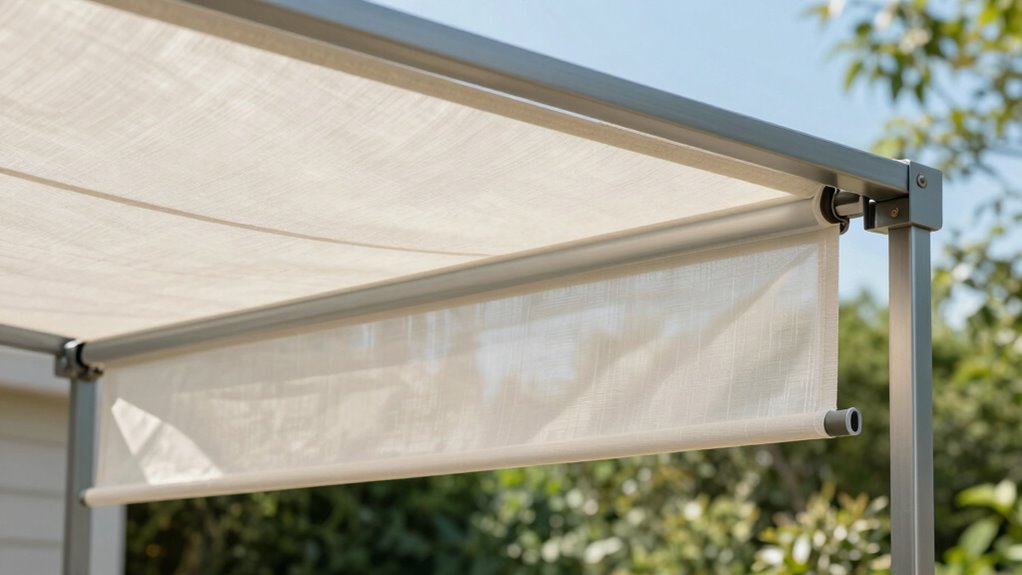
Regular maintenance is essential to keep your shade and ventilation system functioning effectively over time. To ensure shade durability, inspect your shades regularly for tears, fraying, or fading. Clean them according to the manufacturer’s instructions to prevent dirt buildup, which can weaken materials. When selecting new shades, consider color selection carefully; lighter colors reflect sunlight better, helping maintain airflow and reduce heat, while darker shades may absorb more heat, affecting ventilation efficiency. Adjust and tighten hardware as needed to prevent sagging or damage. Proper upkeep not only prolongs the life of your shades but also maintains their effectiveness in providing shade without obstructing airflow. With consistent care, your system will deliver long-term comfort, keeping your space cool and well-ventilated.
Frequently Asked Questions
How Can I Ensure Shade Structures Don’T Impede Airflow During Installation?
To guarantee your shade structures don’t impede airflow, choose a lightweight shade material that allows air to pass through easily. Install the shade at an appropriate height—higher installations promote better ventilation. Position the shade so it doesn’t cover entire open areas or vents, and avoid overly dense fabrics. This way, you maintain airflow while providing shade, creating a comfortable outdoor space without sacrificing ventilation.
What Materials Best Balance Shade and Ventilation for Outdoor Comfort?
You should choose materials like breathable fabrics, lattice panels, or shade sails that offer shade while permitting airflow. These options help maintain ventilation and keep outdoor areas comfortable. Incorporate ventilation strategies such as adjustable shading, gaps between structures, or using open-frame designs. This balance ensures you stay shaded but still benefit from fresh air, preventing stuffiness and enhancing overall outdoor comfort.
Are There Specific Design Features That Enhance Airflow While Providing Shade?
Think of your shade system like a gentle breeze weaving through trees. You can enhance airflow with design features like adjustable shade fabrics and ventilation gaps. These allow you to control the amount of shade while letting air flow freely, keeping your space cool and comfortable. Incorporate these elements into your setup, and you’ll enjoy shaded comfort without sacrificing fresh air.
How Do I Customize Shade Angles to Optimize Breeze Without Sacrificing Shade?
To customize shade angles for ideal breeze and shade, start by adjusting the slats or panels to a 30-45 degree angle. This enhances breeze by allowing air to flow through while maintaining shade. Use breeze enhancement techniques like angling shade elements to catch prevailing winds and creating gaps for airflow. Regularly tweak the angles based on seasonal wind patterns to strike a perfect balance between shade and airflow.
Can Automated Shading Systems Adjust to Airflow Changes Throughout the Day?
Imagine your shade system as a responsive breeze, gently shifting with the wind. Yes, automated shading systems can adjust to airflow changes throughout the day. Smart sensors detect temperature and breeze, triggering automated adjustments that optimize shade and airflow simultaneously. This smart technology keeps your space comfortable, ensuring shade moves just enough to block harsh sun without hindering the natural airflow you enjoy.
Conclusion
Think of your shade system as a gentle sail guiding the breeze, not a wall blocking it. With thoughtful placement and open designs, you harness nature’s breath to breathe life into your outdoor space. When you balance shade and airflow, you create a sanctuary that’s both cool and inviting—like a well-tuned instrument playing in harmony. Remember, true comfort comes when you let nature’s breeze flow freely, carrying your space into serenity.