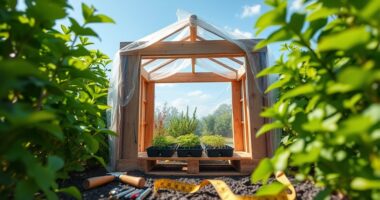
To plan your greenhouse ventilation before summer hits, focus on balancing airflow, temperature, and humidity to prevent heat stress. Consider your greenhouse’s structure, orientation, and outdoor climate to design natural, energy-efficient vent and fan placements. Automate vents for ideal climate control and explore shading or insulation options. Proper planning now will guarantee your plants stay healthy and resilient during hot months. Keep exploring for tips on creating a well-prepared summer-ready greenhouse.

Get garden gear delivered free — and shop member deals
- Fast, free delivery on millions of items
- Access to Prime Big Deal Days deals on October 6–7
- Prime Video, Amazon Music and more included
Key Takeaways
- Assess climate patterns and prevailing winds to design effective natural ventilation strategies.
- Incorporate automated vent controls and timers for consistent climate management.
- Optimize greenhouse orientation, shading, and insulation to regulate temperature and humidity.
- Strategically position vents and fans to maximize airflow and reduce reliance on mechanical cooling.
- Prepare for seasonal changes by integrating flexible and scalable ventilation systems.
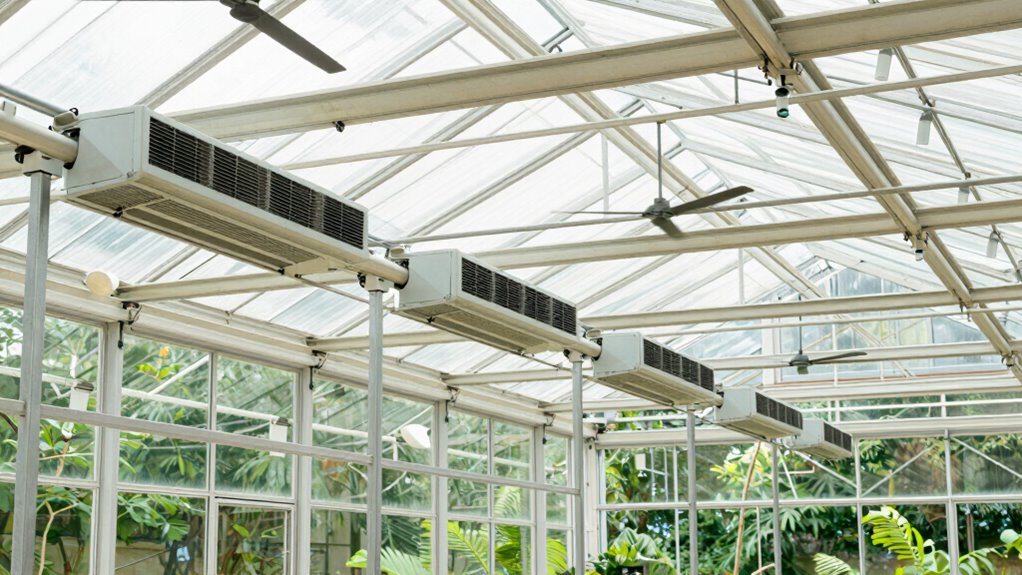
Have you ever wondered how proper ventilation can make or break your greenhouse’s productivity? As summer approaches, it becomes even more critical to plan your ventilation system carefully. Good ventilation isn’t just about keeping the air moving; it’s about creating the right environment for your plants to thrive. When you focus on climate control, you guarantee that temperature, humidity, and airflow are maximized. This balance prevents issues like overheating, mold, or plant stress, which can considerably hamper growth and yield. Proper planning allows you to harness natural airflow or incorporate mechanical systems efficiently, reducing the need for excessive energy use.
Energy efficiency is a key advantage when you develop a smart ventilation strategy ahead of summer. Instead of rushing to install costly systems once the heat hits, you can design a system that minimizes energy consumption from the start. For example, natural ventilation techniques—like strategically placed vents or exhaust fans—can greatly lower your reliance on powered cooling systems. By understanding your greenhouse’s specific climate, you can determine the best placement for vents and fans, ensuring that cool breezes enter while hot air escapes. This reduces the need for fans running constantly, saving you money and lowering your carbon footprint.
Planning also involves evaluating your greenhouse’s structure and orientation. Sunlight angles, shading options, and insulation all influence how your greenhouse heats up during the day. Incorporating automated vent controls or timers allows you to open and close vents at ideal times, maintaining consistent climate control without constant manual adjustments. This automation not only improves energy efficiency but also provides peace of mind, knowing your plants are always in an ideal environment. Additionally, understanding greenhouse climate control is essential for optimizing ventilation strategies that keep your plants healthy and productive. A comprehensive understanding of the climate dynamics can further enhance your planning efforts, ensuring you adapt effectively to seasonal variations.
Furthermore, considering environmental factors such as prevailing wind patterns can help you design more effective natural ventilation systems. This proactive approach ensures that your greenhouse remains comfortable and minimizes reliance on mechanical cooling, especially during peak summer heat.
In essence, a smart approach to greenhouse ventilation planning ensures you’re ready for summer’s challenges. You’ll maximize climate control, improve energy efficiency, and create a stable environment that promotes healthy plant growth. Proper planning means less energy waste, lower operational costs, and a more productive, resilient greenhouse. When summer arrives, you’ll be prepared to maintain ideal growing conditions effortlessly, giving your plants the best chance to flourish during the hottest months.
automatic greenhouse vent controller
As an affiliate, we earn on qualifying purchases.
As an affiliate, we earn on qualifying purchases.
Frequently Asked Questions
How Do I Calculate Optimal Airflow for My Greenhouse?
To calculate ideal airflow for your greenhouse, start by evaluating its size and internal temperature needs. Use airflow efficiency principles by measuring how much air moves through the space per minute, ensuring proper ventilation. Incorporate ventilation optimization techniques like adjusting fan speeds and vent openings. Regularly monitor temperature and humidity levels, then fine-tune airflow to maintain perfect growing conditions, balancing air exchange and energy use effectively.
What Are the Best Ventilation Systems for Different Greenhouse Sizes?
For small greenhouses, consider exhaust fans and side vents to maximize ventilation efficiency and conserve energy. Medium-sized structures benefit from automated roof vents paired with circulation fans, reducing heat buildup. Large greenhouses should use advanced ventilation systems like ridge vents with sidewall fans, ensuring ideal airflow and energy conservation. Tailoring your system to your greenhouse size enhances ventilation efficiency, keeps temperatures stable, and minimizes energy costs during summer.
How Can I Automate Ventilation to Adjust for Weather Changes?
Imagine your greenhouse as a living organism, adjusting its breath with the changing weather. You can automate ventilation using climate control systems equipped with sensors that monitor temperature, humidity, and sunlight. These systems activate exhaust fans, vents, or windows as needed, ensuring ideal airflow. This automation boosts energy efficiency by reducing unnecessary heating or cooling, while keeping your plants comfortable and healthy regardless of unpredictable weather shifts.
What Maintenance Is Required for Ventilation Equipment?
You need to regularly inspect and clean ventilation filters to guarantee proper airflow and prevent dust buildup. Perform fan maintenance by checking for unusual noises, lubricating moving parts, and tightening loose components. Replacing filters when they’re clogged or damaged keeps your system efficient. Schedule routine maintenance to catch issues early, extend equipment lifespan, and maintain ideal ventilation performance, especially as temperatures rise and ventilation demands increase during summer.
How Does Ventilation Impact Plant Disease Prevention?
Ventilation plays a vital role in plant disease prevention by controlling humidity levels. When you properly ventilate your greenhouse, you reduce excess humidity, which helps prevent the growth of pathogens that thrive in damp conditions. Good airflow also promotes even temperature distribution, lowering the chances of disease outbreaks. By maintaining ideal humidity control, you create a healthier environment that minimizes the risk of plant diseases, keeping your crops strong and productive.
Conclusion
By planning your greenhouse ventilation now, you’re channeling the wisdom of Daedalus, crafting a blueprint to navigate the summer heat safely. Just as he carefully designed wings to escape the labyrinth, you’re engineering a system to keep your plants thriving. With foresight and strategic planning, you’ll avoid the chaos of summer’s swelter, ensuring your greenhouse remains a sanctuary of growth. Take control today—your verdant paradise awaits, guided by wisdom and precision.
Fall yard work Picks
leaf blowers
As an affiliate, we earn on qualifying purchases.