
To set up a sensor-ready greenhouse from day one, choose a sturdy, well-ventilated structure with ideal orientation for sunlight. Plan sensor placement at plant canopy and root levels to guarantee accurate data. Integrate automated climate control systems like fans, vents, and watering devices that respond to sensor inputs. Use weatherproof wiring and a central hub for easy management. Leave space for future upgrades and connections. If you want to build a smart, efficient greenhouse right from the start, keep exploring these essential tips.

Get garden gear delivered free — and shop member deals
- Fast, free delivery on millions of items
- Access to Prime Big Deal Days deals on October 6–7
- Prime Video, Amazon Music and more included
Key Takeaways
- Design a sturdy, well-ventilated greenhouse with ample space for sensor placement and future expansion.
- Position sensors at plant canopy and root levels, ensuring protection from direct sunlight and drafts.
- Install weatherproof wiring and secure connections for reliable sensor data transmission.
- Integrate a central control hub to automate environmental adjustments based on sensor inputs.
- Plan for future upgrades by leaving dedicated space and infrastructure for additional sensors and systems.
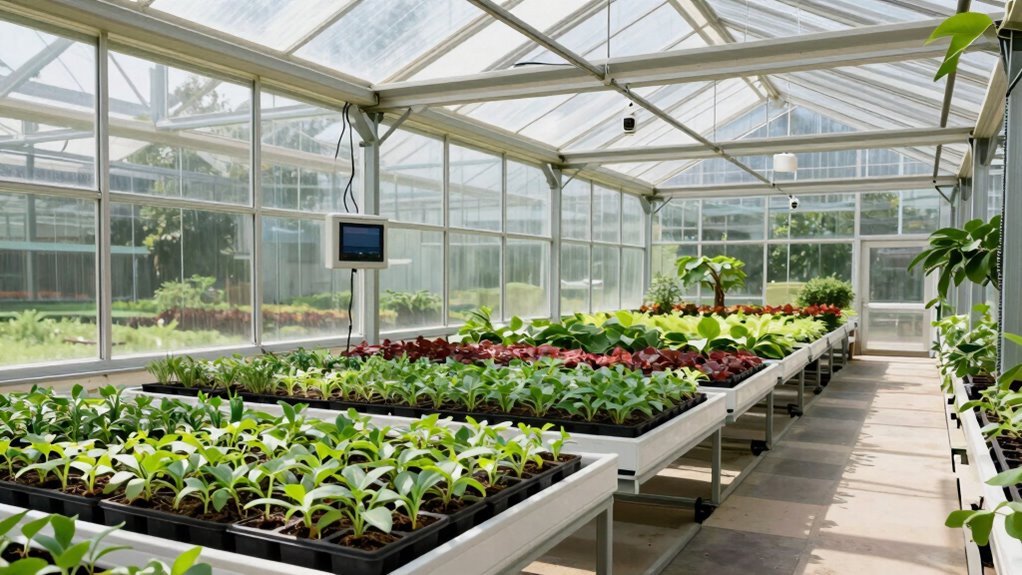
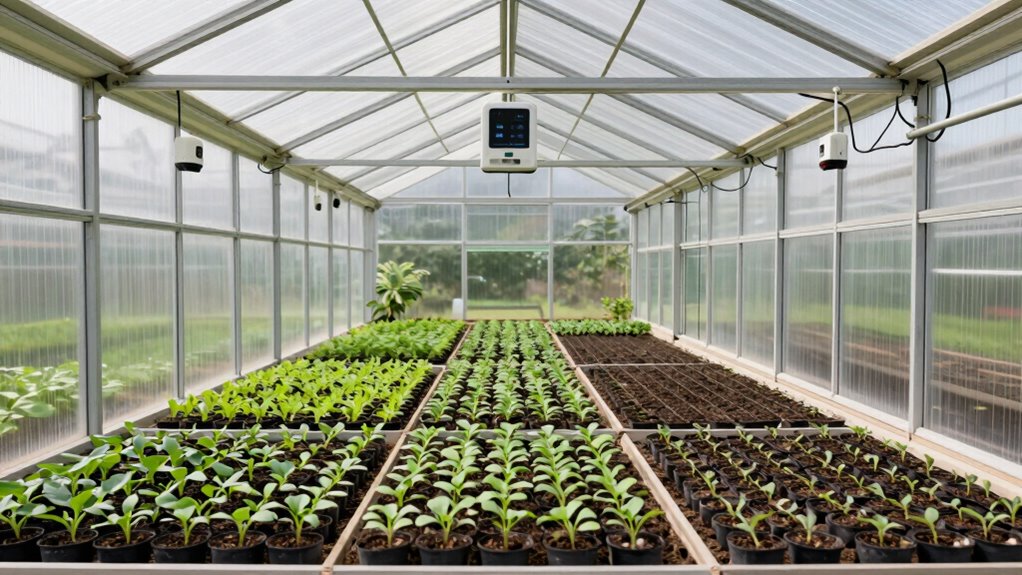
Have you ever wondered how to create the perfect environment for your plants year-round? Setting up a greenhouse that’s ready for sensors from day one isn’t just about choosing the right structure; it’s about designing a space that seamlessly integrates automation and climate control. To start, pick a sturdy, well-ventilated greenhouse frame that can support the weight of sensors and automated systems. Proper orientation is essential—aim for maximum sunlight exposure while minimizing harsh afternoon heat. Once the structure is in place, focus on installing a reliable power supply, as most automated watering and climate control systems depend on steady electricity.
Create a durable, well-ventilated greenhouse with optimal sunlight and reliable power for seamless automation.
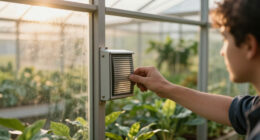
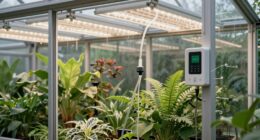
Next, consider the placement of sensors. You want to monitor temperature, humidity, soil moisture, and light levels accurately. Position temperature and humidity sensors at plant canopy level, avoiding direct sunlight or drafts that could skew readings. Soil moisture sensors should be embedded at root level to give precise data for watering needs. When installing these sensors, use robust, weatherproof enclosures that allow free airflow and prevent damage. This setup guarantees your sensors deliver real-time data to your control system, which is the backbone of automation. Incorporating data accuracy into your setup ensures reliable readings and optimal plant health. Ensuring proper maintenance and calibration of sensors is also vital to maintain this accuracy over time.
Speaking of automation, integrating an automated watering system is indispensable for consistent plant health. Choose a system compatible with your sensors, so watering adjusts automatically based on soil moisture levels. This prevents overwatering and underwatering, saving water and reducing manual effort. Pair this with smart climate control devices, like vent openers, fans, and heaters, that respond to sensor data to maintain ideal temperature and humidity. For example, if sensors detect rising temperatures, your system can automatically open vents or activate fans, creating a stable environment without your constant intervention. Additionally, ensuring your system has a user-friendly interface will make management easier and more efficient. Incorporating reliable connectivity ensures your control system functions smoothly and remotely.
Wiring and connectivity are critical for a seamless setup. Use weatherproof cables and secure connections to prevent damage from moisture or pests. Consider a central control hub or a smart home system that consolidates sensor data and controls your automated systems. This setup not only simplifies management but also allows you to monitor and tweak conditions remotely. Regular calibration and maintenance of sensors ensure they provide accurate readings over time, which is essential for precise climate control. Additionally, planning for future expansion will help accommodate new technologies as your greenhouse evolves.
Finally, plan for future expansion. Leave room for additional sensors or automation features. By setting up your greenhouse with these considerations from the start, you guarantee a fully integrated, sensor-ready environment. This approach minimizes manual adjustments, maximizes plant health, and creates a truly intelligent greenhouse that works efficiently all year round. Incorporating innovative technology early on can help streamline your operations and ensure your greenhouse remains adaptable.
sensor-ready greenhouse automation kit
As an affiliate, we earn on qualifying purchases.
As an affiliate, we earn on qualifying purchases.
Frequently Asked Questions
What Are the Best Locations for Installing Greenhouse Sensors?
You should install sensors in spots that accurately reflect your greenhouse’s conditions. Place soil moisture sensors about a few inches below the surface in different zones to monitor variability. Position light intensity sensors at plant canopy level, ideally near the center or areas with maximum sunlight exposure, to get precise readings. This setup guarantees you gather reliable data, helping you optimize watering and lighting for healthier plant growth.
How Do I Ensure Sensor Compatibility With My Greenhouse Systems?
Think of sensor compatibility as fitting puzzle pieces together perfectly. To guarantee this, check that your sensors support the same communication protocols, like Wi-Fi or Bluetooth, and match your greenhouse’s data management systems. Research manufacturer specifications and choose sensors designed for seamless integration. Testing compatibility early prevents headaches later, ensuring smooth sensor integration from day one, so your data flows effortlessly and keeps your greenhouse thriving.
What Maintenance Is Required for Greenhouse Sensors?
To maintain your greenhouse sensors, regularly check their durability by inspecting for wear or damage. Clean sensor surfaces to guarantee accurate data collection, and calibrate them periodically for precision. Keep the data integration system updated to prevent glitches and ensure seamless communication. Replace sensors when they show signs of declining performance. Consistent maintenance guarantees reliable data, helping you optimize greenhouse conditions and prolong sensor lifespan effectively.
How Can I Calibrate Sensors for Accurate Readings?
To calibrate sensors for accurate readings, start by checking sensor placement—position them away from direct sunlight, drafts, or heating vents. Follow the calibration procedures provided by the manufacturer, which often involve comparing sensor readings to a known standard or reference. Adjust the sensors accordingly, ensuring they are stable and properly connected. Regular calibration checks help maintain accuracy, so plan to revisit calibration procedures periodically for consistent results.
Are There Specific Sensors Recommended for Different Plant Types?
Think of sensors as your plant’s best friends—they need to speak their language. For different plant types, choose sensors that monitor soil moisture and light intensity tailored to their needs. For instance, succulents prefer drier soil and less light, so use moisture sensors with low thresholds. Leafy greens thrive with higher moisture and light levels, so pick sensors calibrated accordingly. Matching sensors to plant needs guarantees healthy growth from day one.
Conclusion
So, there you have it—your shiny new greenhouse, fully sensor-ready and practically begging for smart tech. Just remember, all the fancy gadgets in the world won’t turn you into a gardening genius overnight. But hey, if you ignore the basics and rely solely on sensors, you might as well plant your seeds in a bucket of virtual data and hope for the best. After all, nature still loves a little human touch—preferably one with common sense.
Fall yard work Picks
leaf blowers
As an affiliate, we earn on qualifying purchases.