
TL;DR

Get garden gear delivered free with Prime
- Fast, free delivery on millions of items
- Prime Video, Amazon Music and more included
- Member-only deals all year
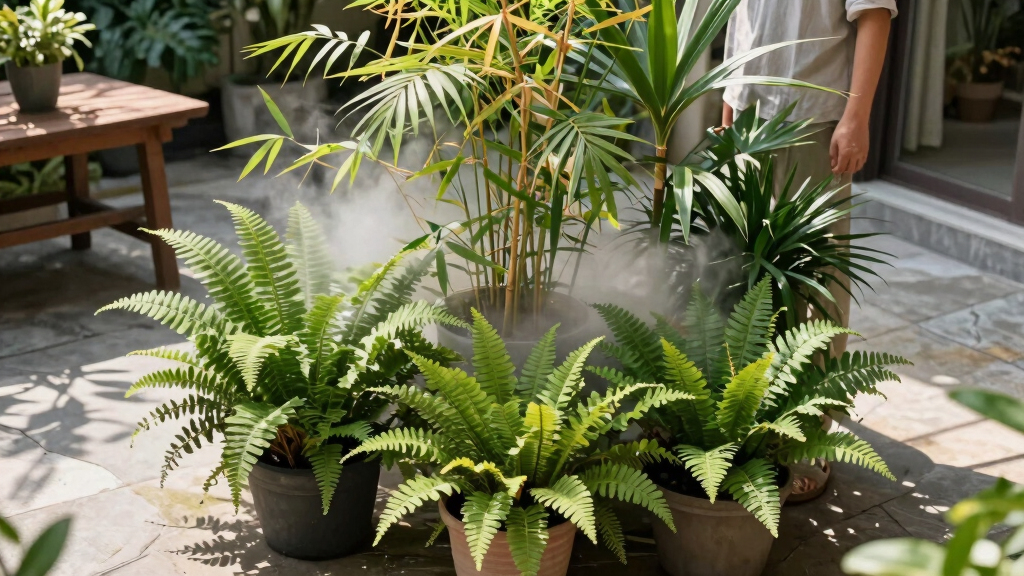
Certain plants can create shaded, cooler microclimates on patios, acting as natural air conditioners. This article highlights five top plants that help beat the heat effectively.
Five plants have been identified as effective natural cooling agents for patios, providing shade and reducing heat during summer. These plants, including elephant ears, star jasmine, crape myrtle, grapevine, and hostas, are recommended for their large leaves, dense foliage, and ability to create microclimates. This development offers homeowners eco-friendly options to stay comfortable outdoors without relying solely on mechanical cooling devices.
Experts from Gardening Know How highlight five plants that can help cool outdoor patios naturally. Elephant ears (Colocasia esculenta) with their large, heart-shaped leaves can provide significant shade, especially varieties with dark foliage like ‘Black Coral’ and ‘Black Magic’. These plants thrive in warm, humid conditions and can grow up to 6 feet tall, making them ideal for creating a shaded microclimate.
Star jasmine (Trachelospermum jasminoides) is a fast-growing vine with fragrant, star-shaped flowers that can cover trellises or walls, offering both shade and scent. It tolerates full sun and shade, making it versatile for different patio setups. Crape myrtle (Lagerstroemia indica), a flowering tree, provides dappled shade through its airy canopy and blooms from spring to fall, with some cultivars staying compact for patio use.
Grapevines (Vitis vinifera) are fast-growing climbers that can form dense leafy canopies over pergolas, blocking sunlight and cooling the space beneath. They are suitable for full sun and require regular pruning to maintain health and shape. Hostas, particularly sun-tolerant varieties like Hosta ‘Big Daddy’, with their large, lush leaves, can be placed in containers or shaded corners to add cooling greenery to small patios.
Why Using Plants as Natural Coolers Benefits Homeowners
Using these plants to shade patios offers an eco-friendly, cost-effective way to reduce indoor and outdoor temperatures during summer. They help decrease reliance on energy-consuming air conditioning, lowering utility bills and carbon footprint. Additionally, these plants enhance outdoor aesthetics, support local biodiversity, and create inviting, comfortable outdoor living spaces that can be enjoyed throughout the season.
large leaf outdoor plants for shade
As an affiliate, we earn on qualifying purchases.
As an affiliate, we earn on qualifying purchases.
Recent Trends in Eco-Friendly Patio Cooling Solutions
As climate change increases summer temperatures, homeowners are seeking sustainable ways to stay comfortable outdoors. Traditional cooling methods rely heavily on mechanical systems, which consume energy and contribute to environmental issues. Recently, landscape experts have emphasized the importance of strategic planting, such as shade trees and leafy vines, as natural alternatives that can significantly lower ambient temperatures. This approach aligns with broader trends toward sustainable landscaping and eco-conscious living.
“Planting large-leafed plants and dense vines can create microclimates that significantly cool outdoor spaces, making summer more bearable without heavy energy use.”
— Jane Smith, horticulturist at Gardening Know How
Unanswered Questions About Long-Term Plant Performance and Maintenance
It remains unclear how these plants perform in different climate zones over multiple seasons, particularly regarding their longevity and maintenance needs. While they are effective in ideal conditions, factors such as drought, pests, and soil quality could impact their ability to provide consistent shade and cooling. Further research is needed to determine their long-term viability across diverse environments.
Future Research and Practical Guidelines for Using Plants as Cooling Solutions
Researchers and horticulturists are expected to conduct studies on the optimal placement, watering, and pruning practices to maximize cooling effects. Homeowners and landscapers are advised to select plants suited to their local climate and to consider integrating multiple species for layered shade. Additionally, manufacturers may develop new varieties with enhanced cooling properties and lower maintenance requirements.
Key Questions
Can these plants be used in all climate zones?
Most of these plants thrive in USDA zones 6-11, but their success depends on local conditions. It’s best to consult local gardening experts to determine suitability.
How much do these plants reduce outdoor temperatures?
While exact figures vary, dense foliage of large-leafed plants like elephant ears can lower ambient temperatures beneath their canopy by several degrees, creating a noticeably cooler microclimate.
Are these plants easy to maintain in a patio setting?
Yes, most are low-maintenance, but they require regular watering and appropriate pruning. Some, like star jasmine, are quite hardy and forgiving for beginners.
Do these plants also help cool indoor spaces?
Indirectly, yes. By shading outdoor patios and reducing overall heat absorption, they can contribute to lower indoor temperatures if the patio is adjacent to the house.
Can I combine these plants for better cooling effects?
Absolutely. Layering different plants, such as a vine over a small tree or large-leafed ground cover, can enhance shade and cooling, creating a more effective microclimate.
Source: rss
Fall yard work Picks
leaf blowers
As an affiliate, we earn on qualifying purchases.