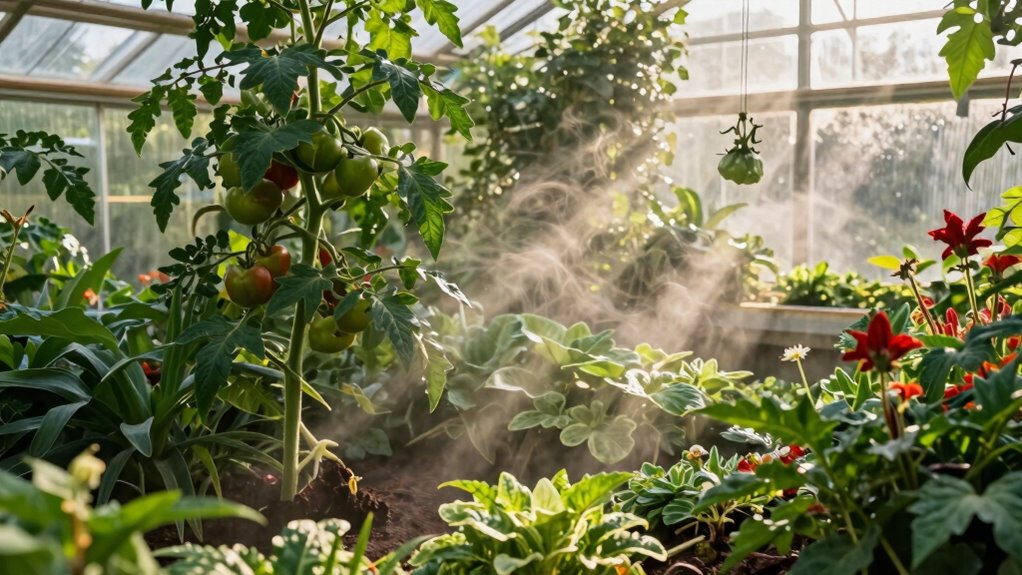
If one corner of your greenhouse always struggles with airflow, it’s likely due to obstructions like dense plants, equipment, or structural features blocking vents or circulation paths. Poor vent placement or inadequate fans can also create stagnant zones. Overcrowding or uneven layout may prevent proper air movement, causing pockets of stagnant, humid air. To fix this, you’ll need to improve vent locations, ensure clear pathways, and use fans effectively—more solutions await if you explore further.
Key Takeaways
- Obstructions like dense plants or equipment can block airflow, creating stagnant zones in one corner.
- Poor vent placement or structural design may cause uneven air distribution and dead zones.
- Inadequate or improperly positioned fans fail to circulate air effectively to all corners.
- Overcrowding and dense plant clusters restrict airflow and promote stagnation in specific areas.
- Gaps, leaks, or restricted openings in the ventilation system hinder proper cross-ventilation and airflow balance.
Understanding Airflow in Your Greenhouse: What You Need to Know
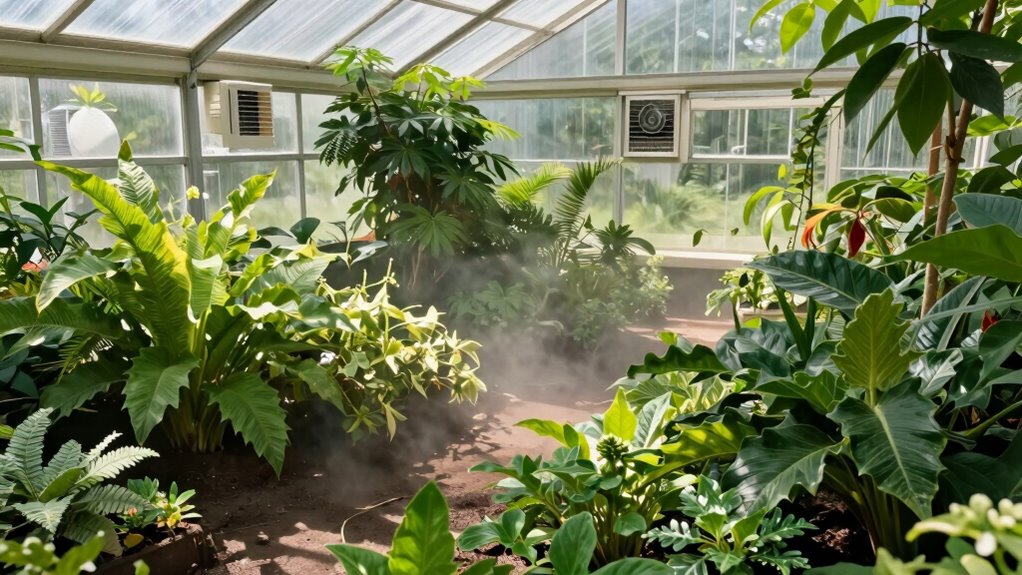
Understanding airflow in your greenhouse is essential for maintaining healthy plant growth and preventing issues like mold and pests. Airflow dynamics refer to how air moves within the space, affecting temperature, humidity, and CO2 levels. When airflow is well-balanced, it enhances ventilation efficiency, ensuring fresh air reaches all areas and stale air is expelled. Proper airflow reduces hot spots, keeps humidity in check, and prevents the buildup of harmful pathogens. You should observe how air currents circulate around your plants and fixtures, adjusting vents, fans, or openings to optimize movement. Recognizing the patterns of airflow helps you create a uniform environment, promoting healthier plants and reducing risks of disease. Mastering airflow dynamics allows you to design effective ventilation that supports your greenhouse’s overall health. Additionally, understanding how airflow patterns influence temperature and humidity distribution can help you fine-tune your ventilation system for optimal plant growth.
Why Does One Corner of Your Greenhouse Have Poor Airflow?
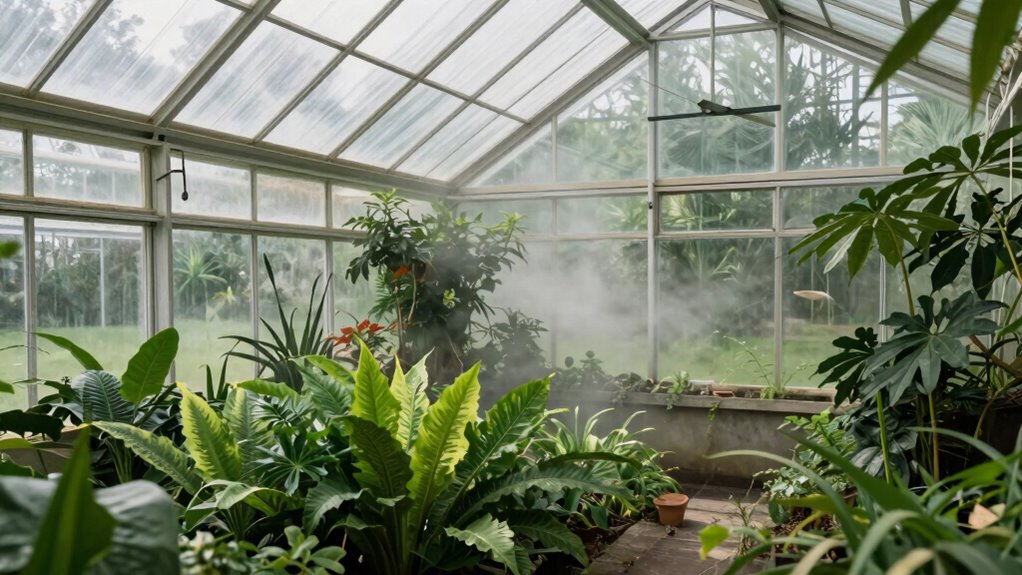
If one corner of your greenhouse has poor airflow, obstructions like plants or equipment might be be blocking the vents. Gaps in your ventilation system could also be preventing proper air circulation. Additionally, the structural design might create dead zones where air doesn’t move freely. Understanding airflow patterns can help identify why certain areas are less ventilated and improve overall circulation.
Obstructions Blocking Airflow
Obstructions such as shelves, equipment, or dense plant clusters can considerably block airflow in a greenhouse, especially in one corner. Poor plant placement can create stagnant air pockets, making it harder for airflow to reach that area. Dense clusters of plants cast shading effects that reduce air movement and heat exchange, compounding the problem. Items like benches or tools positioned too closely can also act as barriers, redirecting or blocking airflow paths. To improve circulation, rearrange plants to allow better air movement and avoid overcrowding. Keep equipment and shelving minimal and well-organized to prevent unnecessary obstructions. Additionally, incorporating energy-efficient fans can actively enhance airflow and circulation throughout the greenhouse. By addressing these obstacles, you’ll promote more consistent airflow, reducing the likelihood of poor ventilation in that troublesome corner.
Ventilation System Gaps
Gaps in your greenhouse’s ventilation system often cause uneven airflow, especially in one corner. These gaps disrupt airflow dynamics, preventing proper circulation where it’s needed most. When ventilation isn’t consistent across the space, stale air can stagnate in that corner, leading to poor air quality and uneven temperature distribution. This inefficiency reduces overall ventilation efficiency, making it harder to maintain ideal growing conditions. Small leaks or poorly sealed vents create these gaps, causing air to bypass certain areas instead of flowing smoothly through the entire greenhouse. To fix this, you need to identify and seal any leaks, ensuring that air moves freely and evenly. Improving ventilation system integrity helps promote uniform airflow and prevents one corner from becoming a airflow dead zone. Understanding airflow is essential for diagnosing and addressing these issues effectively.
Structural Design Limitations
One common reason for poor airflow in a greenhouse corner is the limitations inherent in its structural design. These design choices can create airflow limitations that cause stagnant air pockets. For example, narrow or irregularly shaped corners can block the smooth flow of air, leading to turbulence or dead zones. The placement of beams, supports, or internal walls may obstruct natural airflow paths, preventing air from circulating evenly. Additionally, poorly positioned vents or inadequate spacing between structural elements can worsen these issues. When the structural design doesn’t consider ideal airflow patterns, certain corners become less ventilated, impacting plant health. To improve airflow, you need to recognize how structural features influence circulation and consider redesigning or adjusting elements that hinder proper airflow.
What Factors Affect Air Circulation in Greenhouses?
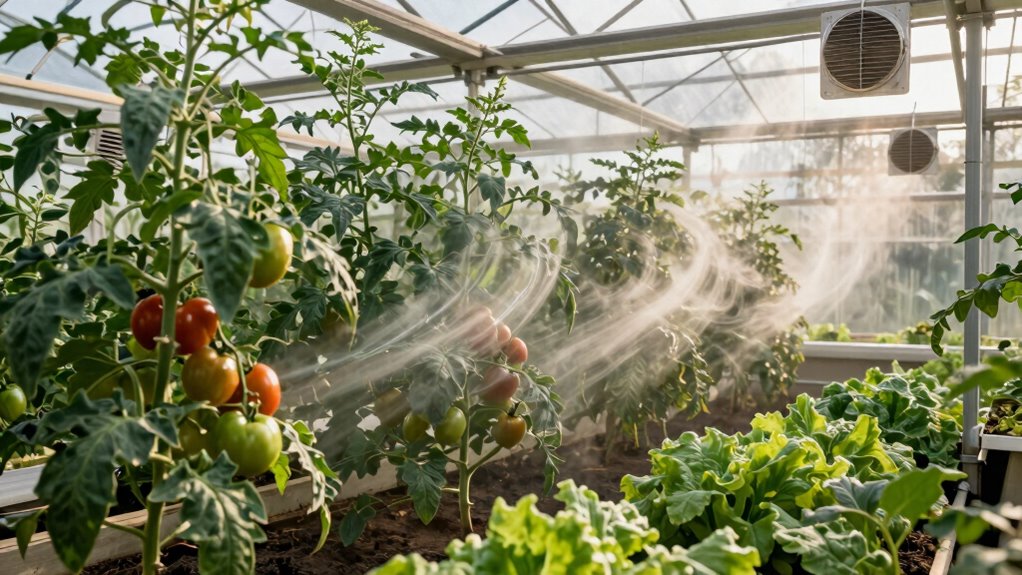
The placement of vents can substantially influence how air moves through your greenhouse, helping or hindering circulation. Obstructions like shelves, equipment, or plants can block airflow and create stagnant zones. To optimize circulation, you need to take into account both vent locations and any barriers that might disrupt airflow patterns. Incorporating an understanding of air circulation principles can further improve your greenhouse environment.
Vent Placement Effects
Where vents are placed in a greenhouse considerably influences how air circulates within the space. Proper vent placement directly affects airflow optimization, ensuring fresh air reaches all areas evenly. If vents are positioned too high or too low, you might create stagnant zones, especially in corners or behind obstructions. Ideally, vents should be located to promote cross-ventilation, allowing cool air to enter at lower points and warm, stale air to exit higher up. This setup helps maintain consistent temperatures and humidity levels. Strategic placement prevents the buildup of hot spots and reduces the struggle of air reaching difficult corners. By carefully considering vent location, you enhance air circulation, creating a healthier environment for your plants and improving overall greenhouse efficiency. Additionally, understanding Free Floating air patterns can help in designing ventilation systems that optimize airflow throughout the entire space.
Obstructions and Barriers
Obstructions and barriers within a greenhouse can considerably hinder airflow, preventing fresh air from reaching all plant areas evenly. Airflow obstructions like large equipment, shelving, or dense plant clusters create barrier effects that disrupt the natural flow of air. These barriers force air to divert or stagnate, leading to uneven temperature and humidity levels. When airflow is blocked or slowed, certain corners or sections become prone to poor ventilation, which can promote mold or disease. To improve circulation, you need to identify and minimize these obstructions. Properly spacing plants, removing unnecessary equipment, and ensuring pathways are clear help maintain consistent airflow. Recognizing how barrier effects influence air movement allows you to optimize your greenhouse setup for healthier, better-ventilated plants. Additionally, understanding airflow patterns can help you design more effective ventilation strategies and avoid dead zones.
How Do Vent Placement and Design Influence Air Movement?
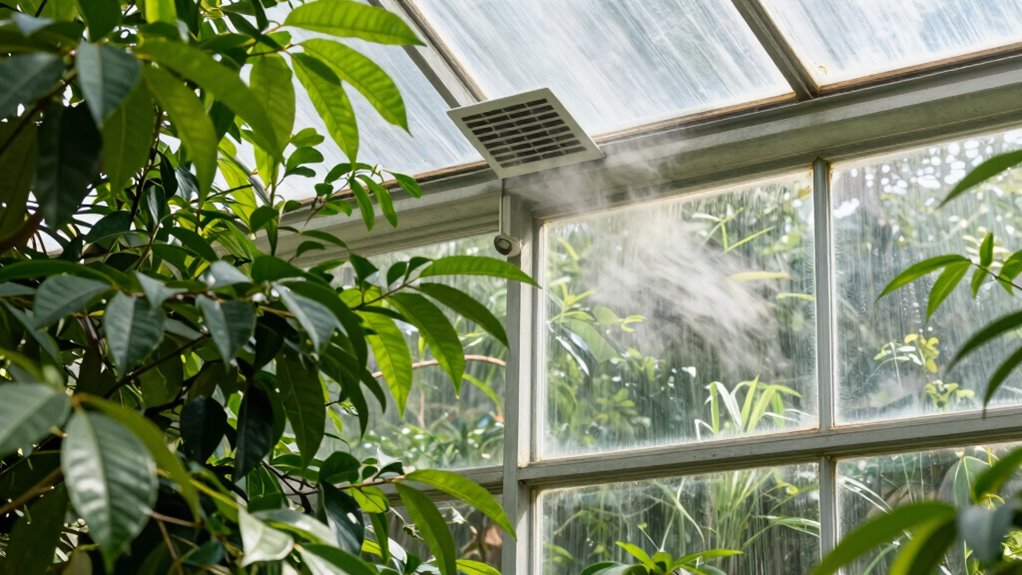
Vent placement and design play a crucial role in directing airflow within a greenhouse. Proper vent placement ensures fresh air enters where it’s needed most, promoting even temperature and humidity. Vent design affects how efficiently air moves, whether through the size, shape, or opening mechanism. For example, side vents can improve cross-ventilation, while roof vents facilitate hot air escape. Consider these factors:
- Strategic placement near heat sources or problem corners
- Larger vents for increased airflow capacity
- Automated vents for consistent operation
- Vent design that encourages smooth, unobstructed air passage
Additionally, integrating local automation systems can optimize vent operation based on real-time environmental data.
How Do Internal Obstacles and Layout Impact Airflow?
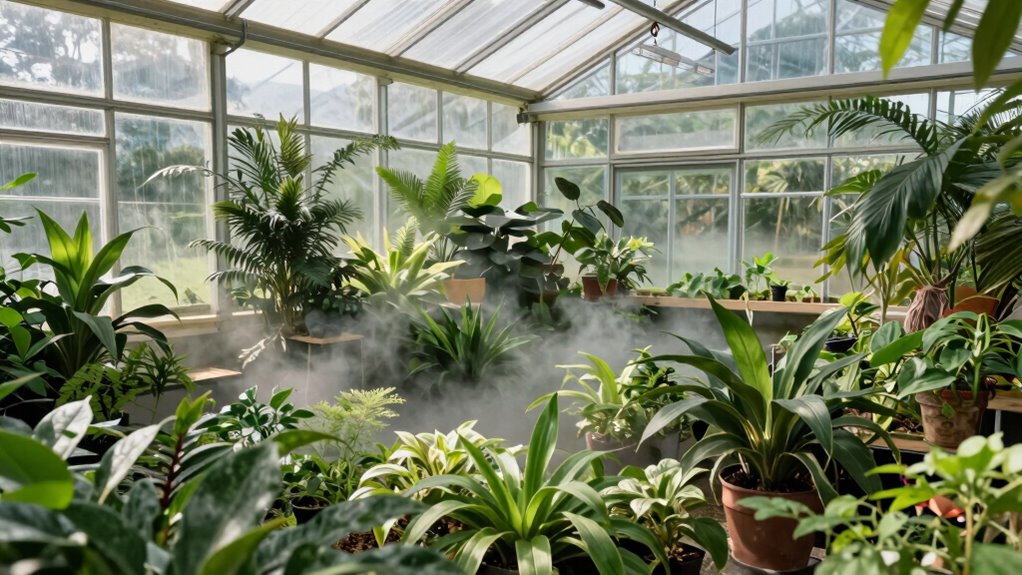
Internal obstacles and the layout of a greenhouse profoundly influence how air moves through the space. Large structures like hydroponic systems can block or redirect airflow, creating dead zones where air stagnates. Narrow pathways or densely packed plants can also hinder circulation, reducing effective ventilation. When airflow is disrupted, humidity levels may rise, fostering mold or pests, complicating pest management. Properly positioning equipment and plants helps ensure even distribution of air, minimizing areas of poor circulation. Additionally, understanding air circulation principles enables better layout planning to optimize airflow patterns. By understanding how obstacles impact airflow, you can design your layout to promote better air exchange. This not only supports healthy plant growth but also makes pest control more manageable, as pests are less likely to settle in stagnant, poorly ventilated corners.
How Can Fans and Ventilation Improve Air Circulation?

Have you ever wondered how to guarantee fresh, evenly circulated air in your greenhouse? Proper ventilation and fans can substantially improve airflow. To optimize air exchange, consider these key points:
- Place fans strategically near problem corners to promote uniform circulation
- Use oscillating fans for broader coverage and better air mixing
- Install exhaust fans at high points to remove stale air effectively
- Ensure fans are positioned to draw in fresh air from outside, encouraging continuous air exchange
- Remember that understanding airflow patterns can help you identify and address areas where circulation is weak, leading to a healthier greenhouse environment.
Troubleshooting Persistent Airflow Problems in Specific Corners
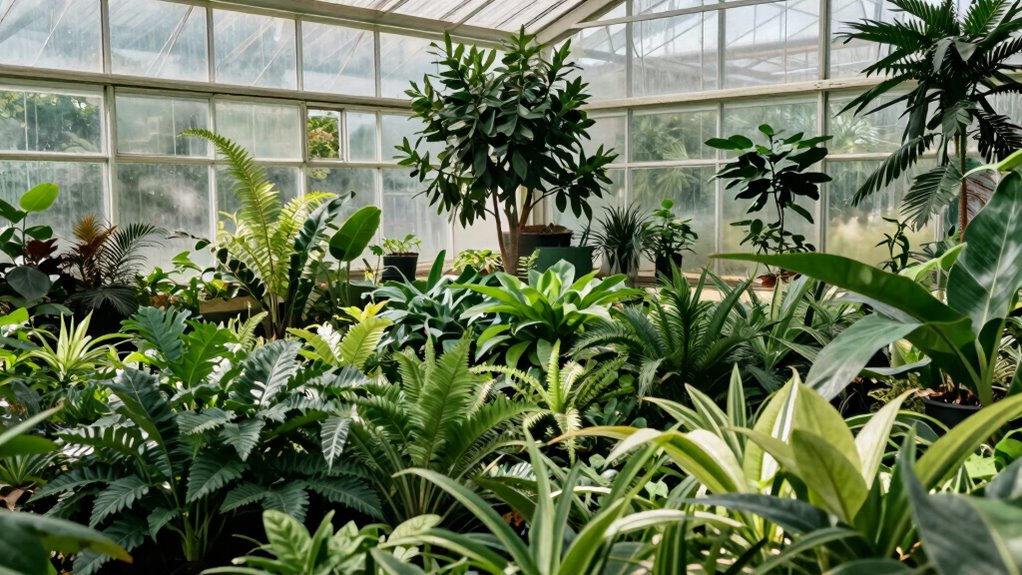
Persistent airflow issues in specific corners often signal underlying problems with fan placement or obstructions that block air movement. To troubleshoot, first check if fans are positioned correctly, ensuring they promote even airflow across all areas. Obstructions like equipment, furniture, or dense plant placement can create stagnant spots, so rearrange plants to avoid crowding, especially near problematic corners. Poor airflow can hinder humidity control, leading to uneven moisture levels that stress plants. Adjusting fan angles or adding supplemental fans can help direct air more effectively. Regularly inspect for debris or blocked vents that might restrict airflow. By optimizing fan placement and managing plant density, you can eliminate dead zones and promote consistent airflow, improving overall greenhouse conditions.
Practical Tips for Achieving Even Air Distribution

To achieve even air distribution in your greenhouse, start by carefully positioning your fans to cover all areas effectively. Use airflow sensors to monitor circulation patterns and identify uneven zones. Adjust fan placement and speed based on sensor feedback to promote uniform airflow. Incorporate the following tips:
- Place fans at strategic locations to avoid dead zones
- Use oscillating fans to improve circulation in stagnant spots
- Regularly check airflow sensors for accurate readings
- Adjust fan angles to direct air toward under-ventilated corners
Monitoring and Adjusting Airflow for Consistent Greenhouse Conditions

Effective monitoring is essential for maintaining consistent airflow in your greenhouse. By regularly checking airflow patterns and humidity levels, you can identify areas where circulation needs adjustment. Use sensors to track humidity control, ensuring it stays within ideal ranges for your plants’ health. If you notice uneven airflow or high humidity in certain corners, adjust fans, vents, or louvers accordingly. Proper airflow promotes even temperature distribution and prevents problems like mold or disease. Keep a log of your adjustments to understand how changes impact airflow and humidity. Consistent monitoring and timely adjustments help you maintain stable conditions, supporting healthy plant growth. Staying attentive to airflow patterns ultimately safeguards your plants’ health and maximizes greenhouse productivity.
Frequently Asked Questions
Can Plant Placement Affect Airflow Distribution in the Greenhouse?
Yes, plant placement affects airflow distribution in your greenhouse. When you place plants too closely, it restricts air circulation around them, creating stagnant spots. Proper plant spacing guarantees better airflow, preventing dead zones and promoting healthy growth. By strategically arranging plants and allowing enough space, you help maintain uniform airflow and temperature, reducing issues like mold or pests and ensuring all plants get the fresh air they need.
How Does Greenhouse Shape Influence Airflow Patterns?
Greenhouse shape substantially influences airflow patterns through its geometry and ventilation design. If your greenhouse has a rectangular layout, air flows along longer paths, potentially creating stagnant corners. A curved or rounded design encourages better circulation by promoting more uniform airflow. To optimize airflow, consider adjusting ventilation placement and greenhouse geometry, ensuring consistent air movement throughout the space and preventing areas from struggling with proper ventilation.
Are There Specific Climate Conditions That Worsen Airflow Issues?
Yes, specific climate conditions can worsen airflow issues in your greenhouse. High humidity buildup makes it harder for air to circulate, especially in corners where airflow naturally slows. Temperature stratification also occurs in hot, humid weather, creating layers of warm and cool air that hinder proper ventilation. When these conditions persist, they amplify airflow problems, making it essential to adjust ventilation and humidity controls to maintain ideal airflow throughout your greenhouse.
What Are the Signs of Poor Airflow Affecting Plant Health?
You notice airflow stagnation causing uneven air distribution, which leads to plant stress. Signs include mold or mildew growth, yellowing or wilting leaves, and increased pest activity. When airflow is poor, plants can’t regulate temperature or humidity effectively, making them more vulnerable to diseases. If you see these symptoms, it’s a clear sign that airflow issues are impacting your plants’ health, and you should improve ventilation promptly.
How Often Should Ventilation Systems Be Inspected for Optimal Airflow?
You should inspect your ventilation systems at least quarterly to guarantee ideal airflow. Regular ventilation maintenance prevents buildup of dust and debris that can hinder performance. Think of it as a routine check-up for your greenhouse’s health. By setting a consistent inspection frequency, you catch issues early, improve air circulation, and promote healthier plant growth. Don’t wait until problems arise—scheduled maintenance keeps your greenhouse running smoothly all year round.
Conclusion
Remember, a well-balanced greenhouse relies on good airflow, like a well-tuned orchestra. If one corner always struggles, it’s a sign to reassess your vent placement, layout, and ventilation tools. By paying attention and making small adjustments, you can guarantee even air distribution and healthier plants. After all, Rome wasn’t built in a day—patience and persistence will help you achieve the ideal environment for your greenhouse success.