
DLI, or Daily Light Integral, is a simple way to see how much light your plants get each day, directly predicting their growth speed. By measuring the total amount of light received through tools like light or PAR meters, you can adjust your grow lights for ideal results. Getting this number right helps your plants grow faster and healthier. Keep exploring to discover how to perfectly manage DLI for your crops.
Key Takeaways
- DLI measures daily light exposure, directly influencing plant photosynthesis, growth speed, and overall health.
- Maintaining the optimal DLI range for specific plants ensures efficient growth and prevents light stress.
- Accurate measurement with light sensors and proper conversion is essential for monitoring DLI effectively.
- Adjusting light intensity, duration, and spectrum based on plant stage optimizes growth speed.
- Regularly tracking and fine-tuning DLI supports healthier plants and maximizes yield potential.
What Is DLI and Why Is It Important for Plant Growth?

Understanding DLI, or Daily Light Integral, is vital because it measures the total amount of light your plants receive each day. This measurement directly impacts photosynthesis efficiency, the process by which plants convert light into energy. The light spectrum plays a fundamental role here, as different wavelengths affect how well plants can perform photosynthesis. When plants receive the right DLI, they optimize their growth rate and health. Too little light limits photosynthesis efficiency, stunting growth, while too much can cause stress or damage. By understanding DLI, you can tailor your lighting setup to guarantee your plants get the ideal amount of light across the appropriate spectrum. Additionally, considering energy-efficient lighting options can help reduce power consumption while maintaining optimal DLI levels. This knowledge helps you promote vigorous growth and healthy development, making your gardening efforts more successful.
What’s the Right DLI Range for Your Plants?
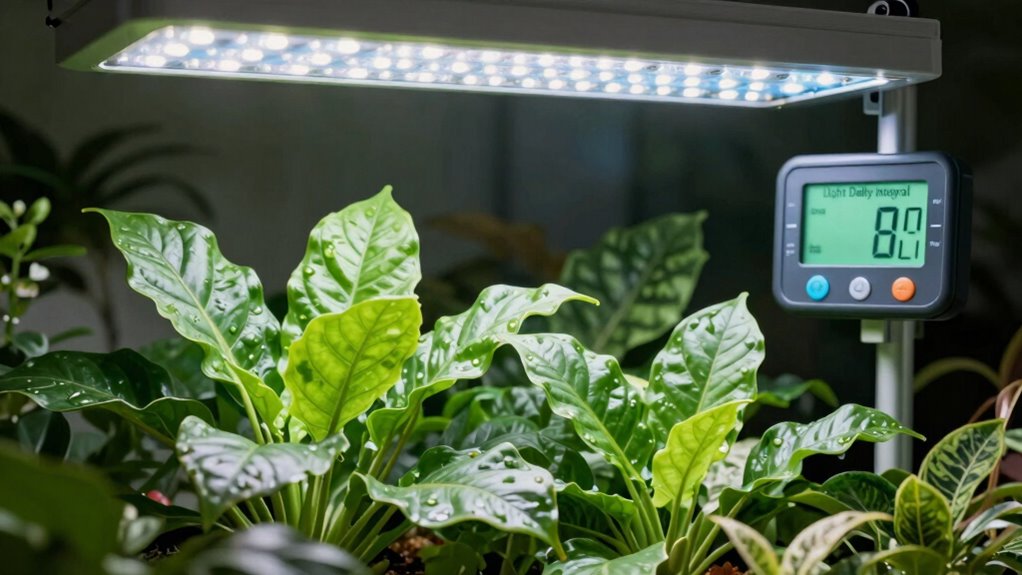
Finding the right DLI range for your plants depends on their species and growth stage, as different plants have specific light requirements to thrive. Generally, leafy greens need a DLI of about 10-12 mol/m²/day, while fruiting plants like tomatoes require around 20-30 mol/m²/day. To enhance plant photosynthesis, focus on providing a suitable light spectrum; a balanced spectrum with blue and red wavelengths is ideal for healthy growth. Too little light hampers photosynthesis, slowing growth and reducing yields, while too much can cause stress or damage. Adjust your light intensity and duration based on your plant’s needs, ensuring they receive the optimal DLI range to promote vigorous growth and maximize productivity. Incorporating light spectrum considerations can further optimize plant health and growth efficiency.
How Do You Calculate Daily Light Integral? A Simple Guide
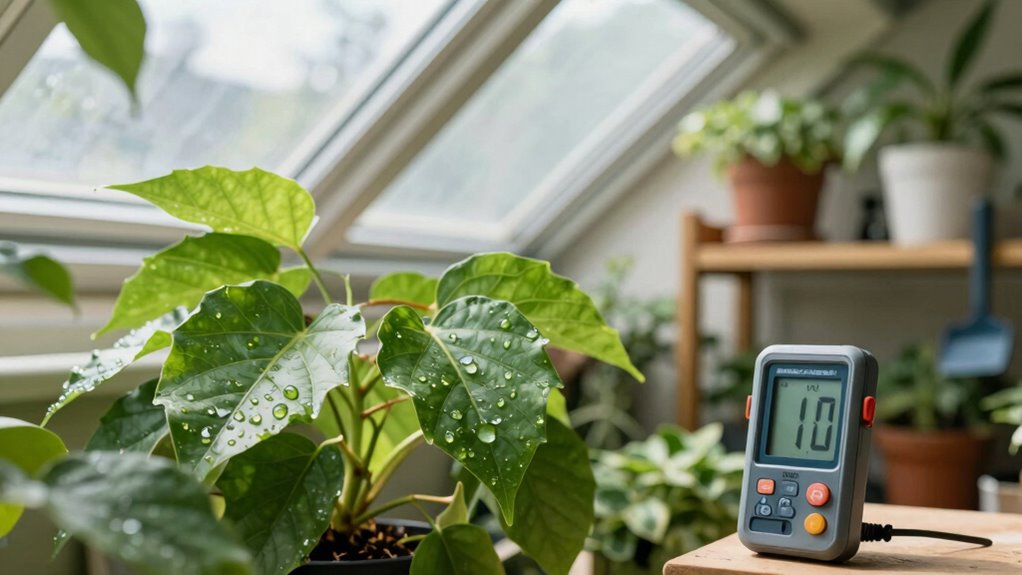
To calculate your Daily Light Integral, start by measuring the light your plants receive each day with a light meter. Then, convert those measurements into a total daily light exposure, or light integral. This straightforward process helps you understand if your plants are getting the right amount of light for healthy growth. Understanding light levels is essential for optimizing your indoor garden’s productivity and ensuring your plants develop strong, healthy foliage.
Measure Daily Light Levels
Measuring daily light levels is essential for maximizing plant growth, and calculating the Daily Light Integral (DLI) is a straightforward process once you understand the basics. You can do this with light sensors that track light intensity throughout the day. Daily monitoring helps you gauge whether your plants get enough light for healthy growth. Use a light sensor to record light levels at different times, then average those readings. Here’s a simple example:
| Time of Day | Light Level (lux) | Cumulative Light (lux-hours) |
|---|---|---|
| Morning | 10,000 | 10,000 |
| Midday | 20,000 | 30,000 |
| Afternoon | 15,000 | 45,000 |
| Evening | 5,000 | 50,000 |
Regularly check your light sensors to guarantee your plants receive consistent, sufficient light for maximum growth. Understanding how light levels vary throughout the day can help optimize your plant care strategies.
Convert To Light Integral
Wondering how to convert your light sensor readings into the daily light integral (DLI)? It’s straightforward. First, record your light measurement in micromoles per square meter per second (μmol/m²/sec). Then, multiply that number by 0.0036 to convert it into mols per day. This calculation accounts for the total amount of light your plants receive daily. Knowing your DLI helps optimize plant nutrition, ensuring your plants get enough light for healthy growth. If your light measurement fluctuates throughout the day, average the readings before converting. Accurate DLI calculations allow you to adjust lighting schedules or intensities, ultimately promoting faster growth and healthier plants. This simple process empowers you to manage light more effectively, maximizing plant development. Understanding the light measurement units used in these calculations can further improve your light management strategies.
How Light Intensity and Duration Affect Your DLI
Light intensity and duration directly influence your Daily Light Integral (DLI), determining how much usable light your plants receive each day. Increasing light duration extends the total amount of light your plants get, which can boost growth if the light quality remains high. Conversely, if the light intensity is weak, even longer light periods won’t provide enough energy for ideal growth. Light quality, meaning the spectrum and clarity of your light source, also plays a vital role; poor quality light reduces the efficiency of light absorption by your plants, lowering your DLI. Balancing light duration with appropriate intensity and maintaining high light quality ensures your plants receive enough light for healthy development. Adjusting these factors helps you maximize growth without wasting energy or risking damage. Understanding the regulatory environment surrounding lighting choices can also influence your setup and compliance.
How to Use DLI to Optimize Your Grow Lights and Boost Growth

To optimize your grow lights, start by adjusting the light intensity to match your plants’ needs. Keep a close eye on their growth progress to see how they respond. This monitoring allows you to fine-tune your setup and boost overall growth effectively. Additionally, understanding your light’s DLI (Daily Light Integral) can help you set precise light levels for optimal plant development.
Adjust Light Intensity
Adjusting light intensity is essential for maximizing your grow lights and promoting healthy plant development. When you fine-tune light levels, you’re ensuring your plants receive the right amount of energy without stress. To do this effectively, consider these key points:
- Match light intensity with your plant’s growth stage, ensuring the right light spectrum for each phase.
- Use your DLI target to determine ideal light levels, avoiding under- or overexposure.
- Remember that plant photoreceptors respond to specific wavelengths, so adjusting spectrum alongside intensity can enhance growth.
- Proper safe installation practices help maintain consistent light delivery and prevent potential hazards.
Track Growth Progress
Ever wonder how to know if your plants are getting the right amount of light? Tracking growth progress helps you assess photosynthesis efficiency and adjust your light spectrum accordingly. Observe your plants for signs of healthy development like vibrant leaves and steady growth. Use tools like a light meter to measure DLI and verify it matches the suitable range for your plant type. Keep a growth journal to record changes over time, noting how different light conditions impact growth speed. Regularly monitoring these factors allows you to fine-tune your grow lights, maximizing photosynthesis efficiency. Adjustments based on growth feedback help you optimize the light spectrum and intensity, ensuring your plants receive the ideal conditions to thrive. Consistent tracking keeps your grow on the right track for vigorous, healthy plants and is essential for understanding photosynthesis efficiency.
Common Mistakes When Measuring or Applying DLI (and How to Avoid Them)
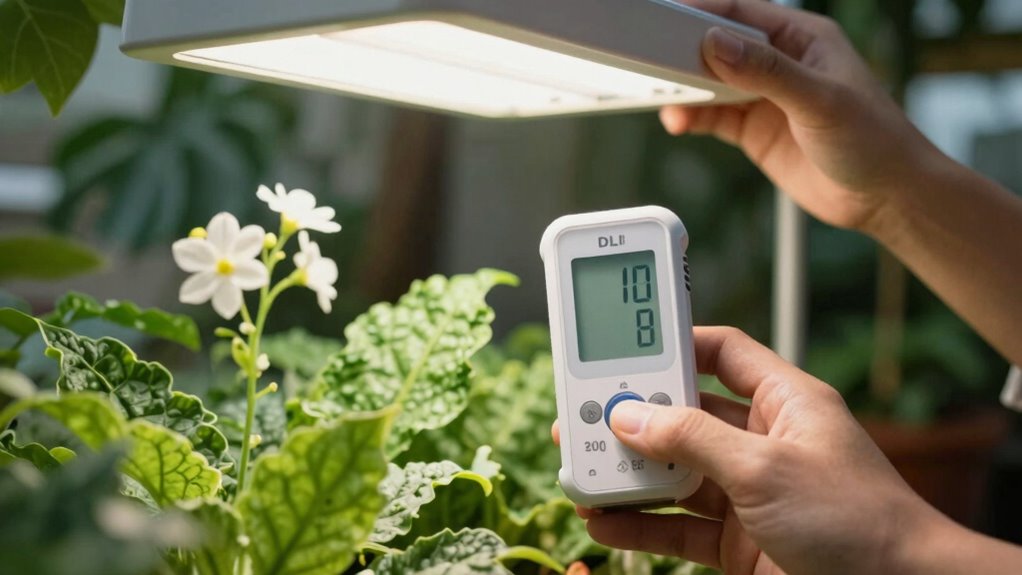
Misjudging how to measure or apply Daily Light Integral (DLI) can lead to poor plant growth and wasted resources. One common mistake is ignoring measurement accuracy, which results in incorrect DLI readings. Seasonal variation also affects light levels, so applying a fixed DLI year-round can harm your plants. To avoid these pitfalls:
Incorrect DLI measurement and ignoring seasonal changes can harm plants and waste resources.
- Rely on precise, calibrated tools for measurement
- Adjust DLI targets based on seasonal changes
- Double-check your readings regularly for consistency
- Understanding photoperiodism helps optimize lighting schedules for healthy growth
Best Tools and Methods to Monitor DLI in Your Garden
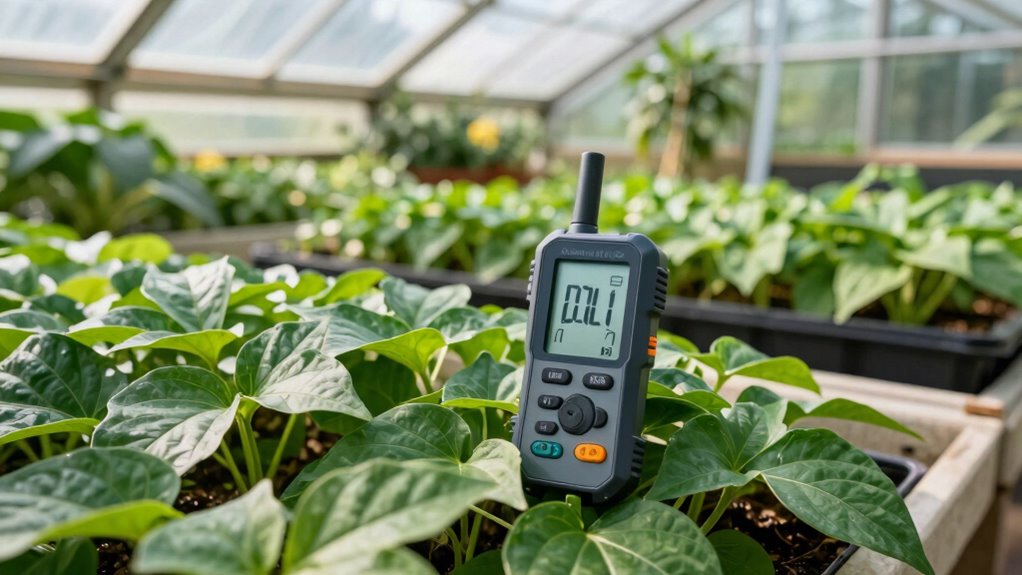
To effectively monitor DLI in your garden, choosing the right tools is essential. Use a quantum light sensor or PAR meter to measure light intensity accurately, ensuring your plants receive ideal light for healthy growth. A light meter with data logging capabilities helps track fluctuations over time, giving you insights into your plant nutrition needs. Regularly monitoring DLI allows you to adjust lighting and prevent issues like pest management problems caused by overly stressed plants. Proper light management supports balanced plant nutrition, promoting vigorous growth and reducing disease risks. Additionally, combining light measurements with environmental sensors helps optimize conditions, ensuring your plants thrive. These tools enable precise, real-time adjustments, simplifying the process of maintaining ideal DLI levels for your garden’s success.
Real-Life Examples: How Adjusting DLI Speeds Up Plant Development
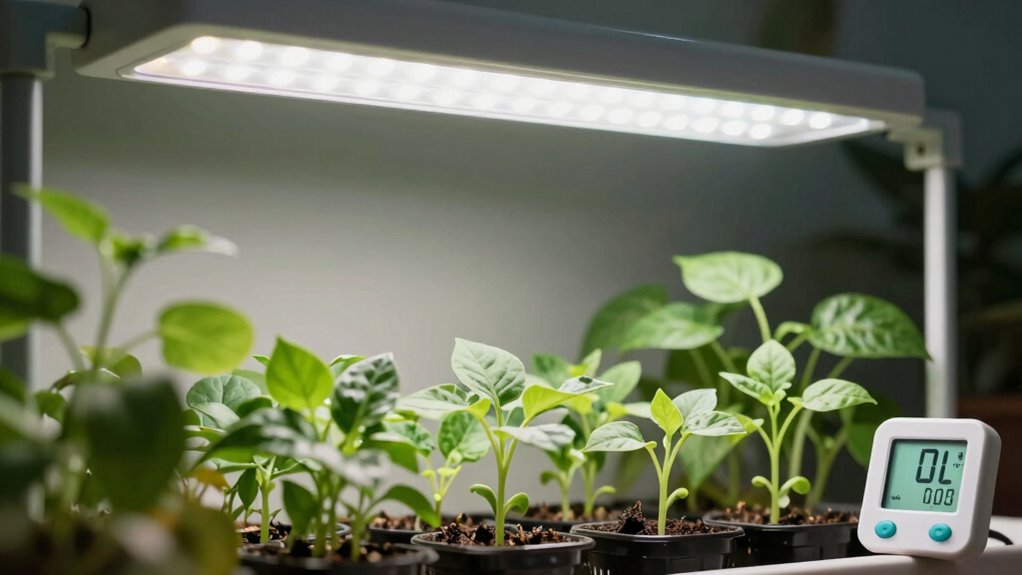
Adjusting the DLI in your garden can considerably speed up plant development by providing the ideal amount of light at each growth stage. When you tailor light levels, you enhance plant nutrition, leading to healthier, faster-growing plants. For example, increasing DLI during vegetative growth can promote lush foliage and strong stems. Conversely, reducing DLI during flowering prevents overstimulation, encouraging better yields.
Adjusting DLI optimizes plant growth and yields by matching light levels to each growth stage.
Consider these practical outcomes:
- Faster growth cycles, reducing overall time to harvest
- Improved plant health, minimizing stress-related pest issues
- Enhanced nutrient uptake, strengthening plant resilience
Tips to Improve DLI and Keep Your Plants Healthy at Every Stage

Ensuring your plants receive the right amount of light at each stage is key to maintaining their health and promoting steady growth. To improve DLI, monitor light intensity regularly and adjust your lighting setup accordingly. Proper plant nutrition supports healthy development, so supplement with the right nutrients to prevent deficiencies that could hinder growth. Keep pests in check through vigilant pest management, as infestations can stress plants and affect their ability to utilize light effectively. Using reflective surfaces can boost light distribution, ensuring even coverage. Regularly prune and remove dead or diseased leaves to optimize light exposure. By balancing light levels, plant nutrition, and pest control, you create an environment where your plants stay healthy and thrive at every stage.
Frequently Asked Questions
Can DLI Be Used for Indoor and Outdoor Plants Equally?
Yes, DLI works for both indoor and outdoor plants, but you’ll need to adjust the light spectrum to match each environment. Indoor plants benefit from a balanced spectrum that mimics natural sunlight, aiding plant adaptation. Outdoor plants naturally receive broad-spectrum sunlight, so DLI helps optimize growth by measuring light exposure. Understanding how light spectrum influences plant adaptation guarantees you provide the right amount of light for healthy growth everywhere.
How Often Should I Adjust DLI During a Plant’s Lifecycle?
You should adjust the DLI-based lighting schedule as your plant progresses through its lifecycle. During vegetative growth, increase the light intensity gradually to promote healthy development. As flowering begins, reduce or modify the light to prevent stress. Regular growth adjustments ensure ideal light delivery, matching your plant’s needs. Keep monitoring your plant’s response and tweak the lighting schedule accordingly to maximize growth and yield.
Does DLI Vary With Different Plant Species?
Think of DLI as a tailored suit—different for every plant species. Yes, DLI varies with species variation because each plant has a unique light response. Some thrive in intense sunlight, while others prefer shade. You need to adjust your light levels accordingly, observing how your plants respond. Understanding these differences helps you optimize growth, ensuring each species gets just the right amount of light to flourish.
What Are the Signs of Incorrect DLI Levels in Plants?
If your plants show slow growth, pale leaves, or leaf curling, you might have dli deficiencies, indicating insufficient light. Conversely, signs of light stress include bleaching, scorched leaf edges, or leaf drop. Keep an eye on these symptoms to adjust your light levels promptly. Proper dli helps prevent stress and promotes healthy growth, so monitoring your plants regularly ensures they get the right amount of light for ideal development.
Is DLI Applicable for Hydroponic or Soil-Based Growing Systems?
You’ll be surprised to learn that DLI applies just as much to hydroponic as soil-based systems. Whether you use a grow light or rely on natural sunlight, understanding the light spectrum and how much light your plants receive is vital. DLI helps you fine-tune your light setup, ensuring your plants thrive. So, don’t dismiss the importance of light management—your plants depend on it, no matter the growing medium.
Conclusion
By mastering DLI, you hold the key to unlocking your plants’ full potential—like tuning an instrument to perfect harmony. When you understand and adjust light levels, growth becomes a symphony of healthy, vibrant plants. Don’t let your garden suffer in the shadows; instead, light the way with simple, effective measures. With DLI as your guide, you’ll cultivate a thriving green space where every leaf and bud sings in perfect tune.