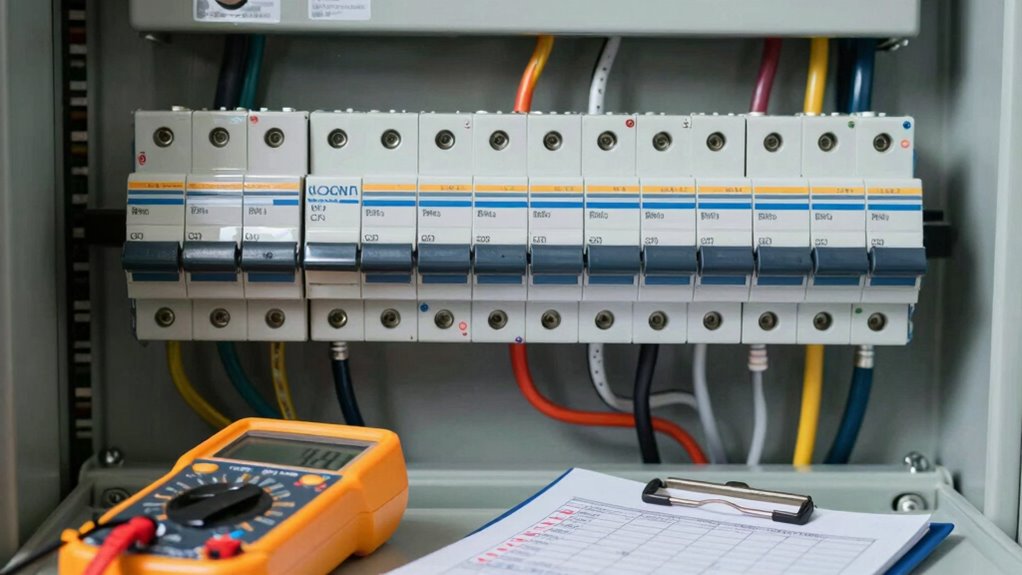
To prevent tripped breakers all winter, start by listing all appliances and their wattage, then check your circuits’ capacity. Distribute high-energy devices evenly across outlets and avoid overloading power strips. Use a plug load meter to monitor consumption and stay within circuit limits. Regularly inspect wiring and appliances for damage. If breakers keep tripping, or you’re unsure about load balance, consulting an electrician is a smart move—there’s more to optimize your system effectively.
Key Takeaways
- List all appliances and their wattage to identify high-energy devices increasing winter load.
- Distribute appliances evenly across circuits to prevent overloading specific breakers.
- Check breaker ratings and ensure total connected load does not exceed circuit capacity.
- Use plug load meters to monitor power consumption and detect overload risks early.
- Regularly inspect wiring and appliances for damage, and contact an electrician if breakers trip frequently.
Why Your Breakers Trip in Winter and How to Prevent It

Have you ever wondered why your circuit breakers trip more frequently during winter? Cold weather often leads to increased energy demand, causing your appliances to work harder and draw more power. This surge can overwhelm your electrical system, especially if your appliances aren’t energy efficient. To prevent trips, focus on energy conservation by unplugging unused devices and upgrading to energy-efficient appliances. These improvements reduce the electrical load, easing pressure on your circuit breakers. Additionally, proper maintenance and ensuring your electrical system is in good condition can help handle seasonal spikes. Being proactive about appliance efficiency and managing your energy use will keep your breakers from tripping unexpectedly, ensuring a safer, more reliable winter electrical system. Regularly checking electrical safety fundamentals can also help you identify potential issues before they cause problems.
How to Check Your Home’s Electrical Demands
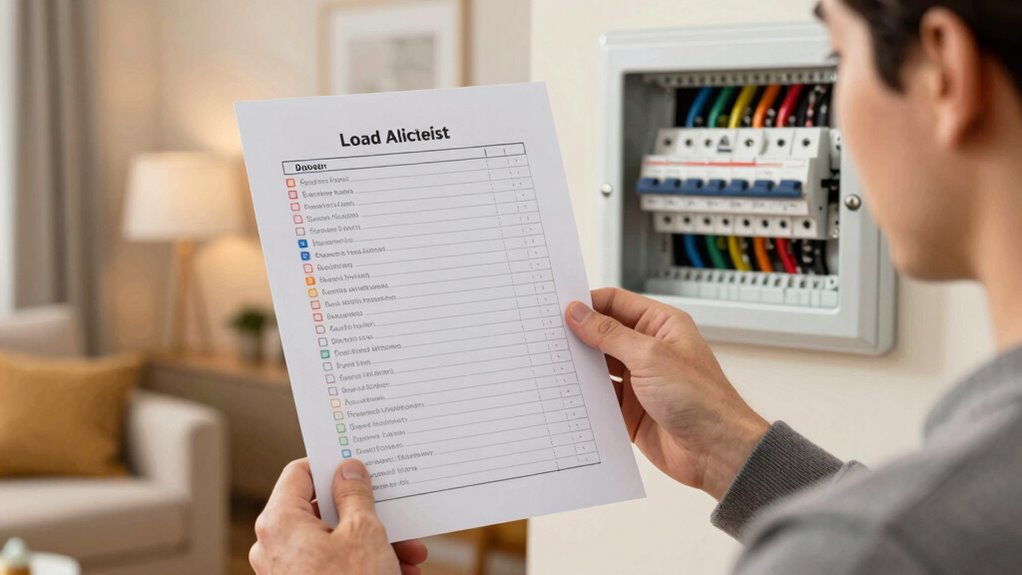
Understanding your home’s electrical demands is key to preventing overloads and keeping your system running smoothly, especially when seasonal demands increase. Start by listing all the appliances and devices you regularly use, noting their wattage. Check for signs of power surges, like flickering lights or tripped breakers, which indicate your system may be strained. Ensuring outlet safety is vital; avoid overloading outlets with multiple high-wattage devices. Use a plug load meter to measure how much power each outlet handles and identify potential overload points. If certain circuits are consistently maxed out, consider redistributing devices or upgrading your electrical system. Being aware of your projector’s electrical needs can help you prevent tripped breakers and prolong the lifespan of your home’s wiring.
How to Assess Your Circuit Capacity and Overload Risks
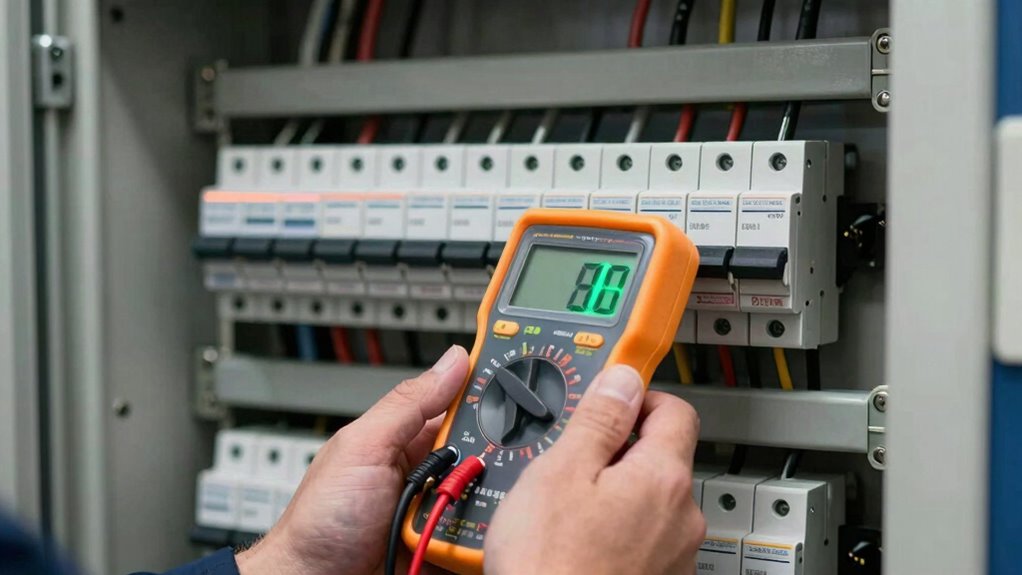
To accurately evaluate your circuit capacity and identify overload risks, start by locating your main electrical panel and reviewing the circuit breaker labels. Check each breaker’s rating, usually indicated in amperes, to determine your circuit capacity. Next, gauge your power consumption by noting the devices and appliances connected to each circuit. Add up their wattages or amps to see if they approach or exceed the breaker’s limit. Overloading occurs when the total power consumption surpasses a circuit’s capacity, increasing the risk of tripped breakers or electrical hazards. Regularly examining your circuits ensures you don’t unintentionally overload them, especially during winter when certain appliances draw more power. Being aware of vetted electrical safety practices can further help you prevent overload risks and keeps your electrical system running safely.
Easy Ways to Balance Your Electrical Load
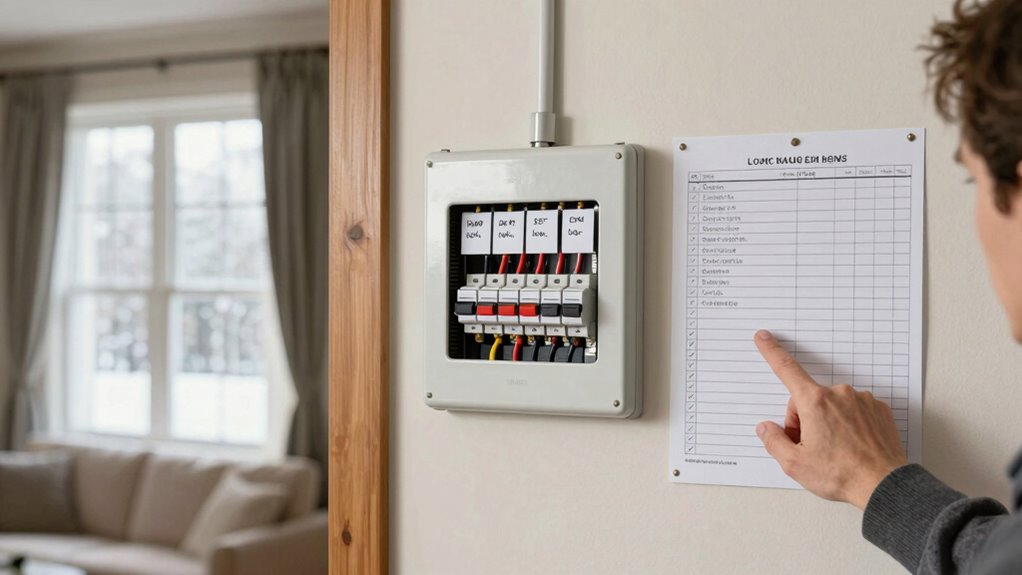
Balancing your electrical load is essential for maintaining a safe and efficient system. Start by evenly distributing appliances across different outlets and circuits to prevent overloads. Avoid plugging too many devices into a single power strip, as this can lead to overheating and pose fire risks. Instead, use multiple power strips safely, ensuring they are rated for the total load. Be mindful of high-energy appliances like space heaters or microwaves; connect them directly to wall outlets rather than extension cords or overloaded strips. Regularly check your appliance distribution and keep an eye on power strip safety. Proper electrical load management helps prevent tripped breakers, reduces strain on your electrical system, and keeps everything running smoothly during the winter months.
How to Monitor Your Electrical System During Winter

Are you regularly checking your electrical system during winter to prevent potential hazards? Using smart meters helps you monitor your energy consumption in real-time, making it easier to spot unusual spikes that could signal overloads. Keep an eye on solar panels if you have them; winter sunlight is limited, but monitoring their output guarantees they’re functioning properly and aren’t adding strain to your system. Regularly reviewing data from these devices allows you to identify patterns and address issues early, preventing breaker trips. Additionally, check for signs of wear or damage to wiring and appliances, especially as cold weather can exacerbate existing problems. Staying vigilant with smart meters and solar panel monitoring keeps your electrical system safe and efficient throughout the winter months. Incorporating modern kitchen technology like connected devices can further enhance your home’s overall safety and energy management during colder months.
When to Call an Electrician to Prevent Breaker Trips

Wondering when it’s time to call an electrician to prevent breaker trips? If you notice ongoing trips or flickering lights, it’s a sign to seek professional help. You should call an electrician if:
- Your electrical panel shows signs of wear or corrosion, indicating the need for electrical panel maintenance.
- Circuit breakers trip repeatedly, even after reducing load.
- You experience frequent power surges or lightning strikes that threaten your system.
- You want to upgrade or add surge protection installations to safeguard your appliances and wiring.
- There are signs of compromised safety and performance, which can put your home at risk if left unaddressed.
An electrician can assess your system, ensure proper load distribution, and install surge protectors. Addressing issues early prevents damage, maintains safety, and keeps your home running smoothly all winter.
Frequently Asked Questions
Can Using Energy-Efficient Appliances Reduce Breaker Trips in Winter?
Using energy-efficient appliances can definitely reduce breaker trips in winter. They consume less energy, which lowers your overall electrical load. When your appliances are more efficient, they draw less power during peak times, helping prevent overloads. By choosing appliances with higher efficiency ratings, you guarantee your electrical system handles winter’s increased energy demands more smoothly, decreasing the chances of tripped breakers and keeping your home powered reliably.
What Specific Signs Indicate a Circuit Is Overloaded?
You’ll notice circuit warning signs like flickering lights, frequent breaker trips, or outlets that feel warm or hot. Overload indicators include a circuit that’s constantly running at maximum capacity or multiple appliances plugged into a single outlet causing sparks or buzzing sounds. If you see these signs, it’s a clear sign your circuit is overloaded and needs a reduction in electrical demand to prevent further issues.
How Often Should I Inspect My Electrical System During Winter?
Ever wonder how often you should inspect your electrical system during winter? It’s best to check your electrical panel maintenance at least once every three months, especially before and after heavy usage periods. Look for signs of wiring upgrades needed, like discoloration or burning smells. Regular inspections help prevent overloads and tripped breakers, ensuring your system stays safe and reliable all winter long. Stay proactive for peace of mind.
Are Smart Home Devices Helpful in Preventing Breaker Trips?
Yes, smart home devices can help prevent breaker trips. Smart home automation allows you to control and schedule your appliances, reducing overloads during peak times. Energy monitoring systems give you real-time data on your power usage, so you can identify and manage high-demand devices before they trip the breaker. By using these smart technologies, you stay proactive, ensuring your electrical system stays balanced and safe all winter long.
What Are Common Mistakes Homeowners Make With Electrical Load Management?
You often overestimate your circuit capacity and overload outlets, leading to breaker trips. Don’t forget to evenly distribute your load across circuits; plugging multiple high-wattage devices into a single outlet can cause issues. Regularly check your breaker labels and avoid daisy-chaining power strips. By managing your load carefully and understanding your circuit capacity, you prevent trips and keep your electrical system running smoothly all winter.
Conclusion
By keeping your electrical load in check, you prevent frustrating breaker trips and enjoy a warm winter without interruptions. While simple checks can often solve minor issues, don’t forget that some problems require professional expertise. Balancing your system isn’t just about avoiding inconvenience; it’s about safeguarding your home’s safety and efficiency. In the end, proactive maintenance is your best defense—ensuring comfort and peace of mind amidst the cold, calm winter months.