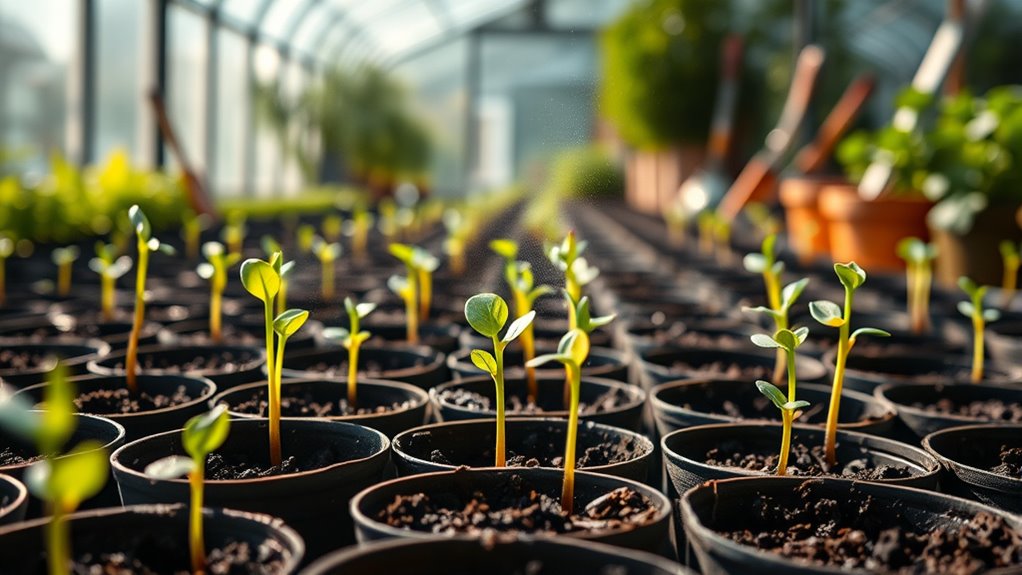

To grow strong seedlings in your greenhouse, guarantee proper ventilation by adjusting vents or fans based on weather conditions. Open vents on warm days to prevent overheating and promote fresh air, then close them at night to protect against cold. Maintain gentle, consistent airflow to avoid stress and reduce fungal issues. Proper hardening involves gradually exposing seedlings outdoors. For more detailed tips on creating ideal conditions, keep exploring how to optimize your greenhouse environment.

Get garden gear delivered free with Prime
- Fast, free delivery on millions of items
- Prime Video, Amazon Music and more included
- Member-only deals all year
Key Takeaways
- Ensure proper greenhouse ventilation by opening vents on warm days and closing them at night for optimal airflow.
- Use gentle, consistent airflow to strengthen seedlings and prevent fungal issues like damping-off.
- Gradually harden seedlings outdoors to build resilience before transplanting.
- Manage temperature and humidity carefully to prevent overheating, chilling, or excess moisture.
- Provide appropriate soil, light, and watering practices to promote healthy, vigorous seedling growth.
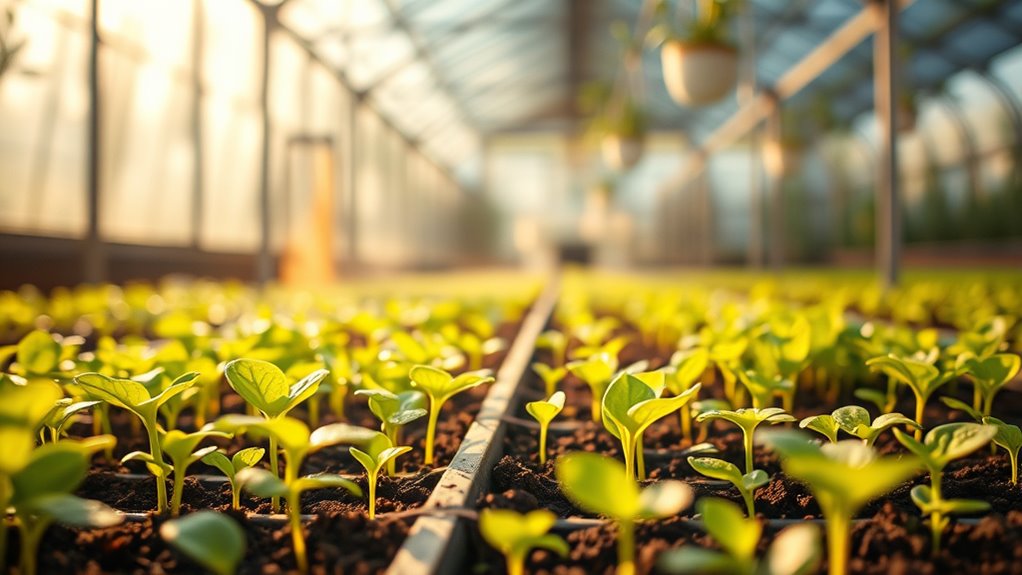
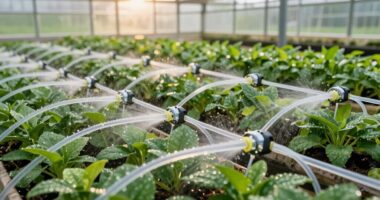
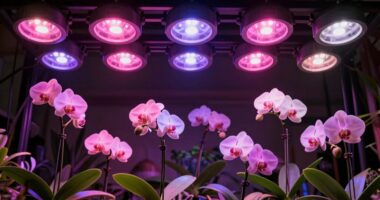
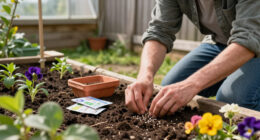
Starting seeds in a greenhouse gives you a head start on the growing season, allowing young plants to develop in a controlled environment. To maximize your success, paying attention to greenhouse ventilation is crucial. Proper ventilation helps regulate temperature and humidity, preventing your seedlings from overheating or becoming too humid, which can lead to diseases like damping-off. Make sure your greenhouse has adjustable vents or fans so you can fine-tune airflow. Good airflow also reduces the risk of fungal issues and promotes stronger, healthier seedlings by encouraging sturdy stem growth. Keep an eye on weather conditions and adjust ventilation accordingly, especially during warmer days when excess heat can stress your young plants. Additionally, incorporating proper airflow techniques can significantly enhance seedling health and vigor. Once your seedlings have sprouted and gained some size, you’ll want to think about seedling hardening. This process involves gradually acclimating your young plants to outdoor conditions, making them more resilient when they finally go into the garden. Before transplanting, start by exposing your seedlings to outdoor conditions for a few hours each day, increasing the duration gradually over a week or two. During this period, keep an eye on weather forecasts to avoid exposing them to harsh sun, strong winds, or cold temperatures. Hardening off reduces transplant shock and encourages stronger root systems, which are essential for mature plant health. As you harden your seedlings, continue to manage greenhouse ventilation carefully. On warm days, open vents to prevent overheating and ensure fresh air circulation, but on cooler nights, close them to protect your plants from chilling. This balance helps your seedlings adapt smoothly to outdoor environments. Maintaining a consistent, gentle airflow during this process is key—sudden drafts or extreme temperature changes can stress your plants. Also, be mindful of seedling development stages, as different phases may require different environmental adjustments. Ensuring that your greenhouse setup includes ventilation systems that are effective and easy to control can make a significant difference. Additionally, choosing the right soil mixture tailored for seedlings can improve their strength and reduce the risk of damping-off. Being aware of light requirements during each growth stage can further optimize seedling vigor and overall health. When you’re ready to plant outside, your seedlings should be sturdy, with healthy stems and vibrant leaves, indicating they’ve successfully undergone the hardening process. In addition to ventilation and hardening, pay attention to watering and lighting inside your greenhouse. Overwatering can lead to weak, leggy seedlings, while insufficient light can cause poor growth. Use grow lights if natural sunlight is limited, and ensure your watering schedule keeps the soil moist but not waterlogged. Combining good airflow, proper hardening, and attentive care sets the foundation for robust seedlings that will thrive once transplanted into your garden. With these practices, you’re giving your plants the best chance to develop strong roots, healthy foliage, and a productive growing season ahead.
As an affiliate, we earn on qualifying purchases.
Frequently Asked Questions
How Often Should I Water Seedlings in a Greenhouse?
You should water your seedlings based on their specific needs, typically keeping the soil consistently moist but not waterlogged. Check the watering frequency regularly, aiming to avoid overwatering or underwatering. Maintain proper humidity control in your greenhouse, as high humidity can reduce evaporation, while low humidity may dry out seedlings quickly. Adjust your watering schedule accordingly, ensuring seedlings stay healthy and strong without excess moisture that could lead to disease.
What Soil Mix Is Best for Greenhouse Seed Starting?
Imagine giving your seedlings a luxurious spa treatment with the perfect soil mix. You should choose a light, well-draining blend rich in soil nutrients, like a mix of peat moss, vermiculite, and compost. Prior to planting, soil sterilization helps eliminate pests and diseases, ensuring a healthy start. This thoughtful combination provides your seedlings with the ideal environment to thrive and grow into strong, vibrant plants.
How Can I Prevent Leggy Seedlings in a Greenhouse?
To prevent leggy seedlings, you should focus on proper lighting techniques and seedling spacing. Make sure your seedlings get enough light—ideally, use grow lights placed close enough to prevent stretching. Additionally, maintain adequate seedling spacing to avoid overcrowding, which can lead to weak, leggy plants. Keep the environment consistent, and avoid sudden temperature changes. These steps help your seedlings stay healthy, sturdy, and well-developed.
When Is the Optimal Time to Transplant Seedlings Outdoors?
Coincidentally, the best time to transplant your seedlings outdoors depends on seasonal timing and weather considerations. You should wait until the danger of frost has passed and daytime temperatures consistently stay above 55°F. Keep an eye on local forecasts and soil conditions. Transplant when seedlings are strong, with several true leaves, and the weather is stable. This guarantees healthy growth and minimizes transplant shock, giving your plants a better start.
What Are Common Pests Affecting Greenhouse Seedlings?
You should regularly inspect your greenhouse seedlings for common pests like aphids, fungus gnats, and whiteflies. Pest identification helps you spot issues early, so you can act quickly. Use natural pest control methods, such as introducing beneficial insects or applying neem oil, to keep pests at bay. Staying vigilant and practicing pest identification ensures your seedlings stay healthy and strong, giving them the best start in your growing season.
Conclusion
With the right tips, you’re well on your way to growing strong, healthy seedlings in your greenhouse. Keep in mind, patience is key—think of it as planting the seeds for future success. Stay attentive, provide proper care, and give your plants the time they need to flourish. Before you know it, you’ll be harvesting a bounty, proving that good things come to those who nurture their green thumbs. Happy gardening!
Fall yard work Picks
leaf blowers
As an affiliate, we earn on qualifying purchases.