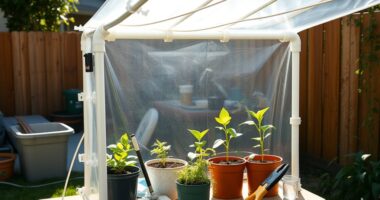
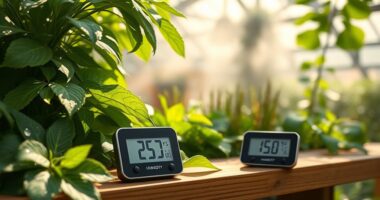
Water barrels store heat by absorbing sunlight and warm air, acting as thermal mass to regulate indoor temps. They release heat when the environment cools, helping keep your space comfortable. Factors like placement, insulation, and weather impact their performance—poor insulation or drafts can cause heat loss. To get the most from your barrels, guarantee proper insulation and strategic positioning. Keep exploring to discover how to maximize their effectiveness and avoid common pitfalls.
Key Takeaways
- Water barrels store heat by absorbing sunlight and warm air, releasing it gradually as surroundings cool.
- Proper placement in direct sunlight and insulation are crucial for maximizing heat absorption and retention.
- Poor insulation or placement in windy, shaded, or drafty areas causes rapid heat loss, reducing effectiveness.
- Container material affects heat transfer; metal conducts heat quickly, while insulated or reflective materials improve retention.
- In cold climates or during winter, water barrels may struggle to store heat effectively without additional insulation or solar input.
What Is Thermal Mass and How Do Water Barrels Store Heat?

Thermal mass refers to materials that can absorb, store, and release heat efficiently. Water barrels are a practical example, storing heat during the day and releasing it at night, helping regulate indoor temperatures. To maximize their effectiveness, you should consider insulation techniques to prevent heat loss. Installing solar panels can complement thermal mass by harnessing sunlight to warm the water barrels naturally. Proper placement in direct sunlight ensures they absorb maximum heat, reducing reliance on electrical heating. Additionally, insulating around the barrels minimizes heat escape, making your system more efficient. Combining water barrels with well-planned insulation and solar panels creates an eco-friendly approach to heating, leveraging natural energy sources and reducing utility costs. Understanding thermal properties can further enhance the efficiency of your thermal mass system by guiding material choice and design. This synergy enhances thermal mass’s ability to stabilize indoor temperatures throughout the day.
How Do Water Barrels Absorb and Release Heat in Real Life?

Water barrels absorb heat through direct contact with warm air or sunlight, gradually increasing their temperature. When the surroundings cool down, the water releases stored heat, helping to regulate nearby temperatures. Several factors, like water volume and insulation, influence how quickly and effectively this process occurs. Additionally, the thermal mass of water allows it to store and release heat over extended periods, making it an effective method for temperature regulation in various environments.
Heat Absorption Process
When sunlight hits a water barrel, the water inside begins to absorb the heat energy, causing its temperature to rise. This process, known as solar heating, depends on the barrel’s exposure and insulation techniques. Proper insulation helps retain absorbed heat, making the process more efficient. The water’s heat absorption depends on factors like surface area, material, and sunlight intensity. As the water warms, it gradually releases heat, especially when temperatures drop. To understand this better, consider the table below:
| Factor | Effect on Heat Absorption | Effect on Heat Release |
|---|---|---|
| Sunlight exposure | Increases absorption | Accelerates release |
| Insulation quality | Retains heat longer | Slows heat loss |
| Water volume | Larger volume absorbs more heat | Prolongs release |
| Water temperature | Higher initial temp speeds up | Enhances release rate |
| Material of barrel | Affects conduction efficiency | Influences heat retention |
Additionally, thermal mass is determined by the material’s ability to store and transfer heat, which impacts the effectiveness of water barrels in heat regulation.
Factors Affecting Release
The rate at which heat is released from a water barrel depends on several factors that influence how quickly it cools down. Insulation efficiency plays a key role—well-insulated barrels retain heat longer, slowing the release process. Conversely, poor insulation allows heat to escape more rapidly. Ambient temperature also impacts release rates; if the surrounding environment is cooler, the water will lose heat faster, accelerating cooling. Additionally, exposure to sunlight or wind can increase heat loss. Understanding these factors helps you predict how long your water barrel can act as a thermal mass. To maximize heat retention, improve insulation and shield the barrel from drafts or direct sunlight. This way, you ensure more consistent heat release aligned with your heating needs. Free floating conditions can also influence how effectively water barrels store and release heat, especially in open outdoor settings.
What Factors Influence Your Water Barrel’s Heating and Cooling?
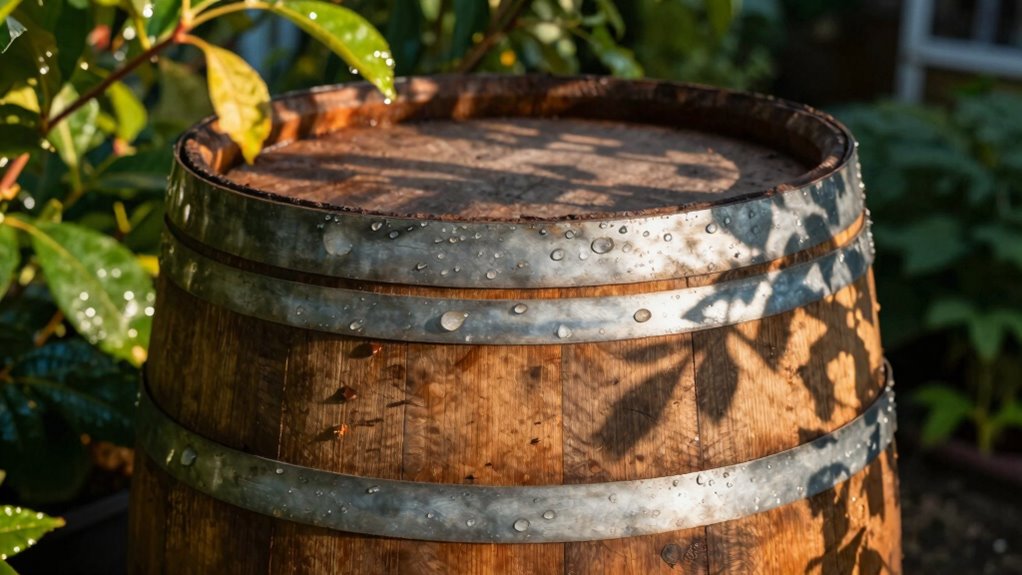
Several factors determine how your water barrel heats up or cools down, affecting its overall temperature management. First, insulation efficiency plays a key role—better insulation slows heat exchange, keeping your water warmer or cooler longer. Second, the container material impacts heat transfer; materials like metal conduct heat quickly, while plastics or wood insulate better. Third, the amount of sunlight exposure influences temperature changes: direct sunlight heats the water rapidly, whereas shaded locations help maintain a stable temperature. Additionally, the presence of damp conditions can affect how quickly heat is lost or gained through evaporation. By understanding these factors, you can optimize your water barrel’s performance. Ensuring proper insulation and selecting the right container material can considerably improve heat retention or dissipation, helping you manage your thermal mass more effectively.
Why Might Your Water Barrel Fail to Keep Things Warm?
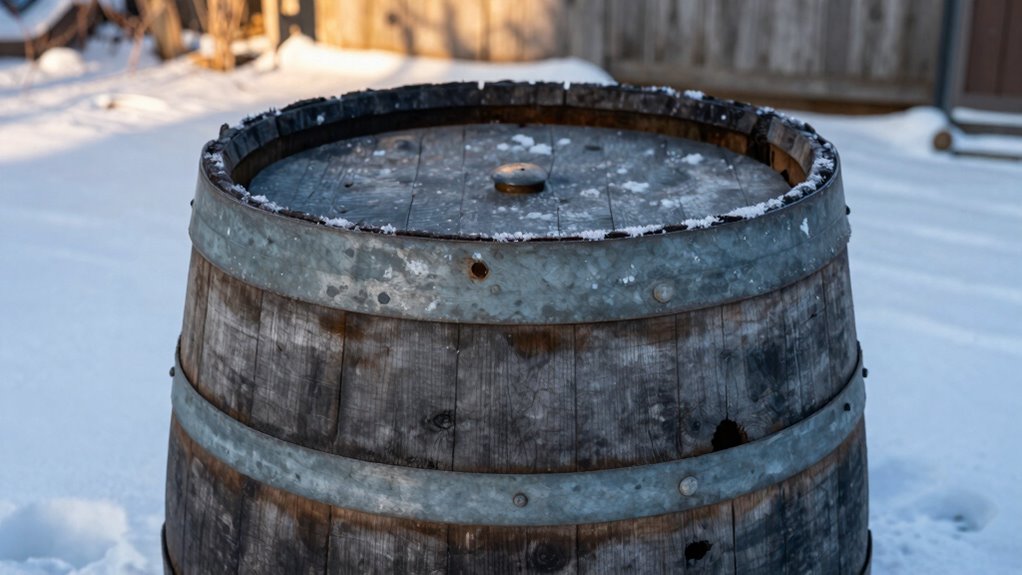
Your water barrel may struggle to stay warm if insulation isn’t effective or if the container material conducts heat away quickly. Without proper insulation techniques, heat escapes rapidly, making it hard to maintain warmth. If you rely on solar panels, inadequate insulation can prevent stored heat from building up effectively. Additionally, materials like metal conduct heat away more rapidly than plastic or wood, worsening heat loss. To visualize this, consider the impact of different factors:
| Factor | Effect | Solution |
|---|---|---|
| Poor insulation | Heat escapes quickly | Use thicker or reflective insulation |
| Container material | Conducts heat away rapidly | Switch to insulated containers |
| Lack of solar input | Less heat absorption | Optimize solar panel placement |
| Environmental conditions | Cold wind accelerates heat loss | Shelter your barrel |
| Insufficient insulation | Limits heat retention | Apply effective insulation techniques |
| Thermal conductivity | Affects how quickly heat is lost | Choose container materials with low conduction |
How Can You Maximize the Heat Storage of Water Barrels?
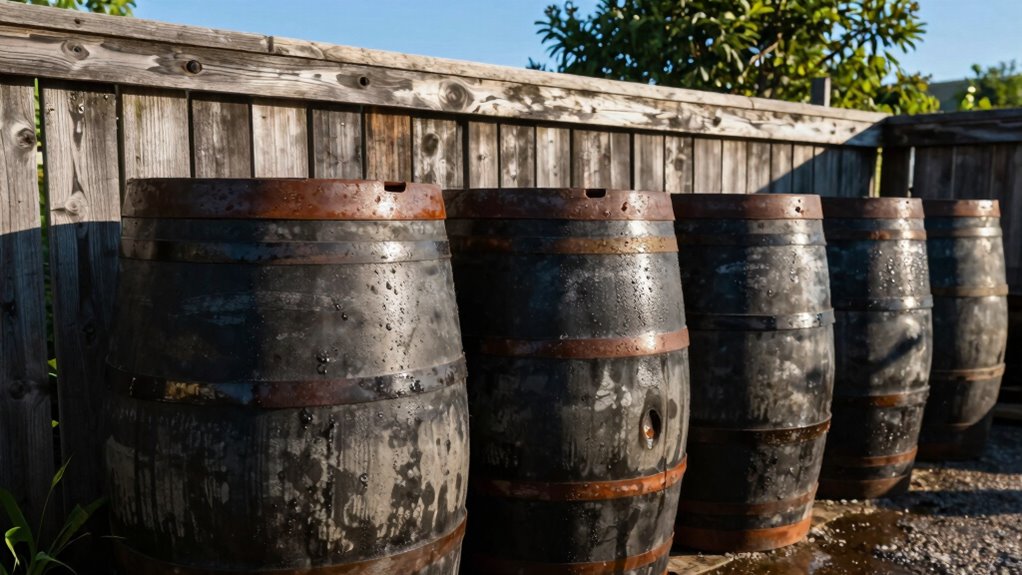
Maximizing heat storage in water barrels requires focusing on effective insulation and strategic placement. To improve insulation techniques, wrap your barrel with foam or reflective insulation to reduce heat loss. For placement strategies, position the barrel in a sunny spot or near a heat source, ensuring it absorbs maximum warmth during the day. Additionally, consider elevating the barrel slightly off the ground to minimize heat transfer to cooler surfaces. Understanding thermal mass can help you better grasp how water barrels retain heat and how to optimize their performance. Here are some key tips:
- Use high-quality insulation materials to minimize heat loss.
- Place the barrel where it gets direct sunlight or near a heat source.
- Elevate the barrel to prevent heat conduction to cold surfaces.
These steps help you optimize heat storage and maintain warmer water longer.
Common Mistakes That Reduce Water Barrel Effectiveness

One common mistake that reduces water barrel effectiveness is neglecting proper insulation. If you leave insulation gaps around your barrel, heat escapes more easily, decreasing its ability to store and release warmth efficiently. Additionally, improper placement of the barrel, such as positioning it where it’s exposed to drafts or direct sunlight, can hinder thermal performance. These issues create uneven heating and cooling, making the water less effective as a thermal mass. To maximize efficiency, verify your barrel is fully insulated with no gaps, and place it in a location protected from drafts but exposed to sunlight or heat sources. Proper insulation and placement help your water barrel work as intended, providing consistent heat storage and reducing energy waste.
Is a Water Barrel the Best Thermal Mass Solution for You?
Before choosing a water barrel, consider whether it fits your budget and if you can access enough materials easily. Think about your local climate—water heats and cools differently depending on where you live. These factors can determine if a water barrel is truly the best thermal mass solution for your needs. Additionally, evaluating the market options available can help you make an informed decision that aligns with your investment goals.
Cost and Accessibility
A water barrel can be an affordable and accessible option for adding thermal mass to your space, but it’s important to contemplate whether it fits your budget and available resources. When considering cost considerations, keep in mind that: 1. Water barrels are generally inexpensive upfront, making them budget-friendly for many DIY projects. 2. You may face accessibility challenges if suitable locations or materials are limited in your area. 3. Shipping or transportation costs could add up if you need to order barrels or supplies from distant suppliers. 4. Understanding the physics of thermal mass can help you optimize the effectiveness of your water barrel setup. While water barrels are often cost-effective and simple to implement, evaluate your space and resources carefully. This way, you’ll determine if they’re truly the best fit for your thermal mass needs or if alternative solutions might suit you better.
Climate Suitability
Considering your climate is essential when deciding if a water barrel is the best thermal mass solution for your space. Climate considerations play a key role in its effectiveness, as water’s ability to store and release heat varies with regional applicability. In moderate or temperate climates, water barrels can help stabilize indoor temperatures by absorbing heat during the day and releasing it at night. However, in extremely cold or hot climates, their performance may diminish, and they might require additional insulation or heating solutions. You should evaluate your area’s temperature fluctuations and seasonal patterns before choosing a water barrel. Ultimately, understanding your local climate helps ensure that a water barrel will contribute positively to your thermal management strategy.
Frequently Asked Questions
How Long Can Water Barrels Retain Heat During Extended Periods?
Water barrels typically retain heat for about 24 to 48 hours, depending on insulation and weather conditions. Your thermal retention capacity diminishes as heat dissipates into the surroundings, especially during extended periods of cold or wind. To maximize heat retention, insulate your water barrels well. Keep in mind that without proper insulation, heat dissipates faster, reducing the duration your barrels can effectively store warmth during prolonged cold spells.
Can Water Barrels Freeze and Break in Cold Climates?
Yes, water barrels can freeze and break in cold climates if you don’t take precautions. The freeze risk undermines the structural integrity of the barrel, causing cracks or even rupture. To prevent this, you should insulate the barrel, ensure it’s properly sealed, and consider using antifreeze solutions or draining the water during extreme cold spells. These steps help maintain the barrel’s durability and keep it functioning effectively.
What Maintenance Is Required to Keep Water Barrels Effective?
You need to regularly maintain your water barrels to keep them effective. Start by cleaning the container to prevent algae and debris buildup, which can reduce heat retention. Check for leaks often, as small cracks can turn into major issues, compromising your thermal mass. By staying vigilant with cleaning and leak prevention, you guarantee your water barrels continue to absorb and store heat efficiently, even in colder months.
Are There Alternatives to Water Barrels for Thermal Mass?
Yes, you can explore alternative materials for thermal mass options. Materials like concrete, brick, or stone absorb and release heat effectively, providing a reliable thermal mass. You might also consider using large ceramic or clay pots, or even packed gravel or sand. These options can be more durable or easier to integrate into your space, offering versatile solutions beyond water barrels for maintaining temperature stability.
How Does Insulation Impact Water Barrel Heat Storage?
Insulation affects your water barrel’s heat storage by improving insulation effectiveness, which reduces heat loss. When you add proper insulation, it limits thermal transfer, meaning less heat escapes during cold periods. Conversely, poor insulation allows heat to dissipate quickly, decreasing storage efficiency. To maximize heat retention, choose insulation materials that minimize thermal transfer, ensuring your water barrel keeps stored heat longer and improves overall thermal mass performance.
Conclusion
While water barrels are a simple and effective thermal mass solution, they aren’t foolproof. If you’re worried about inconsistent heating or cold surprises, consider combining them with insulation or other methods. Remember, understanding how your water barrel absorbs and releases heat helps you use it more effectively. With proper setup and patience, you’ll maximize their benefits and enjoy a more stable indoor temperature—so don’t let initial doubts hold you back from trying this affordable, eco-friendly approach.