
If your seedlings look leggy, it’s likely because they aren’t getting enough light, causing them to stretch and grow weak. To fix this fast, move your grow lights closer—without overheating—and increase the daily light exposure to 12-16 hours. Also, guarantee proper watering, avoid overcrowding, and support tall stems with stakes. For more quick tips on stopping legginess at its root, explore further solutions that keep your seedlings healthy and strong.

Get garden gear delivered free — and shop member deals
- Fast, free delivery on millions of items
- Access to Prime Big Deal Days deals on October 6–7
- Prime Video, Amazon Music and more included
Key Takeaways
- Legginess is caused by insufficient light, prompting seedlings to stretch upward for better exposure.
- Increasing light intensity and adjusting the light source closer prevents seedlings from becoming tall and weak.
- Proper spacing, support, and environmental control promote healthy, stocky growth and reduce stretching.
- Using full-spectrum grow lights and maintaining optimal temperature and humidity improve seedling development.
- Regular monitoring and timely adjustments ensure seedlings stay healthy, strong, and less prone to legginess.
full spectrum LED grow lights for seedlings
As an affiliate, we earn on qualifying purchases.
As an affiliate, we earn on qualifying purchases.
Why Do Seedlings Get Leggy, and How Can I Fix It Fast?
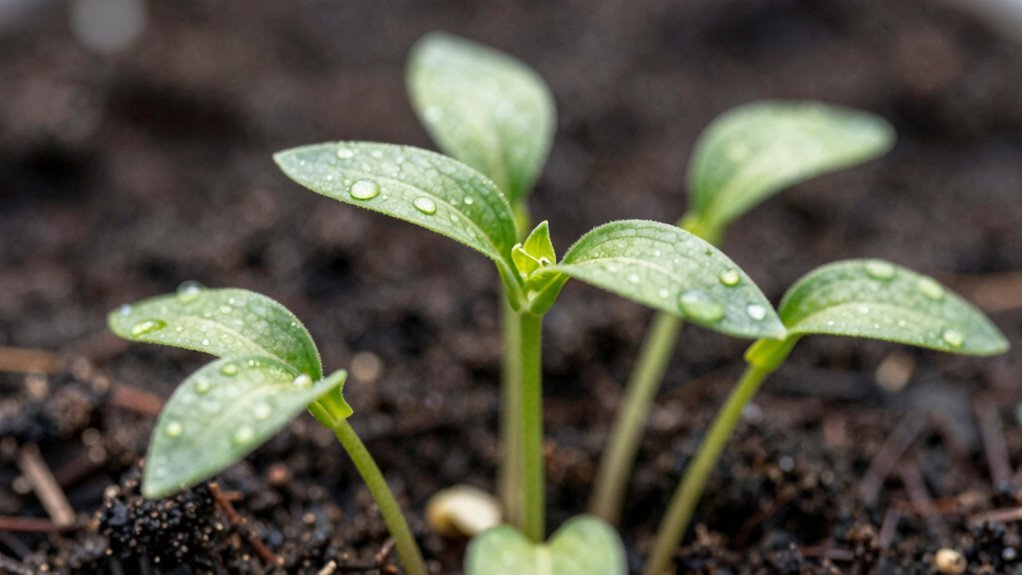
Leggy seedlings happen when they stretch upward in search of more light, often because they aren’t getting enough. This behavior is influenced by seedling genetics, which determine how tall or spindly a plant might naturally become. Some varieties are predisposed to seedling stretching, especially if they’re genetically inclined toward tall, slender growth. When seedlings don’t receive enough light, they instinctively grow taller and thinner as they reach for a source. This rapid seedling stretching weakens stems, making them fragile and prone to falling over. To prevent this, you need to understand your seedlings’ genetic tendencies and provide adequate light early on. Proper lighting encourages healthy, stocky growth and keeps seedling stretching to a minimum. Understanding plant genetics can help you select varieties better suited to your growing conditions, reducing the likelihood of leggy seedlings. Additionally, incorporating indigenous wellness principles such as aligning your gardening practices with natural rhythms can promote healthier plant development and resilience.
Quick Fixes: Rescue Leggy Seedlings in Just 3 Minutes
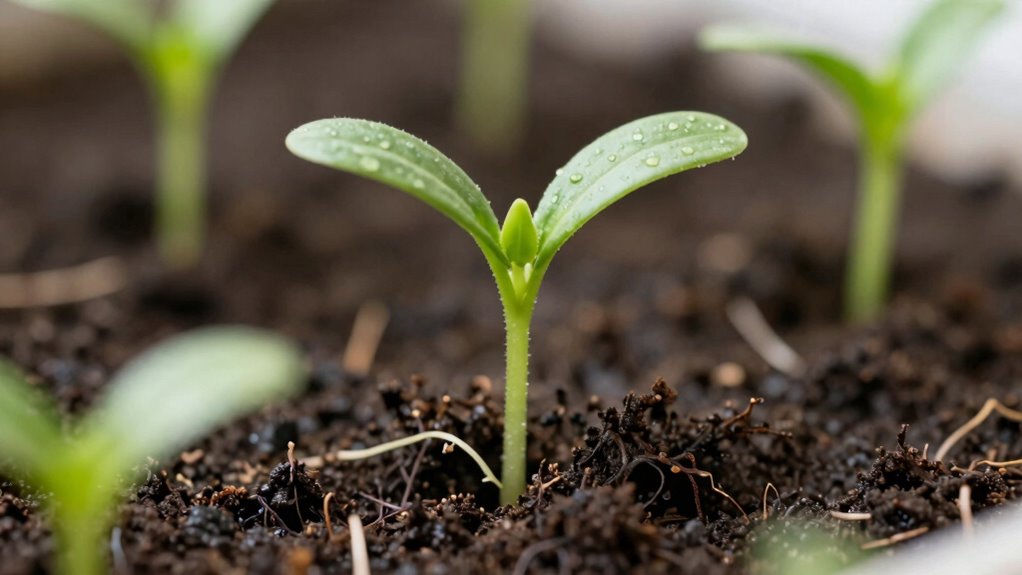
To quickly rescue your leggy seedlings, start by adjusting the light to prevent stretching. Improve soil drainage to keep roots healthy, and use stakes to support tall stems. Additionally, incorporating outdoor structures like small windbreaks or shade cloths can protect seedlings from environmental stress, making a big difference in just three minutes. Proper light management can significantly reduce legginess and promote sturdier growth. Ensuring proper plant care techniques can further enhance seedling resilience and overall health, including soil quality improvements that support robust root development.
Adjust Light Intensity
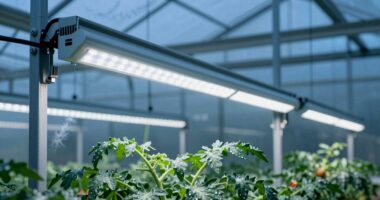
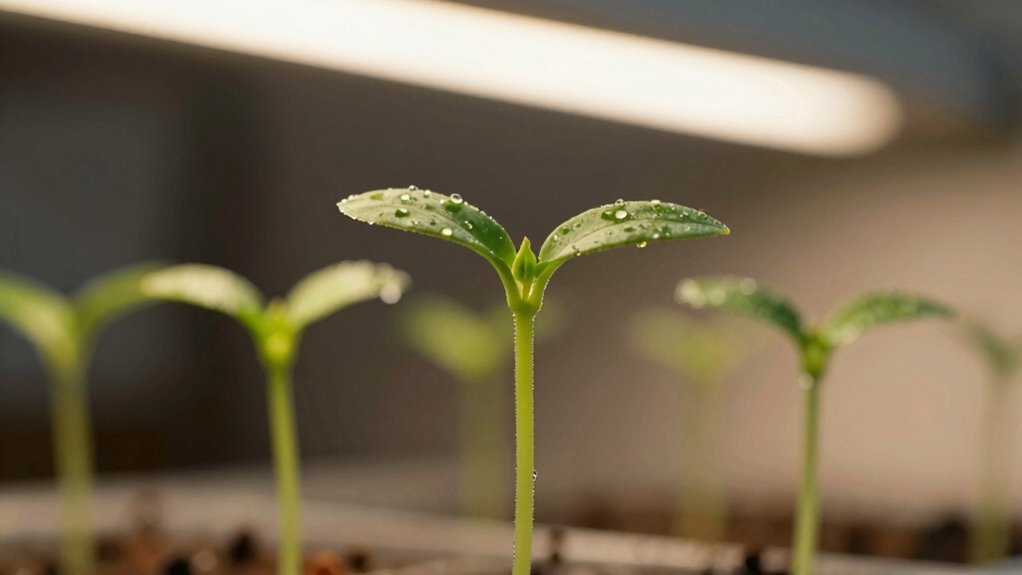
Are your seedlings stretching toward the light, looking tall and spindly? This often happens when the light isn’t intense enough, causing seedlings to elongate in search of brightness. Adjusting light intensity is a quick fix that can prevent leggy growth. Keep in mind, seedling genetics influence how tall they grow naturally, but insufficient light exacerbates legging regardless of genetics. Also, consider transplant timing; if seedlings are too young, they’re more vulnerable to light issues. Position your light source closer to the seedlings, ensuring they receive adequate brightness without overheating. Use full-spectrum grow lights or LED lamps for ideal results. By managing light intensity early on, you keep your seedlings compact and healthy, reducing the risk of leggy, weak stems down the line. Additionally, understanding the importance of light intensity and spectrum can further optimize seedling growth and prevent leggy development. Proper light spectrum can influence plant growth patterns and overall health.
Improve Soil Drainage
If your seedlings are struggling with overly wet or poorly drained soil, quick action can help rescue them in just a few minutes. Start by improving soil drainage with simple soil amendments like coarse sand, perlite, or organic compost mixed into the existing soil. These additions create air pockets, preventing water from pooling around roots. Adjust your watering techniques by watering less frequently and only when the topsoil feels dry to the touch. Avoid overwatering, which worsens drainage issues. Elevate your seedling containers on small blocks or trays to prevent water accumulation at the base. Using electric power generation with bike generators can be a sustainable way to power small grow lights or tools, promoting a healthier growing environment. These quick fixes help ensure proper airflow and prevent root rot, giving your seedlings a healthier environment to grow strong and prevent leggy growth caused by stress from waterlogged soil.
Support With Stakes
Supporting your seedlings with stakes offers a quick and effective way to straighten them when they start to become leggy. Proper seedling support ensures they grow upright, preventing legginess caused by insufficient light. To do this, gently insert stakes into the soil near each seedling, making sure they’re stable but not damaging the roots. Correct stake placement is key—place stakes just outside the seedling’s stem to avoid injury and allow room for growth. Use soft ties or plant clips to secure the stem to the stake without constricting it. This method provides immediate support, encouraging stronger, straighter growth. Understanding espionage techniques can inspire creative ways to troubleshoot and support your gardening challenges. In just a few minutes, you’ll give your leggy seedlings the stability they need to thrive, making rescue quick and simple. Additionally, observing successful seedling growth strategies from experienced gardeners can provide valuable insights for your own gardening practices, including proper body piercing aftercare to prevent issues that could hinder healthy development. Recognizing the importance of light is also crucial in preventing legginess and promoting robust growth, and ensuring your seedlings receive the right light exposure can dramatically improve their health.
How Light Affects Seedling Growth and How to Optimize It
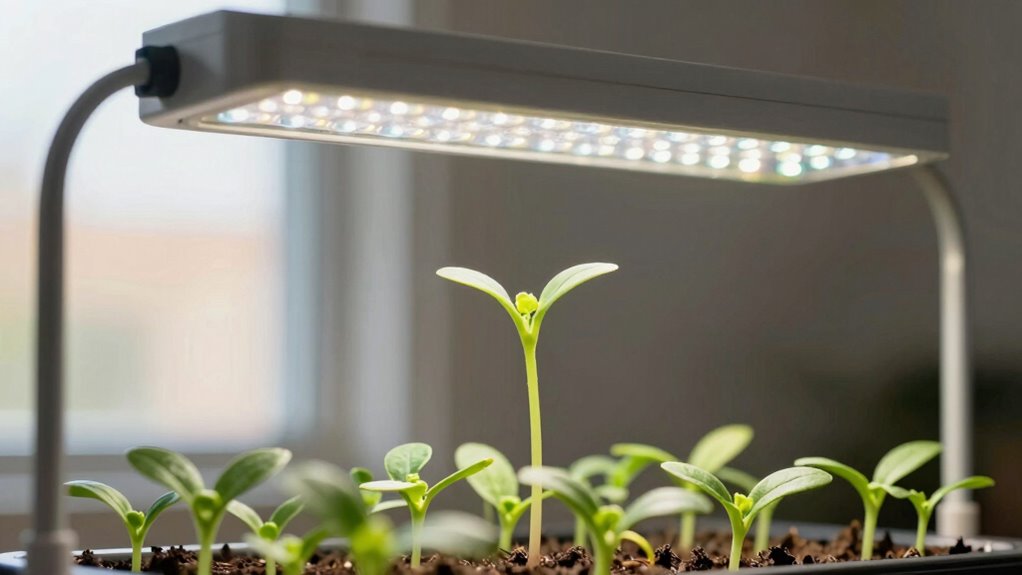
Light plays a crucial role in seedling development, directly influencing their growth rate, stem strength, and overall health. Proper lighting encourages robust root development and preserves seedling genetics. Insufficient light causes seedlings to stretch, weaken stems, and delay maturation. To optimize growth, ensure seedlings receive adequate light intensity, ideally 12-16 hours daily. Use the table below to understand different light sources:
| Light Type | Advantages | Best For |
|---|---|---|
| Fluorescent | Affordable, gentle, energy-efficient | Young seedlings |
| LED | Customizable spectrum, long-lasting | Strong, healthy growth |
| Incandescent | Warm light, widely available | Short-term use |
Additionally, selecting appropriate lighting can significantly improve seedling vitality and overall success. Understanding light spectrum options helps tailor the environment for optimal growth conditions. Choosing the right light intensity is essential to prevent etiolation and promote balanced development. Implementing Vetted lighting solutions ensures reliable and effective illumination for thriving seedlings. Incorporating proper light placement also helps ensure uniform growth and prevents stretch.
Adjusting Light Distance and Intensity for Stronger Seedlings
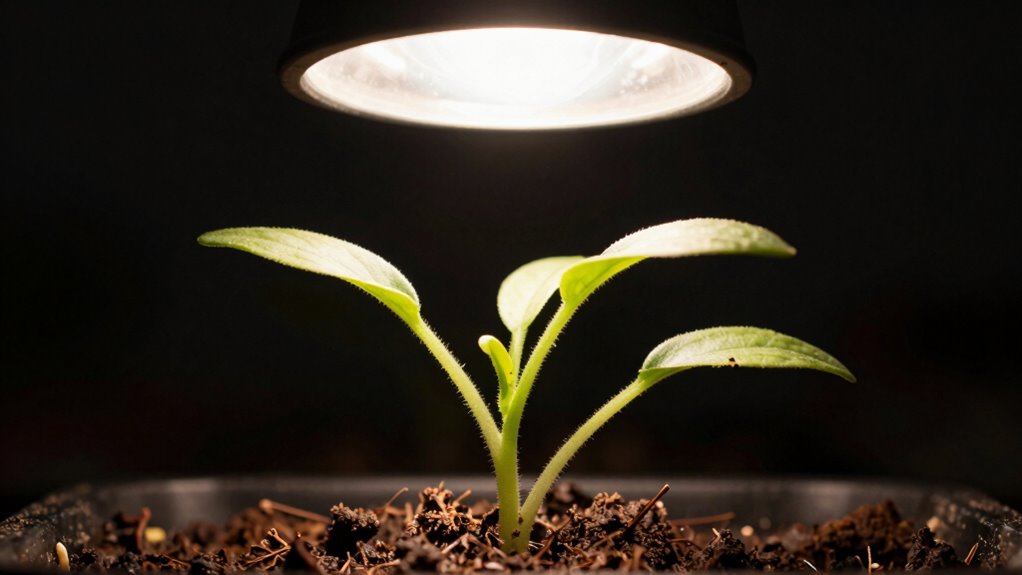
Adjusting the distance and intensity of your grow lights is essential for cultivating strong, healthy seedlings. Light levels should match your seedling’s genetics, as some varieties naturally need more or less light to thrive. Keep lights close enough to prevent legginess but not so close that you cause heat stress or damage. If seedlings start to stretch, raise the lights gradually. Increasing light intensity can help develop sturdier stems, reducing the need for seedling pruning later. Proper light management promotes balanced growth, encouraging your seedlings to develop strong stems and healthy leaves. Remember, adjusting light isn’t a one-time task; monitor your seedlings regularly and tweak the distance and intensity accordingly. This proactive approach ensures your seedlings grow robustly from the start. Light management techniques are key to preventing legginess and ensuring healthy, vigorous growth. Additionally, understanding how to manage light levels effectively can make a significant difference in seedling development. For optimal results, consider the light spectrum your grow lights emit, as different wavelengths influence plant growth stages.
Watering and Fertilizer Tips to Promote Healthy Growth
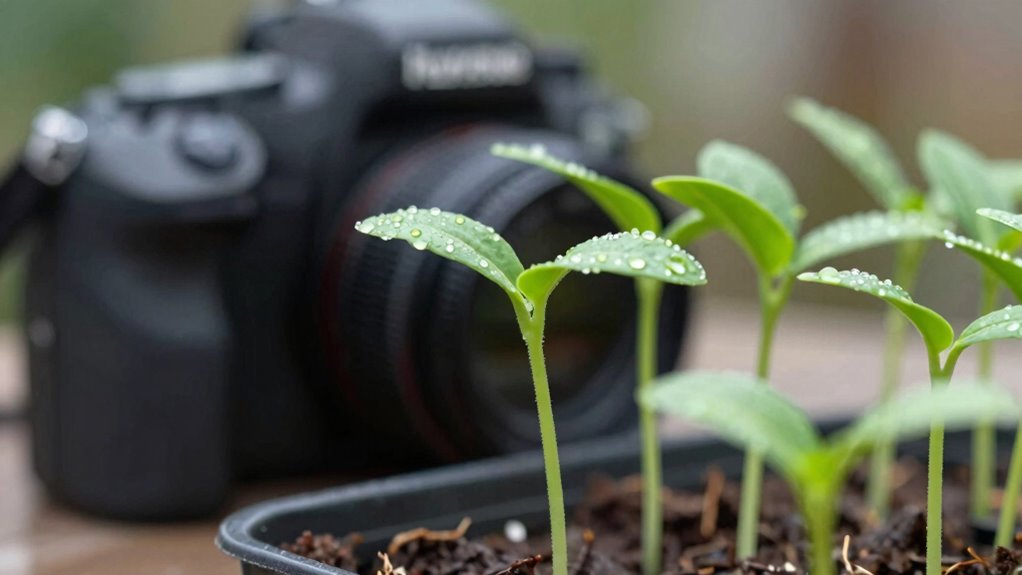
Proper watering and fertilization are key to maintaining healthy, vigorous seedlings. Consistent watering prevents stress and encourages strong root development. Typically, you should water seedlings when the top inch of soil feels dry, adjusting based on container size and environment. Use a balanced fertilizer to support seedling nutrition—too much can cause leggy growth, too little stalls development. Here’s a quick guide:
| Watering Frequency | Fertilizer Type | Tips |
|---|---|---|
| Every 2-3 days | Diluted seedling fertilizer | Avoid overwatering, ensure drainage |
| When soil feels dry | Organic or balanced liquid fertilizer | Use weak solutions to prevent nutrient burn |
| Adjust based on weather | Avoid fertilizing during stress | Keep soil moist but not soggy |
Maintaining proper watering techniques and understanding nutrient balance is essential for preventing issues like legginess and ensuring robust seedling growth. Being attentive to environmental conditions can further optimize seedling health. Following these tips helps promote healthy, sturdy seedlings free from legginess.
Ideal Temperature and Humidity for Robust Seedlings

Maintaining the right temperature and humidity levels is key to growing strong seedlings. You should keep temperatures between 65 and 75°F for ideal growth, avoiding extremes that can cause stress. Balancing humidity around 50-70% helps prevent issues like damping-off and encourages healthy, sturdy seedlings.
Optimal Temperature Range
Have you ever wondered what temperature range promotes the healthiest seedling growth? Your seedling physiology thrives within a specific temperature window, usually between 65-75°F (18-24°C) for most varieties. Maintaining this range encourages ideal cell development and root growth. Too cold, and seedlings slow down; too hot, and they risk stress or stunted growth. Understanding plant genetics helps you select the right temperature for your specific seeds, ensuring they reach their full potential. Consistent warmth supports active nutrient uptake and healthy leaf development. Keep your environment stable, avoiding temperature fluctuations that can disrupt growth. By providing the perfect temperature, you give your seedlings the best chance to develop strong, sturdy stems and vibrant leaves, setting a solid foundation for healthy plants.
Humidity Balance Tips
Keeping your seedlings at the right humidity level is just as important as controlling temperature for healthy growth. Proper humidity helps prevent damping-off disease and ensures your seedlings develop strong stems. Aim for 50-70% humidity, which balances moisture and airflow. Too much humidity can lead to mold and weak seedling nutrition, while too little causes dehydration. Maintain consistent watering schedules to avoid stress. Use a humidity tray or mist lightly if needed. Here’s a quick reference:
| Humidity Level | Effect on Seedlings |
|---|---|
| 50-60% | Ideal for most seedlings |
| 60-70% | Boosts growth, watch for mold |
| 40-50% | Can cause dehydration, slow growth |
| 70-80% | Risk of damping-off, fungal issues |
| Below 40% | Drought stress, stunted growth |
Adjust humidity carefully for robust seedlings with proper seedling nutrition.
Prevention Tips: Keep Your Seedlings Compact and Strong
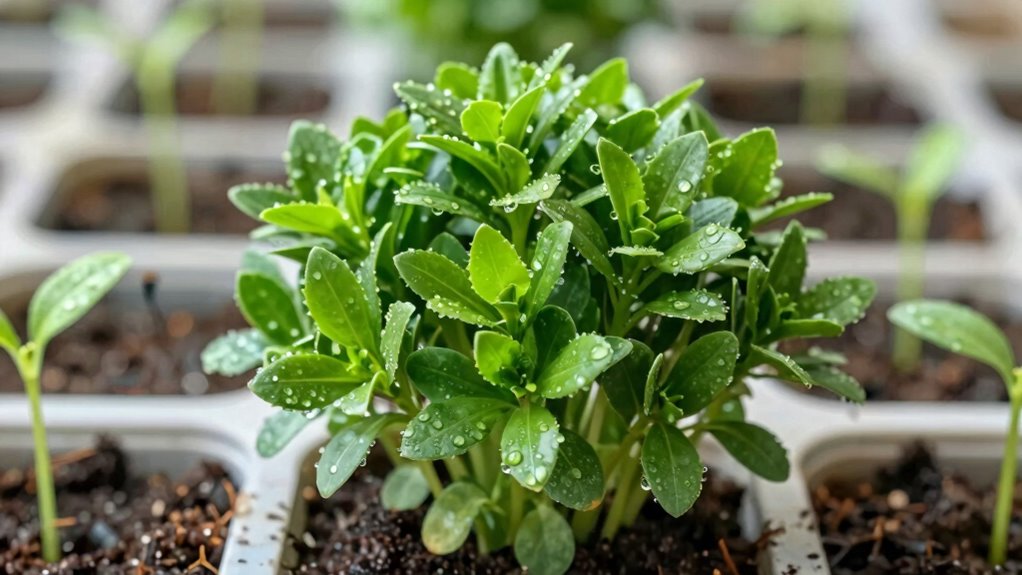
To prevent seedlings from becoming leggy and weak, it’s essential to encourage them to grow stocky and robust from the start. Proper seedling nutrition plays a vital role, providing the necessary nutrients to support healthy growth and prevent stretching. Focus on a balanced fertilizer to promote strong stem development and vibrant foliage. Good root development is equally important; well-established roots anchor your seedlings and supply nutrients efficiently. Make certain your seedlings aren’t overcrowded, as crowded roots can hinder growth and cause legginess. Keep the light source close but not hot, and maintain consistent watering to avoid stress. By giving your seedlings the right nutrition and encouraging healthy root growth, you set the stage for sturdy, compact plants that are ready to thrive.
Common Mistakes That Lead to Leggy Seedlings: and How to Avoid Them

One common mistake that leads to leggy seedlings is providing too little or inconsistent light. When seedlings stretch towards a weak light source, they become spindly and fragile. To avoid this, consider these points:
- Ensure your grow lights are close enough—about 2-3 inches above seedlings.
- Use a timer to provide consistent light durations, preventing uneven seedling stretching.
- Avoid overwatering, which can weaken stems and promote legginess.
- Watch for overwatering issues that cause seedlings to become weak and leggy, as excess moisture hampers root health and nutrient uptake.
Troubleshooting: When to Adjust Your Grow Space and Environment

When your seedlings show signs of stress or aren’t growing as they should, it’s time to evaluate and adjust your grow space and environment. Poor seedling nutrition can cause weak root development, making plants more susceptible to legginess. Check your light source—insufficient or uneven light encourages seedlings to stretch upward. Ensure your grow space maintains consistent temperature and humidity levels, as fluctuations hinder healthy root development. If seedlings are stretching excessively, consider lowering lights or increasing light intensity. Proper ventilation also promotes strong roots and prevents damping-off. Regularly monitor these factors to foster ideal seedling nutrition and root growth. Making timely adjustments in your grow environment helps prevent legginess and supports sturdy, healthy seedlings ready for transplanting.
Frequently Asked Questions
Can I Rescue Severely Leggy Seedlings Without Repotting?
Yes, you can rescue severely leggy seedlings without repotting. To fix seedling stretching, gently pinch or prune the top to encourage bushier growth and prevent further elongation. Increase light exposure gradually, as more light promotes growth correction and sturdier stems. Support the seedlings with small stakes if needed, and guarantee they’re kept at ideal temperature and humidity. These steps help strengthen your seedlings and improve their overall health.
Does Pruning Help Correct Leggy Seedling Issues?
Pruning does help correct leggy seedling issues by promoting bushier growth. When you prune, you remove the top elongated stems, encouraging the plant to develop side shoots and a stronger structure. This corrective technique enhances overall health and appearance. The benefits of pruning include improved airflow and reduced legginess, making your seedlings sturdier and more resilient. Regular, careful pruning is an effective way to manage leggy seedlings early on.
Are Certain Seedling Varieties More Prone to Legginess?
Some seedling varieties are more prone to legginess due to their seedling genetics and varietal susceptibility. You’ll notice that certain types, like tall, leggy peppers or tomatoes, naturally stretch more under low light conditions. To combat this, you can choose more compact varieties or improve your lighting setup. Recognizing varietal susceptibility helps you select the right seedlings and prevent legginess from the start.
How Does Soil Type Influence Seedling Stretch?
Soil type markedly influences seedling stretch by affecting soil composition and nutrient availability. If you use soil with poor drainage or low nutrients, seedlings tend to stretch toward the light to compensate. Rich, well-draining soil provides better support, keeping seedlings upright and reducing legginess. Ensuring the right soil composition helps maintain healthy growth and prevents excessive stretching caused by inadequate nutrients or improper drainage.
What Are Long-Term Effects of Legginess on Plant Health?
Ironically, legginess might look like a growth spurt, but it actually weakens your plant’s vigor. Long-term, it hampers root development, making your plants more vulnerable to stress and less productive. You might think taller seedlings are stronger, but their elongated stems mean they’re stretching for light instead of building a sturdy foundation. Over time, this imbalance can lead to stunted growth and poor yields, undermining your gardening goals.
Conclusion
By understanding how light and environment influence seedling growth, you can prevent leggy plants and promote strong, healthy stems. Remember, seedlings that get enough light are 50% less likely to become leggy. With quick adjustments—like fixing light distance or improving airflow—you can see results in just minutes. Keep an eye on your setup, and you’ll enjoy vibrant, sturdy seedlings that set the foundation for a successful garden or grow operation.
Fall Picks
fall essentials
As an affiliate, we earn on qualifying purchases.