
If your greenhouse feels warm but your plants stay cold, it’s likely because radiant heat isn’t reaching them properly. Radiant heat warms surfaces like the ground, but if airflow is limited or insulation is poor, this warmth doesn’t transfer well to the plants. Moisture or gaps can also trap heat away from your plants. To fix this, you need to improve heat distribution and understand how different heating methods work. Keep exploring for more tips.
Key Takeaways
- Radiant heat warms surfaces like ground and plants directly, but not the air, causing plants to remain cold despite a warm greenhouse environment.
- Poor airflow prevents warm air from reaching plant level, leading to uneven heat distribution and cold plants.
- High humidity traps moisture and inhibits heat transfer, making it difficult for radiant warmth to effectively warm plants.
- Insufficient thermal mass fails to store and slowly release heat, resulting in temperature fluctuations that keep plants cold.
- Relying solely on radiant heat without proper ventilation or thermal management can create a warm environment that doesn’t effectively warm plants.
Why Does My Greenhouse Feel Warm but My Plants Still Stay Cold?
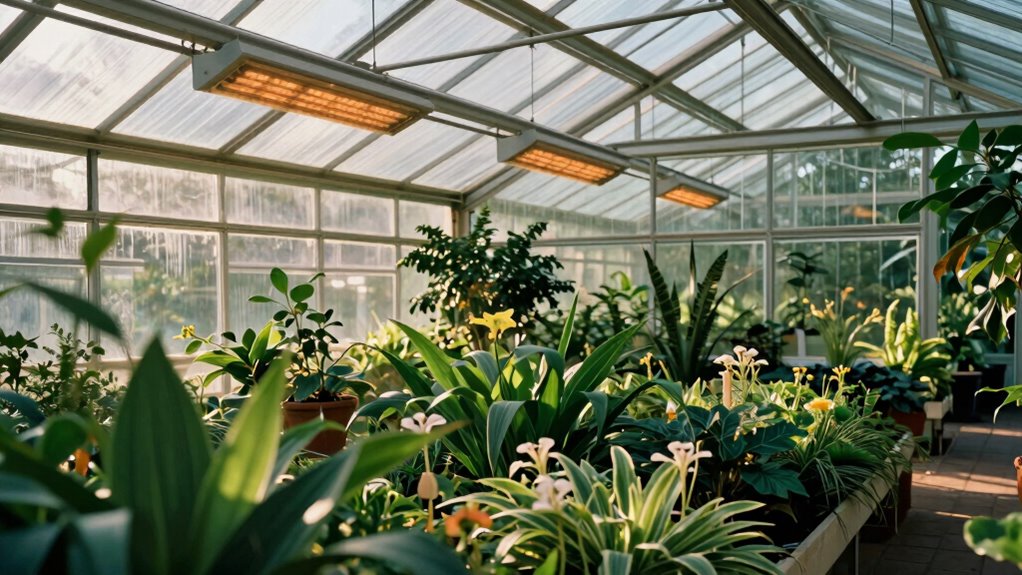
Even if your greenhouse feels warm to the touch, your plants might still stay cold because the heat isn’t reaching them effectively. The key issue often lies in how heat is transferred within the space, which directly impacts plant temperature. High greenhouse humidity can also hinder heat distribution, trapping moisture that prevents warm air from circulating properly around your plants. Without proper airflow or radiant heat, the temperature at plant level remains cooler than the ambient air, leaving your plants cold despite the overall warmth of the greenhouse. To fix this, focus on improving air circulation, managing humidity levels, and ensuring that heat reaches the plants directly. Radiant heat plays a crucial role in efficiently transferring warmth directly to your plants, helping maintain consistent temperature and promoting healthier growth while reducing cold stress. Implementing thermal mass such as water barrels or stone can also help stabilize temperature fluctuations within the greenhouse environment. Additionally, understanding the importance of heat transfer methods can help optimize your greenhouse climate for better plant health. Recognizing the benefits of conductive heat transfer can further improve how warmth is delivered to the plants. Incorporating proper insulation can further prevent heat loss and ensure warmth persists where it’s needed most.
What Is Radiant Heat and How Does It Warm a Greenhouse?

What exactly is radiant heat, and how does it work to warm a greenhouse? Radiant heat is energy transferred through electromagnetic waves, primarily from the sun’s solar radiation. When sunlight hits the greenhouse, it warms surfaces like the ground, plants, and thermal mass—materials such as concrete or water that store heat. These surfaces then emit infrared radiation, which directly warms objects and plants inside, rather than just the surrounding air. Unlike convection, which heats the air, radiant heat travels in straight lines and penetrates surfaces, providing a more comfortable and efficient warming method. By absorbing and slowly releasing heat stored in thermal mass, your greenhouse maintains warmth even when the sun isn’t shining, helping plants stay warmer. This process is a key example of how innovative European cloud servers promote energy efficiency and sustainability through advanced thermal management technologies. Additionally, understanding radiant heat transfer can help optimize greenhouse heating systems for better plant growth and energy savings, making the system more energy-efficient overall.
How Do Radiant Heat, Convection, and Conduction Differ in Greenhouses?

Radiant heat, convection, and conduction are three different ways a greenhouse transfers and distributes warmth, each working through distinct processes. Radiant heat transfers energy directly from hot surfaces, warming objects and plants without heating the air first. Convection involves the movement of warm air, which circulates and distributes heat throughout the space. Conduction occurs when heat moves through materials like thermal insulation or greenhouse glazing, directly warming surfaces and interior air. Understanding these differences helps you optimize sunlight penetration and thermal insulation to retain heat effectively. For example, radiant heat can warm plants directly, while convection circulates warm air evenly. Efficient heat transfer plays a crucial role in maintaining a stable and warm environment for your plants. Additionally, selecting the right materials can enhance thermal efficiency and improve overall heat retention.
How Can I Improve Heat Distribution to Keep My Plants Warm?
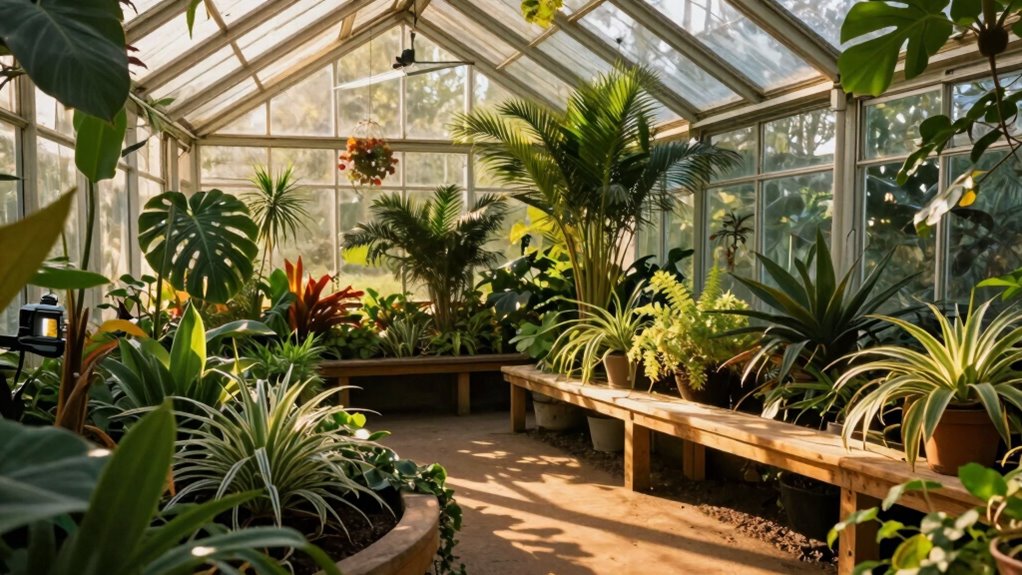
To improve heat distribution in your greenhouse, focus on enhancing airflow and utilizing multiple heating methods to guarantee consistent warmth throughout the space. Proper thermal insulation helps trap heat, preventing cold spots and ensuring even temperature. Adding insulation around walls, floors, and glazing reduces heat loss and keeps warmth steady. Ventilation optimization is equally important; by designing effective airflow patterns, you can circulate warm air evenly and prevent hotspots or drafts. Installing fans or vents that automatically open and close helps maintain uniform temperatures. Incorporating airflow management techniques can significantly improve heat circulation and prevent uneven temperature zones. Using thermal mass such as water barrels or stone can also help absorb and release heat slowly, maintaining more consistent temperatures. With good insulation and airflow control, you’ll notice more consistent temperatures and improved plant growth. Additionally, understanding the importance of total-cost clarity can help you select the most efficient and affordable heating solutions for your greenhouse. Incorporating thermal management techniques can further enhance heat retention and distribution.
Common Mistakes That Cause Warm Greenhouses but Cold Plants
Even when your greenhouse feels warm overall, certain mistakes can still leave your plants cold. One common issue is ventilation problems, which can cause uneven heat distribution, leaving plants in cooler spots despite a warm environment. Proper air circulation helps distribute heat evenly, preventing cold zones at plant level. Another mistake is overlooking insulation gaps; these allow heat to escape, especially near windows or doors, preventing your plants from staying warm. Additionally, relying solely on radiant heat without proper airflow management can create warm surfaces but cold zones at plant level. To fix this, ensure your ventilation system functions efficiently, seal insulation gaps tightly, and promote even airflow. Adequate temperature regulation is essential for maintaining consistent warmth. Addressing these mistakes helps your greenhouse maintain consistent, effective warmth, ensuring your plants thrive rather than suffer from cold stress.
Frequently Asked Questions
Can Radiant Heat Cause Uneven Temperature Distribution in My Greenhouse?
Yes, radiant heat can cause uneven temperature distribution in your greenhouse. It creates hotspots and cold spots due to heat stratification, where warm air rises and cooler air sinks. Proper thermal insulation helps minimize this effect by maintaining consistent temperatures throughout. Without adequate insulation, radiant heat may unevenly warm certain areas, making it harder to keep all your plants at their ideal temperature.
How Does Sunlight Impact Radiant Heating Efficiency?
Sunlight impacts radiant heating efficiency like a mirror bouncing sunlight away; it can diminish how well your greenhouse absorbs heat. When solar absorption occurs, your greenhouse materials soak up rays, warming the space. However, if heat reflection happens—like sunlight bouncing off shiny surfaces—less heat reaches your plants. To maximize efficiency, minimize reflective surfaces and make certain your greenhouse absorbs as much solar energy as possible, keeping your plants warm.
What Materials Best Enhance Radiant Heat Transfer?
You should choose materials with high thermal conductivity, like concrete or metal, to maximize radiant heat transfer because they efficiently conduct heat. Additionally, opt for low reflectivity surfaces, such as matte finishes, which absorb rather than reflect radiant energy, ensuring better heat transfer to your plants. Avoid highly reflective materials like polished metals or shiny surfaces, as they bounce heat away, reducing the warmth your plants need.
Are There Specific Plants More Sensitive to Radiant Heat Differences?
Yes, certain plants are more sensitive to radiant heat differences. You’ll notice that tender, tropical plants, like orchids and ferns, have a higher radiant response, making them more vulnerable to temperature fluctuations caused by radiant heat. These plants require consistent warmth and can suffer from uneven heating in your greenhouse. Recognizing plant sensitivity helps you adjust radiant heat sources, ensuring your plants stay healthy and thrive in the right temperature balance.
How Can I Measure Radiant Heat Accurately in My Greenhouse?
Think of your greenhouse as a stage where radiant heat performs silently. To measure this accurately, use an infrared measurement device or a reliable heat sensor placed strategically around your plants. These tools detect the infrared radiation emitted by surfaces, giving you precise temperature readings. Position sensors at plant height, and regularly monitor them to understand heat distribution, ensuring your plants stay cozy and healthy while your greenhouse feels just right.
Conclusion
By understanding how radiant heat works, you can better tune your greenhouse’s environment. Instead of fighting the warmth you feel, consider how to guide that heat directly to your plants. With a few simple adjustments, you might find your greenhouse becoming a cozy haven where warmth and plants thrive together. Sometimes, it’s just about shifting your perspective — and a little gentle guidance — to turn a warm space into a truly thriving oasis.