To make a greenhouse better for year-round growing, you should focus on advanced climate control systems that regulate temperature, humidity, and airflow. Proper insulation and high-quality glazing keep conditions stable and energy-efficient. Incorporate pest management strategies like physical barriers and biological controls to protect plants all year. Additionally, effective sunlight management with shade cloths and vents ensures ideal light exposure. Explore these features further to discover how they can help you cultivate healthy plants throughout the year.

Get garden gear delivered free — and shop member deals
- Fast, free delivery on millions of items
- Access to Prime Big Deal Days deals on October 6–7
- Prime Video, Amazon Music and more included
Key Takeaways
- Advanced climate control systems maintain stable temperature, humidity, and airflow year-round.
- High-quality insulation and glazing ensure energy efficiency and consistent internal conditions.
- Automated heating, cooling, and shading systems adapt to seasonal changes effectively.
- Structural durability and proper ventilation prevent pests, mold, and environmental stress.
- Integrated pest management and cleanliness promote healthy plant growth throughout the year.
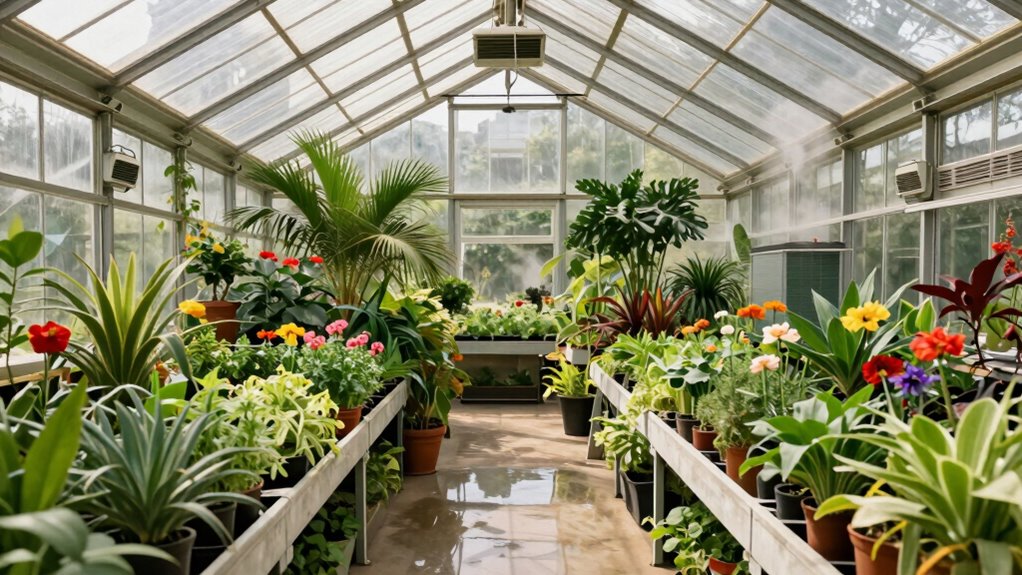
A well-designed greenhouse can transform your gardening experience, allowing you to grow plants year-round regardless of outside weather conditions. To make this possible, the structure must include effective climate control systems. You want to maintain a stable environment where temperature, humidity, and airflow are carefully regulated. Automated heating and cooling systems, along with ventilation fans, help prevent extreme temperatures that could stress or damage your plants. Installing shade cloths or adjustable vents allows you to fine-tune sunlight exposure, ensuring your plants get the right amount of light without overheating. Proper climate control not only extends your growing season but also promotes healthier, more vigorous plants by reducing stress caused by fluctuating weather. Additionally, incorporating climate regulation technologies can optimize conditions and improve energy efficiency. Incorporating energy-efficient equipment can further reduce operational costs and environmental impact.
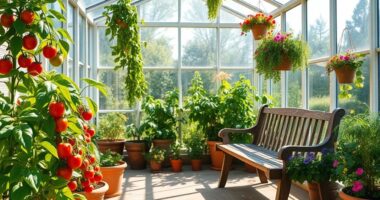
A well-designed greenhouse offers year-round gardening with climate control and healthy plant growth.
Another critical feature that enhances a greenhouse’s suitability for all-year growing is pest management. When pests invade, they can quickly devastate your crops, especially if the environment is consistently warm and humid, which is ideal for many pests. To combat this, you should incorporate integrated pest management (IPM) strategies. These include physical barriers like insect screens on vents and doors, which prevent pests from entering. Regularly monitoring for signs of pests and using biological controls, such as beneficial insects, can keep infestations under control without resorting to harsh chemicals. Keeping your greenhouse clean and removing plant debris also reduces pest habitats. A well-thought-out pest management plan ensures that pests don’t become a persistent problem, allowing your plants to thrive all year long. Proper ventilation plays a key role in reducing humidity levels that attract pests and mold, further supporting pest control efforts. Integrating environmental controls with pest management strategies can further enhance your greenhouse’s resilience against infestations. Ensuring proper air circulation is essential for maintaining a healthy environment and preventing the buildup of pests and diseases.
Beyond climate control and pest management, a durable, well-insulated structure plays a key role. Good insulation helps stabilize indoor temperatures, reducing the workload on your climate control systems and conserving energy. High-quality glazing materials, like double or triple-pane glass or polycarbonate panels, provide better insulation and UV protection. To further improve year-round growing conditions, consider installing heating systems that work efficiently in colder months and cooling systems or shade options for warmer periods. These features work together to create a consistent environment, minimizing the impact of external weather fluctuations. Proper insulation and glazing are essential for energy efficiency and maintaining a stable environment.
Ultimately, the combination of precise climate control, effective pest management, and sturdy construction makes your greenhouse a reliable space for year-round gardening. When you pay attention to these features, you’ll find it easier to grow a diverse range of plants, regardless of the season. This not only boosts your productivity but also enhances the overall health of your plants, making your gardening efforts more successful and enjoyable throughout the entire year.
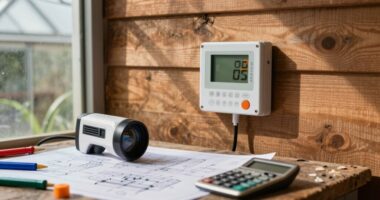
automated greenhouse climate control system
As an affiliate, we earn on qualifying purchases.
As an affiliate, we earn on qualifying purchases.
Frequently Asked Questions
How Does Insulation Impact Greenhouse Efficiency in Winter?
Insulation quality directly impacts your greenhouse’s efficiency in winter by enhancing thermal retention. When your greenhouse is well-insulated, it traps heat more effectively, keeping the interior warmer even during cold days. This reduces your reliance on additional heating, saves energy, and maintains a stable environment for plants. Better insulation minimizes heat loss, allowing you to extend your growing season and guarantee healthy plant growth throughout winter.
What Are the Best Ventilation Options for Maintaining Temperature?
You might think sealing your greenhouse tight keeps things warm, but good ventilation is key. Ventilation systems and air circulation prevent overheating and humidity buildup, ensuring a stable environment. Installing exhaust fans, roof vents, or side vents promotes airflow, helping to regulate temperature naturally. Ironically, opening things up just enough can create the perfect climate, allowing your plants to thrive year-round without costly heating or cooling.
How Can I Prevent Pests Year-Round in My Greenhouse?
To prevent pests year-round in your greenhouse, you should implement pest prevention strategies like regular inspections, removing plant debris, and using physical barriers. Keep your environment clean and monitor plants closely for early signs of pests. Chemical treatments can be effective but use them sparingly and responsibly. Combining these approaches helps maintain a pest-free greenhouse, ensuring healthy, thriving plants throughout the year.
What Lighting Solutions Support Plant Growth During Short Days?
To support plant growth during short days, you should use LED grow lights as supplemental lighting. These energy-efficient lights provide the full spectrum needed for photosynthesis, promoting healthy growth even when natural sunlight is limited. Position the LED grow lights appropriately above your plants, adjusting their duration to mimic natural daylight hours. This guarantees your plants receive consistent, adequate light, helping them thrive year-round regardless of the season.
How Often Should I Service Climate Control Equipment?
How often should you service climate control equipment? Regular maintenance is essential—think about scheduling it at least quarterly to guarantee peak performance. Do you check sensor calibration regularly? Proper calibration prevents issues like temperature swings. By adhering to a maintenance schedule, you catch potential problems early, saving energy and protecting your plants. Consistent servicing keeps your greenhouse climate stable, making year-round growing more reliable and efficient.
Conclusion
By incorporating these features, your greenhouse becomes a fortress for year-round growth, much like a cozy castle shielding its treasures. With proper insulation, efficient ventilation, and smart automation, you’ll create a perfect environment for your plants to thrive no matter the season. Think of your greenhouse as a reliable partner, always ready to nurture your gardening dreams. Embrace these features, and you’ll enjoy lush, healthy crops all year long—like a gardener’s paradise just waiting to bloom.
Fall yard work Picks
leaf blowers
As an affiliate, we earn on qualifying purchases.