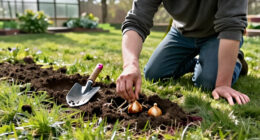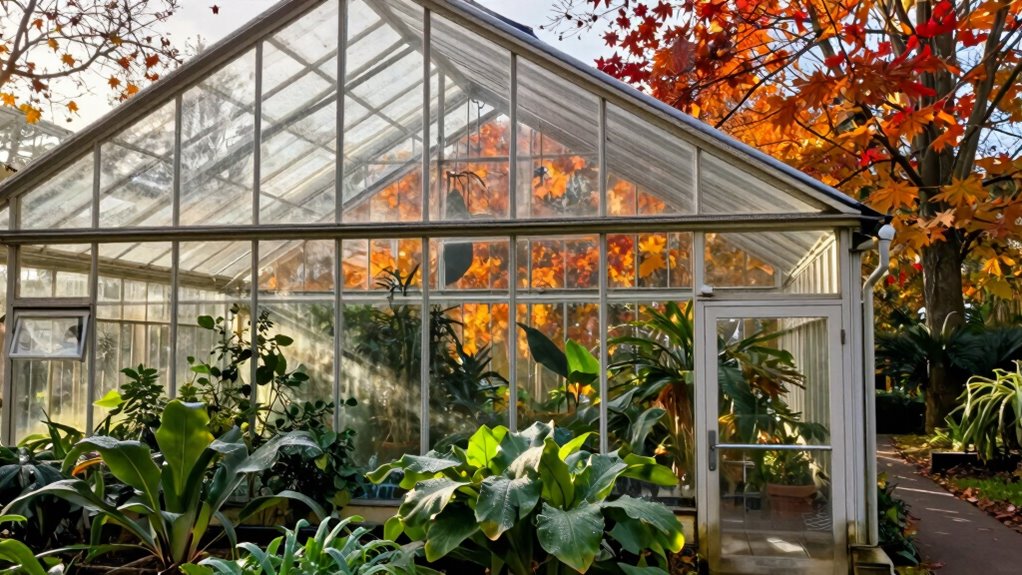

Using a greenhouse in fall is one of the smartest choices because it lets you extend your growing season and protect delicate plants from chilly temperatures. By creating a warm, controlled environment, you can plant earlier and keep crops going into colder months. It also helps you manage pests better and reduces disease risk through precise environmental control. If you’re curious about maximizing your fall garden success, there’s plenty more to discover.

Get garden gear delivered free with Prime
- Fast, free delivery on millions of items
- Prime Video, Amazon Music and more included
- Member-only deals all year
Key Takeaways
- Extends the growing season, allowing early planting and continued cultivation into colder months.
- Provides a barrier against pests, reducing infestations during a time when outdoor pest activity declines.
- Enables precise environmental control to prevent disease and promote healthy plant growth in fall conditions.
- Supports crop rotation and soil health management, reducing soil-borne pests and diseases effectively.
- Offers a protected space for delicate or late-season plants, maintaining garden productivity year-round.
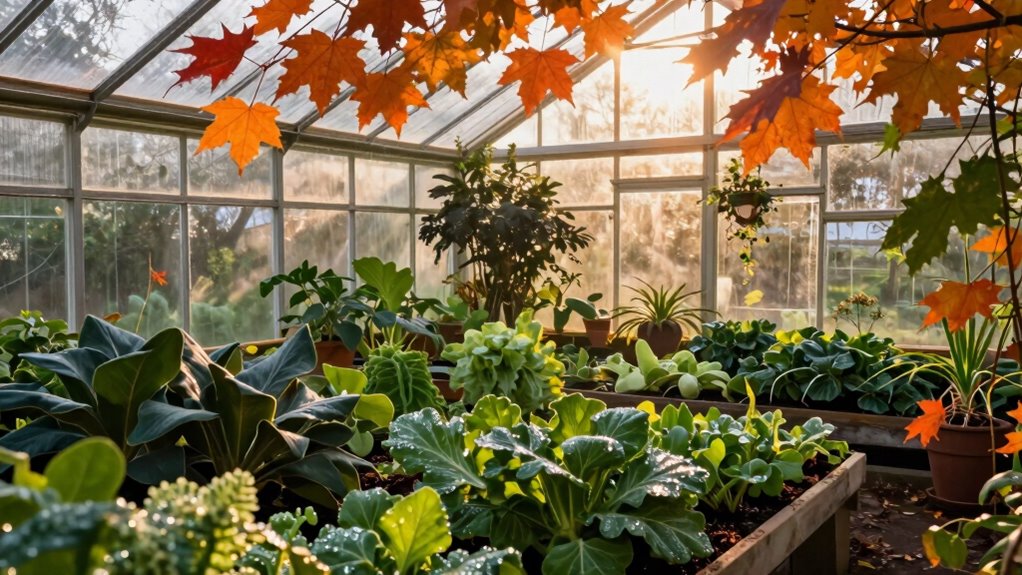
As the crispness of fall settles in, many gardeners find that using a greenhouse becomes even more valuable. The cooler temperatures outside can slow down plant growth and limit your options for seasonal planting. Inside a greenhouse, however, you create a warm, controlled environment that extends your growing season, allowing you to get a head start on next year’s crops or maintain certain plants well into the colder months. This makes fall one of the smartest times to use a greenhouse, especially when it comes to strategic seasonal planting. You can plant hardy vegetables, herbs, or even flowers that prefer cooler weather, ensuring a vibrant, productive space even as the outdoors winds down. Plus, with the right setup, you can continue growing crops that would otherwise be impossible to sustain outside in late fall.
One of the key benefits of using a greenhouse during fall is pest control. As temperatures drop outside, many pests become less active, but some, like aphids or whiteflies, might still find ways to invade your plants. Inside a greenhouse, you gain a significant advantage by creating a barrier that limits pest access. You can implement targeted pest control measures, such as introducing beneficial insects or using organic treatments, without exposing your plants to the harsh chemicals often necessary in open fields. The controlled environment means you can monitor and manage pests more effectively, reducing the risk of infestations that could damage your crops or delay your harvest. This is especially important when you’re trying to protect delicate plants or extend the life of your fall harvest. Moreover, employing integrated pest management strategies within a greenhouse can further enhance pest control efficacy and sustainability.
Using a greenhouse in fall also allows you to fine-tune environmental factors like temperature, humidity, and ventilation, which are vital for maintaining healthy plants and controlling pests. You can adjust these conditions to create an inhospitable environment for pests while providing ideal growing conditions for your crops. This level of control helps you avoid many common fall gardening problems, such as fungal diseases or mold, which thrive in damp, poorly ventilated spaces. Additionally, you can implement crop rotation strategies more easily, preventing soil-borne pests and diseases from taking hold. Incorporating controlled environment techniques, similar to those used in small wood stove setups, can further enhance your greenhouse’s pest management and overall efficiency.
As an affiliate, we earn on qualifying purchases.
Frequently Asked Questions
Can a Greenhouse Extend My Growing Season Into Winter?
Yes, a greenhouse can extend your growing season into winter. By making seasonal plant adjustments and using supplemental heating, you can keep your plants warm and productive. Fall harvest strategies become more effective since you can grow crops later into the year and start new ones early. Your greenhouse creates a controlled environment, allowing you to enjoy fresh produce even during colder months, maximizing your gardening efforts year-round.
What Crops Are Best Suited for Fall Greenhouse Cultivation?
Fruiting, leafy, and root crops thrive in fall greenhouses, making them ideal choices for your autumn harvests. Think tomatoes, lettuce, and carrots, which flourish in the cooler temperatures. You can also focus on crop rotation, planting different crops each season to keep soil healthy and pests at bay. By selecting hardy, versatile vegetables, you maximize your greenhouse’s potential, ensuring a bountiful fall harvest.
How Does Fall Weather Affect Greenhouse Temperature Control?
Fall weather impacts your greenhouse temperature control by requiring effective ventilation strategies and insulation techniques. As outside temperatures drop, you need to increase ventilation to prevent overheating during warmer days and retain heat during cooler nights. Insulation techniques, like bubble wrap or thermal curtains, help maintain stable temperatures. By adjusting these methods, you guarantee your plants stay healthy and productive despite fluctuating fall conditions.
Is Extra Heating Necessary During Fall Greenhouse Use?
Yes, extra heating might be necessary during fall greenhouse use, but it depends on your insulation techniques and ventilation strategies. If you neglect insulation, your plants could face cold stress, especially during chilly nights. However, by implementing efficient insulation and managing ventilation properly, you can retain warmth without over-relying on additional heat. Stay vigilant—early cold snaps can catch you off guard, so prepare your greenhouse to keep your plants thriving.
How Can I Prevent Pests in My Fall Greenhouse?
To prevent pests in your fall greenhouse, you should start with companion planting and choose pest-resistant plants. These strategies naturally deter pests and create a healthier environment. Regularly inspect your plants for signs of pests, remove affected leaves, and keep the greenhouse clean. Using beneficial insects like ladybugs can also help control pests naturally. Combining these methods helps protect your plants without relying heavily on chemicals.
Conclusion
As autumn whispers its gentle secrets, it’s clear that fall offers a quiet opportunity to nurture your greenhouse’s hidden potential. Embrace this season’s subtle charm, and you’ll find yourself reaping rewards long before winter’s chill fully settles in. With patience and care, you turn the fleeting into the timeless, making fall the perfect time to let your greenhouse work its quiet magic. Sometimes, the most subtle seasons hold the greatest promise.
Halloween Picks
halloween
As an affiliate, we earn on qualifying purchases.