
In late winter, focus on prepping your greenhouse by starting seedlings early to build strong roots and sturdy stems. Check your environment using tools like BTU and CADR calculators to tune heating and airflow, ensuring ideal conditions. Clean and inspect for pests, sealing gaps to prevent infestations, and remove debris for hygiene. Maintaining proper ventilation and monitoring pests help create a thriving space. Keep these tasks in mind to gear up for spring success and discover more tips ahead.
Key Takeaways
- Conduct a thorough greenhouse cleaning to remove debris and prevent pests and diseases.
- Prepare seed trays and soil, starting seedlings early for strong growth.
- Adjust environmental controls, including lighting, heating, and ventilation, for optimal seedling development.
- Inspect and seal the greenhouse to prevent pest entry and improve air circulation.
- Monitor and control pests using organic methods, ensuring a healthy environment for spring planting.

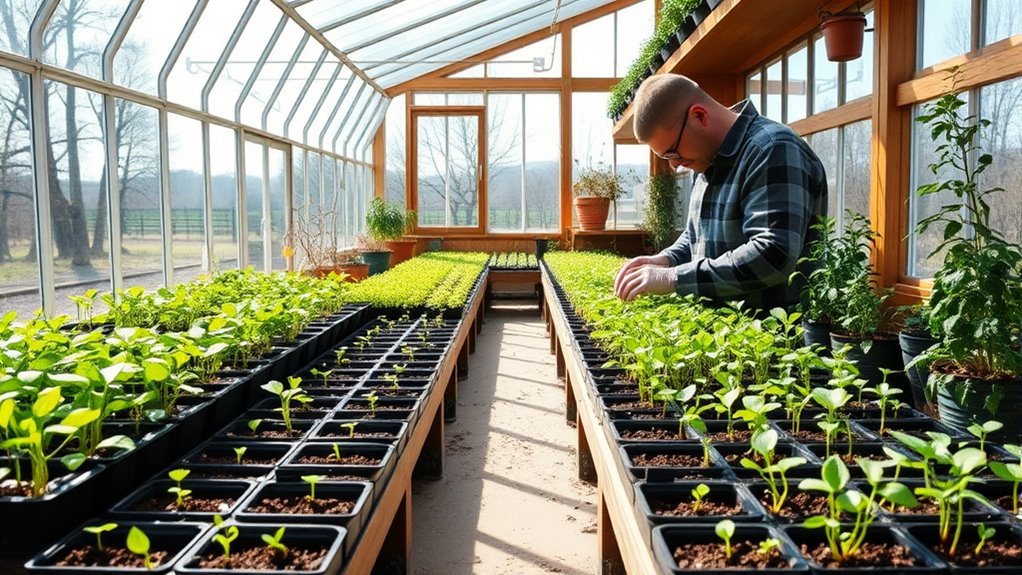
As late winter approaches, it’s the perfect time to prepare your greenhouse for the upcoming growing season. This period is critical for setting a strong foundation for healthy plants and a successful harvest. One of your main tasks now should be focusing on seedling propagation. Starting seedlings early gives them the best chance to develop robust root systems and sturdy stems before they’re transplanted outdoors. To do this effectively, make sure your greenhouse has proper lighting, warmth, and ventilation. Use seed trays or pots with quality soil, and keep the environment consistently moist, but not waterlogged. This careful attention to seedling propagation will give your plants a head start, making them resilient and ready for the transition when the weather warms up. Regularly monitoring and adjusting environmental conditions can improve seedling success rates, especially when using tools like BTU and CADR quick‑calculators to optimize heating and air quality.
At the same time, you need to be vigilant about pest prevention. Late winter is a prime time for pests to overwinter in the greenhouse, hidden in cracks, soil, or on equipment. If you ignore this, you might face infestations that can devastate your young seedlings and mature plants once they’re in full growth. Start by inspecting all plants, pots, and tools for signs of pests or eggs. Remove any debris, and clean your greenhouse thoroughly to reduce hiding spots. Consider introducing beneficial insects or natural predators that can keep pest populations under control without the need for chemicals. Regularly monitor your plants for early signs of trouble, such as holes in leaves or discolored spots, and address issues immediately. Additionally, sealing any gaps or cracks in your greenhouse structure is a smart step to prevent pests from sneaking inside. Keep the environment clean and free of fallen leaves or plant debris, which can harbor pests and diseases. Maintain proper airflow to reduce humidity levels, making the environment less appealing to mold, fungi, and pests alike. Using organic pest deterrents, like neem oil or insecticidal soaps, can also be effective without harming your plants or the environment.
Frequently Asked Questions
How Can I Prevent Pests in My Greenhouse During Late Winter?
To prevent pests in your greenhouse during late winter, start by practicing crop rotation to disrupt pest life cycles. Introduce biological controls like beneficial insects or nematodes to naturally manage pests. Keep your greenhouse clean, remove any plant debris, and monitor regularly for early signs of pests. These proactive steps create an environment less inviting to pests, helping you maintain healthy plants as you prepare for spring.
What Are the Best Ways to Improve Greenhouse Ventilation?
Improve your greenhouse ventilation by installing effective ventilation systems, opening windows, and using exhaust fans. You should also manage airflow by strategically placing vents and ensuring proper fan operation. Regularly monitor temperature and humidity levels, adjusting vents and fans as needed. By optimizing ventilation systems and airflow management, you create a healthier environment that reduces pests, prevents mold, and promotes strong plant growth during late winter and into spring.
When Should I Start Fertilizing My Early Spring Crops?
You should start fertilizing your early spring crops once you’ve completed soil testing and determined nutrient needs. Typically, this is about 2-4 weeks before planting or when the soil warms up. Follow a tailored fertilization schedule based on your soil test results, applying a balanced or specialized fertilizer to make certain your crops get the nutrients they need for healthy growth in spring.
How Do I Diagnose and Treat Common Plant Diseases in Winter?
To diagnose plant diseases in winter, look for discolored, wilted, or spotted leaves, and check for mold or fungal growth. Use a magnifying glass to spot tiny pests or spores. For treatment, remove infected plants and improve air circulation to prevent fungal infections. Apply organic fungicides if needed, and practice plant disease management by maintaining proper watering and hygiene to reduce disease spread and prevent future fungal infection.
What Lighting Improvements Can Boost Plant Growth in Late Winter?
Ever wonder how to boost your plants’ growth during late winter? You should add supplemental lighting to extend daylight hours and promote healthy development. Focus on light spectrum optimization by choosing grow lights that emit a full spectrum, mimicking natural sunlight. This enhances photosynthesis and encourages vibrant, robust plants. By improving your lighting setup, you’ll create a thriving environment that prepares your greenhouse for spring success.
Conclusion
As you wrap up your late winter greenhouse tasks, consider this: some believe that early planting can give your garden a head start, but others argue it risks frost damage. The truth? With careful planning and monitoring, early seeding can truly pay off, boosting your spring harvest. So, trust your instincts, stay vigilant, and prepare to enjoy an abundant, thriving garden when the season finally turns. Your green thumb will thank you!