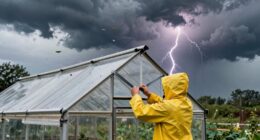
Before a snowstorm hits, guarantee your greenhouse is ready by inspecting the structure for weak spots, reinforcing windows, doors, and vents, and sealing gaps to keep heat in. Clear snow from the roof safely and regularly, and make sure your heating system is working with a backup plan in place. Protect sensitive plants and keep pathways clear for emergency access. Staying vigilant with these checks can save your greenhouse from snow damage—learn more to stay fully prepared.
Key Takeaways
- Inspect and reinforce greenhouse structure, seals, and insulation to withstand heavy snow loads and prevent heat loss.
- Clear snow from the roof safely using proper tools, avoiding roof damage or collapse.
- Test heating systems, and ensure backup power is available to protect plants during outages.
- Clear pathways and emergency routes, keeping them free of snow and hazards for safe access.
- Monitor for snow buildup and structural stress regularly, removing excess snow to prevent damage.
Is Your Greenhouse Ready for Snow Loads?
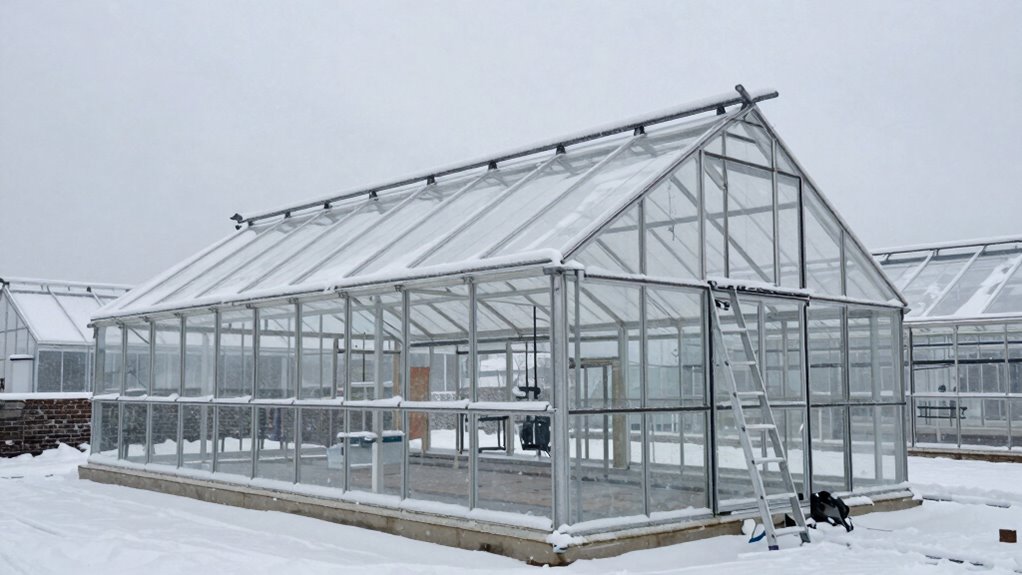
Before heavy snowfalls arrive, it’s crucial to assess whether your greenhouse can handle the added weight. Start by inspecting the structure for any existing weaknesses and make sure the framing is strong enough to support snow loads. Proper ventilation tips help prevent excess moisture buildup, which can lead to ice accumulation and added weight inside the greenhouse. Adjust vents to promote airflow and reduce humidity, minimizing the risk of snow sticking or melting unevenly. Additionally, review your watering strategies; avoid overwatering plants, as excess moisture can freeze and increase weight on the structure. Keeping these factors in check ensures your greenhouse remains stable and safe during winter storms. Regularly monitoring and maintaining these elements helps prevent surprises when heavy snow begins to fall, especially if you use reliable backup power to protect your equipment during outages.
How to Reinforce Windows, Doors, and Vents for Winter
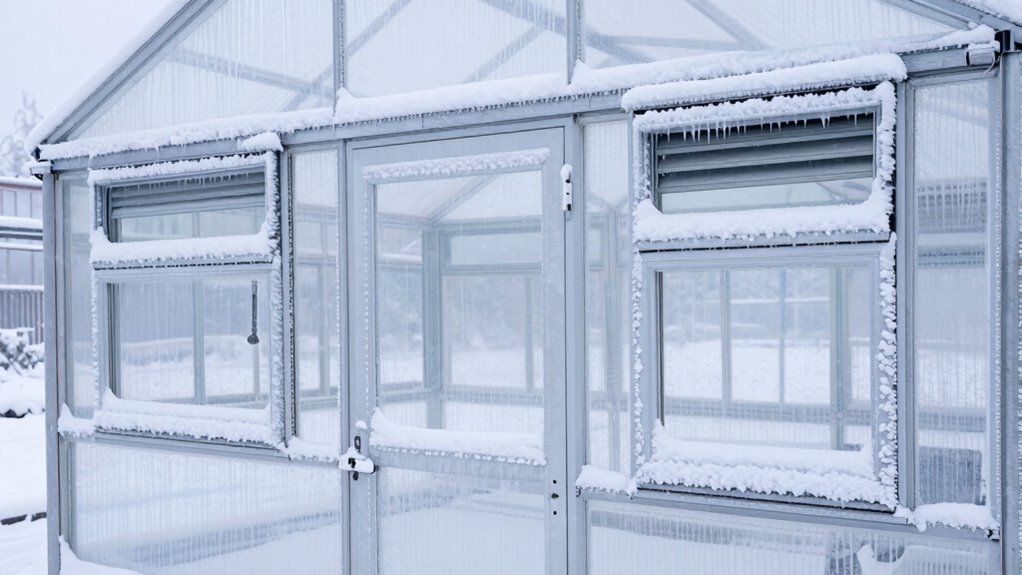
To keep cold air out and prevent damage, you need to secure your windows, doors, and vents with weatherproofing. Use reinforced materials like storm windows or door braces to strengthen weak spots. Properly sealing these openings guarantees your home stays warmer and safer during a snowstorm. Additionally, inspecting and replacing weatherproofing materials ensures continued effectiveness against harsh winter conditions.
Secure Openings With Weatherproofing
During winter storms, ensuring your windows, doors, and vents are properly weatherproofed is essential to keep cold air out and prevent drafts. Start by inspecting all openings for gaps or cracks. Use weatherproofing materials like sealant, weatherstripping, or foam tape to seal gaps around windows and doors. Pay special attention to vents, making sure they close tightly and are sealed if not in use. Proper weatherproofing of openings helps maintain a stable temperature inside your greenhouse and reduces energy loss. Check for any areas where cold air might seep in and reinforce them promptly. Implementing energy-efficient solutions can further enhance your greenhouse’s winter resilience. This simple step safeguards your plants from harsh winter conditions and keeps your greenhouse warm and efficient throughout the storm.
Use Reinforced Materials Effectively
Reinforcing windows, doors, and vents with sturdy materials is essential for maintaining warmth during winter storms. Using reinforced materials helps withstand heavy snow loads that can cause breakage or collapse. Install shatterproof or polycarbonate panels over vulnerable openings, ensuring they are securely fastened to handle increased snow weight. Reinforce door frames with metal braces or strips to prevent warping under snow pressure. For vents, add extra support brackets or storm shutters made from reinforced materials to keep snow out and maintain insulation. Always check that your reinforcements are properly anchored and able to bear the snow load. Incorporating connected home fitness technology, such as sensors or smart monitoring devices, can also help you track the structural integrity of your greenhouse remotely during winter storms. This proactive approach minimizes damage and keeps your greenhouse protected, ensuring a stable environment despite the harshest winter conditions.
How to Safely Clear Snow From Your Greenhouse Roof
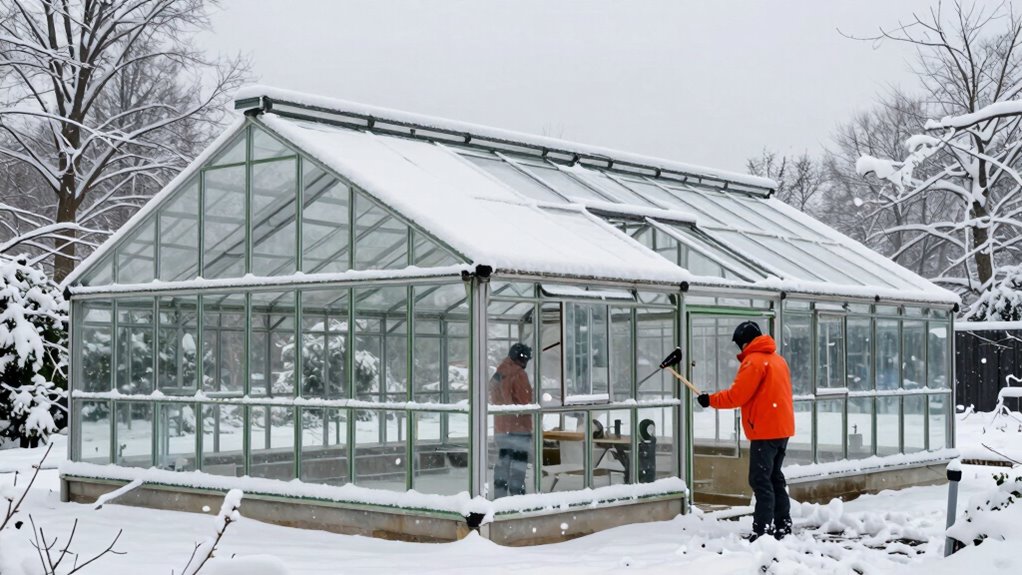
Clearing snow from your greenhouse roof is essential to prevent structural damage and maintain proper airflow. Safe snow removal reduces the risk of collapse and ensures your plants stay healthy. Before starting, prioritize roof safety by using proper equipment and avoiding slippery surfaces.
Consider these tips:
- Use a lightweight, long-handled snow rake to avoid putting too much weight on the roof.
- Clear snow gradually, working from the edges inward, to prevent sudden shifts.
- Avoid climbing onto the roof; stick to ground-based tools and gentle removal methods.
- Always be aware of the structural integrity of your greenhouse, especially during heavy snowfalls.
Always stay alert for weak spots or ice build-up that could cause accidents. Taking these precautions guarantees your snow removal is effective and safe, protecting your greenhouse throughout winter storms.
Seal Gaps and Add Insulation to Keep the Heat In
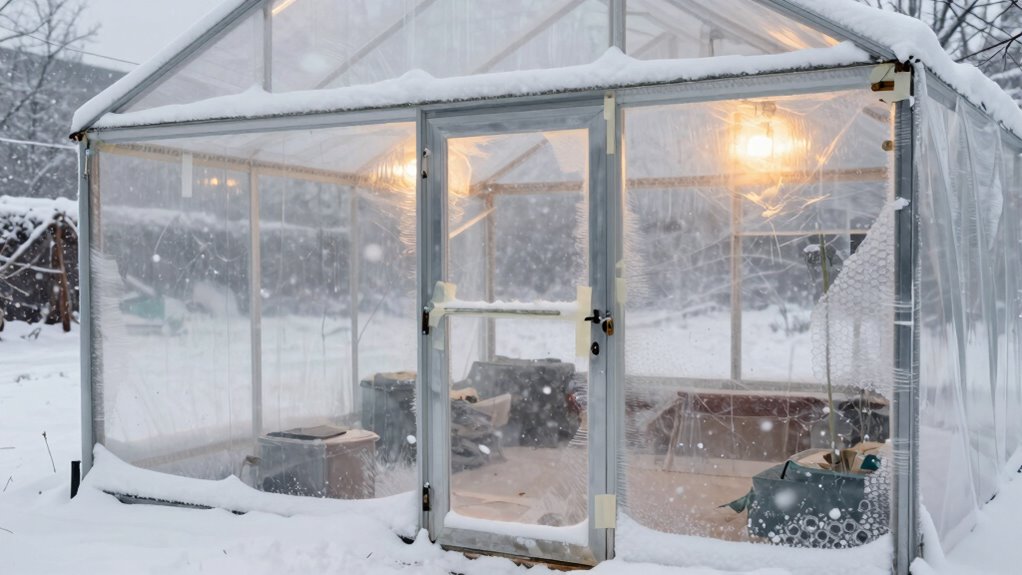
To keep your greenhouse warm during a snowstorm, sealing gaps and adding insulation is essential. Air leak detection helps you identify drafts around vents, doors, and windows, ensuring no heat escapes. Use effective insulation materials like foam boards, bubble wrap, or thermal blankets to boost heat retention. Proper sealing prevents cold air from seeping in and maintains a stable temperature inside. Focus on areas prone to leaks, such as door frames or window edges, and seal them tightly. Adding insulation not only preserves warmth but also protects plants from temperature fluctuations. Here’s a quick guide:
| Area | Recommended Insulation Material | Tips |
|---|---|---|
| Windows & Doors | Foam tape or weatherstripping | Seal gaps thoroughly |
| Vents | Bubble wrap or thermal blankets | Cover vents during storms |
| Wall Joints | Insulation panels | Fill cracks and gaps |
| Roof Edges | Sealant or foam strips | Prevent drafts |
Additionally, inspecting your insulation quality can help you identify areas that need reinforcement before the storm hits.
Is Your Heating System Prepared? Test It and Backup Power
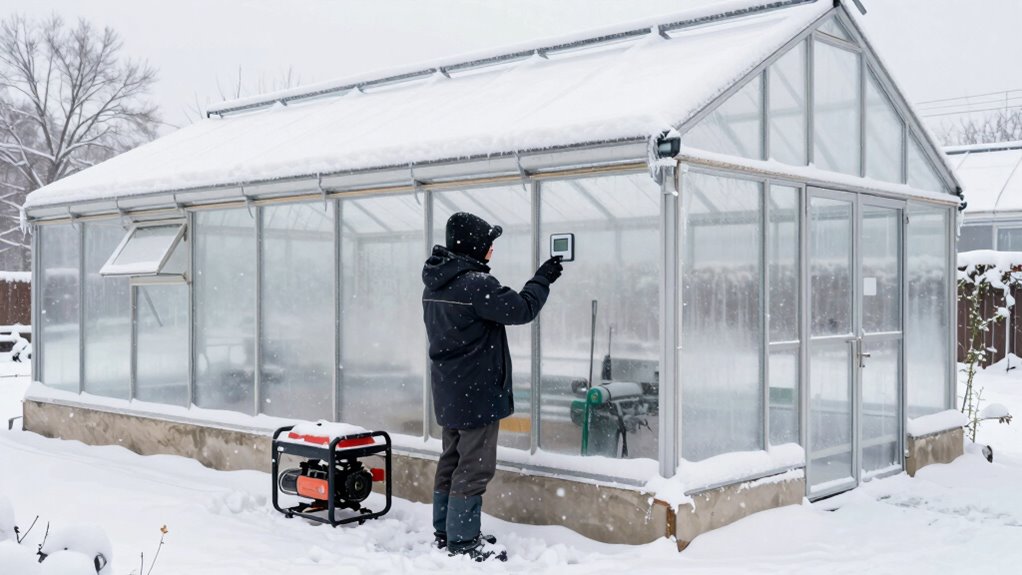
Make sure your heating system works properly by testing it regularly before a snowstorm hits. Check your backup power sources, like generators or batteries, to guarantee they’ll keep your heat running if the power goes out. Keep an eye on your home’s temperature stability to stay comfortable and avoid surprises during severe weather. Additionally, practicing curiosity about your system’s performance can help you identify potential issues early and ensure your setup remains reliable. curiosity and vigilance
Test Heating System Regularly
Testing your heating system regularly guarantees it’s ready when you need it most. Perform routine checks to ascertain reliable operation, especially before a snowstorm. During inspections, focus on ventilation checks to prevent excess humidity, which can cause mold or damage. Verify that the thermostat responds accurately, maintaining consistent temperatures. Also, test humidity control features to keep the environment stable for your plants. Don’t forget to:
- Run the heating system for a few minutes to listen for unusual noises
- Check for any leaks or blockages in vents and ducts
- Confirm that safety features, like shut-offs, function correctly
- Ensure your heating system’s reliability is maintained to prevent unexpected breakdowns during critical times
Check Backup Power Sources
Ensuring your heating system stays operational during a power outage is essential when a snowstorm hits. Check that your backup generators are in good condition and ready to deploy if needed. Test them regularly to confirm they start easily and supply enough power for your greenhouse’s heating needs. Keep fuel supplies and maintenance logs up to date, so you’re not caught off guard. Consider connecting essential systems to a backup power source to maintain power continuity. If you don’t have a backup generator, now’s the time to invest in one. Make sure your electrical connections are secure and protected from the elements. Being prepared with reliable backup power safeguards your plants and prevents costly damage caused by freezing temperatures during winter storms.
Monitor Temperature Stability
Since temperature drops can happen suddenly during a snowstorm, it’s essential to verify that your heating system is functioning correctly before the storm hits. Test your heating equipment to ensure reliable temperature stability, especially for delicate plants. Also, check your ventilation systems to prevent humidity buildup and mold, which can threaten pest control efforts. Consider these steps:
- Run your heating system for an extended period to confirm consistent performance.
- Inspect backup power sources to keep heat running if the power goes out.
- Monitor temperature levels regularly with a reliable thermometer to detect fluctuations early.
- Incorporate Free Floating landscaping ideas to help your greenhouse blend seamlessly with the natural environment and improve overall resilience.
Maintaining stable temperatures helps prevent cold stress on plants and keeps pests at bay. Proper heating and ventilation ensure your greenhouse remains resilient despite harsh weather conditions.
How to Protect Sensitive Plants During a Snowstorm
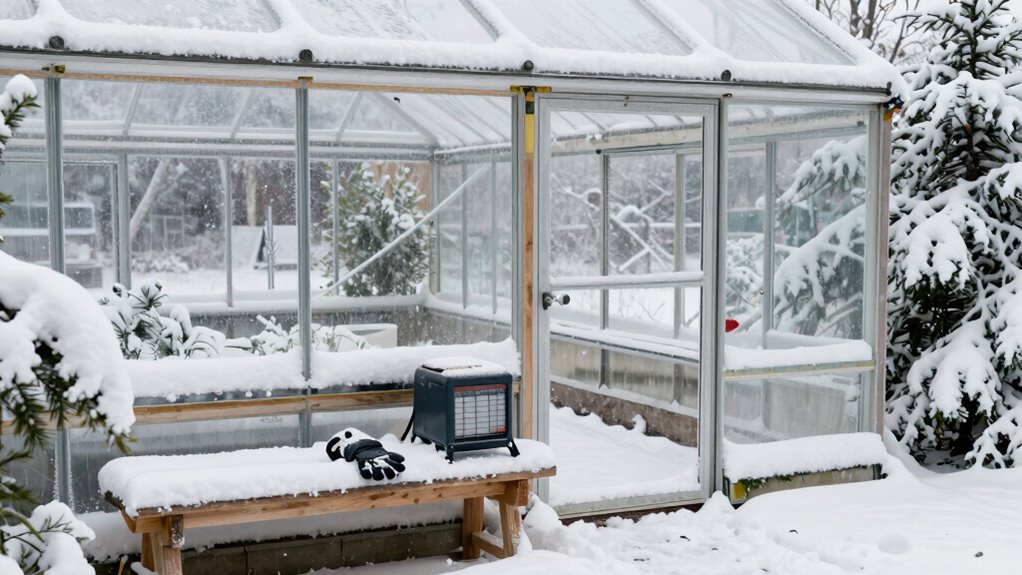
When a snowstorm is approaching, protecting sensitive plants becomes a top priority to prevent damage. You should prioritize plant insulation and frost protection to keep temperatures stable. Wrap vulnerable plants with horticultural fleece or burlap, and consider using mulch around roots for extra warmth. Moving potted plants indoors or into a sheltered area also helps. To help you decide, here’s a quick guide:
| Plant Type | Recommended Protection | Best Placement |
|---|---|---|
| Tender annuals | Cover with frost cloth, insulate with blankets | Inside greenhouse or garage |
| Shrubs and trees | Wrap with burlap or frost blankets | Against windbreaks |
| Potted plants | Move indoors or into insulated shed | Near heat sources |
| Root vegetables | Mulch heavily for insulation | Soil bed |
Proper frost protection keeps your plants safe and healthy during a snowstorm. Additionally, understanding plant hardiness zones can help you select the best protection strategies for your specific climate.
Are Pathways Clear for Emergency Access and Maintenance?
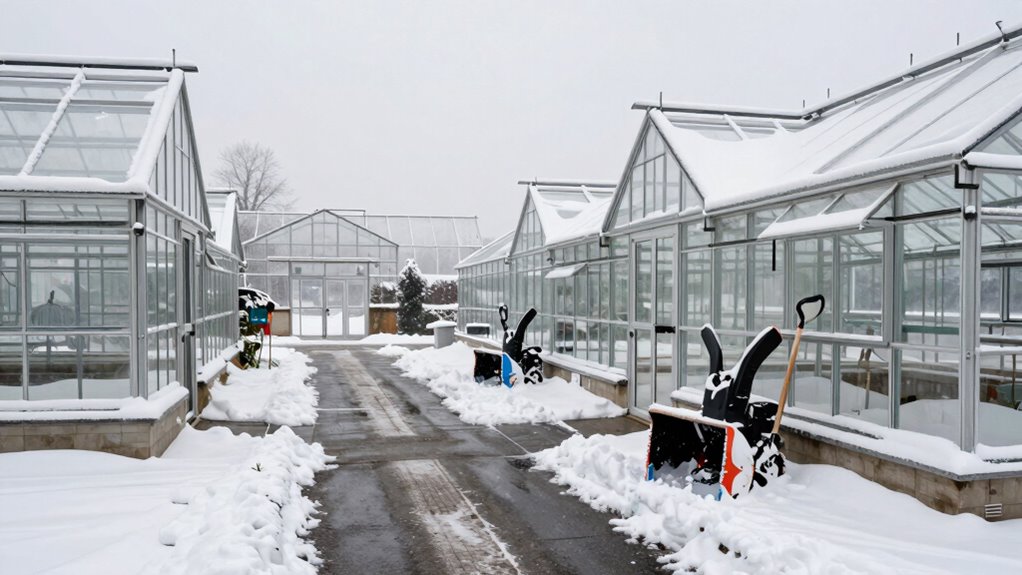
Clear pathways are essential during a snowstorm to ensure emergency access and ongoing maintenance. If pathways are blocked or icy, it can delay urgent repairs or rescue efforts. Before the storm hits, check that all routes to your greenhouse are free of snow, ice, and debris. Proper pathway clearance allows quick access for emergency responders and maintenance personnel. Consider these key steps:
Clear snow and ice to ensure quick emergency access and safe maintenance during storms.
- Remove snow and ice from all main pathways
- Ensure pathways are wide enough for equipment and emergency vehicles
- Mark any obstacles or hazards that could impede access
Keeping pathways clear helps prevent accidents and guarantees that help can arrive swiftly if needed. Don’t wait until the snow starts falling—act now to maintain unobstructed emergency access and safe maintenance routes.
Do You Have Emergency Supplies and Power Outage Plans?
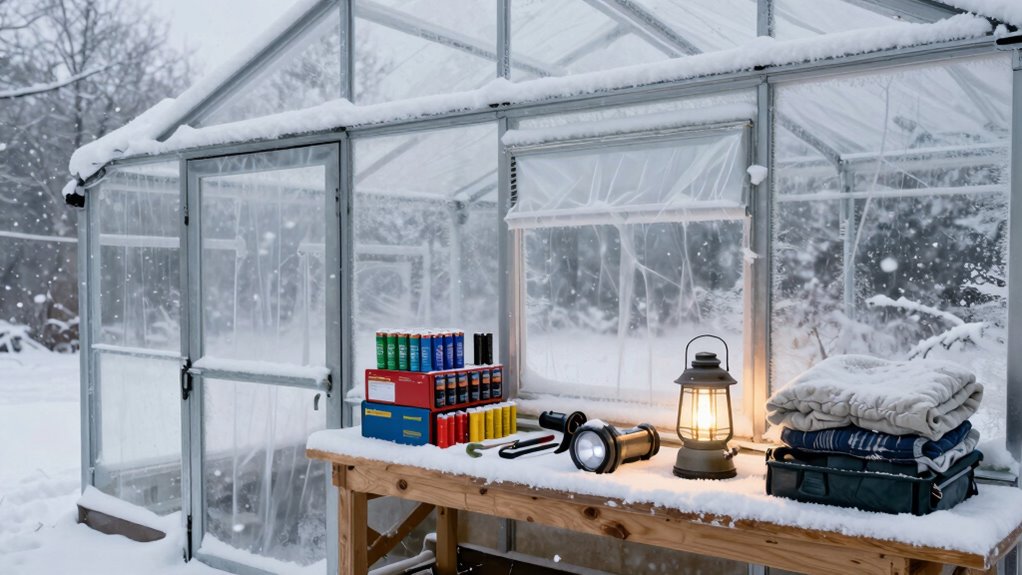
Are you prepared for a power outage during a snowstorm? Having emergency supplies on hand is essential to keep your greenhouse functioning and protect your plants. Make sure you have enough batteries, flashlights, and a portable charger for your devices. Consider stocking non-perishable food and water in case winter conditions delay help or supplies. Planning for a power outage means knowing how to keep your greenhouse warm without electricity—perhaps with backup heaters or thermal blankets. Regularly check your emergency supplies to ensure they’re ready when needed. A reliable power outage plan minimizes risks of temperature drops and damage to your plants. Being prepared gives you peace of mind and helps your greenhouse weather the storm better.
How to Monitor Snow and Adjust Your Greenhouse Conditions
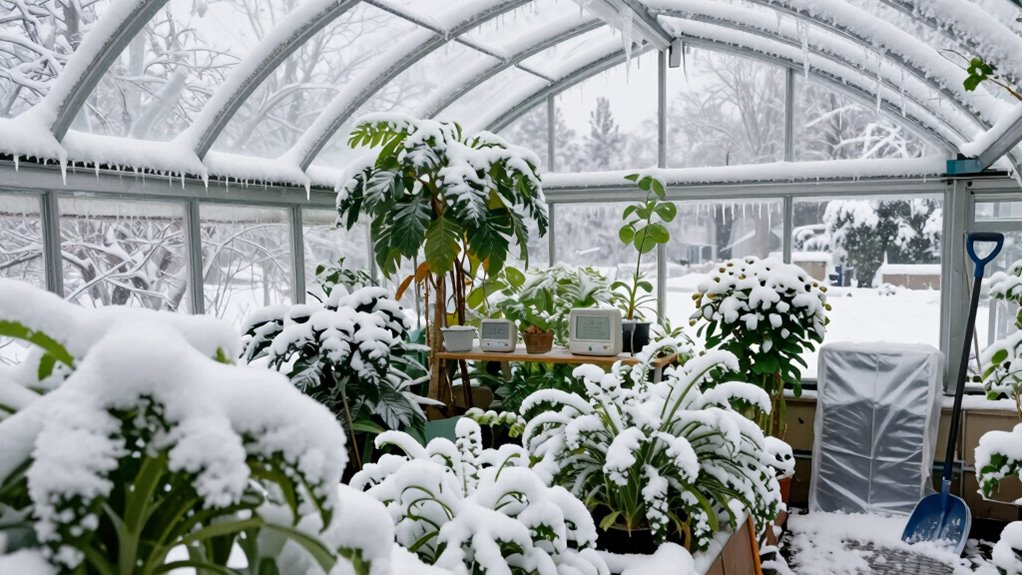
Monitoring snow accumulation on your greenhouse is essential to maintaining ideal conditions during a storm. Heavy snow load can compromise its structure, while strong winds threaten its wind resistance. To stay ahead, regularly inspect your greenhouse’s roof and walls for snow buildup. Remove excess snow carefully to prevent excessive weight, especially on vulnerable areas. Keep a close eye on weather reports for wind speed changes, adjusting ventilation or securing loose panels as needed. Consider the following:
- Use a broom or soft rake to gently clear snow from the roof
- Check for signs of stress or damage caused by wind or snow load
- Reinforce or secure any weak points before conditions worsen
Staying vigilant helps prevent structural damage and keeps your greenhouse functioning at an ideal level during a snowstorm.
Frequently Asked Questions
How Can I Prevent Pests From Entering During Winter Storms?
To prevent pests during winter storms, focus on pest proofing your greenhouse. Install sturdy entry barriers like weatherstripping or fine mesh screens on all vents, doors, and windows. Seal any cracks or gaps that pests could use to enter. Keep the greenhouse clean and remove potential hiding spots. Regularly inspect and maintain these barriers to guarantee they stay effective, giving pests fewer chances to sneak inside during harsh weather.
What Are the Best Methods to Ventilate My Greenhouse in Snow Conditions?
To ventilate your greenhouse in snow conditions, use ventilation techniques like adjustable vents and roof vents that you can open carefully to prevent snow load buildup. guarantee vents are clear of snow and debris to maintain airflow while avoiding structural stress. When snow accumulates, partially open vents to promote air circulation without adding extra weight. Regularly check vents during storms to balance proper ventilation and safety.
How Do I Ensure Proper Drainage to Avoid Water Damage?
You guarantee proper drainage by inspecting your drainage systems regularly, making sure they’re clear of debris. Create slopes in your greenhouse floor to direct water runoff away from structures and plants. Install drainage channels or gutters where needed, and consider using gravel or permeable materials to improve water absorption. These steps prevent water damage, protect your plants, and keep your greenhouse safe during heavy snow and melt.
Should I Install Additional Lighting During Short Winter Days?
During short winter days, you should install additional lighting to keep your greenhouse thriving. Think of winter lighting as your plants’ secret weapon, providing essential supplemental illumination when natural light wanes. Without it, growth slows, and spirits dim. By adding supplemental illumination, you guarantee your plants get the warmth and light they need, even on the gloomiest days, keeping your greenhouse productive and vibrant all winter long.
How Can I Maintain Humidity Levels During a Snowstorm?
During a snowstorm, you can maintain humidity levels by using a humidifier or placing water trays inside your greenhouse. These humidity control methods help keep the air moist, ensuring your plants stay hydrated. Regularly check water levels and mist your plants if needed. This approach prevents dehydration, supports healthy growth, and keeps your plants resilient against the cold, harsh weather outside.
Conclusion
By taking these steps, you’ll turn your greenhouse into a fortress against winter’s assault, transforming fragile plants into resilient survivors. Think of your preparations as a warm, protective shield, guarding your green sanctuary from snow’s icy grip. With careful planning and action, you’ll ensure your plants thrive through the storm, making the coldest days feel like just a passing shadow rather than a winter’s threat. Stay proactive, and let your greenhouse stand strong against the snow.